Introduction
Every man knows the frustration of waking up, looking in the mirror, and finding that one defiant tuft of hair pointing in an entirely different direction from everything else. That rebellious swirl is called a cowlick, and it is among the most common hair challenges men face. Studies and professional barber surveys suggest that close to 90 percent of men have at least one cowlick, most commonly located at the crown of the head, along the front hairline, or near the nape of the neck.
A cowlick forms when hair follicles grow in a circular or opposing direction relative to the surrounding hair. This is a genetic trait, not a styling failure. The result is a section of hair that perpetually lifts, swirls, or resists the direction you are trying to push it. Straight and fine hair types tend to make cowlicks more visible, while curly or wavy hair naturally obscures them with texture.
The good news is that cowlicks are far more manageable than most men believe. The real solution is not fighting your natural hair growth pattern but selecting a haircut that works with it. The right cut, the right technique, and the right product combination can transform a source of daily frustration into something that looks completely intentional.
This guide covers 20 of the best men’s hairstyles for cowlicks, broken down by cut type, cowlick location, and styling approach. Whether you prefer low-maintenance cuts or polished looks, there is an option here that works for your hair.
The Textured Crop
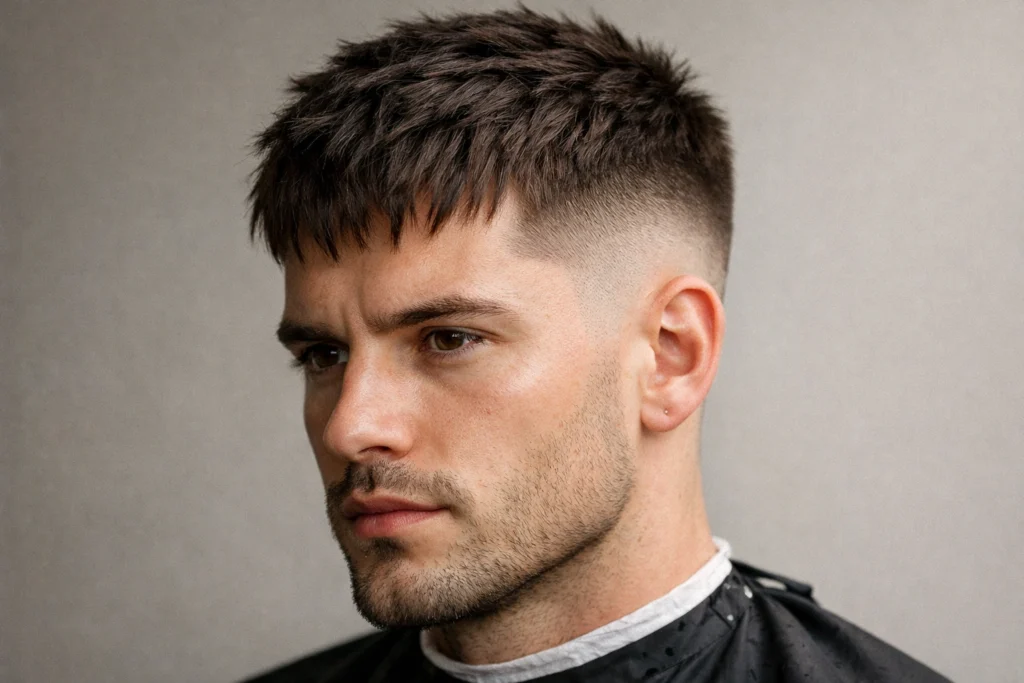
The textured crop is one of the most dependable hairstyles for men dealing with front hairline or crown cowlicks. It features short, layered hair across the top with a slight length variation that creates movement and visual texture. Because the hair never settles uniformly in a single direction, the cowlick’s swirl blends naturally into the overall style. French crop and Caesar crop variations work especially well for men with prominent front cowlicks, as the forward-swept fringe aligns with the natural direction of the hair’s growth pattern rather than working against it.
Ask your barber for two to three inches on top with point-cut layering and a skin or low fade on the sides. The irregular texture distributes lift across multiple lengths instead of concentrating it in one obvious tuft.
The Buzz Cut

For men who want the simplest, most permanent solution to cowlick problems, the buzz cut delivers results without compromise. When hair is cut to a uniform short length using a number three or number four clipper guard all over, it removes the length that a cowlick needs to form a visible pattern. The hair simply does not have enough length to swirl, lift, or point in a different direction from the rest.
A buzz cut with a skin fade on the sides adds definition and keeps the look sharp rather than plain. Maintenance is minimal, requiring a trim every three to four weeks to keep the cowlick effect neutralized.
The Side Part
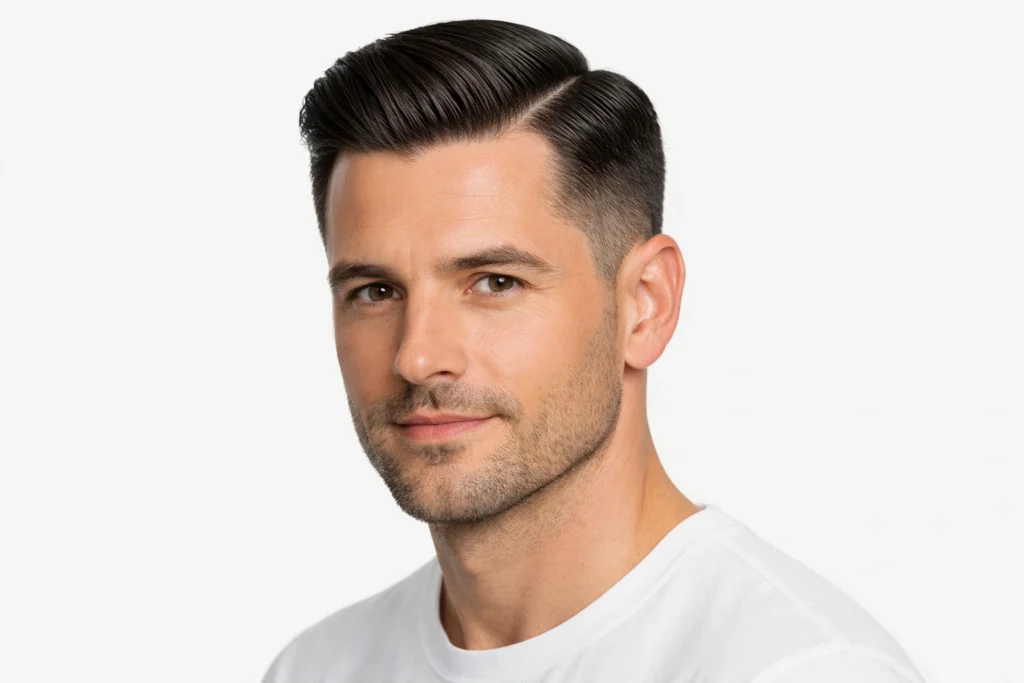
The side part is a timeless men’s hairstyle that handles cowlicks along the front hairline with remarkable effectiveness. The key principle here is parting the hair in the same direction as the cowlick’s natural growth rather than forcing a part elsewhere. When the part aligns with the hair’s natural tendency, the cowlick integrates into the style instead of fighting it.
Use a medium-hold pomade or grooming cream applied to damp hair. Comb from the part outward, following the direction the cowlick already wants to travel. The result is a clean, polished look that appears deliberate rather than accidental.
The Quiff
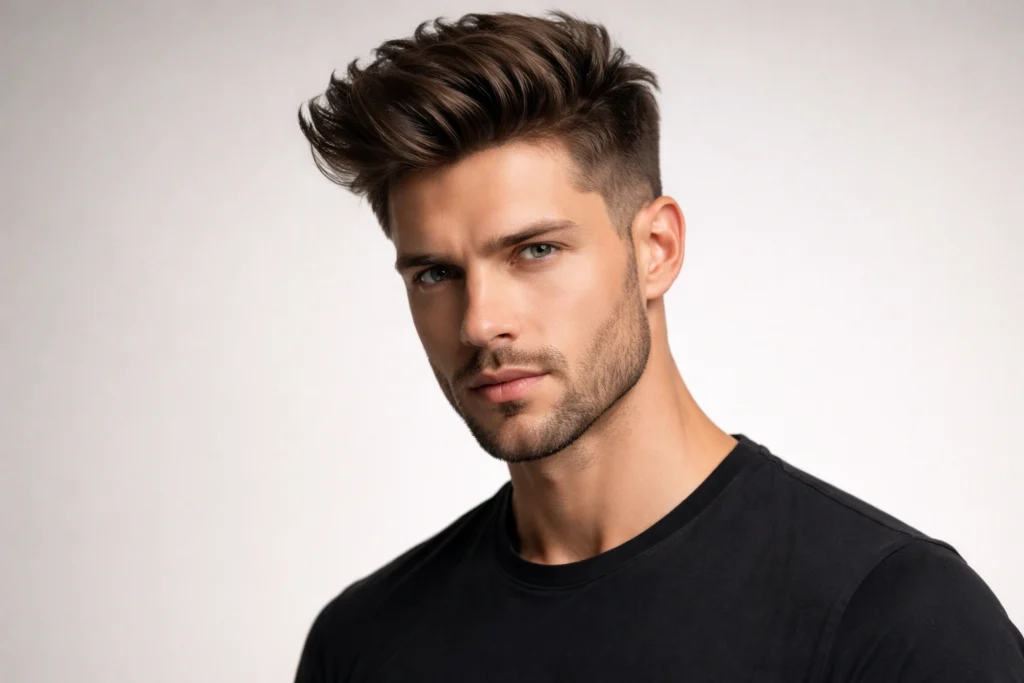
The quiff and the cowlick are a surprisingly compatible pairing. The natural lift that a crown or front cowlick produces is exactly the volume a quiff depends on for its signature height. By leaning into the upward movement your cowlick creates, you can build a quiff with minimal product and effort that holds its shape throughout the day.
Keep the sides trimmed short with a taper or fade, and leave three to four inches on top for styling flexibility. Apply a matte clay or sea salt spray to damp hair, then use a blow dryer to direct the volume upward and slightly backward. The cowlick becomes the structural foundation of the style rather than its biggest problem.
The Pompadour
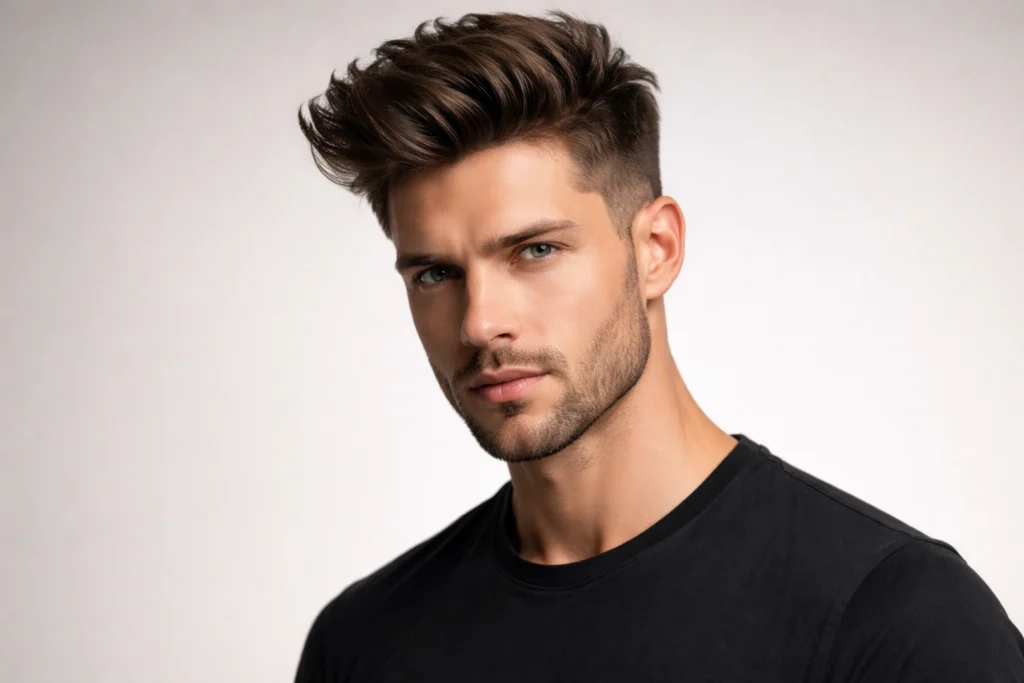
The pompadour is one of the most iconic men’s hairstyles, and it handles cowlicks exceptionally well because the entire design is built around directing hair upward and backward. A strong cowlick near the front hairline or crown actually assists in creating the pompadour’s signature lift. Professional barbers have long noted that slicked-back pompadours can actively benefit from a strong cowlick rather than suffer from one.
The sides are kept short or faded, while the top is grown to a minimum of three inches. Use a strong-hold wax or high-hold pomade, blow dry the top upward and back, then shape and smooth the surface. The cowlick provides the natural momentum the style requires.
The Undercut
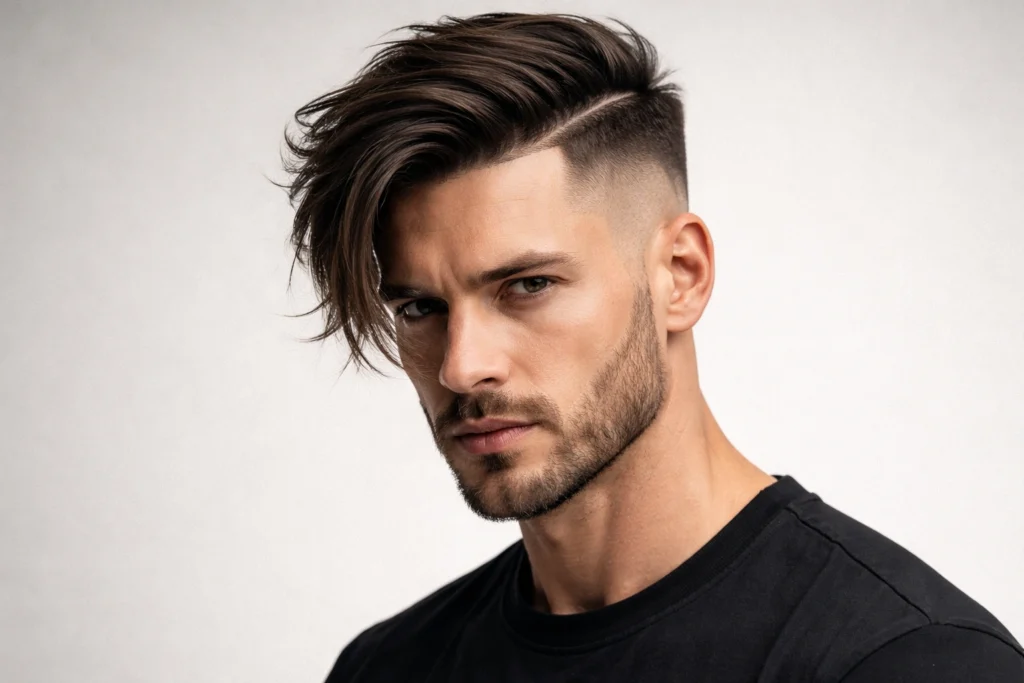
The undercut is a reliable choice for men with cowlicks near the crown or temple area. The sides and back are cropped close to the skin or buzzed short, while the top retains significant length. This length on top gives you the ability to style the hair forward, to the side, or swept back in a direction that fully covers or incorporates the cowlick.
The contrast between the close sides and the longer top draws the eye upward, redirecting attention away from any irregular growth at the crown. An undercut pairs well with a textured finish or a sleek, combed style depending on the occasion.
The Crew Cut
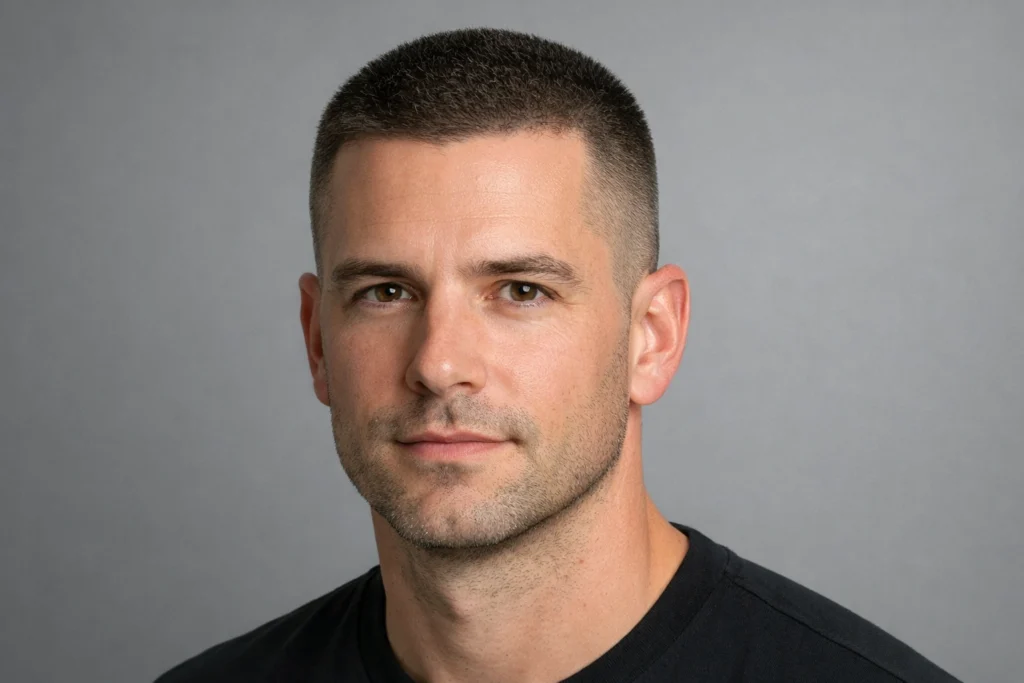
The crew cut offers a practical middle ground between the extreme brevity of a buzz cut and the styling demands of longer hairstyles. Hair is tapered on the sides and back while the top retains a short uniform length of roughly half an inch to one inch. This length is short enough to minimize the cowlick’s appearance but long enough to maintain a polished, shaped look.
Crew cuts work best for cowlicks at the crown. The short, dense hair on top prevents individual sections from separating enough to make the swirl pattern visible. A light application of matte paste or styling cream keeps everything in place without drawing attention to problem areas.
The Caesar Cut
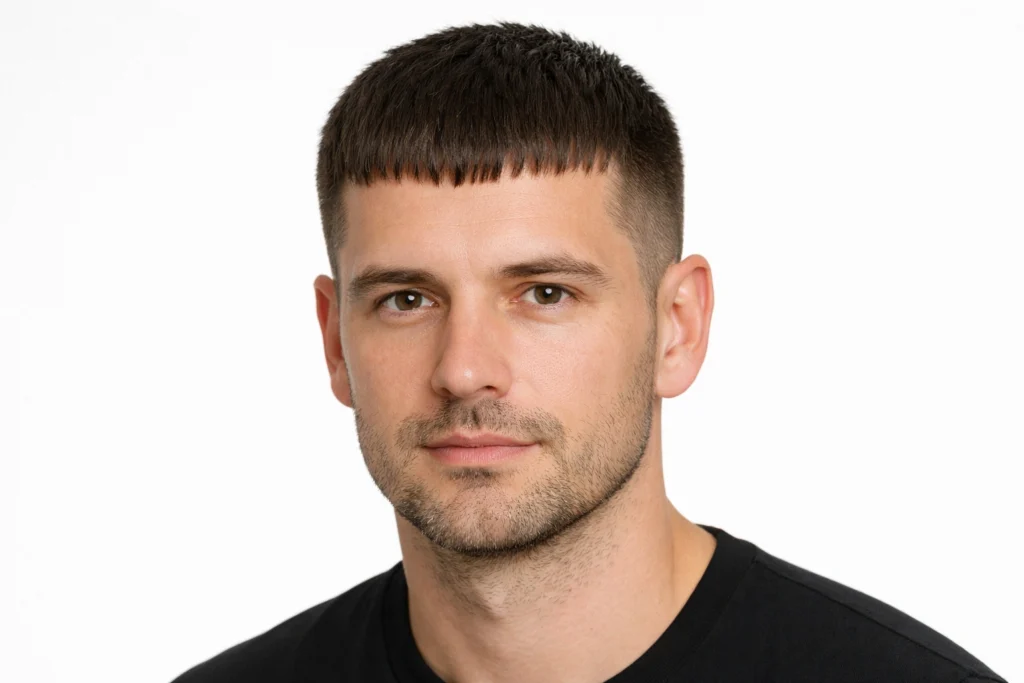
The Caesar cut is significantly underrated as a solution for front cowlick management. It features a horizontally blunt fringe brushed forward over the forehead with uniform layering throughout the rest of the top. This forward-brushed direction aligns with the natural growth tendency of most front hairline cowlicks, making the style feel effortless to maintain.
Ask your barber for one to two inches on top with a subtle fade on the sides. The modern Caesar, unlike the severely short version associated with its historical namesake, has a contemporary feel that suits most face shapes and hair types.
The Taper Fade with Length on Top
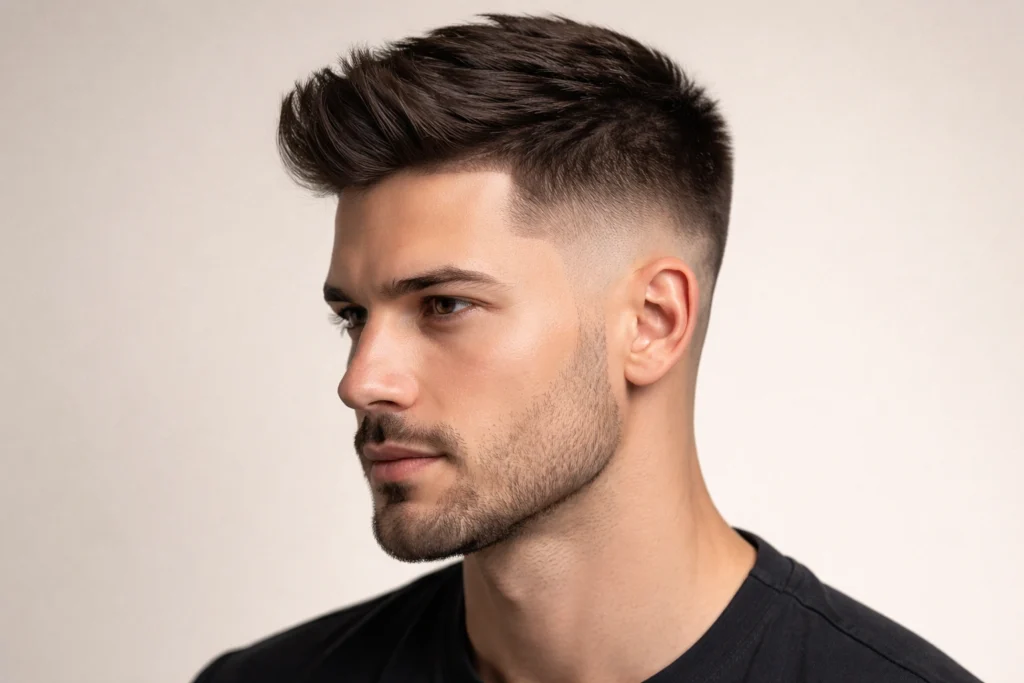
The taper fade creates a gradual reduction in hair length from the top of the head down to the skin at the sides and nape. This technique draws attention toward the top of the head while keeping the sides controlled and clean. For men with cowlicks, the fade functions as a strategic contrast tool that makes the top styling look intentional and prominent.
Pairing a taper fade with two to three inches of length on top gives you enough hair to work with during styling while the tight sides frame the face and shift focus away from any irregularity at the crown or hairline.
The Slicked-Back Style
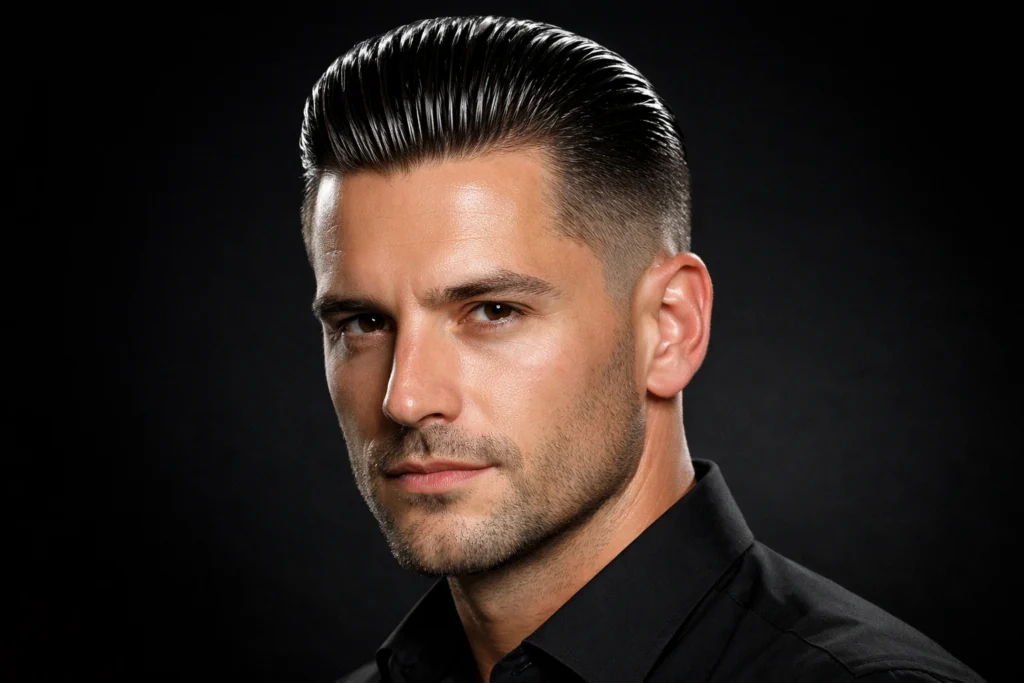
Slicking hair straight back is one of the most effective approaches for men with strong cowlicks because it redirects the hair in a single, unified direction. Rather than attempting to part hair or create texture, the slicked-back style uses product to override the cowlick’s resistance entirely.
The technique requires applying a high-hold pomade or strong gel to wet hair and combing everything straight back from the front hairline. A blow dryer set on medium heat further reinforces the direction. This is most effective on medium to thick hair with no more than mild natural wave.
The Messy Textured Look

The messy textured look turns the cowlick’s unpredictability into an aesthetic feature. By deliberately styling the hair in multiple directions with a matte clay or texture powder, the cowlick’s irregular direction simply blends into the overall disheveled effect. Nothing looks out of place when the entire style is intentionally unstructured.
Apply product to damp hair and scrunch or finger-style the top in varied directions. The cowlick becomes one of several natural movements in the hair rather than a single conspicuous point of difference.
The Faux Hawk
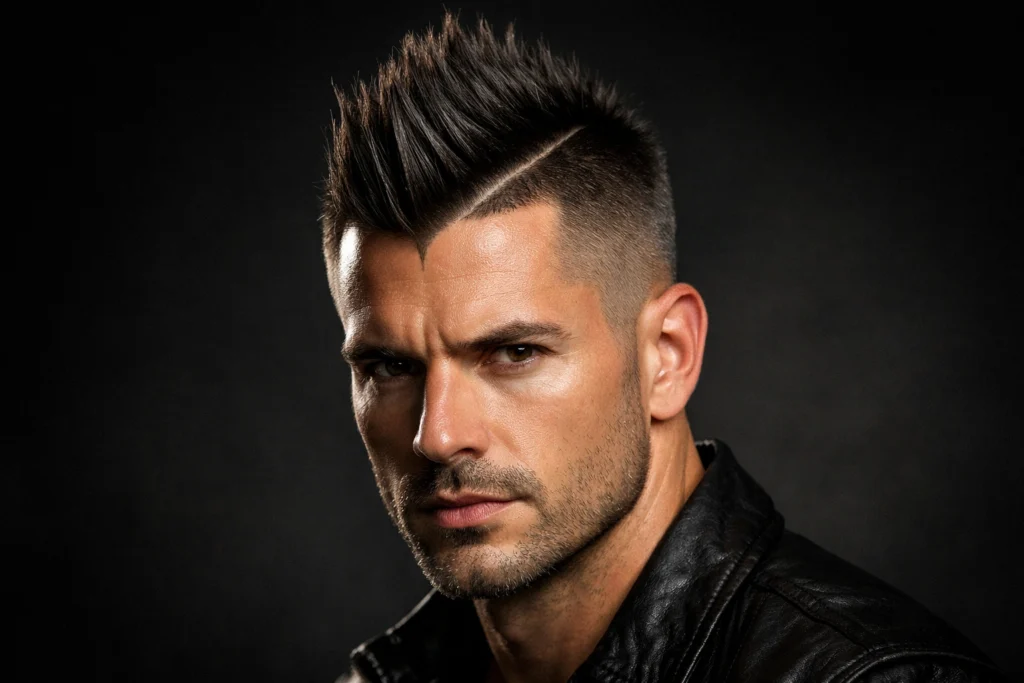
The faux hawk redirects the lift and volume of a crown cowlick into the center line of the style. Instead of the cowlick creating an unwanted point or swirl, the faux hawk uses that same natural energy to build the central ridge that defines the hairstyle.
Keep the sides short with a fade or tight taper, and leave enough length in the center to direct upward with a strong-hold clay. The cowlick’s natural push aligns with the direction of the style, turning one of the most stubborn hair problems into a styling advantage.
The Flow Hairstyle
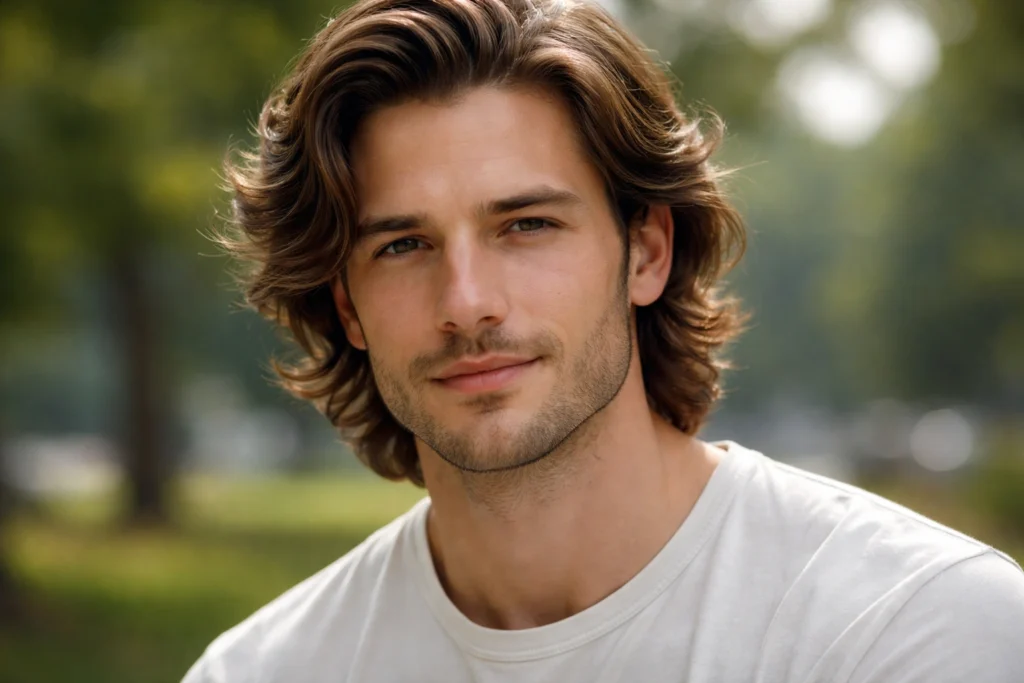
For men willing to grow their hair to four inches or longer, the flow hairstyle uses gravity and weight to physically override a cowlick’s resistance. Once hair reaches sufficient length, its own mass pulls downward with more force than the follicle’s growth pattern pushes outward. Crown cowlicks in particular are effectively neutralized by this approach.
Flow styles require minimal daily styling. A light conditioning leave-in product or lightweight hair oil keeps the hair smooth and prevents frizz that could draw attention back to the cowlick area as the style grows in.
The Ivy League Cut

The Ivy League cut is a refined, professional-length hairstyle that works especially well for office environments and men who prefer a more polished appearance. It is longer than a crew cut, typically one and a half to two and a half inches on top, with a clean taper on the sides. The added length allows the hair to be combed to the side in a way that incorporates a front cowlick into the part rather than competing with it.
This cut performs best when paired with a medium-hold, low-shine product that maintains control without creating a stiff or artificial finish.
The Spiky Top
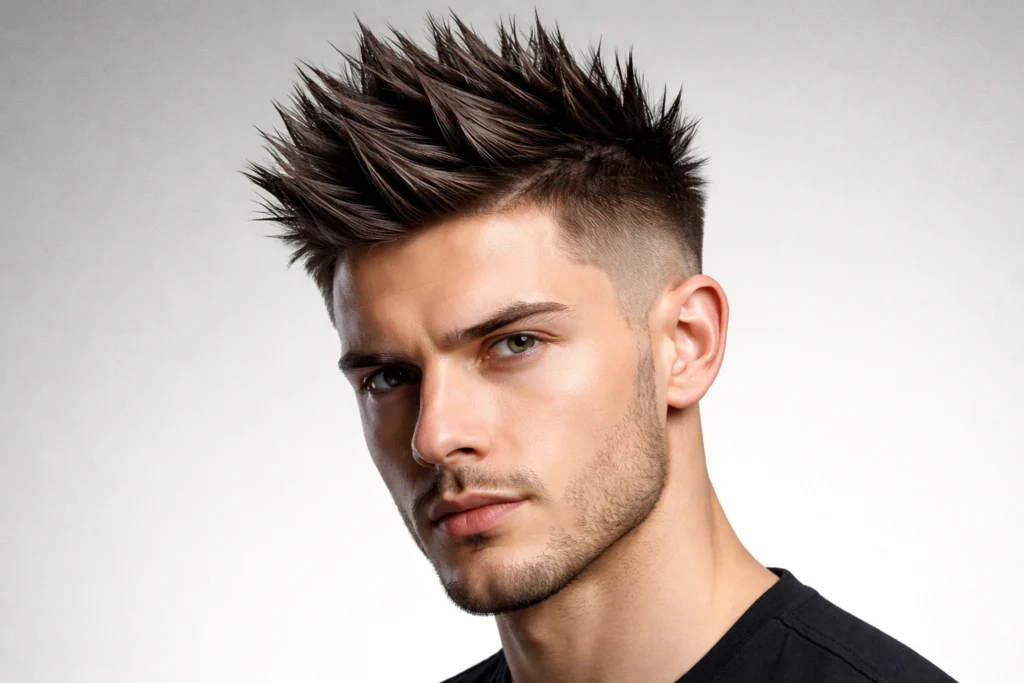
Styling hair deliberately upward in a spiked direction turns the cowlick’s natural lift into a feature of the overall look. When hair is spiked intentionally with a strong-hold gel or wax, the cowlick cannot stand out because every section of the top is already pointing in a similar upward direction. There is no contrast for the cowlick to create.
This approach works best for men with medium thickness hair and cowlicks near the crown or front. Keep the sides faded or tapered to balance the volume on top and prevent the look from appearing overly wide.
The Blowout
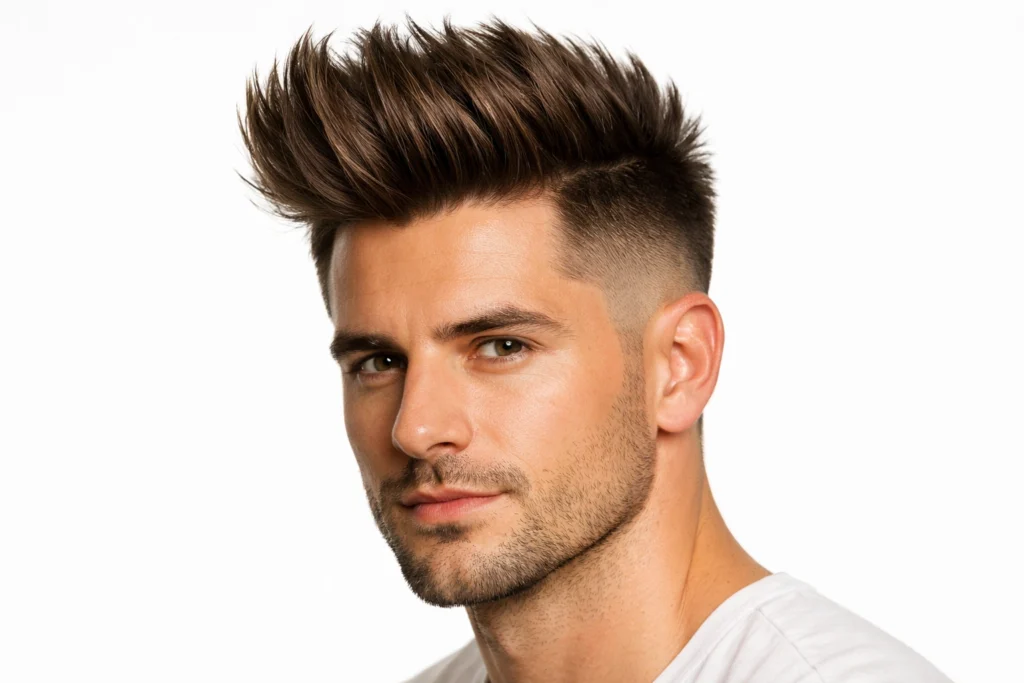
The blowout is a volume-driven hairstyle that works particularly well for men who want thicker-looking hair while concealing a crown or front cowlick. A blow dryer is used to lift the hair upward and forward while a round brush or comb adds direction and shape. The resulting volume spreads the hair’s lift evenly across the entire top, making the cowlick’s contribution indistinguishable from the overall height of the style.
High fades on the sides enhance the face-framing effect of a blowout while keeping the focus on the top. A lightweight mousse or volumizing foam applied before blow drying provides hold without heaviness.
The Curly or Wavy Natural Style
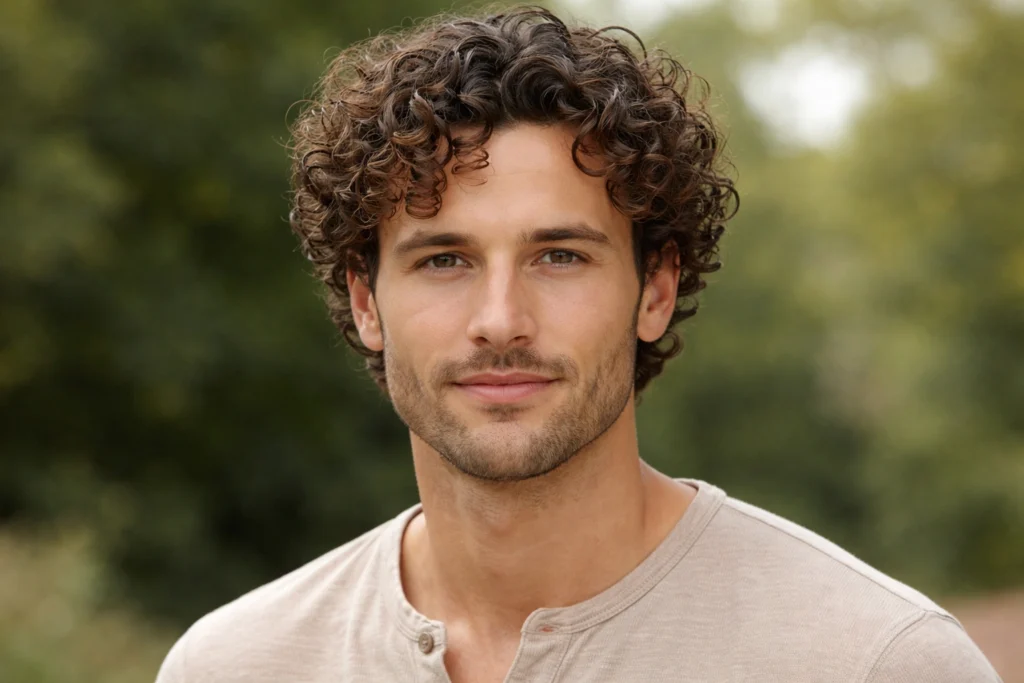
Men with naturally curly or wavy hair are actually at an advantage when it comes to cowlick management. The texture inherent in curly hair visually disguises directional changes in growth, making cowlicks far less noticeable than they would be in straight hair. Embracing the natural curl pattern rather than trying to straighten or suppress it is one of the most effective cowlick solutions for men with this hair type.
A curl-defining cream or light gel applied to damp hair enhances the natural texture while adding enough hold to prevent the cowlick from separating and becoming visible as hair dries.
The Disconnected Undercut
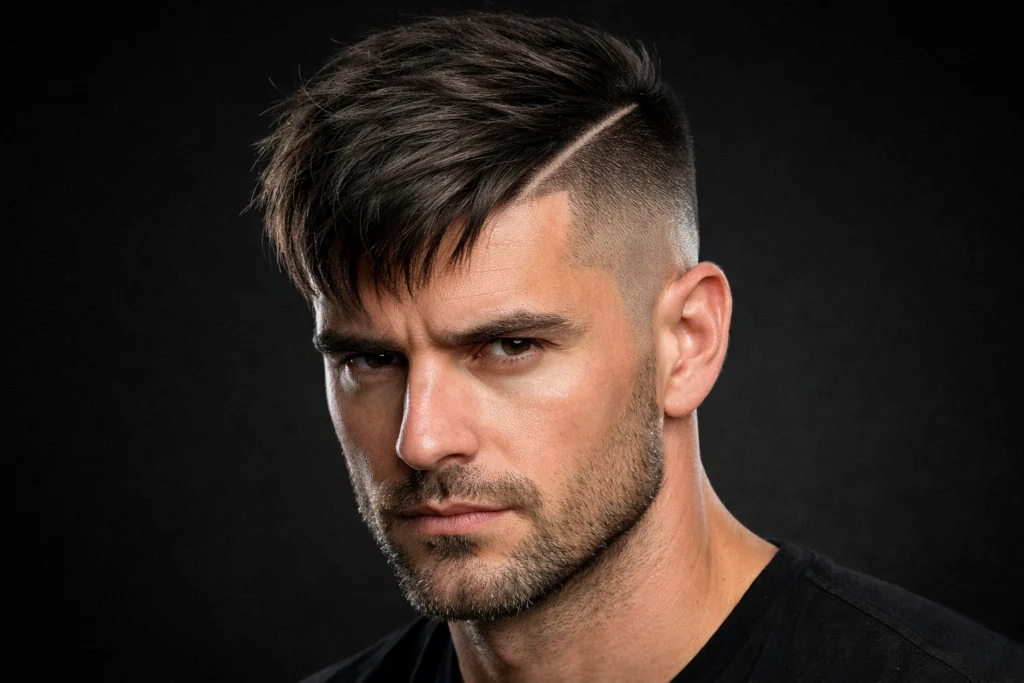
The disconnected undercut takes the traditional undercut a step further by creating a sharp, visible contrast line between the shaved or closely clipped sides and the longer top section. This dramatic transition draws the eye toward the structured design of the cut itself, shifting attention away from any cowlick activity at the crown.
The length on top is styled forward or to the side, depending on the location of the cowlick, and held in place with a strong-hold clay or paste. This style suits men who prefer a bold, modern aesthetic.
The Side Sweep
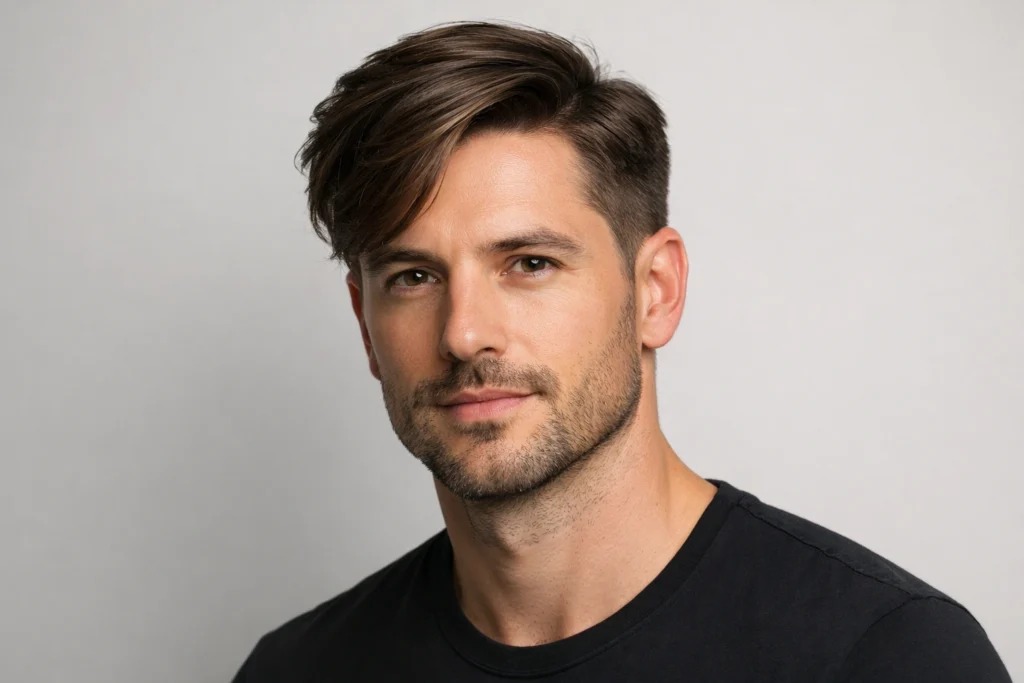
The side sweep is a natural, understated hairstyle that works with the directional tendency of a front hairline or temple cowlick rather than fighting it. Hair is grown to a medium length on top and swept laterally to one side, following the path the cowlick naturally wants to travel. When the hair’s intended styling direction matches the cowlick’s growth direction, the two reinforce each other instead of creating tension.
A medium-hold cream or light pomade maintains the sweep without creating a rigid or unnatural appearance. This style is low maintenance and suits most face shapes.
The Asymmetric Cut
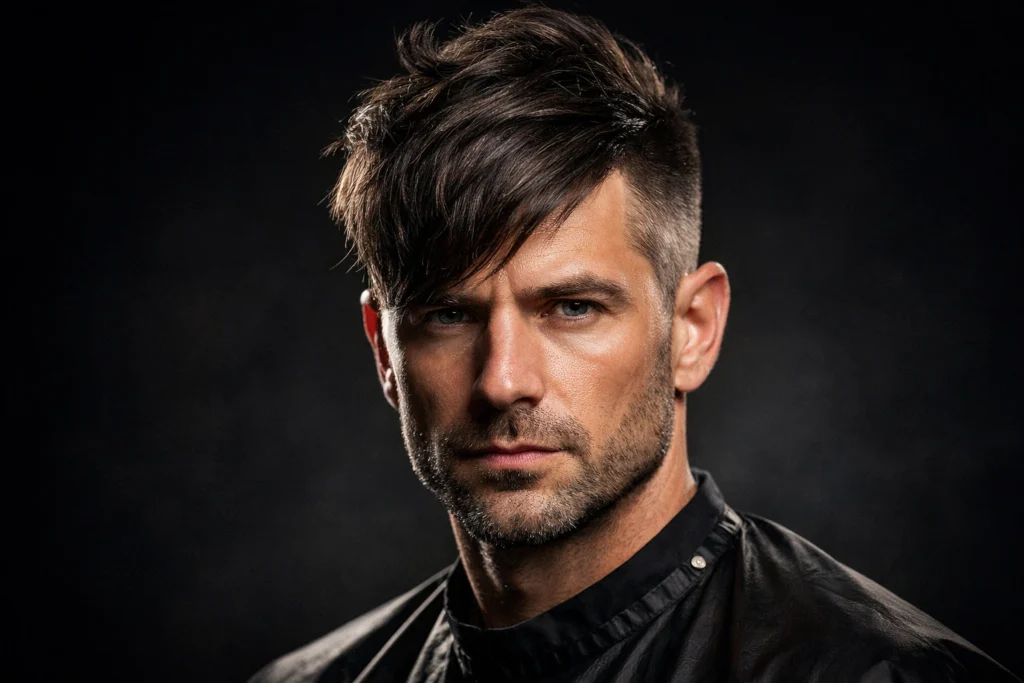
For men whose cowlick creates a persistent imbalance or lift on one side, an asymmetric cut turns that natural bias into a deliberate design feature. By cutting one side slightly shorter or adding more texture to the cowlick-affected side, the barber creates intentional asymmetry that reads as a styling choice rather than a hair problem.
Volume-focused styling on the cowlick side amplifies the intentional contrast, while the opposite side remains flatter and more subdued. This approach works particularly well for side cowlicks near the temple and for men who want a creative, individualized look.
How to Style Your Hair Around a Cowlick
Selecting the right haircut is the first step, but proper technique during styling makes the difference between a cowlick that blends in and one that stands out. The most effective method begins with fully wetting the hair rather than simply dampening it. Apply your styling product directly to wet hair so that it is present as the hair dries and sets.
Blow dry with intentional direction. If the cowlick pushes hair forward, blow dry it briefly in the opposite direction to reset the growth pattern, then style it in your intended direction. Finish with the cool shot setting on your blow dryer for fifteen to twenty seconds. The heat opens and shapes the hair shaft while cold air closes the cuticle and locks the style in place.
For product selection, matte clay, texture powder, or sea salt spray give control without emphasizing the cowlick’s separation. Avoid high-shine pomades and heavy gels, as these create definition between individual hair sections and make cowlicks more visible rather than less.
Talking to Your Barber About Your Cowlick
The most skilled barber cannot address a cowlick they do not know about. Before any cut begins, identify the location of your cowlick, describe the direction it grows, and note whether it is located at the crown, front hairline, or temple area. Request that the barber cut with the cowlick’s natural growth pattern rather than against it. Ask specifically for point cutting or texturizing scissors in the cowlick zone, as blunt cuts at problem areas emphasize the swirl while layered cuts distribute the lift across multiple lengths.
A knowledgeable barber will also check the cowlick area both when wet and when dry, since a cowlick often behaves differently in each state and the cut should account for both.
Conclusion
A cowlick is a permanent feature of your hair’s growth pattern, not a temporary problem to be corrected. The most effective approach to men’s hairstyles for cowlicks is choosing cuts and styling techniques that work alongside your hair’s natural direction rather than opposing it. Whether you prefer the low-maintenance permanence of a buzz cut, the polished control of a side part, or the textured versatility of a quiff, there is a cowlick-friendly style that suits your lifestyle, face shape, and preferences.
The 20 hairstyles covered in this guide represent a full spectrum of approaches, from the corrective to the creative, giving every man a practical path toward a style that looks sharp and holds throughout the day. The right cut, combined with the right product and technique, makes what once felt like a daily battle feel completely effortless.
Frequently Asked Questions
What is the best men’s hairstyle for a crown cowlick?
The best options for a crown cowlick are styles that either use very short length to eliminate the pattern entirely, such as a buzz cut or crew cut, or longer styles that use the weight and gravity of the hair to pull the cowlick down. A quiff or faux hawk also works well by redirecting the cowlick’s natural lift into the structure of the style.
Can a cowlick be permanently fixed?
A cowlick is determined by your hair follicle growth direction, which is genetic and cannot be permanently altered by styling alone. However, the right haircut consistently makes a cowlick unnoticeable or visually integrated into the style. Some men explore professional keratin treatments or relaxers to temporarily reduce the cowlick’s resistance, but the growth pattern itself remains unchanged.
What products work best for controlling a cowlick?
Matte clay, texture powder, and sea salt spray are the most effective product types for managing cowlicks because they provide grip and texture without creating shine or separation that makes cowlicks more visible. For heavy-lift cowlicks, a strong-hold wax applied to wet hair before blow drying gives the most control throughout the day.
Should I ask my barber about my cowlick before getting a haircut?
Always. Informing your barber about the exact location and direction of your cowlick before the cut begins allows them to shape the hair in a way that works with the growth pattern rather than against it. Experienced barbers use point cutting, layering, and strategic length distribution to minimize the cowlick’s visual impact during and after styling.
Do cowlicks get worse as men age or as hair changes?
The cowlick itself does not change, but changes in hair texture, thickness, and density as men age can affect how noticeable it appears. Thinning hair may make a cowlick more visible because there is less surrounding hair to disguise the swirl. In those cases, shorter cuts or styles with added texture become even more important for managing the cowlick’s appearance effectively.