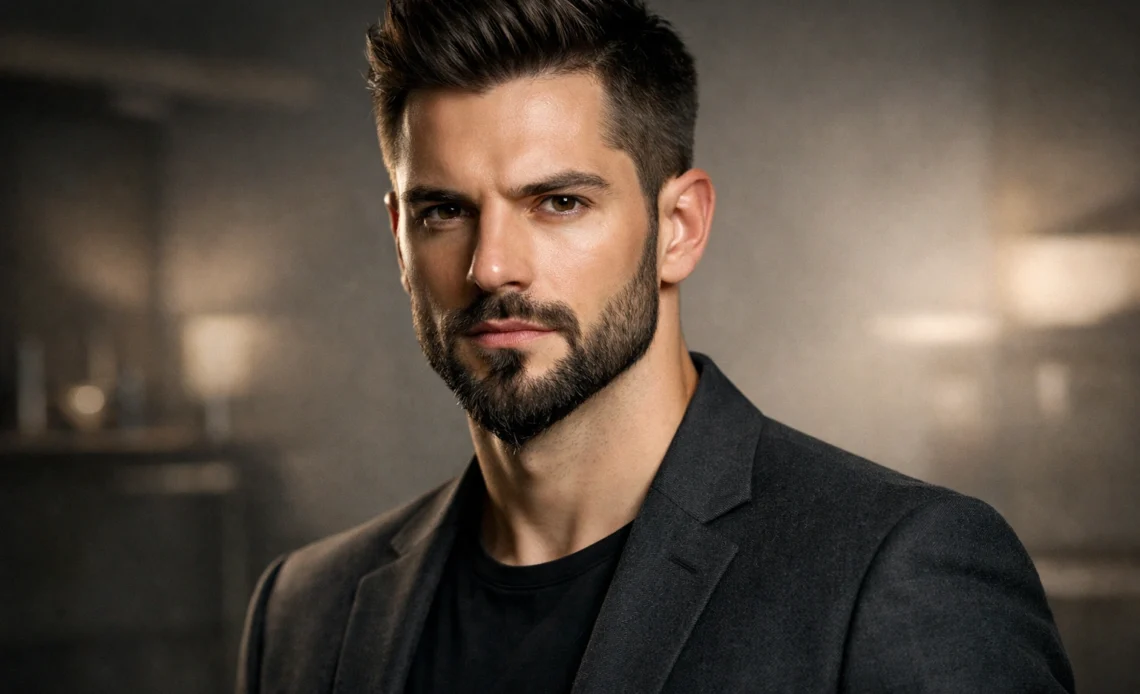
A beard is not simply facial hair. For the man who takes his grooming seriously, it is the most powerful structural tool available to reshape how the world sees his face. Among all the styles a man can wear, pointed beard styles occupy a category entirely their own. They add vertical length to the chin, sharpen the jaw, draw the eye downward with intention, and give any face a more angular, sculpted appearance. Whether you want something bold and theatrical or restrained and professional, the pointed beard delivers.
The appeal of pointed beard styles has never been limited to a single era or aesthetic. From the refined Van Dyke worn by seventeenth-century aristocrats to the modern faded chin spike seen in contemporary barbershops, the pointed beard has always functioned as a statement of masculine confidence. Johnny Depp has made the Van Dyke iconic for a new generation. Robert Downey Jr. turned the anchor beard into one of the most recognizable looks in popular culture. Idris Elba wears clean, defined chin shapes that project authority without effort.
This article covers 20 of the most compelling pointed beard styles available today, explains which face shapes each one serves best, and gives you the practical guidance to grow, shape, and maintain every one of them with precision.
Why Pointed Beard Styles Work for Every Face Shape
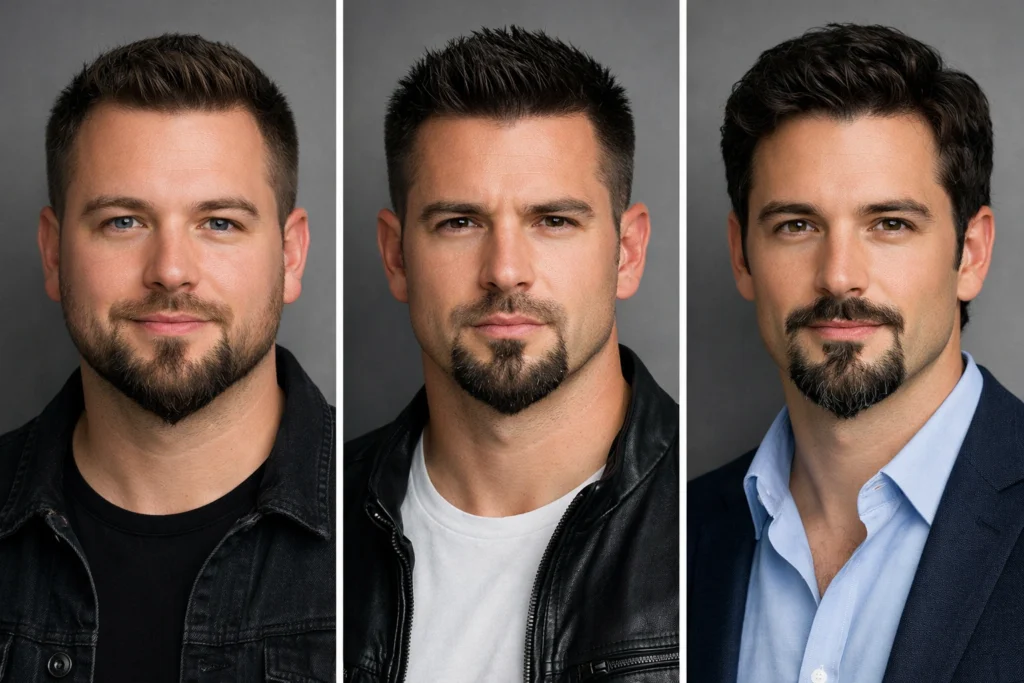
Before choosing a style, it helps to understand why pointed beards are so broadly flattering. The fundamental principle is simple: the downward taper of a pointed beard creates the illusion of vertical length on the face. For men with round faces, this added length transforms a soft, circular silhouette into something more angular and defined. For men with square jaws, a pointed chin softens the harsh horizontal edges of the lower face and introduces a more refined, proportional shape. For men with oval or diamond-shaped faces, a pointed style amplifies natural symmetry and sharpens already well-proportioned features.
This versatility is why pointed beard styles appear consistently at the top of every serious grooming guide. They work across face shapes, hair densities, and age groups. A younger man can wear a short minimalist point for a clean, understated look. An older man can wear a longer, more structured pointed beard that communicates authority and distinction. The style scales. It adapts. And when it is well-groomed and properly shaped, it makes virtually every man look more composed and intentional about his appearance.
The Classic V-Point Beard
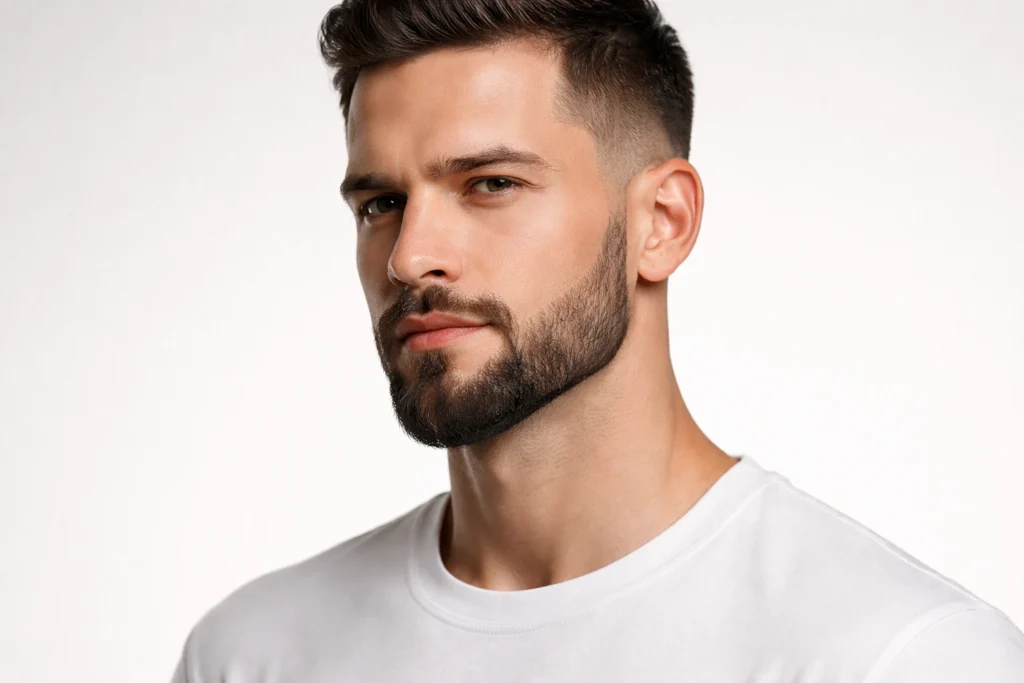
The classic V-point beard is the purest expression of the pointed beard category. The sides of the beard are kept short and closely trimmed while the chin is allowed to grow longer, tapering to a clean, defined V-shape. There are no disconnected elements, no elaborate mustache styling, and no complexity. Just a straightforward, masculine shape that draws the eye directly to the chin.
This style works exceptionally well for men with round or oval faces who want to add visible length to their lower face. The point does not need to be extreme to be effective. Even a modest V-taper creates the perception of a sharper jaw and a longer chin. To maintain it, use a precision trimmer to keep the sides even and a pair of small grooming scissors to shape the tip. Beard oil kept applied daily keeps the hair soft and the skin beneath it healthy.
The Van Dyke Beard
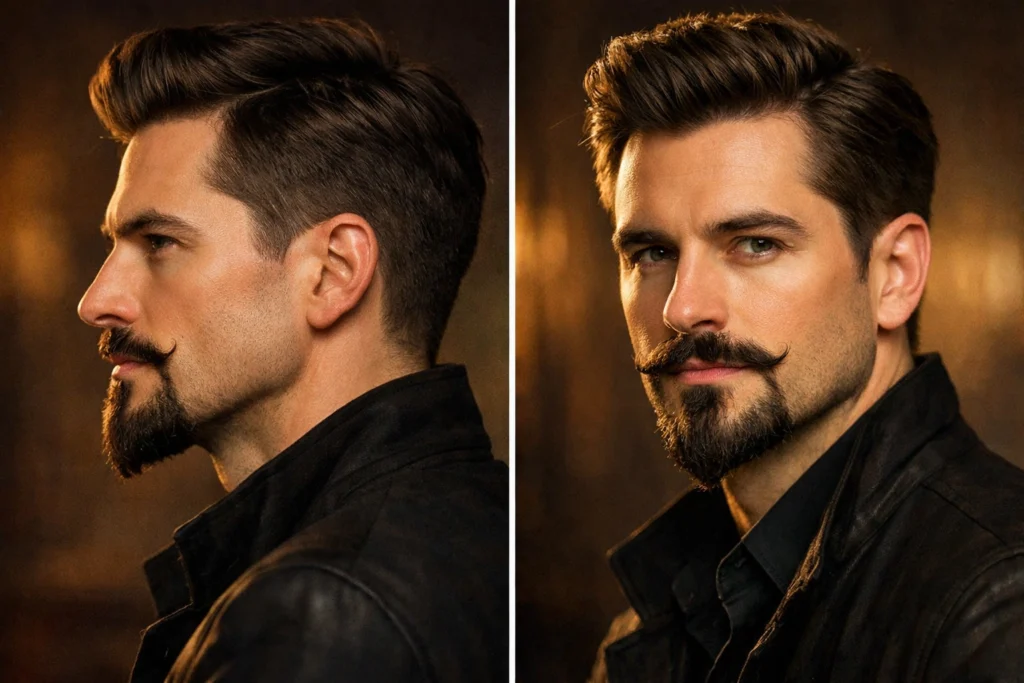
The Van Dyke is one of the most storied pointed beard styles in grooming history. Named after seventeenth-century Flemish painter Anthony van Dyck, whose self-portraits made the look famous across Europe, the Van Dyke pairs a pointed chin beard with a completely detached mustache. The cheeks are kept clean-shaven, which creates a sharp visual contrast between the two elements and focuses all attention on the center of the face.
This style requires good symmetry on both sides of the chin and a mustache that has enough density to stand independently. It suits oval, round, and heart-shaped faces particularly well. Johnny Depp has worn various interpretations of the Van Dyke throughout his career, and each version communicates the same message: a man who has a distinct sense of style and the confidence to commit to it. The mustache can be worn straight, curled at the ends, or shaped subtly upward for additional personality.
The Anchor Beard
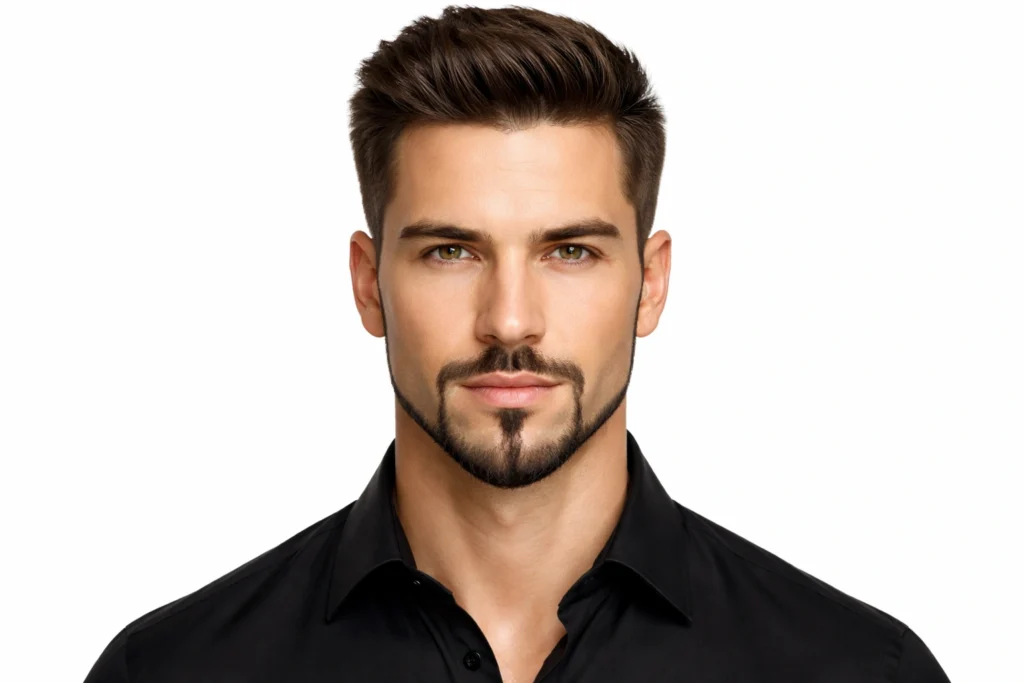 is a sophisticated pointed style that traces the jawline and connects it to a defined chin point, creating a shape that mirrors the outline of a ship’s anchor when viewed straight on. It pairs with a floating mustache above the upper lip, kept separate from the chin beard itself. The result is a structured, architecturally precise style that conveys both confidence and attention to detail.
Robert Downey Jr. wore the anchor beard as Tony Stark and elevated it from a niche grooming choice to one of the most recognized facial hair styles in the world. It suits oval and round faces best, using the clean jawline outline to add definition and the downward chin point to introduce length. Maintenance requires regular shaping with a trimmer along the jaw and precision scissor work at the chin point to keep the tip clean and symmetrical.
The Ducktail Beard
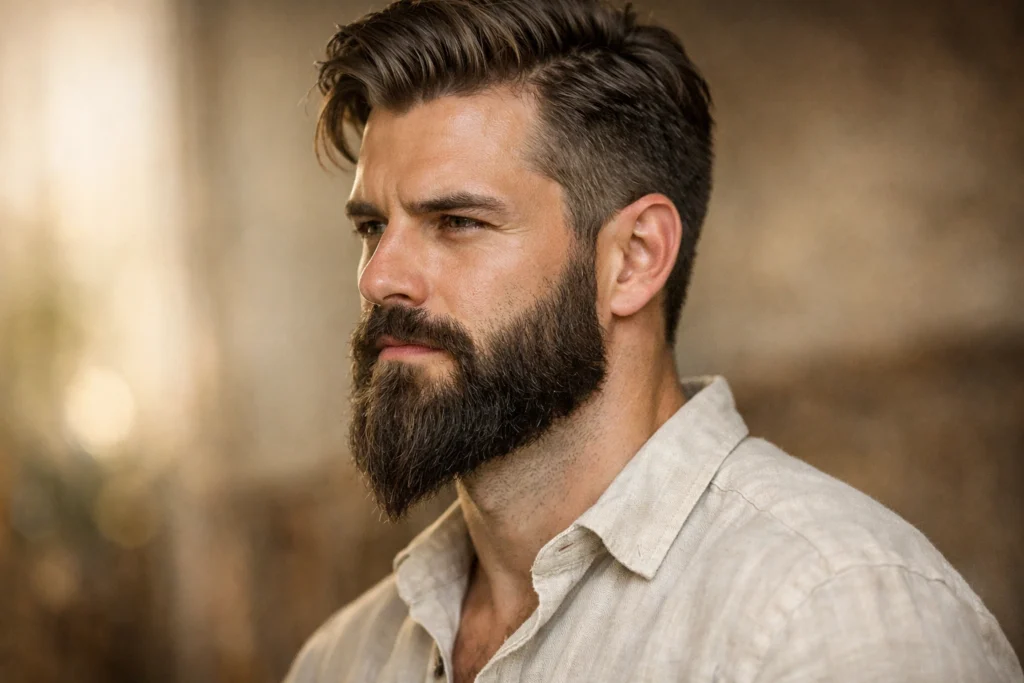
The ducktail beard is a full, medium-length beard with a pointed or slightly forked tip at the chin that resembles the tail of a duck in profile. Unlike the more minimal pointed styles, the ducktail involves real beard volume. The hair grows full through the cheeks and jawline and is then shaped and trained to taper toward a central point at the base of the chin.
This is the style for men who want the authority of a full beard combined with the structural precision of a pointed finish. It suits rectangular and oval faces particularly well because the fullness at the sides adds width while the tapered point below prevents the beard from making the face look longer than it is. Beard balm and regular combing are essential for training the hair toward the point and keeping the overall shape tidy.
The Short Pointed Goatee

The short pointed goatee is the most accessible entry point into pointed beard styles. It sits close to the face, covers only the chin and the area immediately below the lower lip, and tapers to a clean, subtle point. It is low maintenance by the standards of this category, easy to shape, and appropriate in virtually every social and professional context.
This is a strong choice for younger men experimenting with facial hair structure for the first time, and it works equally well for men in formal work environments who want a grooming choice that is distinctive without being conspicuous. For men with square faces, the soft taper of a short goatee rounds the angles of the jaw without competing with the face’s natural structure. Trim every few days with a precision trimmer and keep the surrounding skin clean-shaven for maximum impact.
The Extended Goatee with Point
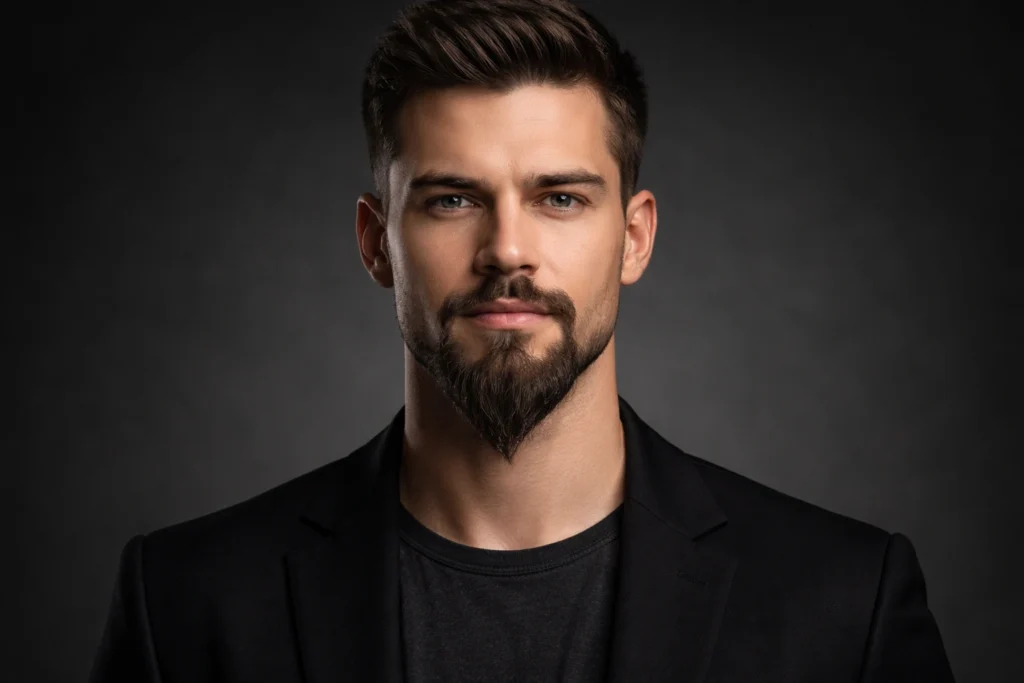
The extended goatee takes the classic goatee shape and lengthens it downward and outward to cover more of the lower face while retaining the defining pointed tip at the chin. The beard extends along the sides of the mouth and down through the jawline area, creating a broader base from which the point emerges. The mustache is typically included and connected to the chin beard for a continuous shape.
This is a flattering style for men with shorter or rounder face shapes because the extended coverage and downward point work together to elongate the lower third of the face considerably. The style also suits men with good beard density because the extended coverage requires relatively even growth across the area. Shaping it well requires attention to symmetry on both sides of the lower jaw and consistent trimming to keep the extension from growing too wide or too long above the point.
The Long Pointed Beard
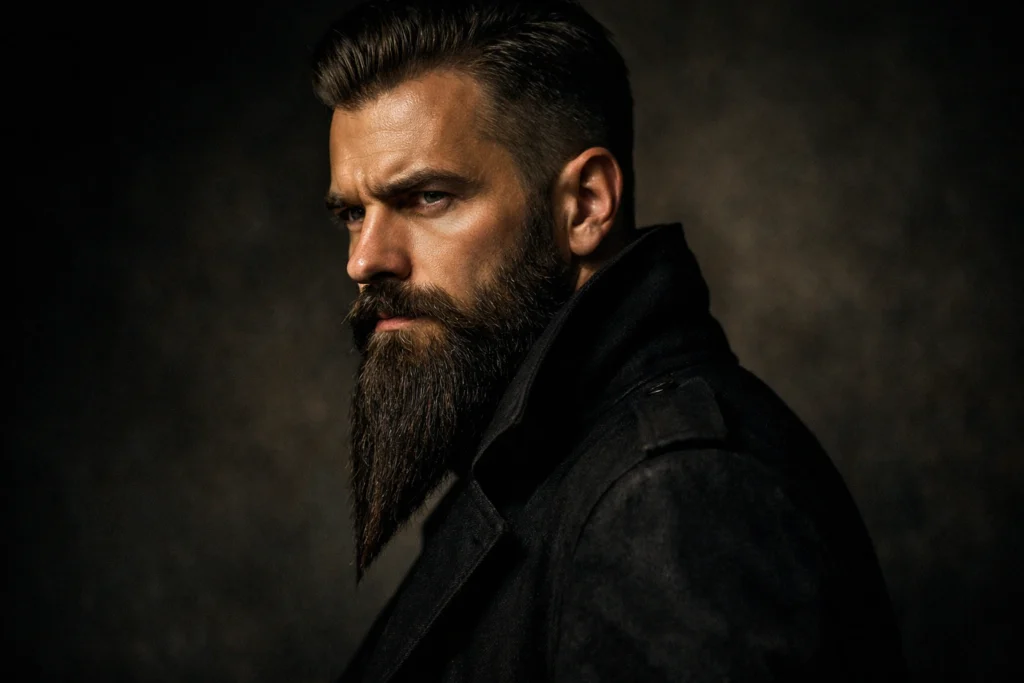
The long pointed beard is a dramatic, commanding style that makes no attempt at subtlety. The beard is grown to a significant length, typically three inches or more below the chin, and shaped throughout to taper progressively toward a sharp, defined point at the end. The sides may be kept fuller or shaped more narrowly depending on preference, but the overall silhouette is always longer than wide.
This style has historical weight. It appears across Renaissance portraiture, Viking grooming tradition, and the contemporary beard competition circuit. For everyday wear, it suits men with angular or rectangular faces who can carry the additional vertical length without the face appearing disproportionate. A good beard comb, beard balm for shaping, and beard wax for the tip are the essential tools for keeping the long pointed beard looking intentional rather than simply unkempt.
The Faded Chin Spike
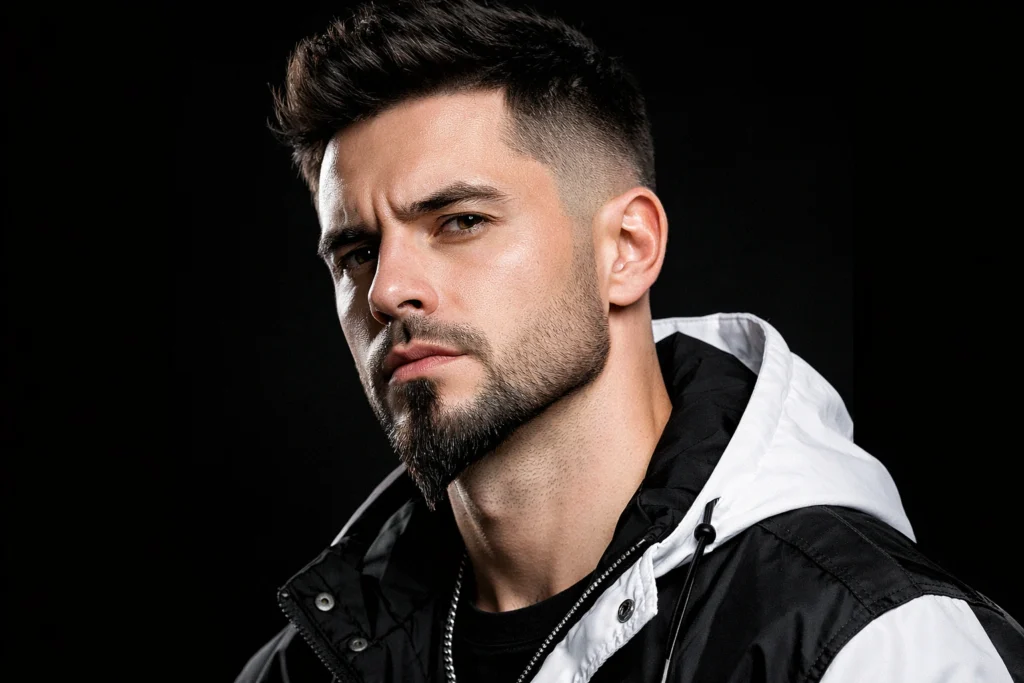
The faded chin spike is one of the most contemporary pointed beard styles, borrowing its aesthetic vocabulary from modern barbershop culture and blending it with the classic chin point. The beard is kept very short or faded cleanly along the sides and cheeks while the chin is left slightly longer and shaped into a tight, defined point. The contrast between the faded sides and the structured chin spike creates a sharp, fashion-forward silhouette.
This style complements modern haircut trends including mid fades, low fades, and burst fades, which is why it appears regularly alongside contemporary hairstyles rather than in more traditional grooming contexts. It suits oval, heart, and square face shapes and works particularly well for men who want a pointed beard style that connects to current aesthetic trends without abandoning the foundational principle of the chin point.
The Balbo with Pointed Chin
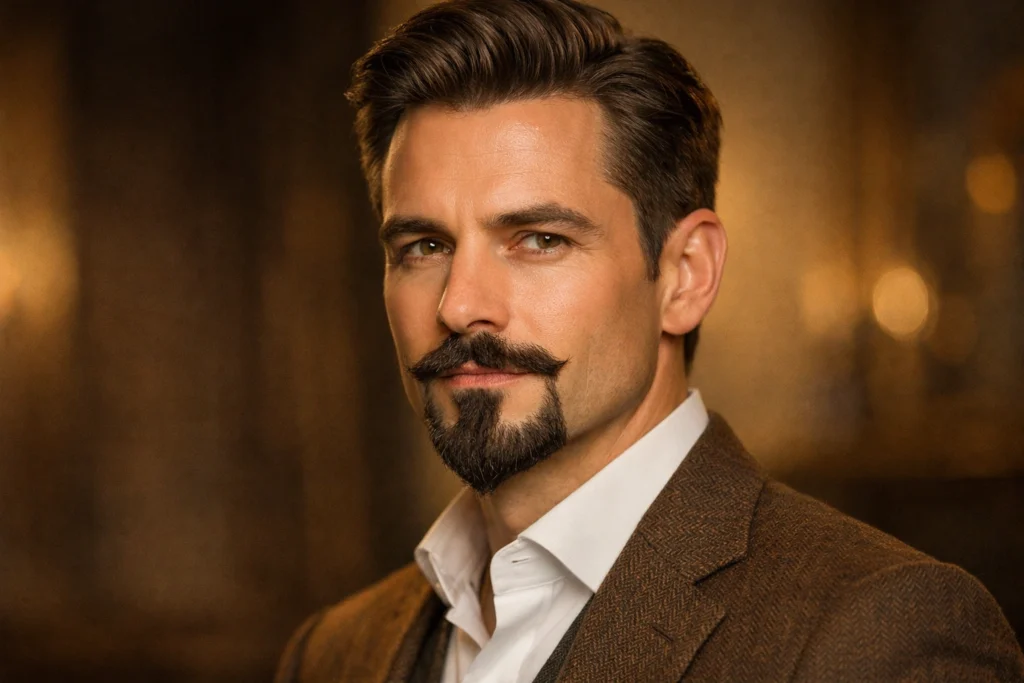
The Balbo beard is defined by its disconnected floating mustache and its sculpted chin beard, and when the chin beard is shaped to a deliberate point, it becomes one of the most refined and visually distinct styles in the entire pointed beard category. Named after Italian aviator Italo Balbo, the style has a European sophistication to it that reads as both artistic and precise.
The cheeks are kept clean-shaven, the mustache is kept entirely separate from the chin piece, and the chin beard is shaped to taper to a clean point below. The effect is a style that looks highly intentional without appearing overdone. It suits oval, round, and heart-shaped faces well and pairs naturally with well-tailored clothing and a grooming routine that values precision. Maintaining the separation between mustache and beard is the most important technical requirement of this style.
Grooming Tools and Maintenance for Pointed Beard Styles
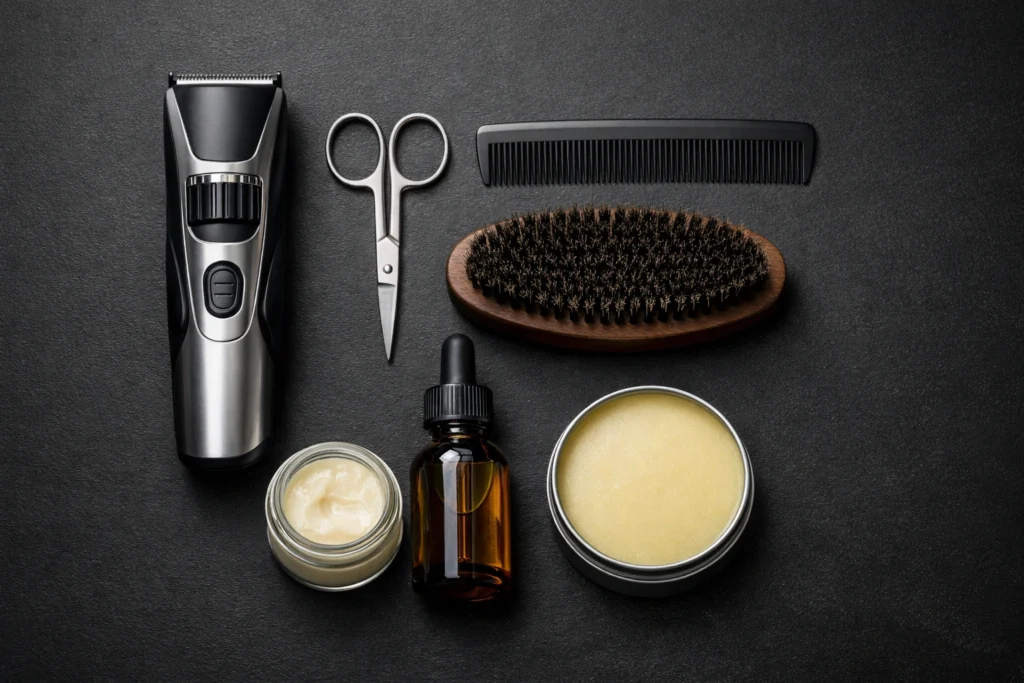
All of the pointed beard styles in this article share one fundamental requirement: consistent, precise maintenance. A pointed beard that is not regularly shaped drifts toward being shapeless, and a shapeless pointed beard loses the structural quality that makes it worth wearing in the first place. Getting the maintenance right is what separates a great pointed beard from a mediocre one.
The essential tools for maintaining any pointed beard style are a quality precision beard trimmer with multiple guard settings, a pair of small grooming scissors for detail work at the tip, a beard comb for daily grooming and shaping, and a boar bristle brush for training the direction of growth. Beard oil applied daily keeps the hair soft and the skin beneath it moisturized, which is essential for men wearing longer or denser styles. Beard balm provides light hold and helps shape the beard into its intended form. For more dramatic pointed styles like the long pointed beard or the faded chin spike, a small amount of beard wax at the tip maintains the point throughout the day.
A visit to a professional barber every two to three weeks is the most reliable way to maintain the symmetry and precise shaping that pointed beard styles require. Between visits, daily grooming with a comb and light product application is usually sufficient for keeping most pointed styles looking sharp. The investment in proper tools and regular upkeep is what transforms a pointed beard from a style choice into a genuine signature of your appearance.
Conclusion
Pointed beard styles have endured across centuries and cultures because they work. They enhance the face, strengthen the jaw, and give any man who wears them correctly a more defined, commanding appearance. From the minimalist short pointed goatee to the theatrical long pointed beard, every style in this article serves the same underlying purpose: to make the man wearing it look more precisely, intentionally himself.
The right pointed beard is not determined by trend alone. It is determined by your face shape, your natural beard density, your daily maintenance commitment, and the kind of image you want your appearance to project. Take the time to understand those factors, choose a style that aligns with them, and maintain it with the discipline every good pointed beard deserves. The result will be a look that commands attention without asking for it, which is ultimately the highest standard in men’s grooming.
You may also like this post: 20 Viking Beard Styles That Are Still Trending in 2026
Frequently Asked Questions
What face shape benefits most from a pointed beard style?
Round faces benefit the most from pointed beard styles. The downward taper of a pointed chin creates vertical length, transforming a circular silhouette into a more angular, elongated shape. Square and oval faces also benefit significantly from various pointed styles.
How long does it take to grow a beard suitable for a pointed style?
Most men need four to eight weeks of uninterrupted growth before there is enough length and density to shape a defined pointed beard. Longer styles like the ducktail or long pointed beard may require three to six months of steady growth before shaping is practical.
What is the difference between a Van Dyke and a goatee?
A classic goatee covers only the chin without necessarily including a mustache, and the mustache when present is typically connected to the chin beard. A Van Dyke specifically features a pointed chin beard paired with a completely detached, standalone mustache with clean-shaven cheeks between them.
How do I keep the tip of my pointed beard sharp between barber visits?
Use small grooming scissors and a precision trimmer to maintain the point at home. Comb the beard downward daily to train the hairs in the right direction, and apply a small amount of beard wax or balm to the tip to hold the shape. Check for symmetry by viewing the beard straight-on in a well-lit mirror.
Which products work best for shaping and maintaining pointed beard styles?
Beard oil is essential for daily softening and skin care beneath the beard. Beard balm provides light hold and helps maintain shape. For the tip of longer or more dramatic pointed styles, a small amount of beard wax provides the strongest hold without making the hair look stiff or unnatural.
1 Comment