Introduction
Few haircuts in modern barbering have earned their reputation as quickly or as decisively as the burst fade. Walk into any barbershop today and you will find reference photos of burst fades pinned to the walls, shared on screens, and requested by men of every age and hair type. The reason for that enduring popularity is simple: the burst fade is one of the most visually striking, technically impressive, and genuinely versatile cuts available in the contemporary grooming landscape.
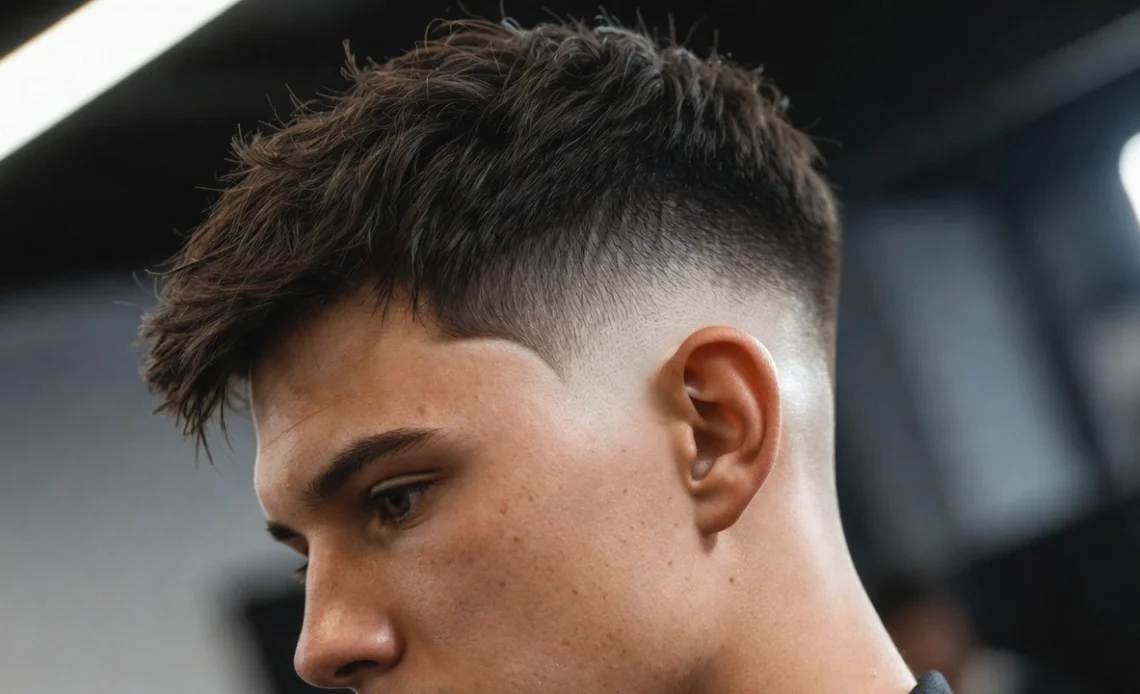
What sets the burst fade apart from other fade variations is its signature curved line. Where a standard taper fade drops straight down the sides of the head in a uniform line, and a drop fade follows a downward arc behind the ear, the burst fade radiates outward from behind the ear in a semicircular pattern. The result is a rounded, almost explosive shape that creates a dynamic halo of contrast around the ear, giving the entire haircut an architectural quality that no other fade technique can replicate.
That distinctive shape is also what makes the burst fade such a powerful partner for so many different top styles. Because the fade preserves more length at the back of the head than a conventional taper, it creates a natural foundation for longer back styles like the mullet and the mohawk, while still delivering the sharp, clean contrast that men with cropped tops are looking for. It is genuinely one of the most adaptable techniques in the barber’s toolkit.
This guide covers 16 of the most popular burst fade haircuts available today, examining what makes each one work, who it suits best, and how to maintain and style it at home between barbershop visits. Whether you are discovering the burst fade for the first time or looking to refine a style you already wear, these 16 options give you a complete picture of what this cut can do.
Burst Fade with Textured Crop
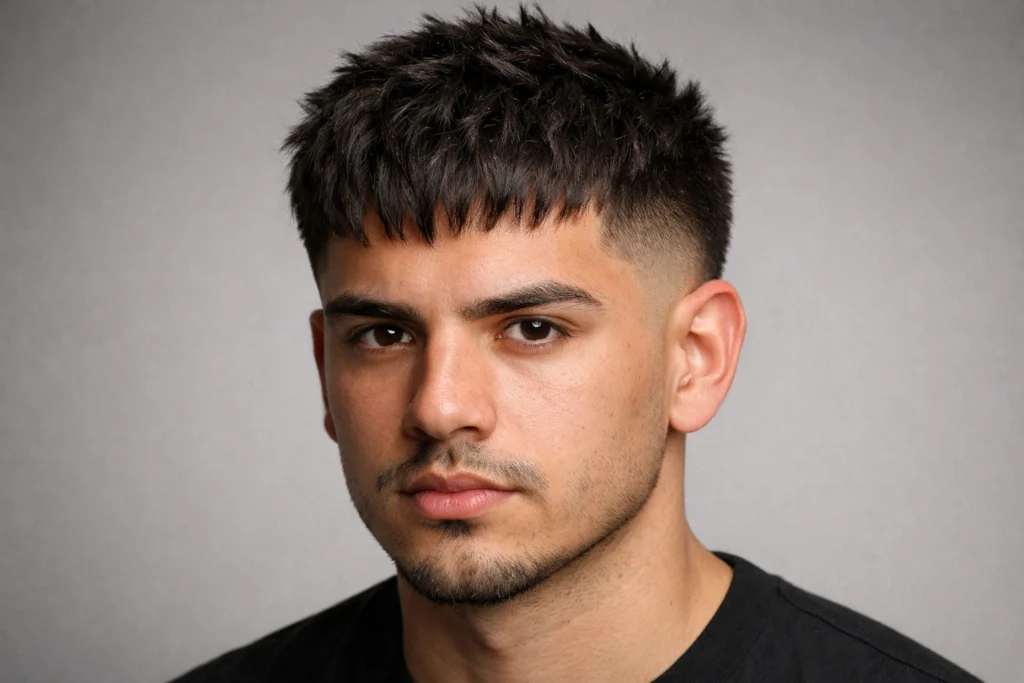
The combination of a burst fade and a textured crop is one of the most requested pairings in barbershops across the world, and it is easy to understand why. The textured crop brings a clean, choppy separation to the top while the burst fade wraps around the ear in its characteristic curved arc, creating a look that is simultaneously sharp and natural. The contrast between the close fade and the textured top is the defining visual element of this combination.
This pairing works across a wide range of hair types, from straight to moderately wavy, and suits oval, square, and round face shapes equally well. Styling requires nothing more than a small amount of matte paste or clay worked through slightly damp hair and finger-styled for natural separation. The burst fade with textured crop is the ideal starting point for any man discovering this technique for the first time.
Burst Fade Mohawk
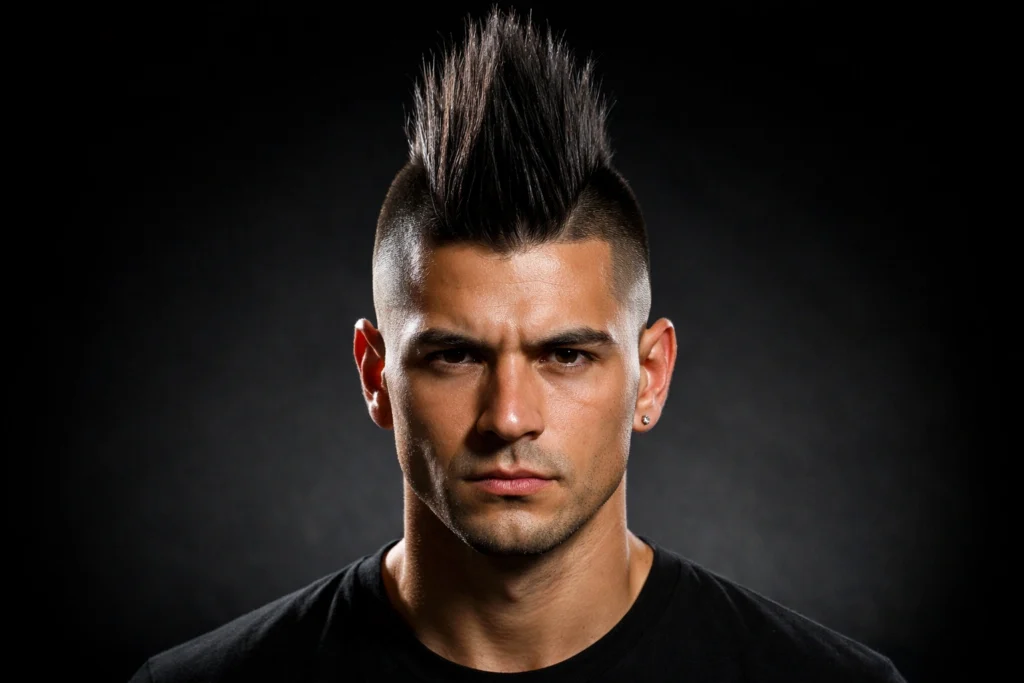
The burst fade mohawk is one of the boldest and most visually dramatic haircuts in mainstream men’s grooming. The mohawk strip running from the forehead to the crown is elevated and sharpened by the burst fade that sweeps around the ear on each side, creating a clean frame that makes the central strip appear even more prominent and powerful. This is a haircut that commands attention and makes an unmistakable personal statement.
The key to the burst fade mohawk is proportion. The strip should be wide enough to create genuine volume at the top without appearing exaggerated, and the burst fade should be executed with precision to keep the curved line symmetrical on both sides. Matte paste or a light wax applied to the strip and worked upward with a comb or fingers creates the height and definition the style needs to perform at its best.
Burst Fade Mullet
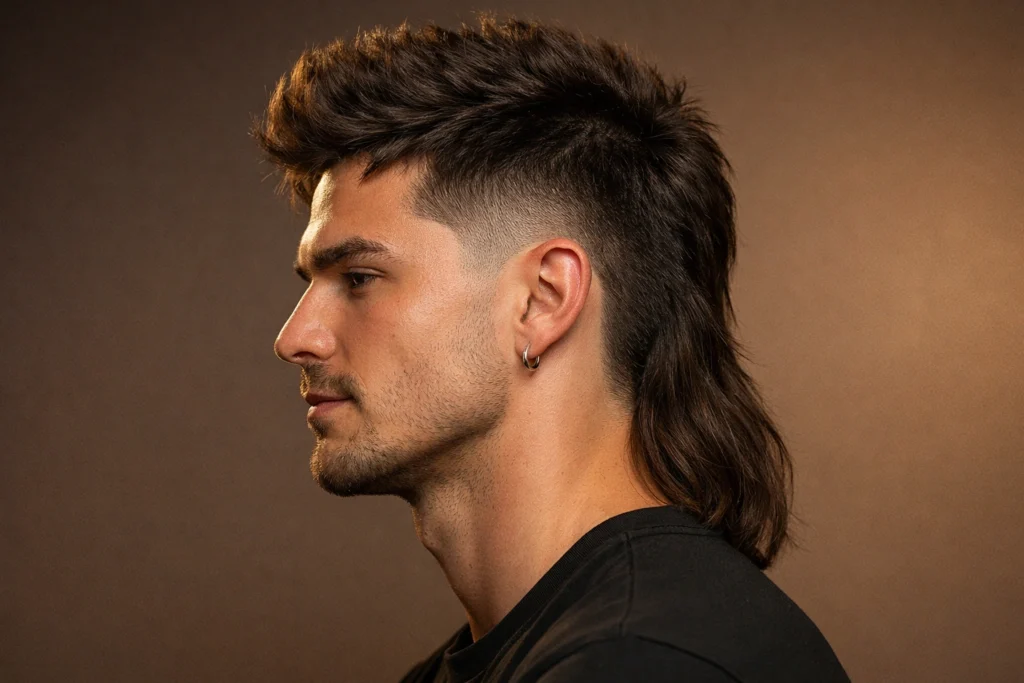
The burst fade mullet is among the most talked-about hybrid hairstyles in contemporary men’s grooming, and its continued presence in barbershop conversations confirms that it has genuine staying power. The mullet’s longer back section and the burst fade’s curved side taper are natural companions because the fade preserves length at the nape of the neck, creating a seamless transition into the extended back of the mullet rather than the abrupt cutoff that a standard taper would produce.
The modern version of this combination features a clean, well-shaped back rather than the shapeless length that gave earlier mullet variations their controversial reputation. A defined neckline and a shaped back section, paired with a textured top and a precise burst fade on the sides, produces a result that reads as genuinely stylish rather than throwback. Sea salt spray through damp hair and air drying produces the natural movement this style needs.
Low Burst Fade
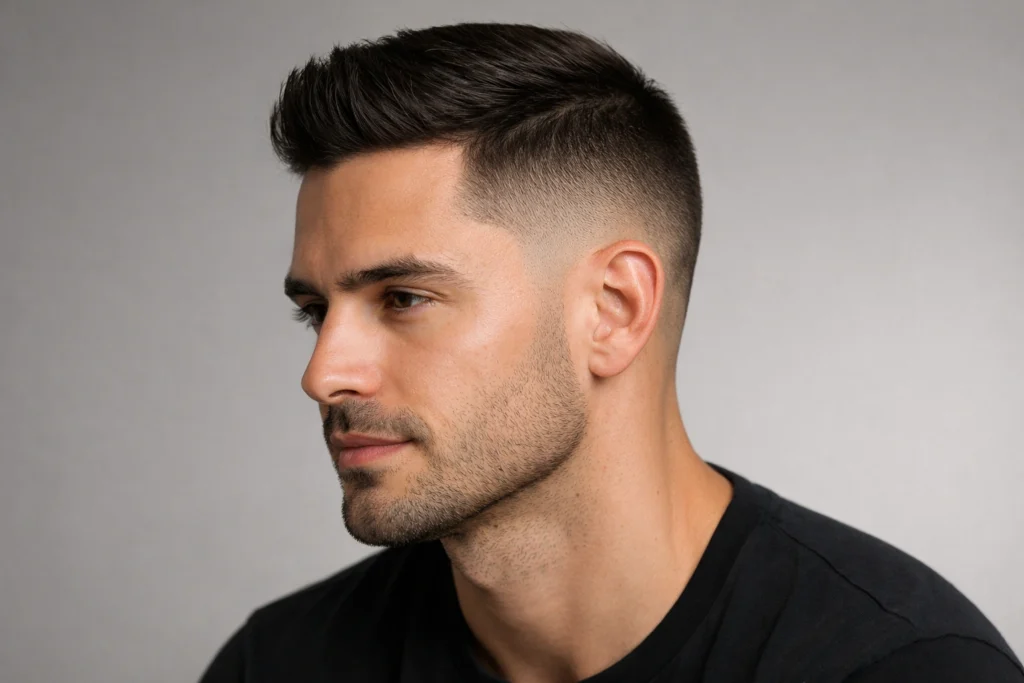
For men who want the distinctive curved shape of the burst fade without the high-contrast drama of a skin or high fade, the low burst fade is the answer. The fade begins close to the natural hairline, staying low on the sides and creating a subtle, refined version of the characteristic arc around the ear. The result is a polished, professional-appropriate interpretation of the burst fade that suits conservative environments without sacrificing the modern edge of the technique.
The low burst fade works particularly well when paired with classic top styles like the side part, the comb-over, and the ivy league cut, where the overall aesthetic leans toward sophistication rather than boldness. It is a cut that reads as well-groomed and intentional without crossing into territory that might create friction in formal professional settings. Maintenance every three to four weeks keeps the fade line clean and the overall shape well-defined.
High Burst Fade
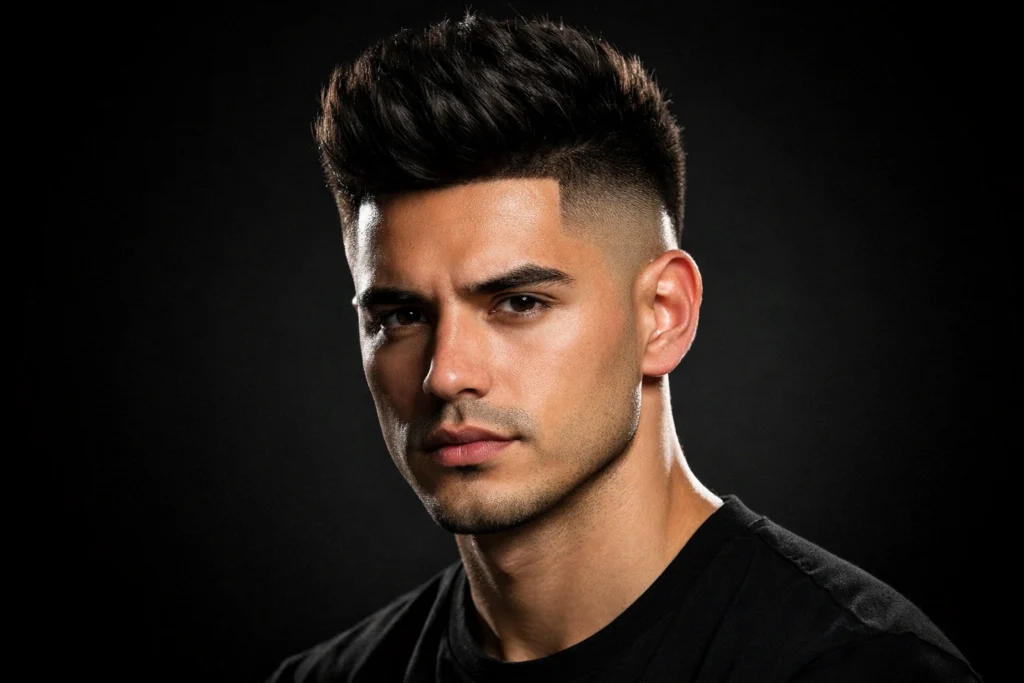
At the opposite end of the contrast spectrum from the low version, the high burst fade starts much closer to the temples and creates a significantly more dramatic visual statement. The fade arc begins high on the sides, dramatically framing the top section and creating a strong, eye-catching silhouette that photographs exceptionally well and reads as bold and confident in person.
The high burst fade suits men who are comfortable standing out and who choose their haircuts as a form of deliberate personal expression. It pairs naturally with larger, more voluminous top styles, such as the pompadour, the high-top, and the textured quiff, where the generous length on top creates a proportional balance with the dramatic high fade on the sides. Visiting the barber every two to three weeks is essential to keep the high fade line sharp.
Skin Burst Fade
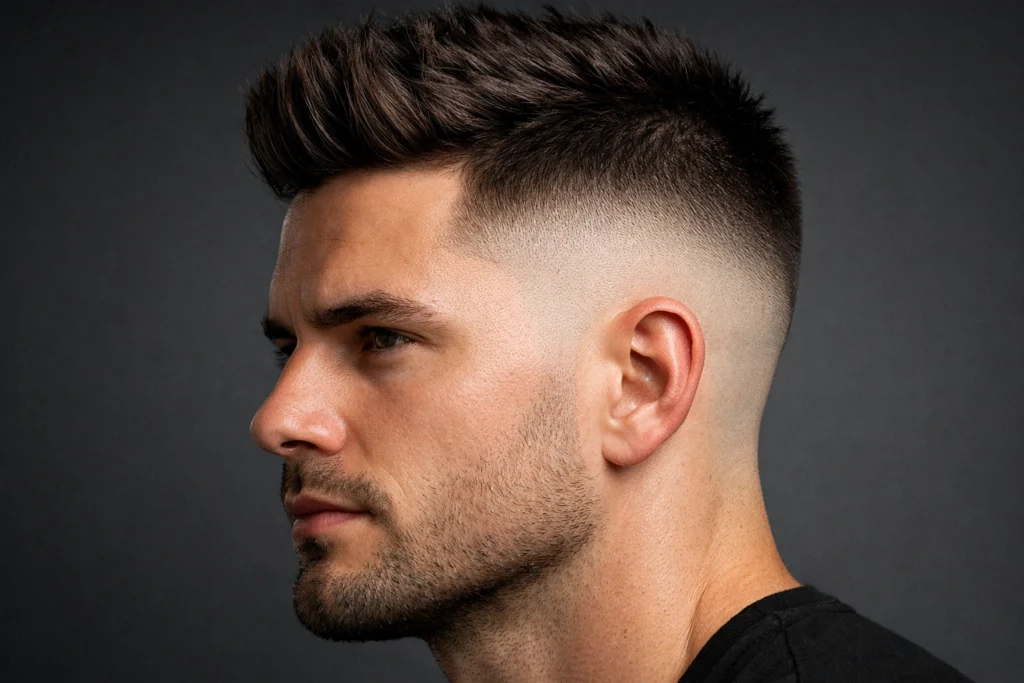
The skin burst fade takes the technique to its most extreme and visually arresting conclusion by blending the sides all the way down to bare skin. The result is maximum contrast between the natural hair above and the bare skin below, with the characteristic curved arc of the burst fade creating a clean, almost graphic line that stands in sharp relief against the scalp.
This is one of the sharpest and most technically demanding fade variations available, and the quality of the execution depends entirely on the skill of the barber performing it. A well-executed skin burst fade on the right face shape and top style is genuinely breathtaking in its precision. It requires maintenance every two weeks at most to keep the bare skin areas clean and the fade line sharp. Moisturizing the faded skin areas is an important part of home care for this style.
Burst Fade with Curly Hair
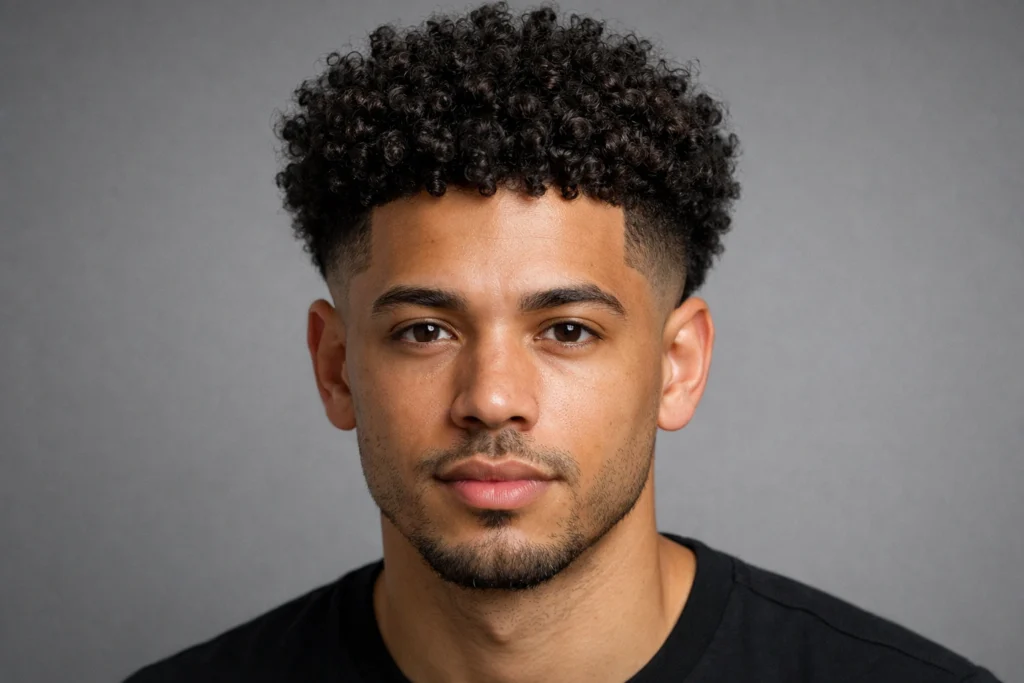
For men with naturally curly hair, the burst fade is one of the most effective and flattering techniques available because it manages volume on the sides while allowing the natural texture and fullness of curly hair to take center stage on top. The curved fade arc creates a clean frame around the ears that gives the curls above it a structured, intentional appearance rather than a purely natural one.
The burst fade with curly hair works across the full spectrum of curl types, from loose waves to tight coils. A defining curl cream or a light gel applied to damp hair and left to air dry produces the best result, preserving the natural curl pattern without creating crunchiness or stiffness. For men with very tight curls, a pick or afro comb can be used to gently lift and shape the top before product application.
Burst Fade with Braids
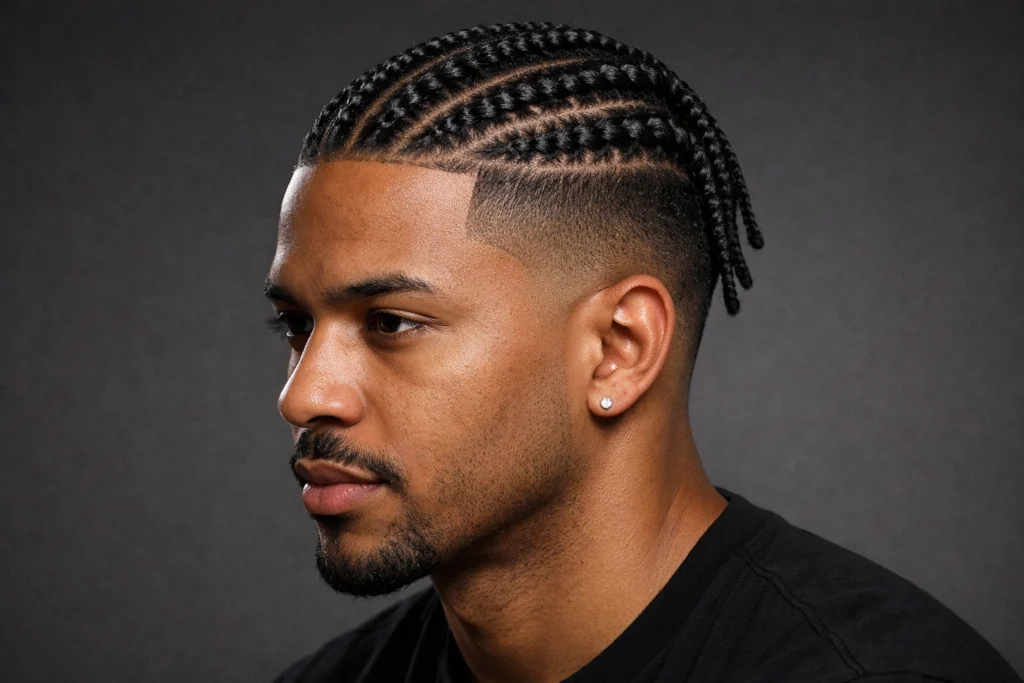
The combination of a burst fade and braided top styles represents one of the most creative and culturally rich expressions of the technique available. The clean, curved fade line provides a sharp, defined base from which the braids extend upward, creating a strong visual contrast between the close-cropped sides and the structured, intricate top. Box braids, cornrows, and two-strand twists all work beautifully with a burst fade foundation.
This combination suits men who want their haircut to reflect both precision barbering and the artistry of traditional braiding techniques. The maintenance approach is divided between keeping the fade line sharp with regular barbershop visits and caring for the braids themselves with appropriate moisturizing oils and protective styling products. A silk or satin sleep cap helps preserve the braids and the scalp between appointments.
Burst Fade Pompadour
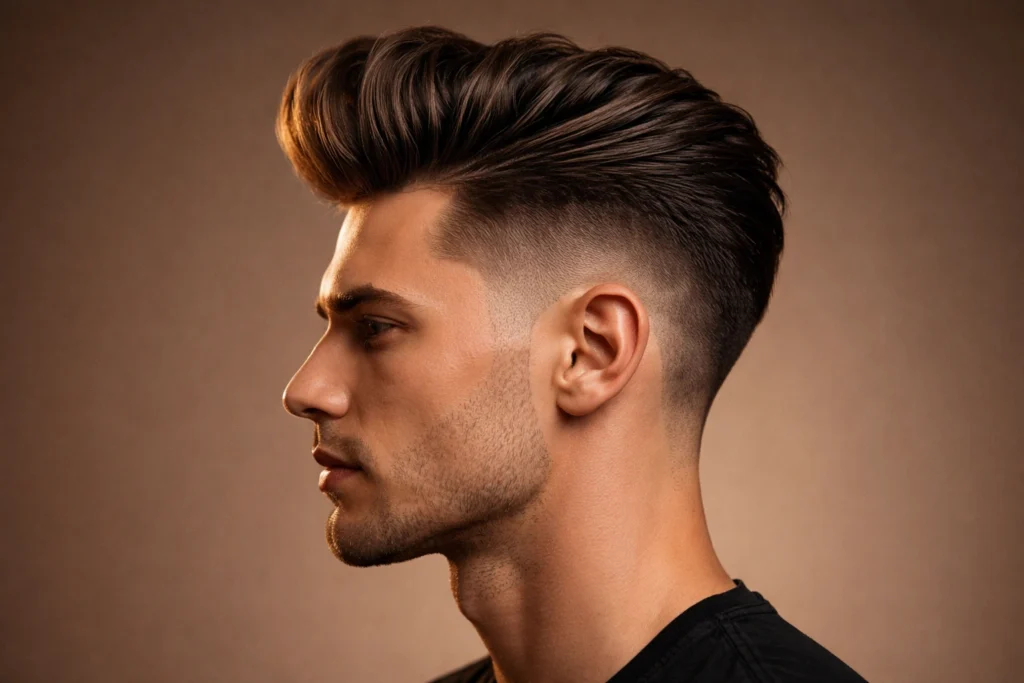
The burst fade pompadour brings together two of the most enduring silhouettes in men’s hairstyle history and updates them for a contemporary audience. The pompadour’s swept-back volume at the front creates genuine height and presence, while the burst fade’s curved arc on the sides frames that volume with a crisp, modern precision that the original pompadour never had.
The modern interpretation uses a matte or low-sheen product rather than the high-gloss lacquered finish of the classic pompadour, giving the overall look a current, effortless quality. A volumizing cream applied before blow-drying establishes the lift and shape, and a small amount of matte clay applied through the dry top section creates the separation and hold needed to keep the shape through the day. The burst fade pompadour suits oval and oblong face shapes particularly well.
Burst Fade with Designs and Line Work
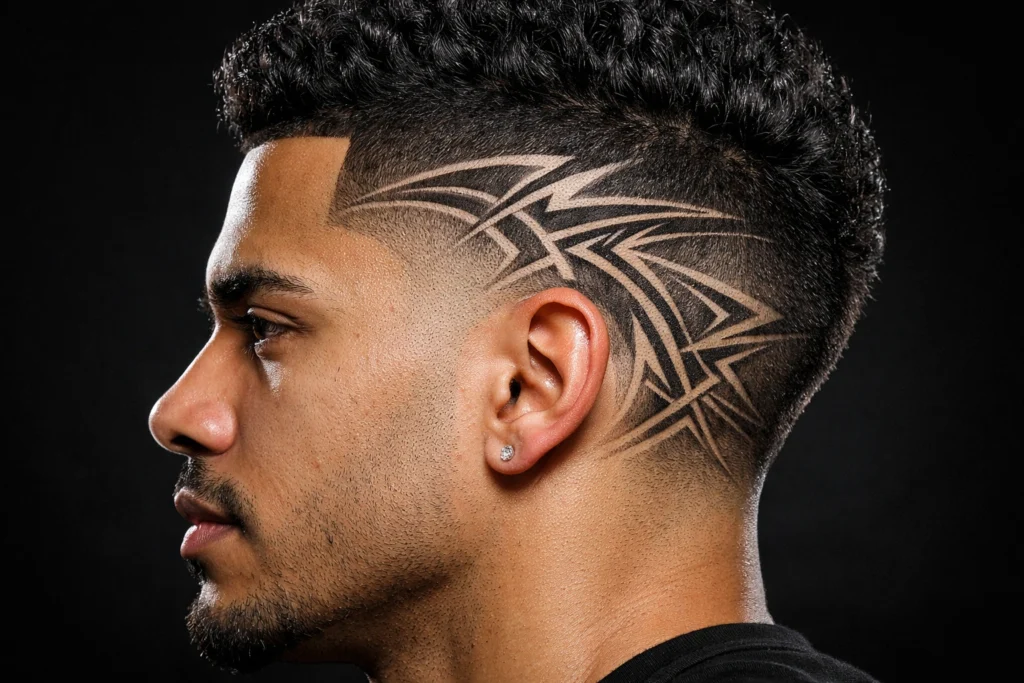
For men who want to take the burst fade beyond a haircut and into the territory of wearable art, adding razor-cut designs and line work into the faded area transforms the style into something genuinely unique and personalized. Geometric shapes, tribal patterns, lightning bolts, and abstract line work carved into the faded sides of a burst fade create a custom piece of visual art that no one else in the room will be wearing.
The artistry required for quality line work demands a barber with specific skills in precision design cutting, so choosing the right professional for this variation is especially important. The designs are typically visible for one to two weeks before regrowth begins to soften the lines, meaning this is a high-maintenance variation that suits men who are committed to frequent barbershop visits and who regard their haircut as an ongoing creative expression.
Burst Fade Comb-Over
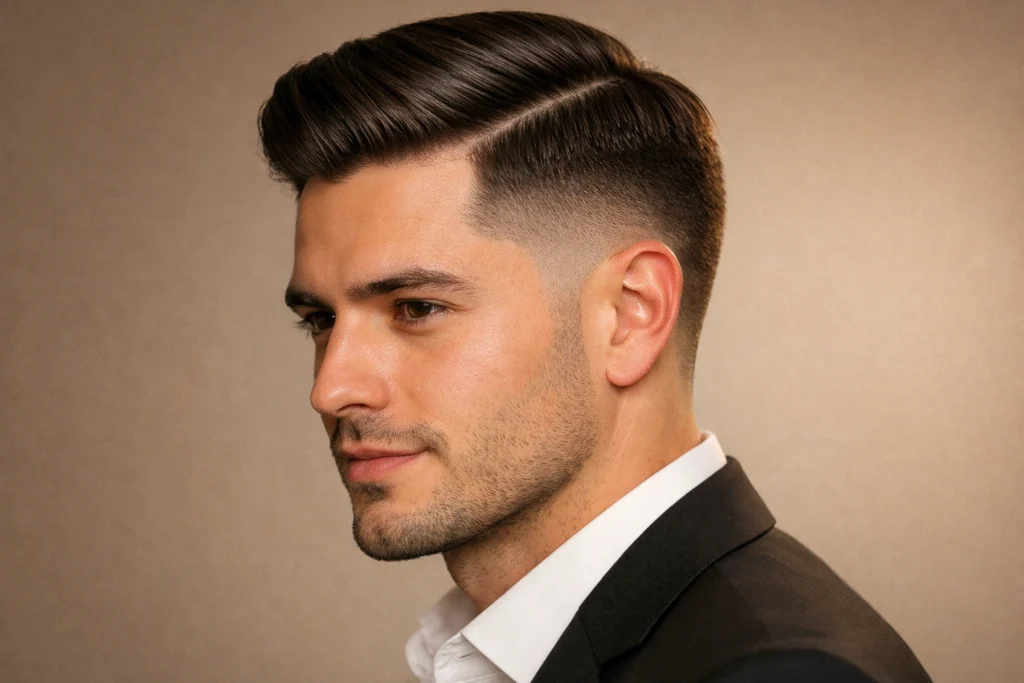
The burst fade comb-over pairs the classic side-swept top with the modern drama of the burst fade to create a look that bridges formal sophistication and contemporary edge. The hair on top is swept to one side and styled with either a natural or defined part, while the burst fade on the sides creates the curved contrast that gives the entire composition its modern character.
This combination works exceptionally well for men in professional or formal environments who want a current haircut that still communicates polish and control. A light matte pomade or a medium-hold cream applied to the top and combed through with a fine-tooth comb produces a clean, intentional finish. The comb-over element also makes this a strong option for men with thinning hair on top, as the sideways sweep creates a natural sense of coverage and density.
Burst Fade with Dreadlocks
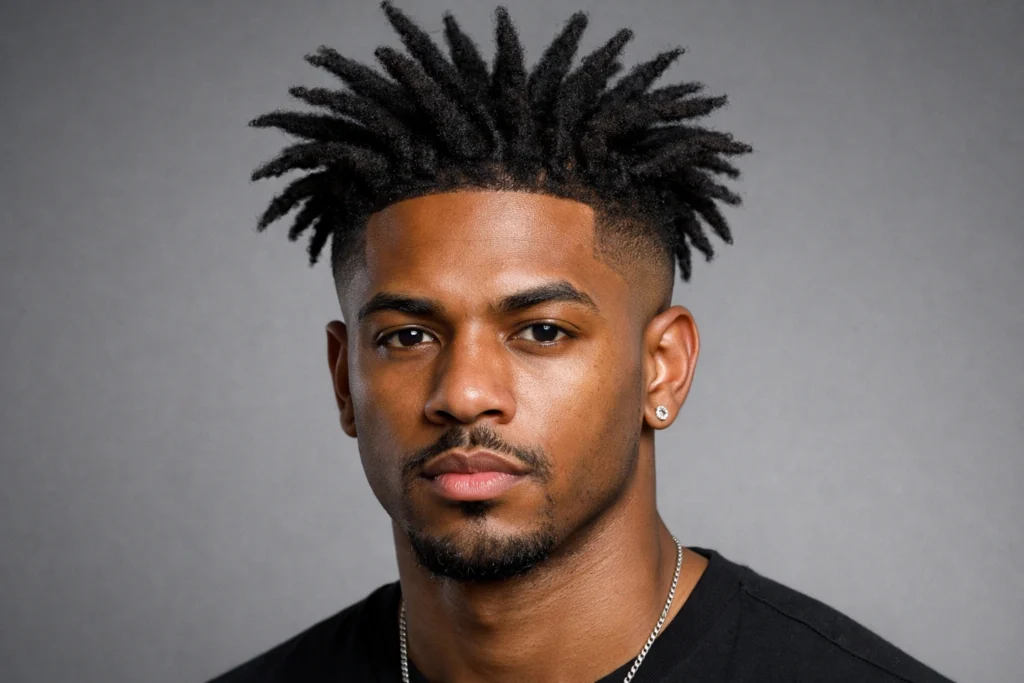
The burst fade with dreadlocks is a combination that produces one of the most striking and culturally resonant hairstyles in contemporary men’s grooming. The clean, curved fade on the sides creates a sharp perimeter that makes the natural volume and length of the dreadlocks above appear more structured and intentional without interfering with the organic beauty of the locks themselves.
This pairing works at any stage of the dreadlock process, from shorter starter locs to fully mature, long locs. The fade provides definition and freshness to a style that can otherwise appear heavy or undefined on the sides. Regular barbershop maintenance for the fade every three to four weeks, combined with proper locking and moisturizing care for the dreadlocks, keeps the overall look clean and well-maintained.
Burst Fade with Taper
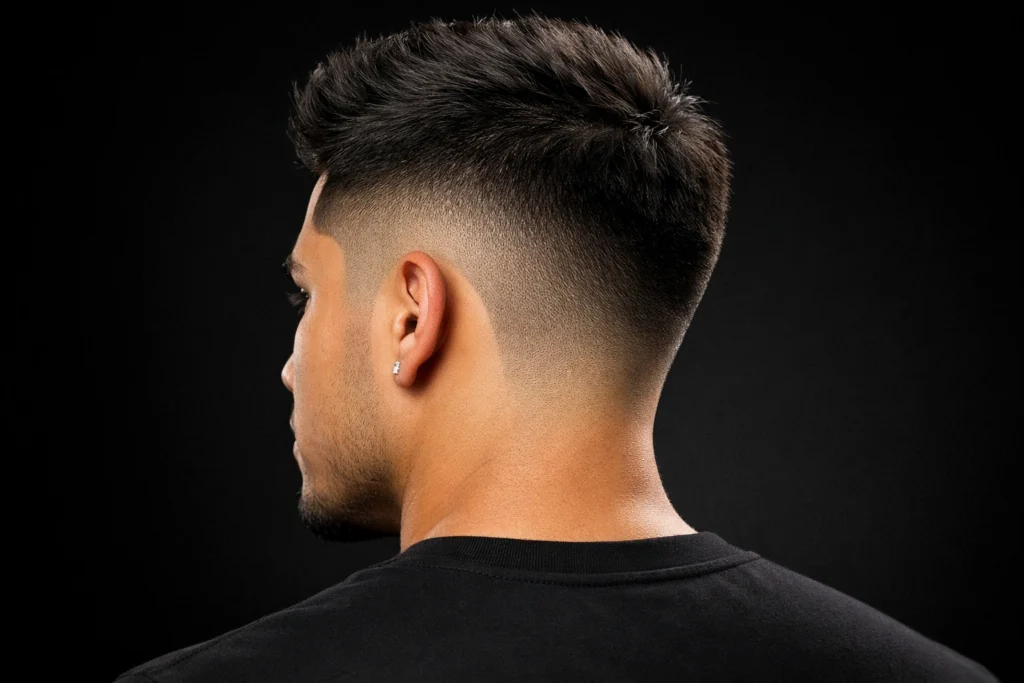
Combining a burst fade with a taper creates a hybrid technique that offers the best qualities of both approaches. The burst fade’s distinctive curved arc around the ear handles the sides and the temple area, while a taper takes over at the neckline and the lower back of the head, creating a complete, well-finished perimeter. The result is a cleaner, more polished overall silhouette than a burst fade alone typically produces.
This combination is particularly popular for men who want the visual drama of the burst fade on the sides combined with a clean, professional neckline finish. It is one of the more technically demanding combinations to execute well, requiring a barber who is equally skilled in both techniques. The burst fade with taper suits virtually all face shapes and hair types and is one of the most complete-looking haircuts on this list.
Burst Fade with Afro
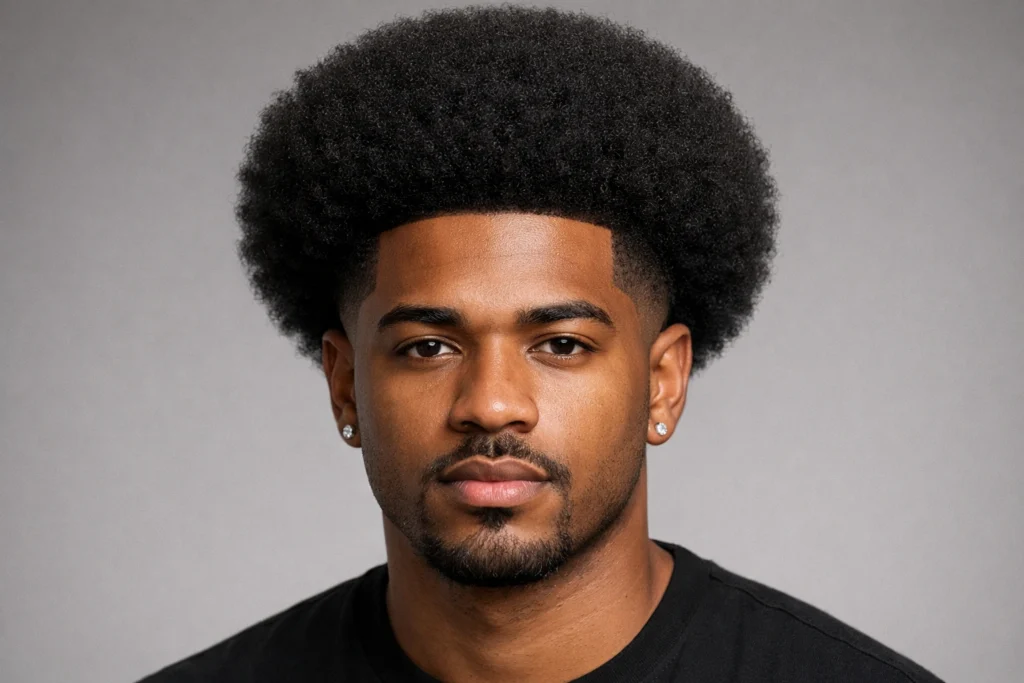
For men with natural afro texture, the burst fade provides one of the cleanest and most flattering frames available for showcasing the volume and shape of their natural hair. The curved fade around the ear creates a defined boundary between the close-cropped sides and the full, rounded afro on top, giving the overall shape a sense of intentional structure that celebrates rather than subdues the natural texture.
The burst fade afro requires a barber who is experienced with both the fade technique and with shaping and maintaining afro hair, as the top section benefits from careful shaping to create a clean, rounded silhouette rather than an uneven or asymmetric shape. Moisturizing regularly with a leave-in cream or natural oil keeps the scalp and hair healthy, and a pick or afro comb helps maintain the shape and volume of the top between visits.
Mid Burst Fade
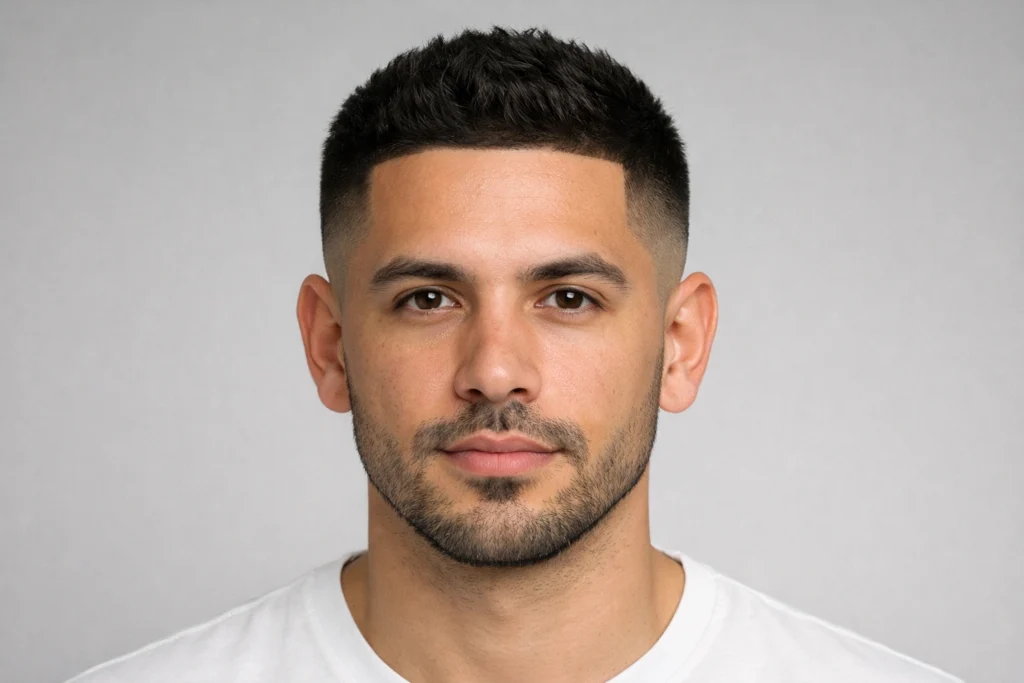
The mid burst fade positions the fade line at the midpoint of the sides, starting roughly at the level of the temples and creating a balanced, visually moderate version of the technique that sits between the subtlety of the low burst fade and the drama of the high version. It is the most universally flattering burst fade variation because it suits the widest range of face shapes and top styles without requiring either a bold personal statement or a deliberately conservative approach.
For men who are trying the burst fade for the first time and are uncertain about how dramatic they want the contrast to be, the mid burst fade is the safest and most reliable starting point. It pairs naturally with nearly every top style on this list and provides a foundation that can be adjusted in either direction at future appointments once the wearer has a clearer sense of their preference.
Burst Fade with Beard
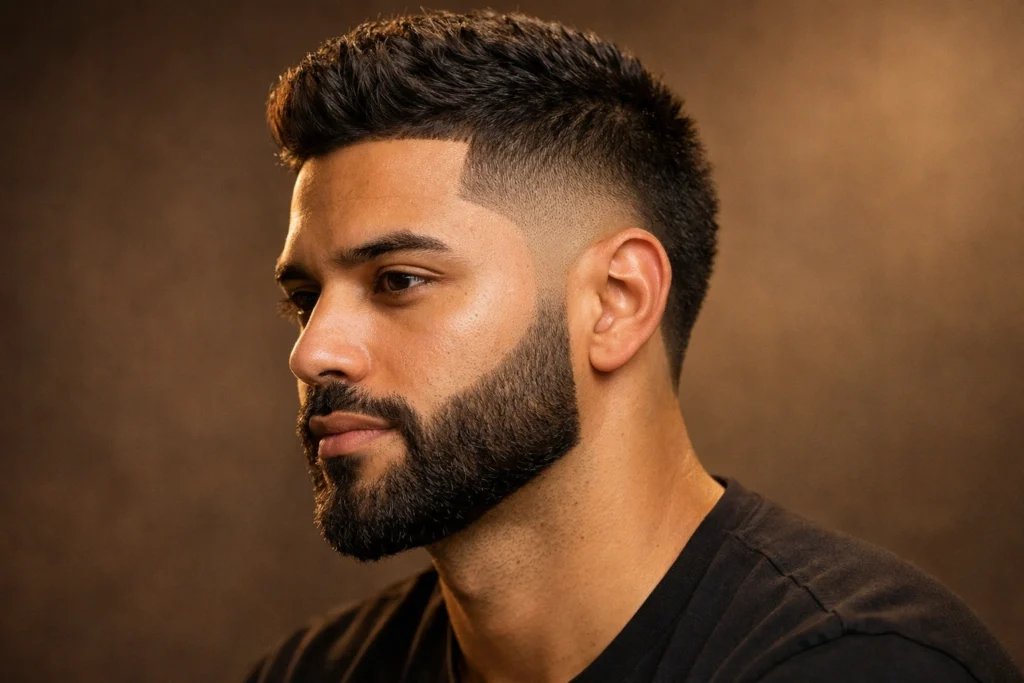
Pairing a burst fade with a well-groomed beard creates one of the most complete and sophisticated looks in contemporary men’s grooming. The curved fade arc on the sides creates a deliberate frame that connects naturally to the upper boundary of the beard, allowing the two elements to work together as a unified composition rather than as separate independent features of the face.
The key to making the burst fade and beard combination work is the connection point between the fade and the beard line. A skilled barber will ensure that the fade transitions cleanly into the beard outline, creating a seamless flow rather than a jarring discontinuity. Short, medium, and full beards all work with this combination, though a short or medium beard generally produces the cleanest and most balanced overall result. Regular beard maintenance with a natural beard oil or balm keeps the facial hair healthy and soft alongside the sharp precision of the fade.
How to Choose the Right Burst Fade for Your Face Shape
With 16 variations laid out, the practical question of which one to choose requires an understanding of how different burst fade heights and top styles interact with the natural proportions of different face shapes. Men with oval faces have the most flexibility and can wear virtually any variation on this list with confidence. Square face shapes benefit from burst fade variations that add height at the crown, such as the mohawk or pompadour combination, which draws the eye upward and balances the strong jaw. Round faces benefit from high burst fades that create a taller, more elongated silhouette. Oblong faces are best served by mid or low burst fades that add some width at the sides rather than further elongating the face with excessive height.
Hair type plays an equally important role. Men with thick hair can handle any burst fade variation but may benefit most from high or skin burst fades that remove significant bulk from the sides. Fine hair benefits from mid to low burst fades that preserve some visual density on the sides. Curly and coily hair types are naturally suited to the higher contrast variations because the volume of the natural texture on top creates a proportional balance with the dramatic fade on the sides.
Conclusion
The burst fade has earned its place at the center of modern men’s haircut culture not through trend cycles or social media moments but through genuine versatility, technical distinction, and a visual impact that no other fade variation can quite replicate. Its signature curved arc around the ear is both a technical achievement and a design statement, and its compatibility with virtually every top style in the barbershop makes it one of the most adaptable techniques available to any man who walks through the door.
The 16 variations covered in this guide represent the full range of what the burst fade can do, from the subtle professionalism of the low burst fade comb-over to the bold artistry of the skin burst fade with designs. Each one carries its own character, its own maintenance requirements, and its own ideal context.
The best next step is a consultation with a barber who is skilled in the burst fade technique. Bring reference photos of the variation that resonates with you, be honest about your lifestyle, your face shape, and how much time you want to spend on daily styling, and trust an experienced professional to translate your vision into a sharp, modern result that feels exactly right.
You may also like this post: 18 Sharp & Modern Textured Haircuts for Men in 2026
Frequently Asked Questions
What exactly is a burst fade haircut?
A burst fade is a specific fade technique where the hair is tapered in a semicircular arc that radiates outward from behind the ear. Unlike a standard taper that drops in a straight horizontal line, the burst fade creates a curved, rounded shape around the ear that gives the overall haircut a distinctive, dynamic silhouette.
How is a burst fade different from a drop fade?
A drop fade curves downward behind the ear, dropping below the natural hairline toward the nape of the neck. A burst fade radiates outward from the ear in a rounded, semicircular arc that preserves more length at the back of the head. The burst fade creates a rounder, more expansive shape while the drop fade produces a more downward, elongated arc.
How often should I visit the barber to maintain a burst fade?
For most burst fade variations, a barbershop visit every two to three weeks is recommended to keep the curved fade line clean and sharp. Skin burst fades require more frequent visits given how quickly regrowth becomes visible on bare skin, while low burst fades on longer top styles can sometimes be maintained for up to four weeks between appointments.
What hair types work best with a burst fade?
The burst fade works across virtually all hair types including straight, wavy, curly, coily, thick, and fine hair. It is particularly effective for men with naturally curly or coily hair because the curved fade creates a defined structure around the ears that frames the natural texture of the top beautifully. Thick hair benefits significantly from the bulk removal that the fade provides on the sides.
What should I ask my barber for when requesting a burst fade?
Tell your barber you want a burst fade and specify whether you want it low, mid, or high on the sides, and whether you want it to blend to skin or stop short of the skin for a less dramatic result. Bring a reference photo of the specific variation you have in mind, describe the top style you want paired with it, and discuss your face shape and hair type so the barber can advise on the best proportions for your individual features.