Introduction
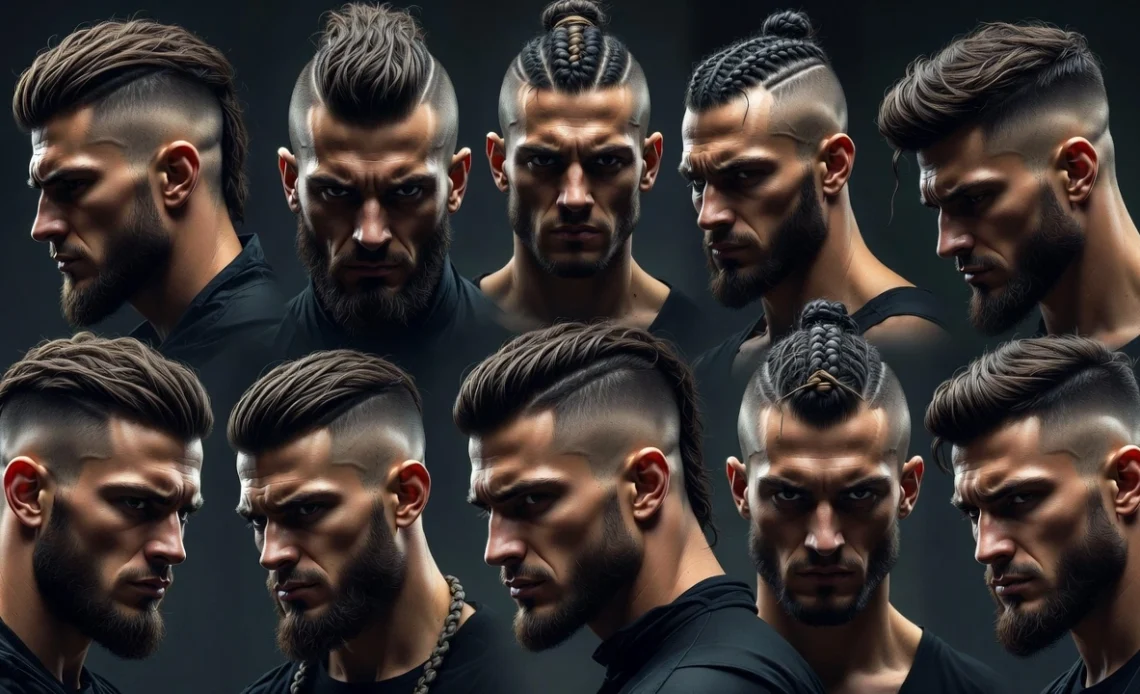
Throughout history, warriors have been recognized not just by their armor or their courage, but by the way they wore their hair. From the bold mohawks of ancient Celtic fighters to the disciplined top knots of Japanese samurai, hair has always been a powerful symbol of identity, rank, and raw masculine energy. Today, that legacy lives on in some of the most compelling men’s haircut trends circulating barbershops and social media alike.
Warrior-inspired haircuts for men are not merely a style choice. They are a declaration. These cuts carry the weight of centuries of battle-hardened tradition, filtered through modern grooming techniques and adapted for the man who wants to project confidence, edge, and a sense of purposeful strength. Whether you are drawn to the controlled chaos of the classic warrior cut, the ancient dignity of a samurai bun, or the fierce lines of a Viking braid, there is a warrior-inspired style that fits your personality and your face shape.
This article breaks down 12 of the most compelling warrior-inspired haircuts for men, covering what makes each one distinct, how to wear it, and what kind of man it suits best. By the end, you will have a clear picture of which style aligns with your vision and how to walk into your next barbershop appointment with confidence.
The Classic Warrior Cut
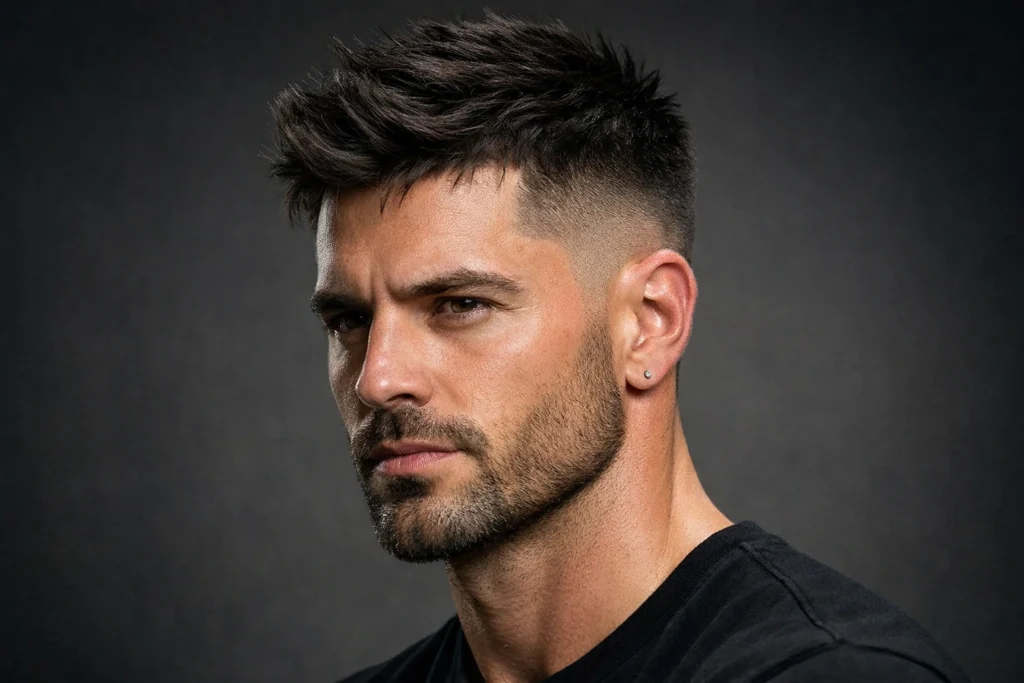
The warrior cut is the style that started the modern conversation. At its core, it is a low taper fade on the sides and back, paired with longer, point-cut textured layers on top. The result is a look that balances structure with deliberate messiness, giving off the impression that you rolled out of bed looking exactly this good.
The top typically requires about three to four inches of length to achieve the signature spiked and tousled effect. Too short and you lose the volume. Too long and the style loses its edge. Your barber will use point cutting to create choppy, uneven layers that move naturally and hold texture without looking overdone.
This cut suits men with square, rectangle, or diamond face shapes particularly well, as the volume on top plays beautifully against strong, defined features. Medium to thick hair is ideal, though fine hair can still pull it off with the right products, specifically a lightweight clay or texture powder that adds grip without weighing the strands down.
To style the classic warrior cut, start with damp hair after a shower. Apply a sea salt spray or volumizing mousse and work it through with your fingers. Finish with a matte clay for hold and definition. The goal is controlled chaos, not a polished finish.
The Warrior Fade
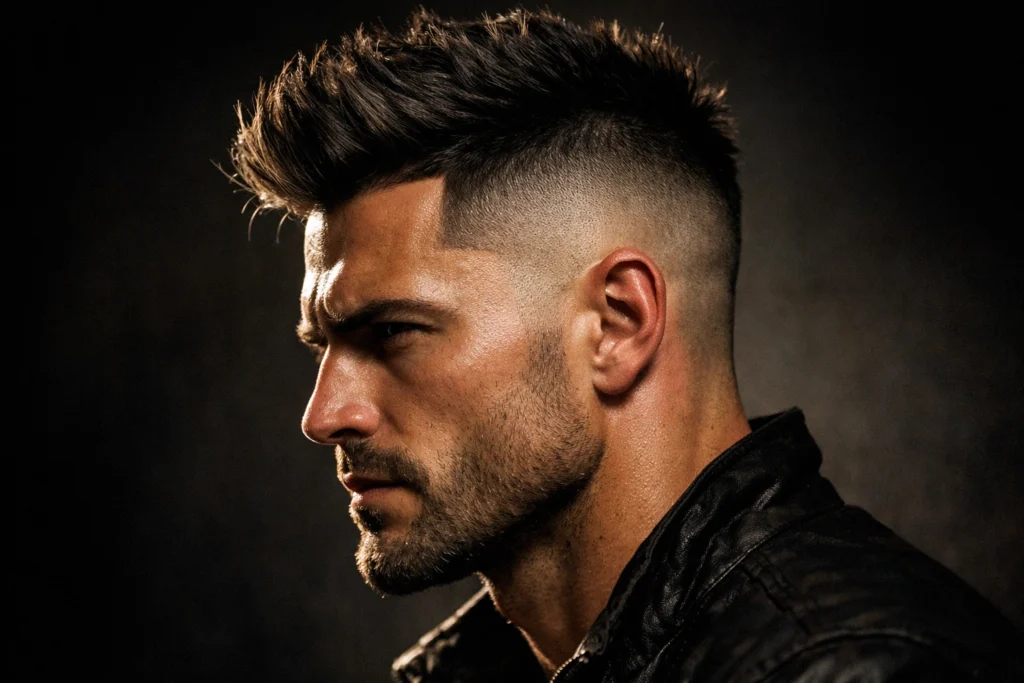
The warrior fade takes the classic concept and sharpens it considerably. Where the original version tends toward a softer, more blended taper, the fade variation introduces a crisp, high-contrast transition from skin to hair. The sides are faded cleanly, sometimes all the way down to the skin, while the top maintains its textured, voluminous character.
This version of the warrior haircut is ideal for men who want a cleaner, more sculpted silhouette. It reads as both bold and disciplined, capturing the spirit of a fighter who takes pride in his appearance without sacrificing attitude. The fade can be set at a low, mid, or high level depending on how much contrast you want.
Pair this cut with a defined line-up at the hairline for an extra layer of sharpness, and consider adding a subtle part to give the top some additional structure. This is a barbershop-friendly cut that requires regular maintenance, ideally every three to four weeks, to keep the fade looking crisp.
The Samurai Top Knot
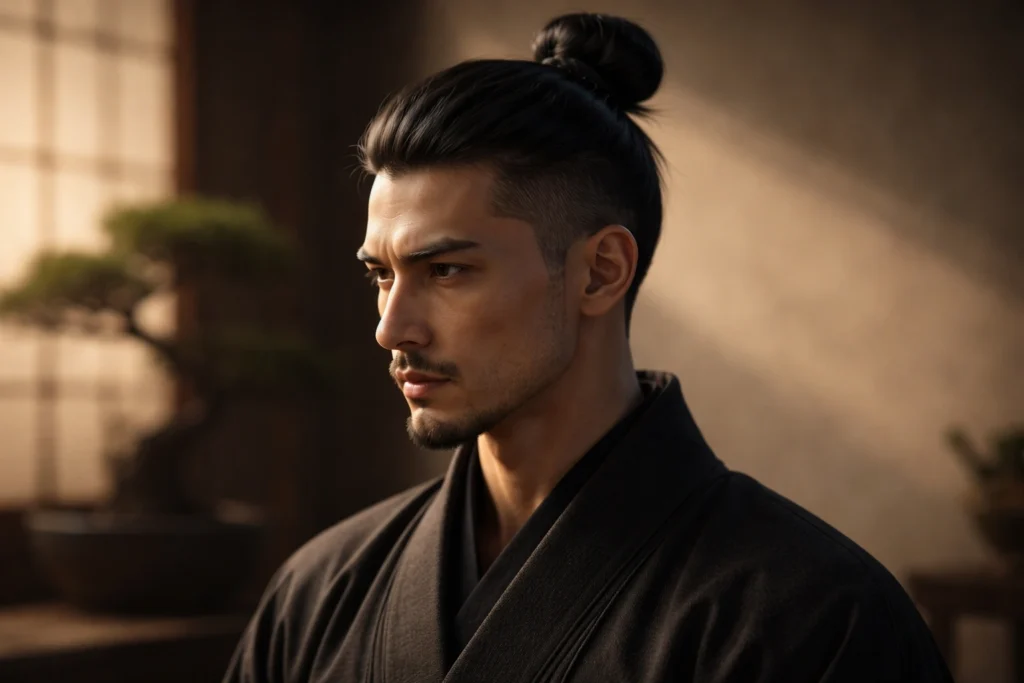
Few haircuts carry as much cultural weight and historical gravitas as the samurai top knot. Known traditionally as the chonmage, this hairstyle was worn by Japanese warriors of the Edo period as both a practical solution for keeping hair away from the face during battle and a mark of social status and discipline.
In its modern form, the samurai top knot involves growing hair to a length that can be gathered and tied at the crown of the head. The sides can be left natural, tapered, or fully faded for a more contemporary look. When paired with a fade, the contrast between the clean sides and the elevated bun creates a striking silhouette that reads as both ancient and cutting-edge.
This style works best for men with medium to long hair who are willing to commit to the growth phase. It suits most face shapes and communicates a quiet confidence. The simplicity of the knot itself is part of the appeal. There are no frills, no excess. Just disciplined, purposeful style that echoes the warrior ethos of economy and precision.
The Viking Warrior Style
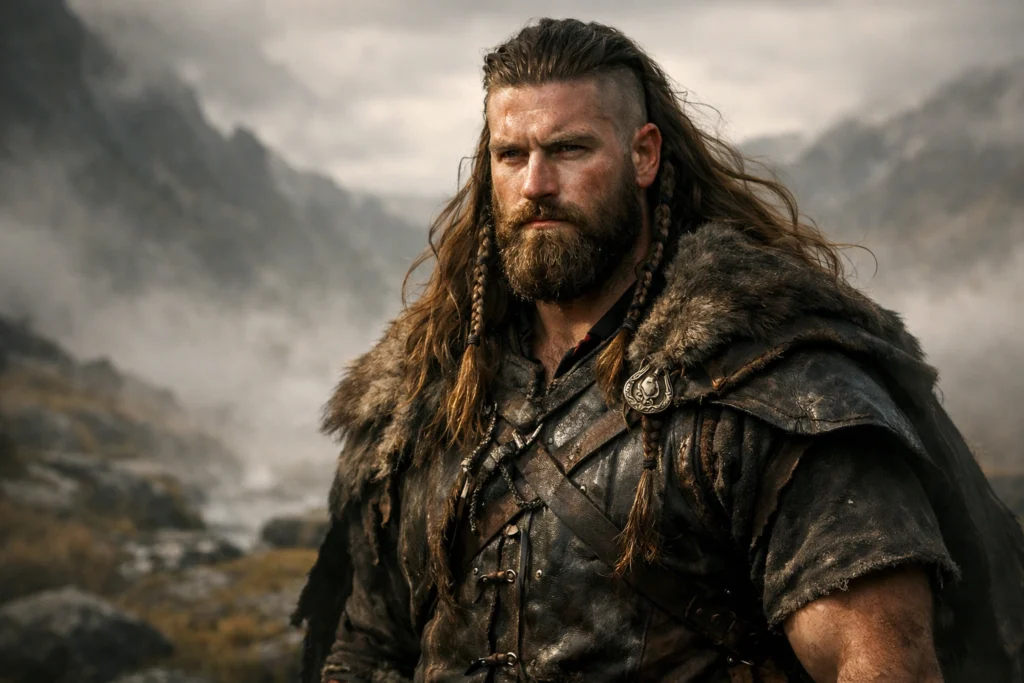
The Viking warrior hairstyle is one of the most visually dramatic entries on this list. Rooted in Norse tradition, this look draws from the grooming habits of Scandinavian fighters who wore their hair long, braided, and full as a symbol of strength, wealth, and social standing. In Norse culture, the condition and styling of a man’s hair communicated his place in the world.
Today, the Viking warrior style typically incorporates long hair on top with shaved or tapered sides. Braids are the defining element, ranging from a single central braid to multiple intricate patterns that frame the face. A full beard completes the look, amplifying its raw masculine power.
For men who want a subtler take, a partial braid or a loose top knot with faded sides captures the Viking aesthetic without requiring years of hair growth. The key is volume, texture, and an unapologetic confidence in the space you occupy. This style has been popularized in recent years by television and film portrayals of Norse culture, and its appeal shows no sign of fading.
The Mohawk Warrior Cut
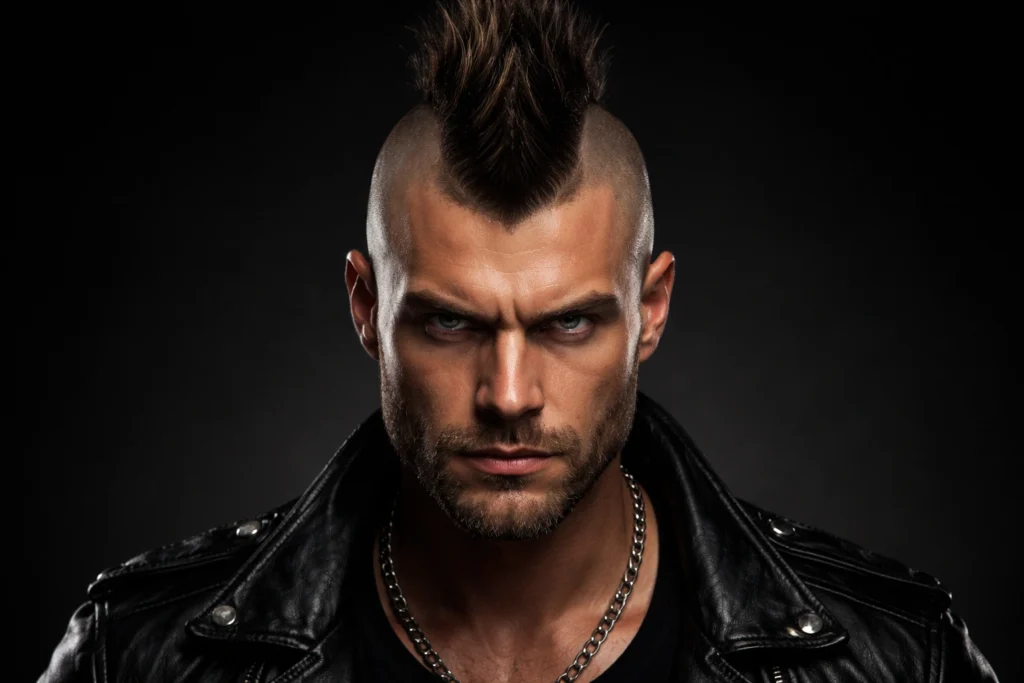
The mohawk has a fighting history that stretches back thousands of years. Associated with multiple indigenous warrior cultures across different continents, the mohawk communicates ferocity and defiance in a way that few other hairstyles can match. The classic version shaves both sides of the head completely while leaving a central strip of hair that is styled upward.
Modern barbershops offer the mohawk in a range of intensities. The full traditional version with completely shaved sides remains available for those who want the maximum impact. But for men who prefer something more wearable on a daily basis, a faux hawk, which creates the illusion of a mohawk through fading and styling without removing all the side hair, delivers similar energy with more versatility.
The mohawk suits men with confidence and a willingness to stand out. It works particularly well for angular face shapes and adds dramatic height to the overall profile. When styled with a matte pomade or texture paste, the strip on top can range from boldly spiked to loosely textured, allowing you to dial the aggression up or down depending on the occasion.
The Warrior Braid
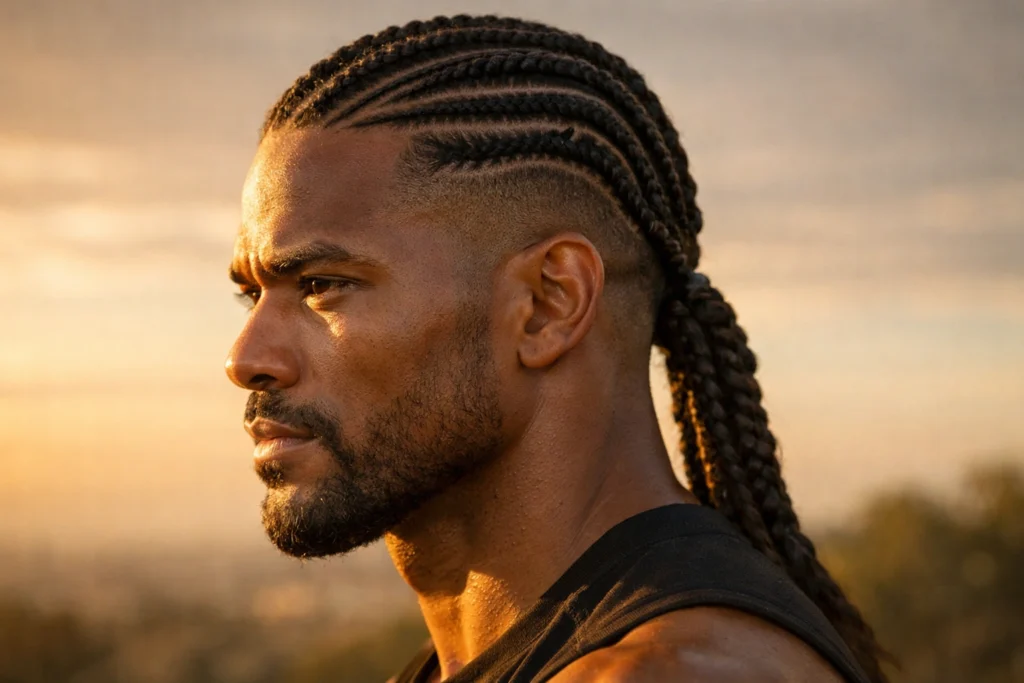
The warrior braid occupies a unique position among these styles because it is both a hairstyle and a tradition simultaneously. Braiding hair was common among warriors across ancient Africa, Native America, Scandinavia, and parts of Asia. These braids were not merely decorative. They identified allegiances, commemorated battles, and kept long hair controlled in combat.
The modern warrior braid can range from a single thick braid worn down the back to complex multi-strand patterns woven across the scalp. Men with longer hair can opt for cornrow-style braids that lie flat against the head and create sharp, geometric lines. Those with shorter hair can achieve a partial braid effect by braiding the top section while the sides are faded clean.
This style requires significant hair length to execute well, but the visual payoff is substantial. It suits men of all face shapes and communicates a cultural richness and personal investment in appearance that goes well beyond the average haircut. Maintenance involves keeping the braids tight and moisturizing the scalp regularly to prevent irritation.
The Undercut Warrior
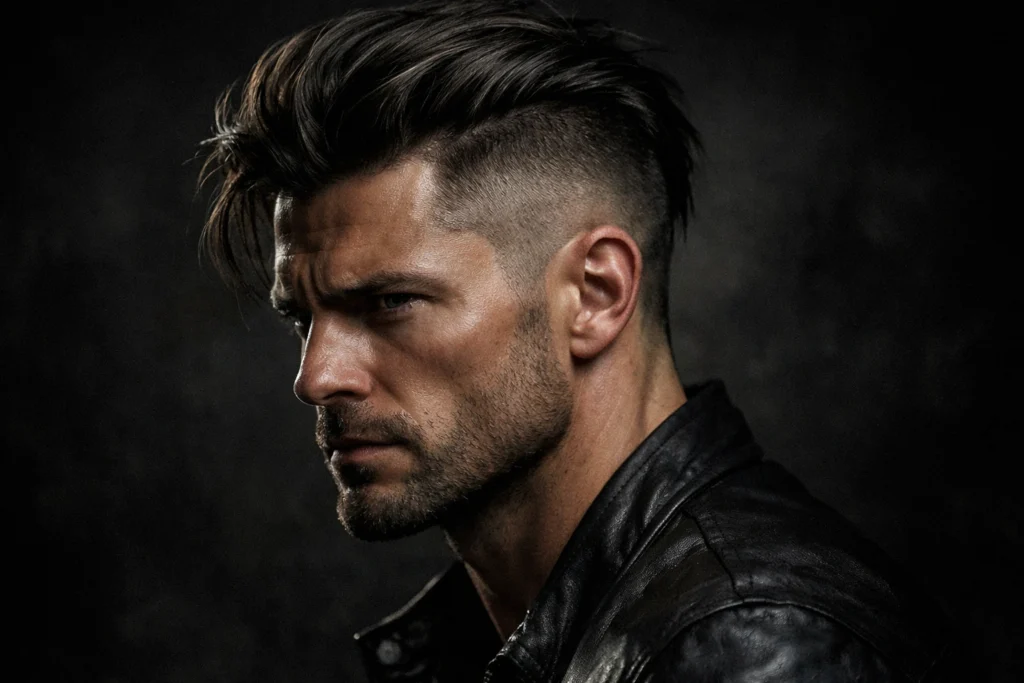
The undercut is a versatile framework that lends itself naturally to warrior-inspired interpretations. By shaving or closely cropping the sides and back while leaving the top section long and free, the undercut creates a dramatic contrast that defines this entire family of styles.
When styled with warrior cut techniques, the undercut top can be worn pushed back in a slicked style that evokes the look of a Viking warrior preparing for battle, or it can be tousled and textured for a more contemporary interpretation. Adding a braid along the side or on top of the undercut introduces another layer of visual complexity and historic resonance.
The undercut warrior suits men with medium to long hair on top and works across all hair types. Straight hair achieves a sleek, powerful finish, while wavy or curly hair adds natural volume and movement that gives the style an untamed quality. This is a cut with a high degree of adaptability, which is part of why it has remained consistently popular across multiple decades of men’s grooming trends.
The Warrior Crop with Hard Part
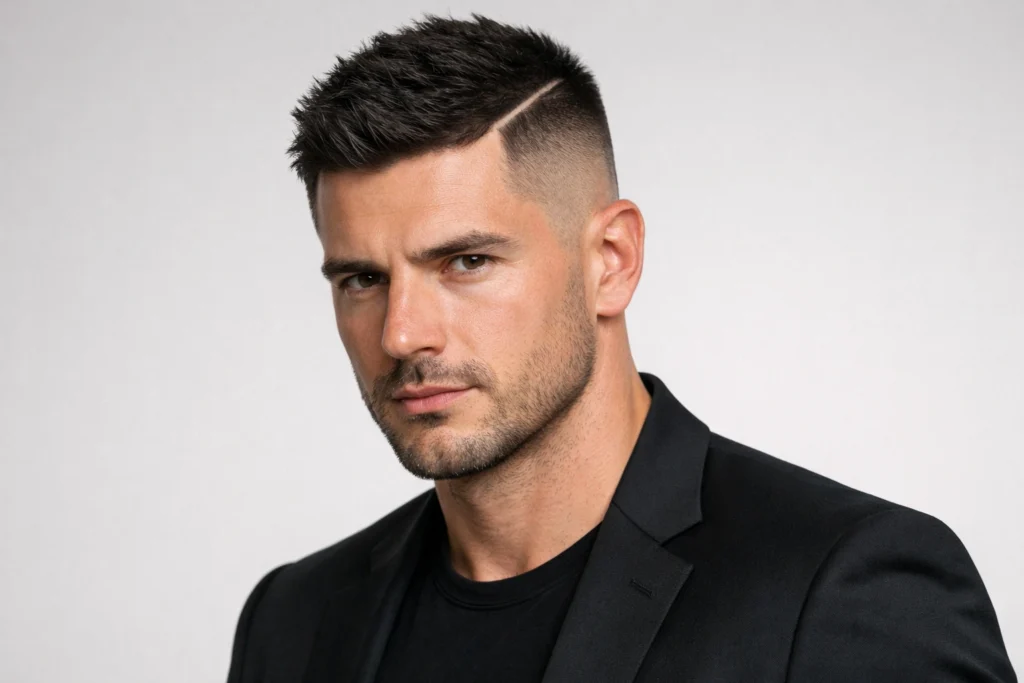
The warrior crop with a hard part translates the fierce spirit of warrior-inspired style into a shorter, more office-appropriate format. This cut keeps the length relatively short across the top but introduces heavy texture through cropping and point-cutting techniques that create a bold, defined finish. A hard part, shaved cleanly into the side, adds a geometric precision that gives the overall look a sense of tactical sharpness.
This is a warrior haircut for the man who operates in professional environments but refuses to surrender his edge. The hard part is a small but powerful detail that elevates the entire silhouette from a simple short cut to something with character and intention. Pair this with a low skin fade on the sides and a matte product on top, and you have a look that commands respect in the boardroom and the barbershop alike.
The warrior crop works particularly well for men with angular faces and medium to thick hair. It requires minimal daily styling while still projecting the kind of deliberate, confident grooming that the warrior-inspired aesthetic demands.
The Long Warrior with Shoulder-Length Flow
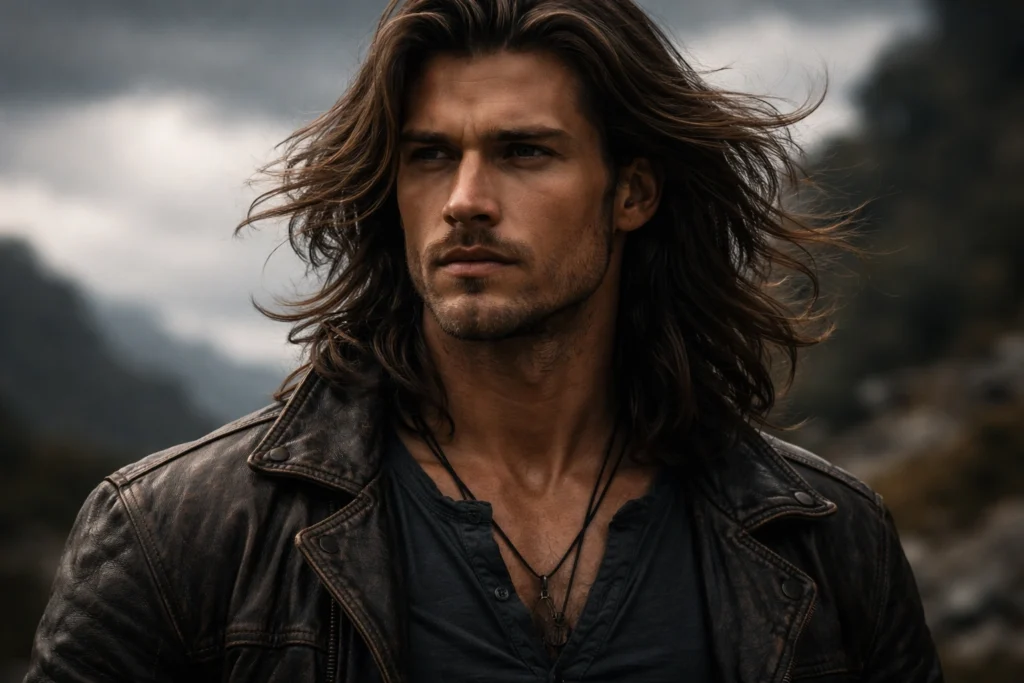
Not every warrior wore close-cropped hair. Many historical fighters across cultures maintained long, flowing hair as a mark of their status and identity. The shoulder-length warrior style honors this tradition by embracing length and movement as tools of masculine expression.
This cut typically features layers throughout the length to reduce bulk and add movement. The sides may be lightly tapered or left natural, depending on how much contrast you want. The defining characteristic is the way the hair moves and flows, suggesting both power and freedom simultaneously.
This style requires commitment in terms of maintenance. Regular trims to manage the ends, consistent conditioning to maintain health and shine, and occasional styling with a light oil or curl cream to define texture are all part of keeping this look at its best. The shoulder-length warrior suits men with naturally straight or wavy hair and communicates a confidence in occupying space that shorter cuts simply cannot achieve.
The Caesar Warrior Cut
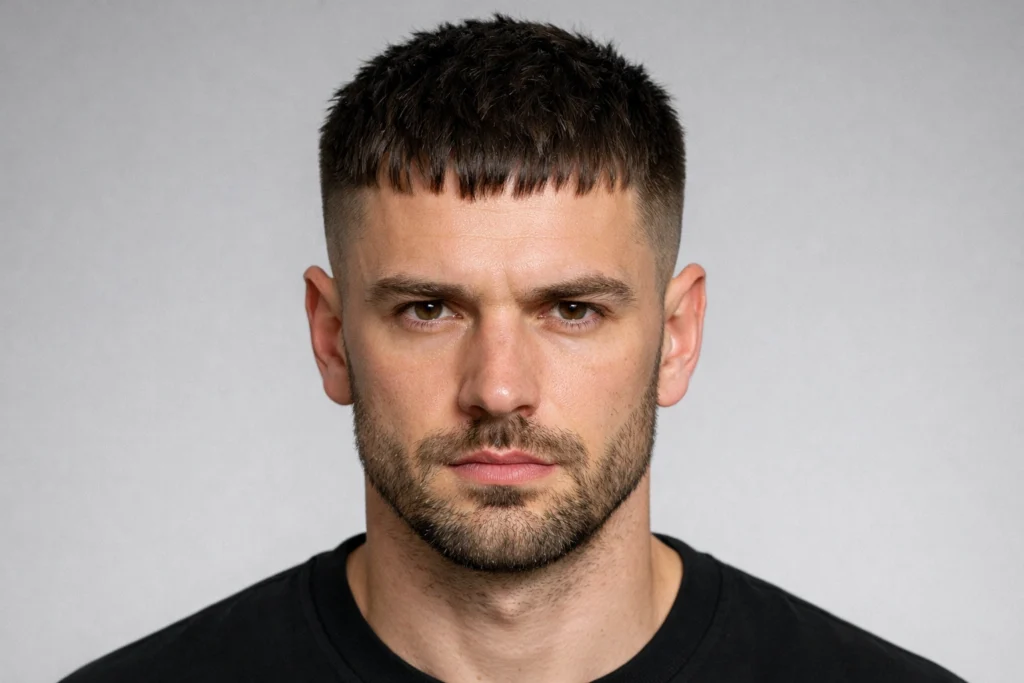
The Caesar cut borrows its name from one of history’s most consequential military commanders. Julius Caesar was notably particular about his grooming, and the cut that bears his name reflects that legacy: a short, horizontally cut fringe across the forehead paired with evenly cropped length across the top and a close fade or taper on the sides.
The warrior version of this cut maintains the horizontal fringe but incorporates the textured, choppy quality that defines the broader warrior cut aesthetic. The result is a style that is tight, structured, and controlled while still carrying the rebellious energy that makes warrior-inspired cuts so compelling.
This is an excellent option for men with receding hairlines, as the forward-sweeping fringe creates the appearance of fuller hair at the front. It suits round and oval face shapes particularly well and requires very little product to maintain. A small amount of matte clay worked through the fringe is all you need to keep this look precise and intentional throughout the day.
The Warrior Quiff
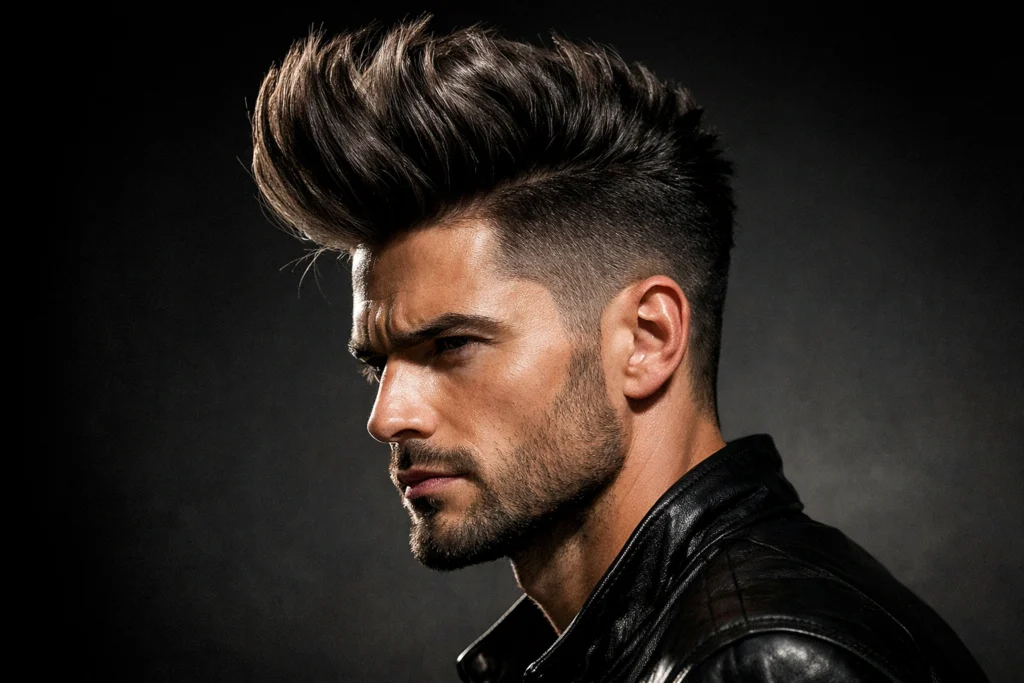
The quiff is a classic men’s hairstyle that takes on a new dimension when approached through the lens of warrior-inspired grooming. Where the traditional quiff is swept back and polished, the warrior quiff introduces deliberate texture, controlled irregularity, and a sense of power that the refined version lacks.
To achieve this look, the top section needs enough length to create substantial volume, typically three to five inches. The hair is blow-dried upward and back to build height, then finished with a clay or texture paste to hold the shape without adding shine. The sides are faded or tapered cleanly, creating the kind of high-contrast silhouette that defines the warrior cut family.
The warrior quiff suits men with medium to thick hair and works particularly well for those with oval or rectangular face shapes. It communicates a decisive, forward-facing confidence that feels simultaneously rooted in tradition and completely current. This is a versatile cut that can transition from casual environments to formal settings with minimal adjustments to the styling.
The Textured Fringe Warrior
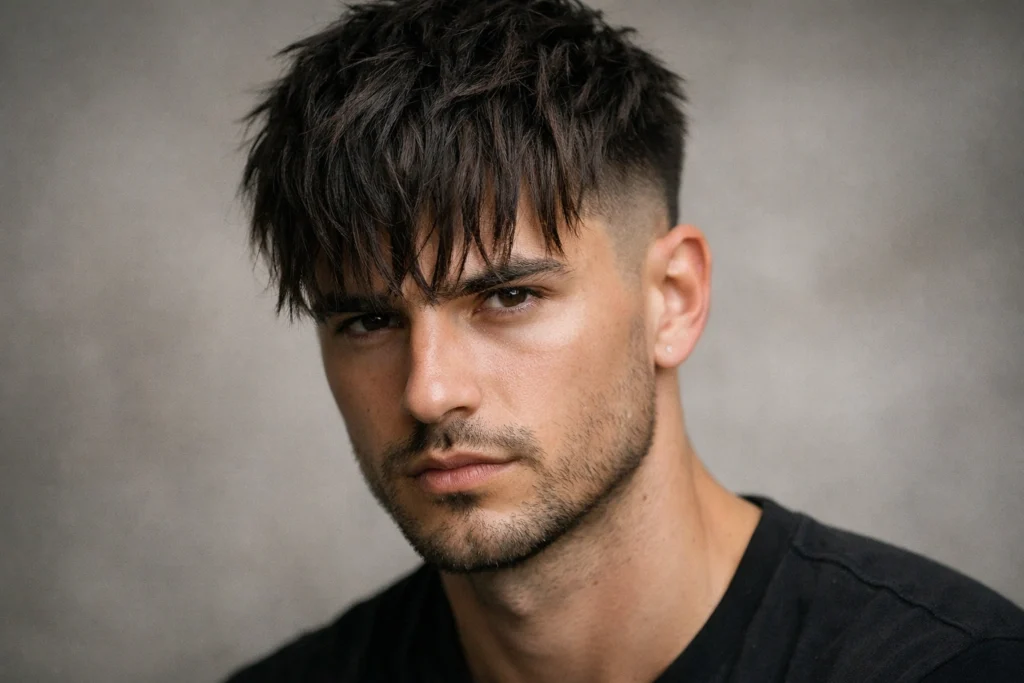
The final entry on this list takes the warrior-inspired concept and translates it into one of the most wearable and widely flattering formats available. The textured fringe warrior features a heavily layered top with choppy, piece-y fringe that falls across or near the forehead, paired with a clean low taper or fade on the sides.
This style draws from the broader warrior cut tradition in its emphasis on texture and deliberate imperfection, but the fringe element softens the overall look and makes it accessible to a wider range of face shapes, including rounder faces that benefit from the vertical lines the fringe creates. It is bold without being aggressive, structured without being rigid.
The textured fringe warrior is a strong choice for men entering the warrior-inspired style category for the first time. It captures the spirit of these historically rooted cuts without requiring dramatic length or significant departure from conventional grooming norms. Style it with a lightweight texture spray and a small amount of matte clay, and you have a look that is as easy to maintain as it is compelling to wear.
How to Choose the Right Warrior-Inspired Haircut for You
Selecting the right warrior haircut from this list comes down to a handful of practical considerations. Your face shape is the first variable to assess. Angular faces such as square and diamond shapes handle almost every option on this list with ease. Round faces benefit from cuts that add height, such as the warrior quiff or mohawk. Long faces can balance their proportions with wider, more textured styles like the Viking warrior or the warrior braid.
Your hair type matters equally. Thick, medium-density hair is the most cooperative for warrior cuts because it holds texture and volume naturally. Fine hair can work with the right products but benefits most from the shorter options such as the Caesar warrior or the warrior crop. Curly and coarse hair bring natural texture that amplifies the warrior aesthetic beautifully, particularly in the Viking and braid styles.
Finally, consider your lifestyle. Some of these cuts require regular barbershop visits every three to five weeks to maintain their sharpness. Others, like the shoulder-length warrior or the samurai top knot, allow for longer intervals between appointments but demand consistent home care. Match the maintenance requirements to your schedule and grooming routine before committing.
Conclusion
Warrior-inspired haircuts for men represent a rich intersection of history, culture, and contemporary style. These are not passive choices. Every cut on this list carries something of the battlefield heritage from which it draws, whether that comes through the disciplined structure of a samurai top knot, the raw ferocity of a mohawk, or the textured confidence of the modern warrior cut that currently dominates barbershops and social media feeds worldwide.
The best warrior haircut is the one that aligns with who you are and how you want to present yourself to the world. Bring a reference photo to your barber, communicate your lifestyle needs clearly, and invest in quality products to maintain the look between appointments. When you do, you carry forward a tradition of groomed, purposeful masculinity that stretches back through centuries of human history and remains as compelling today as it has ever been.
You may also like this post: 17 Fresh Short Haircuts for Men That Are Perfect for Summer
Frequently Asked Questions
What is a warrior cut haircut exactly?
A warrior cut is a men’s hairstyle featuring point-cut textured layers on top, typically three to four inches in length, paired with a low taper fade on the sides and back. The overall effect is a controlled, deliberately messy look that balances volume with clean structure.
Who does the warrior cut suit best?
The warrior cut works well for most men but shines on those with square, rectangular, or diamond face shapes. Medium to thick hair is ideal for achieving the signature texture, though fine hair can work with strategic product choices like lightweight clay or texture powder.
How often should I get a warrior-inspired haircut trimmed?
For cuts with a fade component, barbers recommend visiting every three to five weeks to keep the fade crisp and the layers from blending out. Longer styles such as the Viking warrior or shoulder-length cut can be maintained with slightly less frequent appointments, though regular trims are still important for hair health.
What products work best for styling warrior haircuts?
Matte products such as hair clay, texture paste, and styling powder are the most effective choices. These provide hold and definition without adding shine that would undermine the raw, textured quality of warrior-inspired styles. Sea salt spray is excellent as a pre-styler on damp hair to build grip before applying a finishing product.
Can warrior-inspired haircuts work in professional settings?
Yes, several variations such as the warrior crop with a hard part, the Caesar warrior cut, and the warrior quiff are professional-environment friendly. The key is opting for a tighter, more structured version of the style and keeping the overall silhouette controlled rather than overtly aggressive.
1 Comment