Introduction
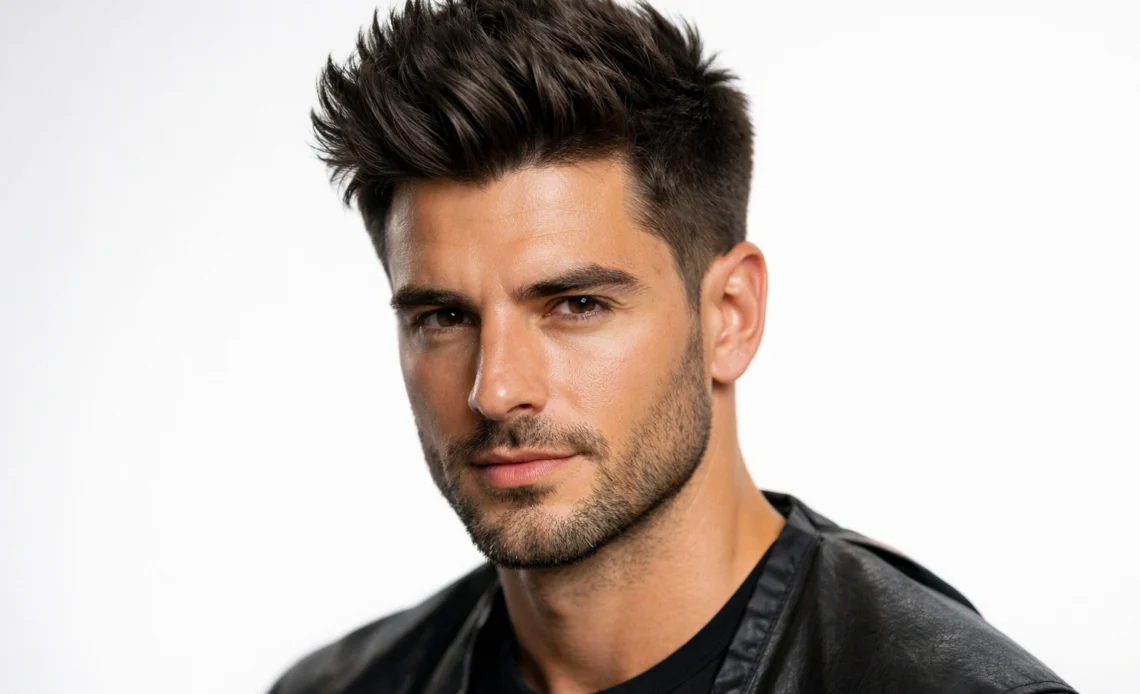
Thick hair is one of the most sought-after traits in men’s grooming, yet it often feels like a burden to the men who actually have it. It can resist styling, add unwanted bulk, and turn humid days into a full-blown battle. The good news is that thick hair, when paired with the right cut and technique, becomes your greatest asset. It holds shape beautifully, carries volume naturally, and gives almost every style a rich, full appearance that men with fine hair spend years trying to recreate.
Whether you are heading to the barbershop for the first time in months or simply looking to refresh your look, this guide covers 20 simple yet stylish hairstyles for thick hair that actually work in your favor. Each style has been chosen for its practicality, its visual appeal, and its compatibility with dense, heavy hair. From clean classics to modern cuts, there is something here for every taste, face shape, and lifestyle.
The Classic Taper Cut and Textured Crop
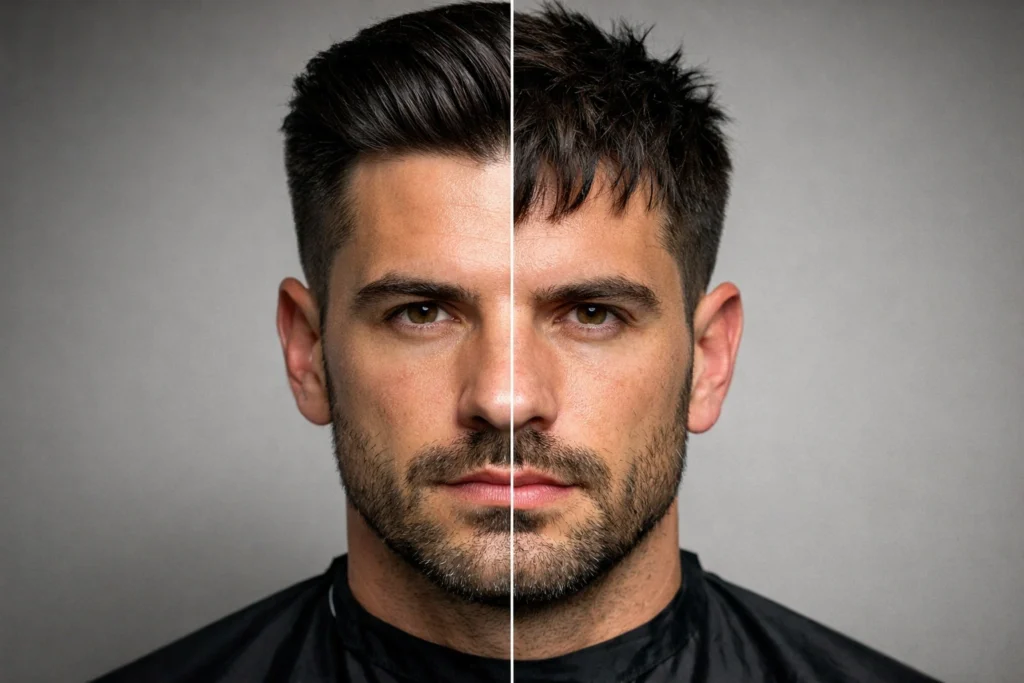
The classic taper is a cornerstone of men’s barbering for good reason. It gradually shortens the hair from the crown down to the neckline, creating a clean, structured silhouette without going too short. For men with thick hair, a taper eliminates the bulky pyramid shape that often forms when dense hair is left untreated at the sides. The taper removes weight from the sides and back while leaving enough length on top to work with your hair’s natural texture. A skilled barber can adjust the taper’s severity based on how dense your hair is, giving you a result that always looks intentional and well-maintained.
The Textured Crop
The textured crop sits short on the sides and features a choppy, slightly longer top that sits forward toward the forehead. It is one of the most practical hairstyles for thick hair because it uses the hair’s natural density to create definition rather than fighting against it. Apply a matte clay or paste to damp hair and work it through with your fingers. The goal is separation and texture, not a sleek or glossy finish. This style requires very little daily effort and tends to look better as the day goes on.
The Undercut and Side Part
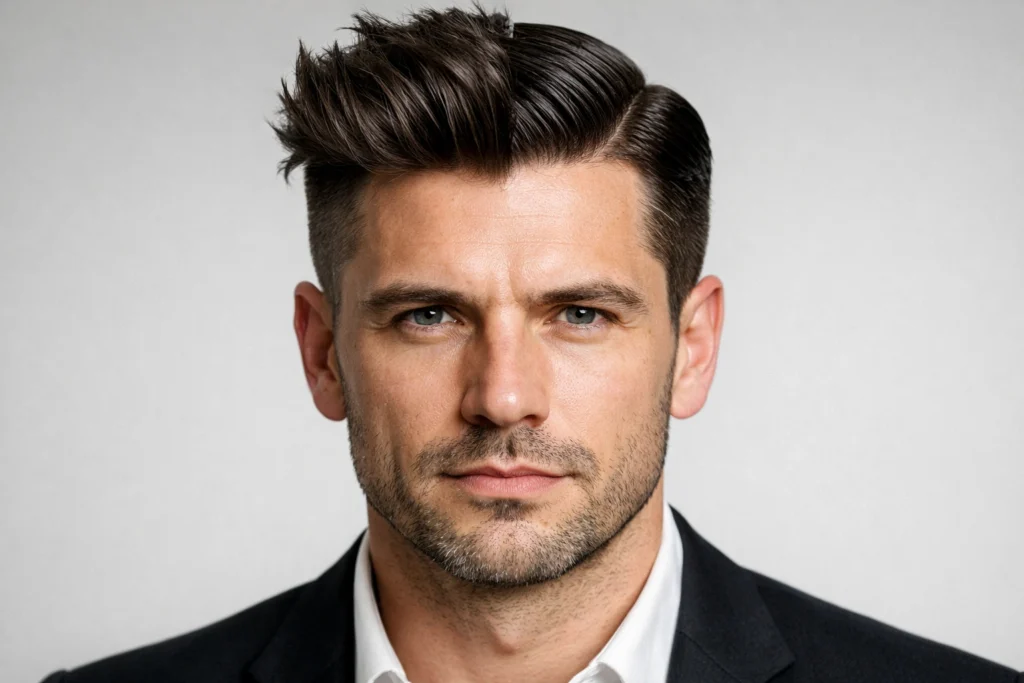
The undercut is defined by a sharp contrast between the closely cut sides and a full, longer top. It has been a consistently popular style for decades, and thick hair makes it look especially striking. The weight and volume of a thick mane on top sits dramatically above the shaved or closely trimmed sides, producing a bold, high-contrast appearance. The undercut works well for oval, square, and rectangular face shapes. If you have a round face, pair it with a slightly longer top to add vertical length and balance.
The Side Part
A well-executed side part is effortlessly classic and office-appropriate without feeling stiff or outdated. Thick hair holds a side part extremely well because the density naturally keeps the hair in place throughout the day with minimal product. Ask your barber for a medium fade or taper on the sides and a clean part line cut into the hair. Use a light pomade or cream to lay the top over smoothly. The result is a polished, put-together look that suits both formal and casual settings.
The Pompadour and Quiff
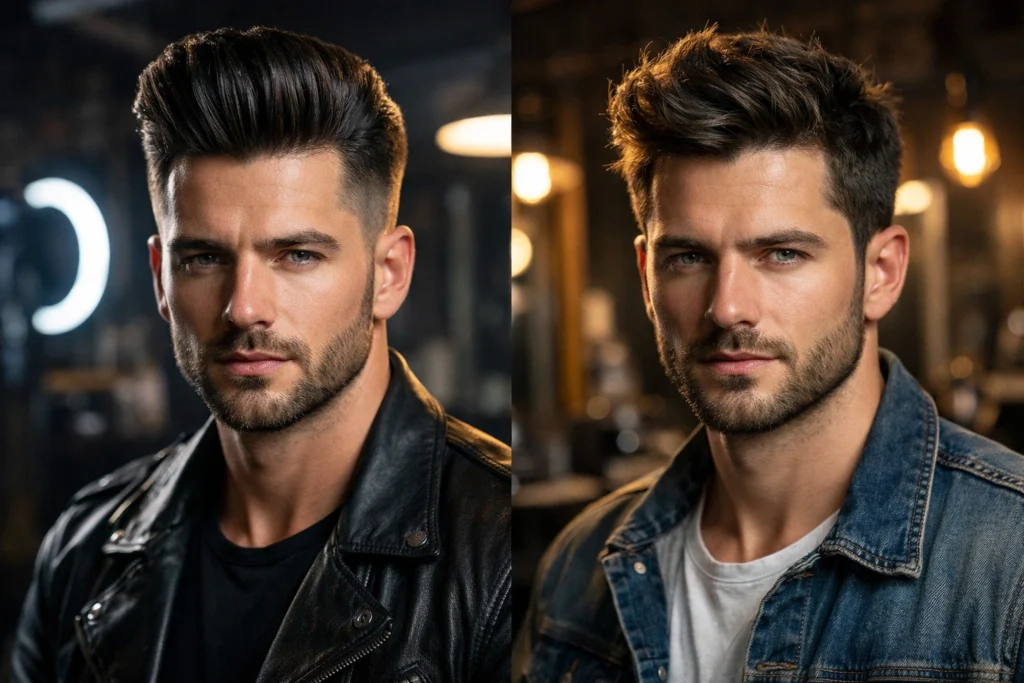
The pompadour is a high-volume style that sweeps the hair up and back from the forehead, creating a bold, elevated shape. Thick hair is the ideal match for this cut because it provides the natural volume and weight required to maintain the pompadour’s signature height. The classic version uses a generous amount of high-shine pomade for a slick, groomed finish. The modern take keeps a softer, more textured appearance using matte products. Either works beautifully for thick hair, though the modern version tends to be more versatile for everyday wear.
The Quiff
The quiff is a softer, more relaxed cousin of the pompadour. It sweeps the hair upward and slightly backward at the front, but without the extreme height or rigidity of a classic pomp. This makes it a great daily style for men with thick hair who want something polished but not overdressed. A textured quiff adds choppy layers to reduce bulk. A longer quiff allows for more dramatic height. A disheveled quiff, one of the most popular styles in recent years, gives a windswept, lived-in look that works particularly well with naturally thick, slightly wavy hair.
The Crew Cut and Fade with Textured Top
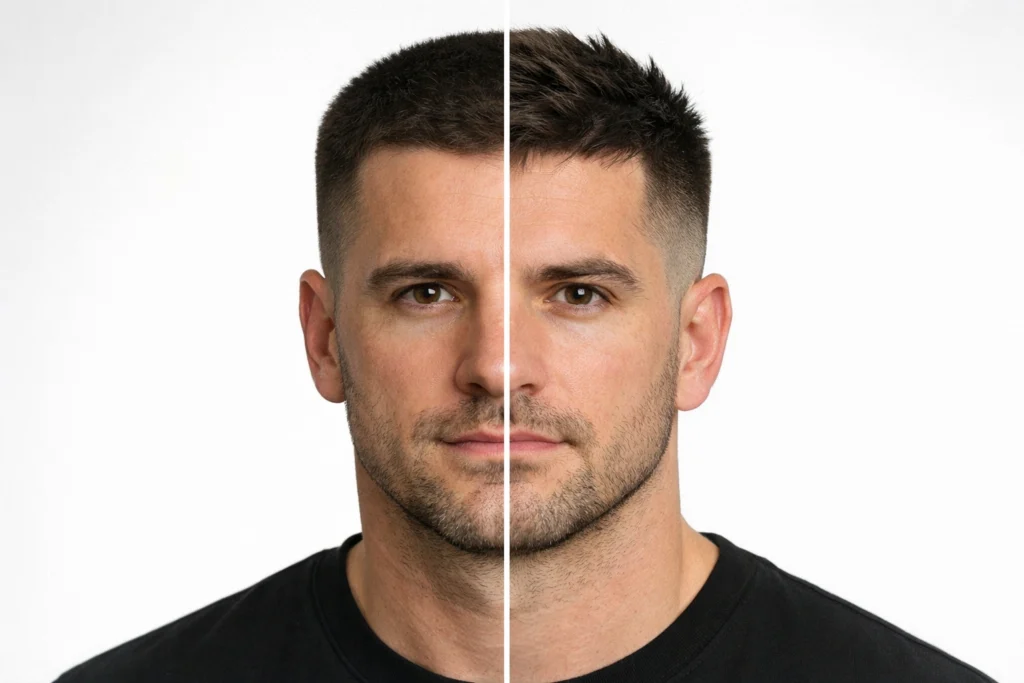
The crew cut is one of the most dependable hairstyles in existence. Short on the sides and back, slightly longer on top, it is straightforward, low-maintenance, and universally flattering. For thick hair, the crew cut works by keeping density under control while still showing off the fullness of your hair on top. You need almost no product for a crew cut. A small amount of wax or cream worked through the top can add a bit of definition, but the style is genuinely wash-and-go once you leave the barbershop.
The Fade with Textured Top
A fade, whether low, mid, or high, blends the hair seamlessly from skin-close at the bottom to gradually longer at the top. Combined with a textured top, this is arguably the most versatile and widely requested style in modern barbershops. Thick hair can make the sides feel heavy and wide without some form of fade to reduce that weight. A well-done fade tightens the overall shape, making the head look cleaner and the top hair more defined. Ask for a mid fade with a textured top for the ideal balance between boldness and everyday wearability.
The French Crop and Slick Back
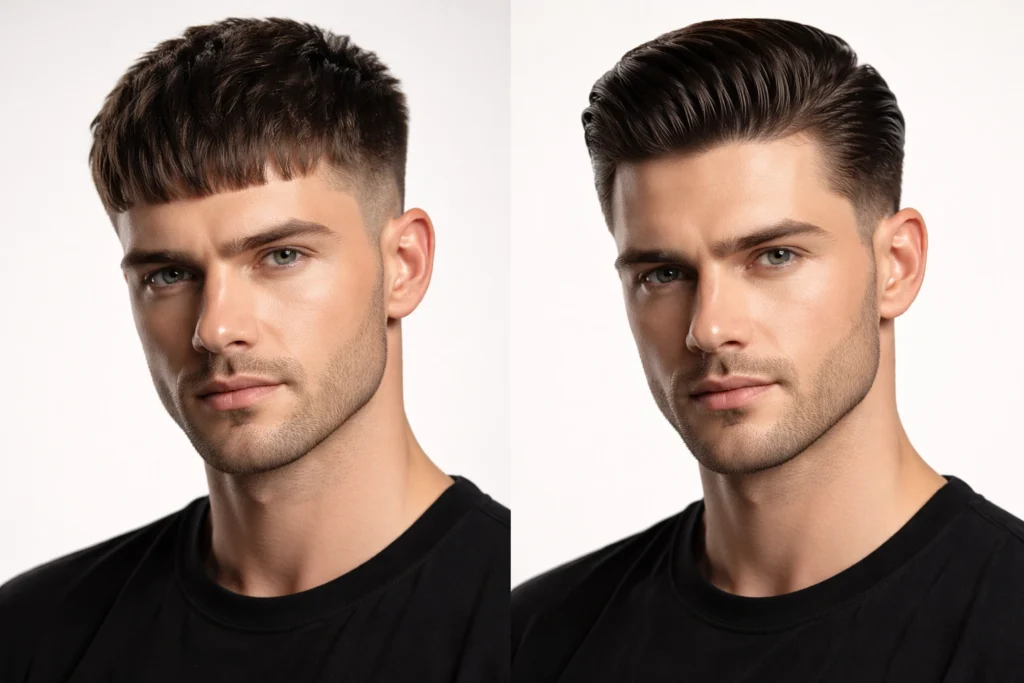
The French crop features a short back and sides with a blunt or slightly textured fringe that sits forward over the forehead. It is one of the most effortlessly cool cuts a man with thick hair can wear, partly because thick hair makes the fringe look particularly full and intentional. Trims every three to four weeks keep the fringe clean and the sides tight. Use a light product to define the fringe without making it look stiff. The French crop suits nearly every face shape and works across all age groups.
The Slick Back
The slick back is a sleek, commanding style where all the hair is combed or brushed directly back from the forehead using a medium to strong hold product. Thick hair is practically made for this style because the density creates a full, rich sweep of hair that always looks intentional. Water-based pomades or strong-hold creams work best. Apply to damp hair, comb back cleanly, and allow it to dry in place. For a slightly looser, more modern version, let a small amount of texture remain rather than forcing the hair completely flat.
The Wolf Cut
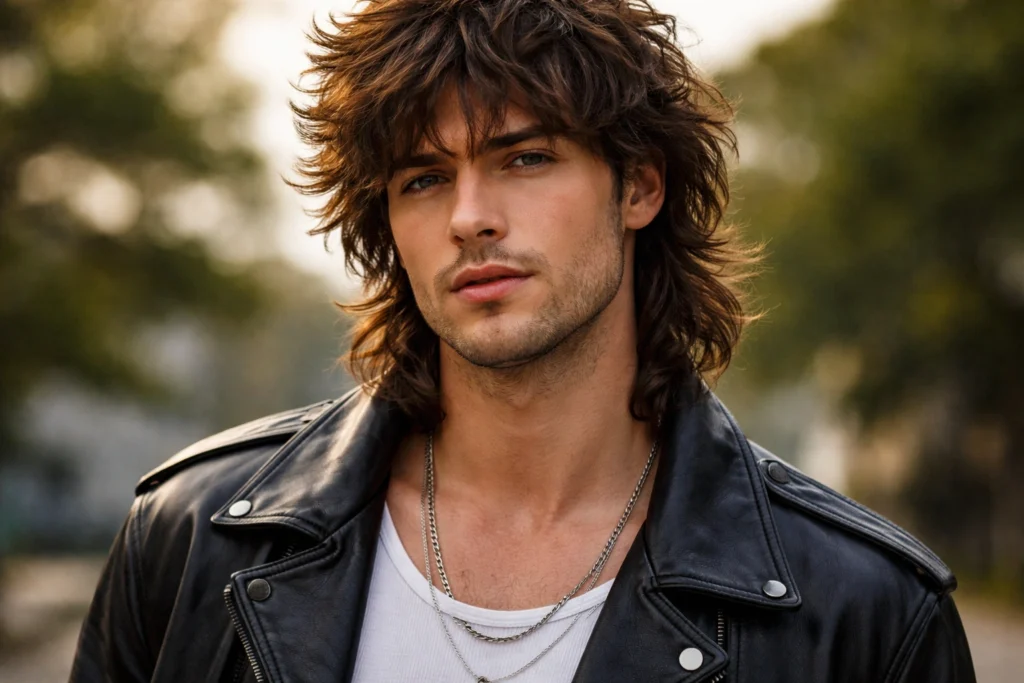
The wolf cut blends elements of a shag and a mullet into one layered, free-flowing style. It has seen a massive surge in popularity over the past few years and it is one of the few longer styles that genuinely flatters thick hair by using layers to remove bulk while preserving volume and movement.
Who Should Try the Wolf Cut
Men with naturally thick and slightly wavy or curly hair will find the wolf cut especially rewarding. The layers enhance natural movement, and the style looks great with minimal daily effort. It pairs well with a low fade or can be worn with a natural neckline for a softer, more relaxed finish.
The Curtain Fringe and Modern Mullet
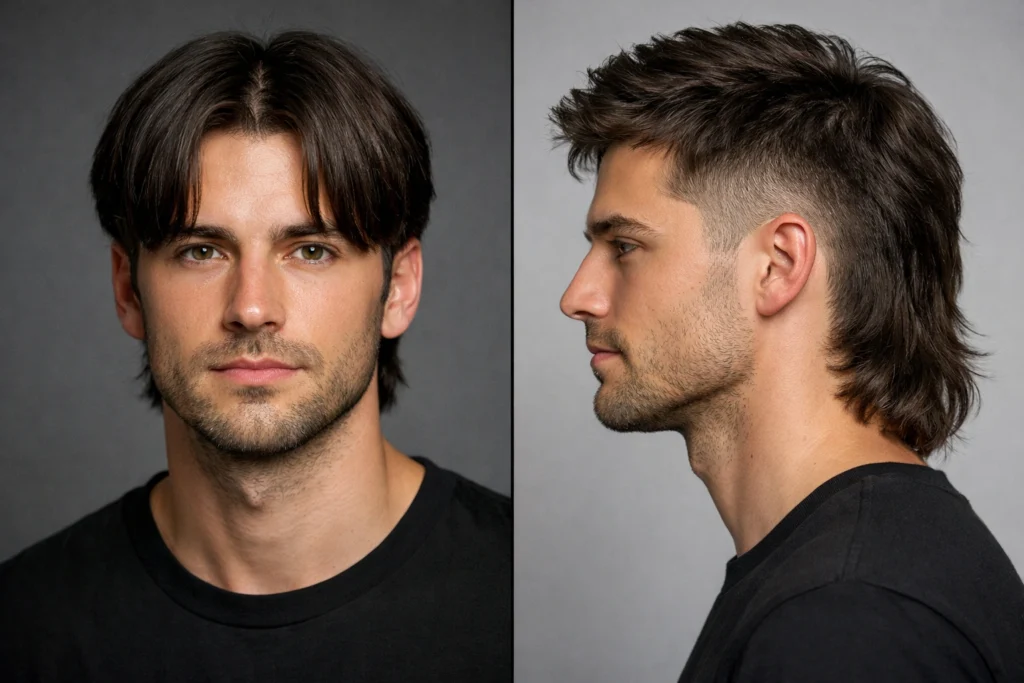
The curtain fringe, also known as the curtain cut or center part, divides the hair down the middle and allows it to fall naturally on either side of the face. Once a defining look of the 1990s, it has come back strongly and suits men with thick, straight or slightly wavy hair particularly well. Let the hair grow to at least ear length on top. Part it in the center and allow it to fall loosely on both sides. Use a light styling cream or leave-in conditioner to keep it smooth without looking overly styled. Regular trims keep the ends clean and the style looking intentional.
The Modern Mullet
The modern mullet is nothing like the dated style of decades past. Today’s version is clean, tapered on the sides, textured on top, and features a controlled longer section at the back. Thick hair is one of the best hair types for this cut because the density gives the back section a full, intentional appearance rather than a scraggly one. Use a light wax or salt spray to define the texture on top. Keep the back section clean and free of product for a natural fall. Ask your barber for a low or mid fade on the sides to keep the overall shape neat and modern.
The Buzz Cut and High Top Fade
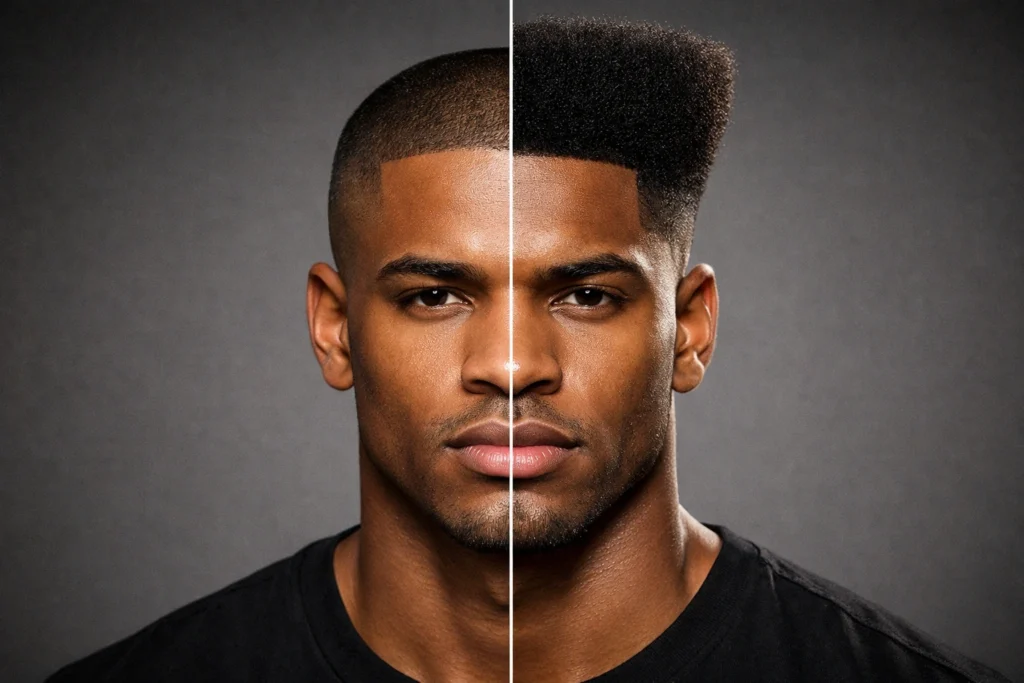
The buzz cut is the ultimate low-maintenance option and one that works equally well on all hair types, including thick hair. While it does not showcase your hair’s volume in the way longer styles do, it provides a sharp, clean look that requires almost no upkeep between visits to the barbershop. A faded buzz cut blends from a shorter length on the sides to a slightly longer length on top, adding subtle dimension without complexity. Men with thick hair benefit from a faded buzz because a uniform length all over can sometimes make the head appear wider.
The High Top Fade
Born in hip-hop culture, the high top fade combines a dramatic amount of length and volume on top with tightly faded sides. Thick hair is essentially required for this style to work properly, as the top section needs to hold significant height and shape without collapsing. The high top fade works best for men with naturally straight or coily thick hair. It is a bold, statement-making style that communicates confidence and a strong sense of personal identity.
The Man Bun and Shag Cut
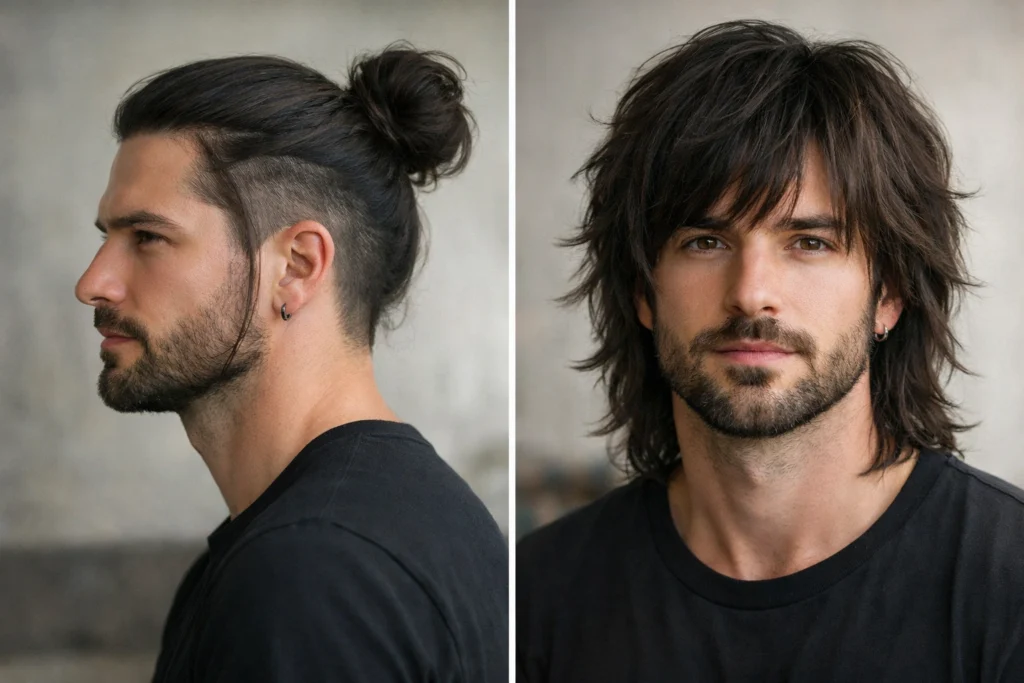
For men with longer thick hair, the man bun is a practical and stylish option that keeps hair out of the face while still looking intentional. Thick hair produces a particularly full and well-defined bun that holds its shape throughout the day without much help from pins or bands. Keep the sides either naturally tapered or paired with an undercut for a sharper contrast. Use a small amount of smoothing cream or light oil to keep flyaways in check. Regular deep conditioning treatments keep the overall look healthy and polished.
The Shag Cut
The shag is a layered style with volume through the crown and feathered or textured ends throughout. It draws inspiration from rock music culture and has remained a steady favorite for men who want something that looks effortlessly cool without hours of morning styling. For thick hair specifically, layers are essential in a shag cut. Without them, thick hair will sit heavily and without movement. Ask your barber to add significant layering through the sides and ends to allow the hair to breathe and move naturally.
The Faux Hawk and Ivy League Cut
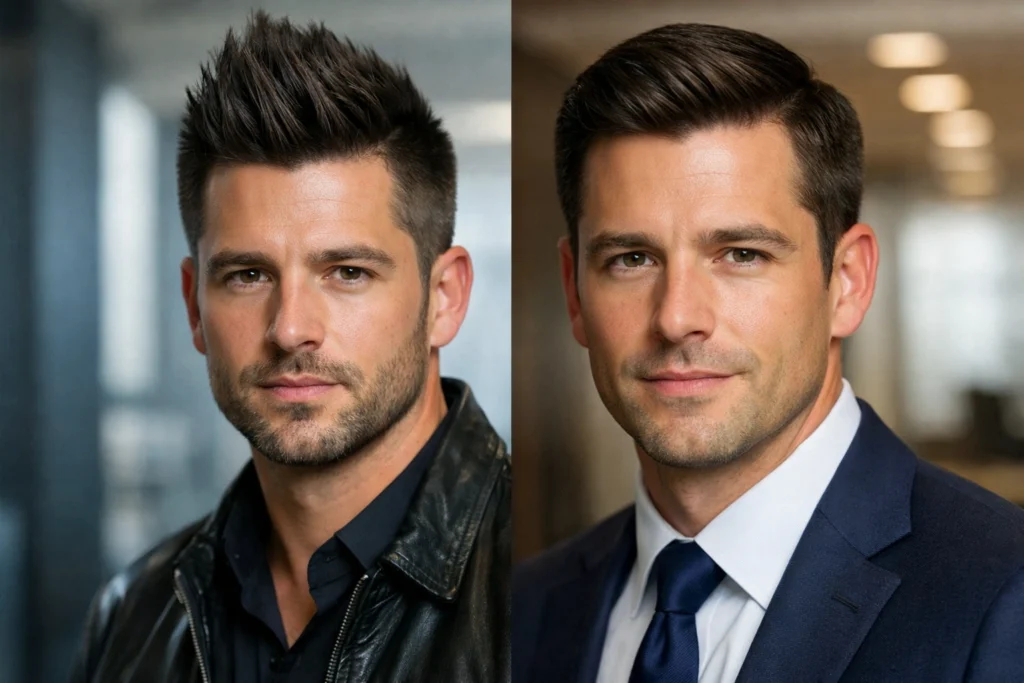
The faux hawk captures the spirit of a mohawk without the commitment of shaving the sides. Instead, the sides are faded or closely cut, and the center of the hair is styled upward to create a ridge of height from front to back. Thick hair makes this style incredibly easy to execute and hold. Apply a strong hold matte clay or fiber to the center section and push the hair upward with your palms. Run your fingers through lightly to add texture. The style holds all day with minimal touch-ups needed.
The Ivy League Cut
The Ivy League cut is a slightly longer version of the crew cut that allows for more styling versatility on top. It carries a refined, professional appearance that works particularly well for men in formal or corporate environments who still want a look with some personality. The top can be parted to the side, swept back loosely, or left slightly tousled for a more relaxed finish. A light pomade or styling cream gives enough hold without making the hair look stiff or overdone.
The Layered Long Hair
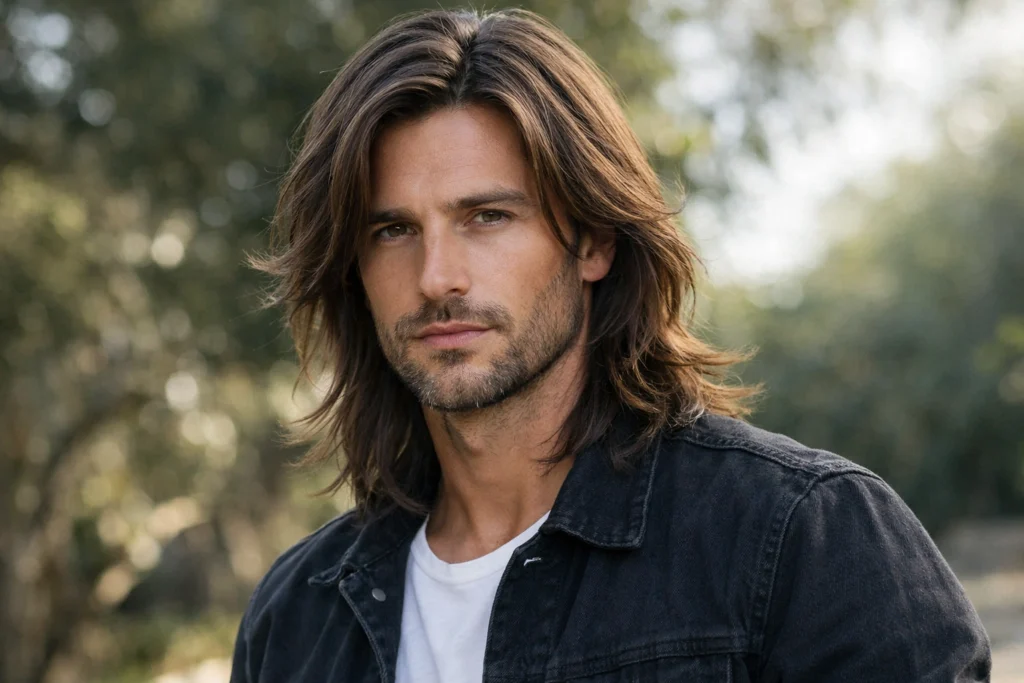
For men growing their thick hair out, layered long hair is the most flattering approach. Without layers, thick hair can appear blocky and shapeless at longer lengths. Strategic layering creates movement, removes excess weight, and allows the hair to frame the face and fall naturally.
Maintenance and Styling for Long Thick Hair
Invest in a quality conditioner and use it consistently. Light oils or leave-in treatments help manage frizz and keep thick hair looking smooth rather than poofy. A trim every six to eight weeks maintains the layers and prevents split ends from moving up the hair shaft.
Conclusion
Thick hair is genuinely one of the best hair types to work with once you understand how to manage it. The 20 styles covered here range from sharp and short to long and layered, ensuring there is a fitting option regardless of your lifestyle, face shape, or daily routine. The most important step is finding a skilled barber who understands how to cut and thin thick hair without removing too much weight or leaving it looking flat. Pair the right cut with the right product, visit the barbershop regularly, and your thick hair will consistently be one of your most defining style assets.
You may also like this post: 20 Trendy Men’s Haircuts Perfect for Round Face Shapes
Frequently Asked Questions
What is the best hairstyle for thick hair that is also low maintenance?
The textured crop and the crew cut are both excellent low-maintenance options for thick hair. They require minimal daily styling and hold their shape well between barber visits.
How often should men with thick hair get a haircut?
Most men with thick hair benefit from a trim every three to four weeks for shorter styles and every six to eight weeks for medium to longer styles. Regular trims prevent the hair from losing its shape as it grows out.
What products work best for styling thick hair?
Matte clays, fiber pastes, and light pomades tend to work best for thick hair. They provide hold and definition without making the hair look stiff or greasy. Avoid heavy gels that can weigh the hair down and reduce natural movement.
Should men with thick hair ask their barber to thin their hair?
Thinning shears can be useful for removing bulk from very dense hair, but they should be used carefully. Over-thinning can make thick hair difficult to style and may cause it to sit unevenly. Ask your barber to use them selectively rather than throughout the entire cut.
Can men with thick hair wear longer styles comfortably?
Yes, absolutely. Longer hairstyles like the wolf cut, curtain fringe, man bun, and layered long hair all work exceptionally well for men with thick hair. The key is layering, which removes weight and allows the hair to move and fall naturally rather than sitting as a dense, shapeless block.
1 Comment