Introduction
A double chin is one of the most common cosmetic concerns men deal with regardless of age or body type. It can soften the definition of the jawline, add visual weight to the lower face, and create an overall impression of roundness that many men find unflattering. The good news is that the solution does not require surgery, expensive treatments, or dramatic lifestyle changes. A well-chosen and properly groomed beard is one of the most immediate and effective tools available for concealing a double chin and restoring the impression of a strong, defined jawline.
The key principle behind beard styles that help conceal a double chin is straightforward: the beard must provide coverage over the chin and upper neck area while simultaneously creating the visual impression of length and structure in the lower face. Styles that add volume and length at the chin, keep the sides trimmed shorter, and feature a well-placed neckline consistently produce the most flattering results. Shorter, stubbly styles that leave the jawline visible do the opposite, drawing attention to the soft tissue beneath rather than concealing it.
This article presents 20 beard styles that help conceal a double chin, grouped by approach and beard type. Whether you can grow a full, dense beard or prefer a more sculpted and defined look with moderate facial hair, there is a style on this list that will work for your face, your hair growth pattern, and your personal grooming preferences. Read through each style, understand why it works, and use the guidance provided to bring the look to life with your barber or at home.
The Full Beard
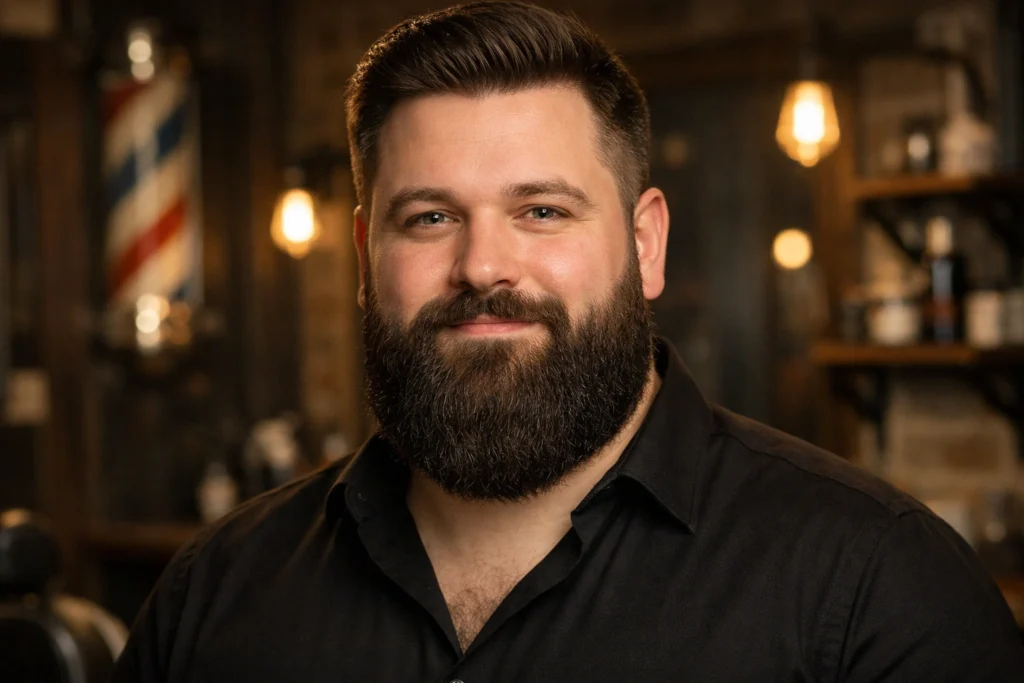
The full beard is the single most effective beard style for concealing a double chin, and it earns that distinction for one simple reason: complete coverage. A full beard allowed to grow to between two and four inches in length covers the chin, the jaw, and the upper neck entirely, eliminating any visible trace of a double chin beneath a dense layer of well-groomed facial hair. There is no other style that offers this level of concealment, and for men who can grow a thick, even beard, this is the most reliable option on the entire list.
The full beard works beyond simple coverage, however. When shaped correctly, it actively creates the illusion of a stronger, more angular jaw. The key shaping instruction is to keep the sides trimmed shorter than the chin. This means the beard should be shortest at the sideburns and longest at the chin and lower jaw, which draws the eye downward along a vertical line and produces an elongating effect on the face. Avoid allowing the beard to grow equally full all around, as this adds roundness to the face rather than length and defeats the purpose of the style for double chin concealment.
Maintenance requires beard oil or balm applied daily to keep the hair hydrated, soft, and manageable. A boar bristle brush helps train the beard to grow downward and prevents puffiness at the sides. Regular trimming of the sides every one to two weeks keeps the shape defined and the concealing effect intact.
Neckline Placement for the Full Beard
For men with a double chin, the neckline of a full beard should be set just above the Adam’s apple rather than high under the chin. A neckline placed too high exposes the submental area and defeats the concealment purpose of the style entirely. Setting the neckline at the correct point ensures the beard flows naturally over the double chin area without an awkward, visible gap.
The Ducktail Beard
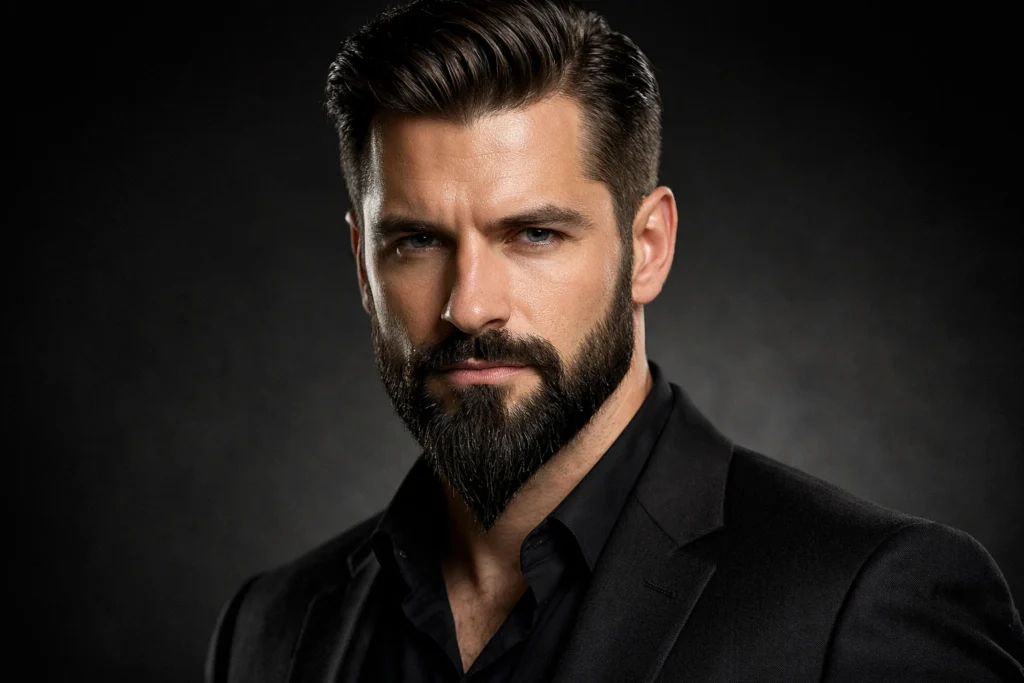
The ducktail beard is one of the most strategically flattering beard styles available to men with double chins. It is a full beard that has been shaped and trimmed so that the bottom of the chin area tapers into a gentle point, resembling the tail of a duck in profile. This pointed shape is critical because it introduces a sharp downward angle at the base of the face that creates a strong visual impression of jaw definition and facial length.
The sides of a ducktail beard are kept shorter and tapered, which narrows the profile of the face and prevents additional width from accumulating at the cheeks and temples. The combination of short sides and a pointed, prominent chin produces exactly the kind of vertical elongation that works best for concealing a double chin. The eye is drawn naturally toward the pointed tip of the beard rather than to the soft area beneath the jaw.
To achieve a ducktail, grow a full beard to at least two inches in length and then use scissors and a comb to sculpt the chin area into a gradual point. The shaping requires patience and precision, and a visit to an experienced barber for the initial shaping is strongly recommended. Once the shape is established, maintaining it at home with regular trimming is straightforward. Beard balm helps add structure and hold to the point, keeping it defined throughout the day.
Why the Ducktail Works
The ducktail’s elongating effect on the face comes from its sharp base angle. A pointed chin creates a downward visual line that effectively lengthens the face and redirects attention away from the width and softness of a double chin, replacing it with an impression of structure and definition.
The Garibaldi Beard
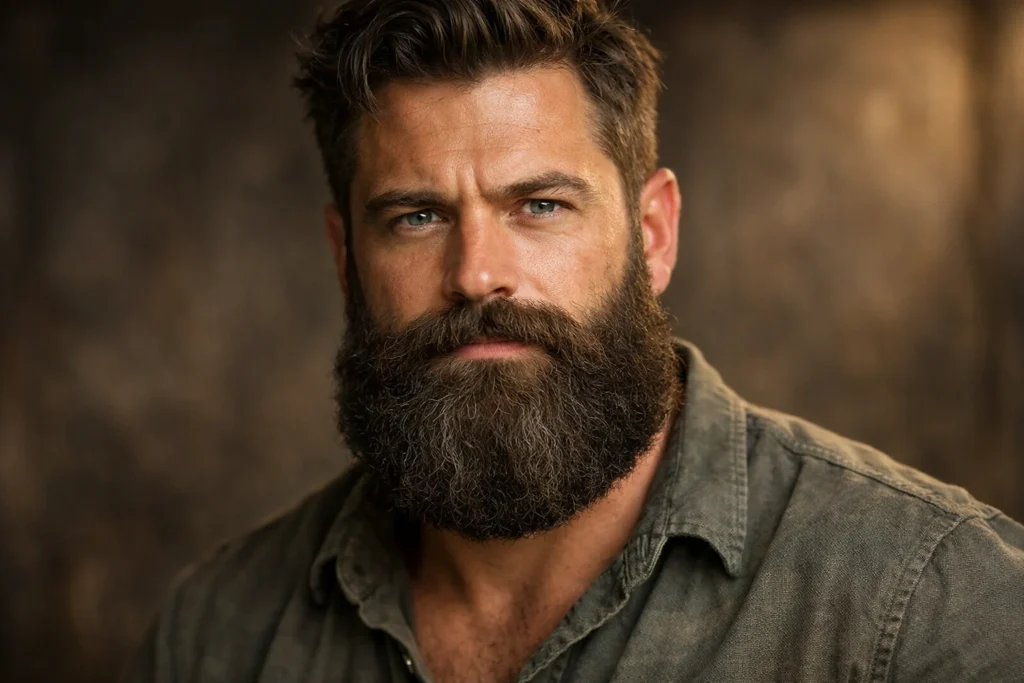
The Garibaldi beard is a full, wide, rounded beard that grows to between four and eight inches in length and features a naturally rounded base rather than a sharp point. Named after the Italian general Giuseppe Garibaldi, this style is known for its bold, masculine presence and its exceptional ability to add volume and definition to a weak or soft jawline. For men with a double chin, the Garibaldi provides the coverage and volume needed to completely conceal the area while projecting an image of strength and confidence.
The width of the Garibaldi’s base creates a visual counterbalance to a round face by shifting the focal point of the face downward to the full, prominent beard. The softly rounded bottom edge of the beard has a more natural and relaxed quality than the ducktail, making it an excellent choice for men who prefer a less sculpted, more organic look. The sides are kept shorter than the chin area, maintaining the slimming vertical emphasis that all effective double chin beard styles share.
This beard requires significant growth time and a commitment to regular conditioning and grooming to remain looking intentional rather than neglected. Beard oil applied daily and a wide-tooth comb used to brush the beard downward and into shape are the two most important maintenance tools for this style.
The Van Dyke Beard
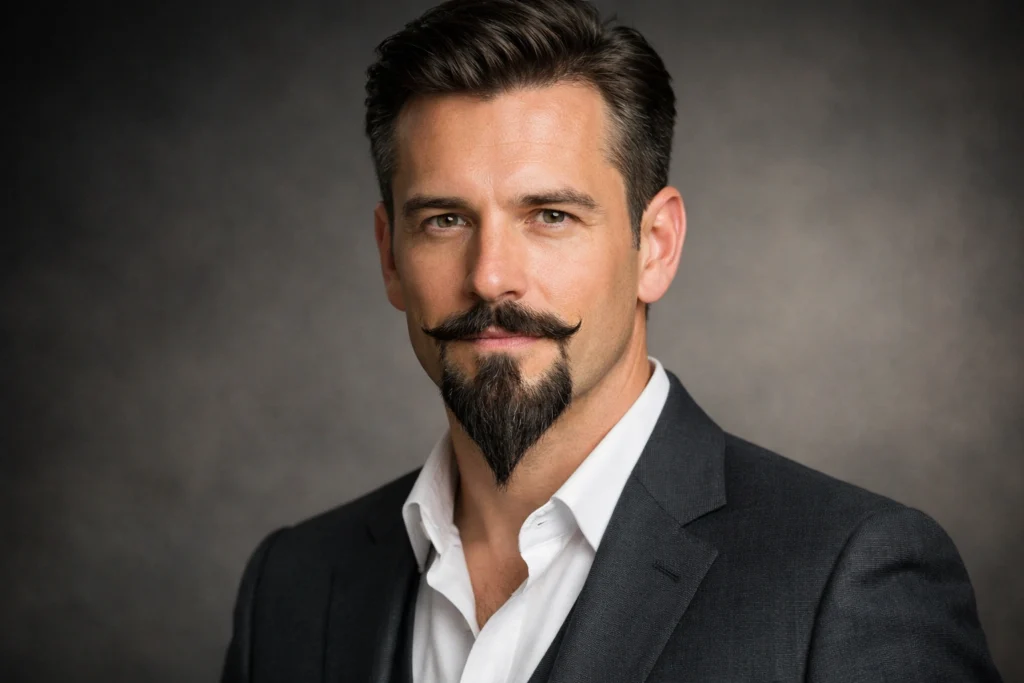
The Van Dyke beard is a classic style that combines a pointed chin beard with a separate, styled mustache. The cheeks are kept fully clean-shaven, which means the Van Dyke does not offer the same degree of coverage as a full beard. What it does offer, however, is a highly effective elongating illusion created by the pointed chin beard that draws a strong vertical line downward from the center of the face. This vertical emphasis is one of the most reliable techniques for making a round face appear longer and for minimizing the visual impact of a double chin.
The pointed beard should be grown to approximately one to two inches in length and shaped into a clean, deliberate point at the chin. The mustache is styled separately, typically with a slight curl or shape at the ends. The clean-shaven cheeks contrast with the defined chin area to focus attention on the lower center of the face where the beard adds structure, rather than on the soft sides where the double chin would otherwise be most visible.
The Van Dyke requires precise trimming with a quality razor or detail trimmer to maintain the clean boundaries between the bearded and shaved areas. A small amount of beard wax can be used on the mustache to maintain its shape and separation from the chin beard.
Van Dyke Length Consideration
For men with a double chin, keeping the Van Dyke’s chin beard at one and a half to two inches provides the best balance between elongation and coverage. A very short Van Dyke does not provide enough length to create a meaningful elongating effect, while an excessively long one can lose the neat, intentional quality that makes this style work.
The Balbo Beard
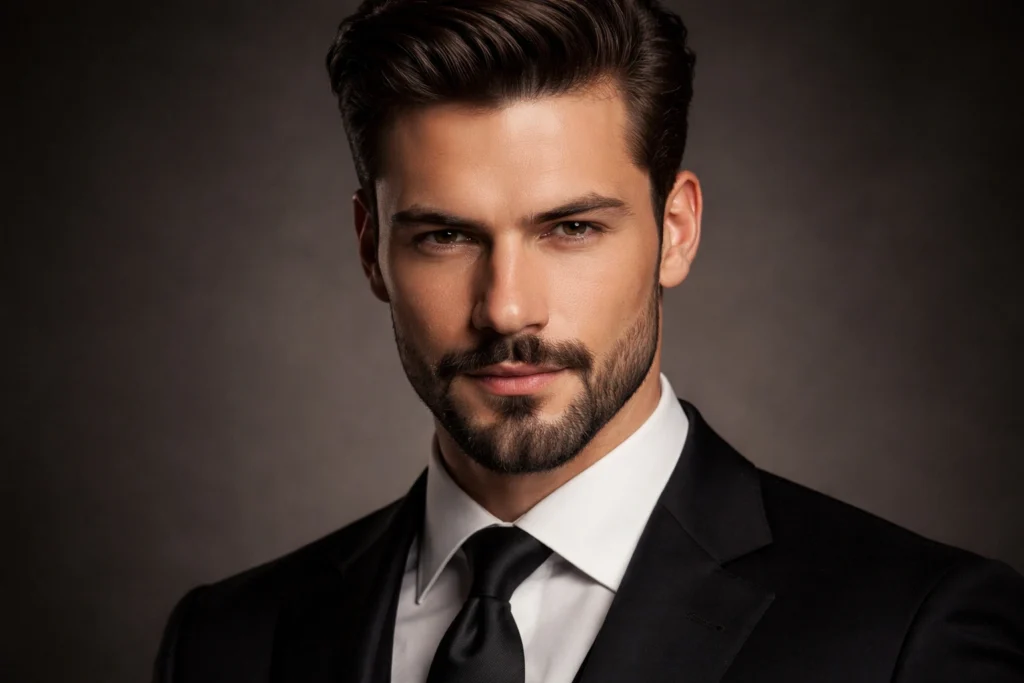
The Balbo beard is a sophisticated style that features a floating mustache separated from a shaped chin beard that does not extend to the sideburns. It is named after Italo Balbo and has been worn famously by Robert Downey Jr., whose angular face and well-defined look in the style helped bring it back to mainstream attention. For men with double chins, the Balbo works by concentrating all the beard’s visual weight at the center of the face around the chin and mustache, drawing the eye inward and upward rather than outward toward the wider, softer areas of the face.
The chin beard should be kept at a medium length of one to two inches and shaped with clean, defined edges. The mustache is maintained at a slightly shorter length and styled to remain visually separate from the chin beard. The clean-shaven cheeks and jaw create strong contrast that emphasizes the sculpted center of the face and reduces the apparent width of the lower face where a double chin typically shows.
This style rewards precise grooming. A sharp detail trimmer and a steady hand are essential to maintaining the clean lines that give the Balbo its distinctive character. Regular shaving of the cheek and sideburn areas keeps the contrast crisp and the style intentional.
The Anchor Beard
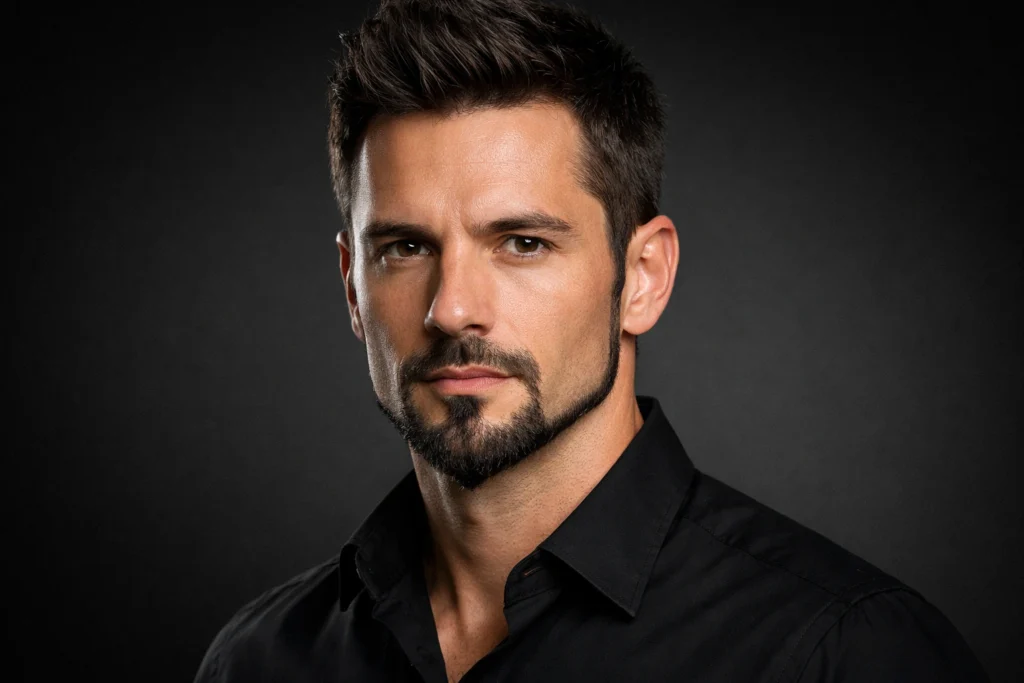
The anchor beard takes its name from the shape it creates on the face, resembling a ship’s anchor. It combines a pointed chin beard with a chin strap that runs along the jawline, connected to a styled mustache above. The result is a structured, angular framework around the lower face that introduces the impression of a sharp, defined jaw even where the natural bone structure is soft or obscured by a double chin.
The defining quality of the anchor beard for double chin concealment is its jawline strap. By placing a line of facial hair along the jaw, the anchor beard creates a visual representation of a jawline that draws the eye along its path and produces the impression of definition beneath. This is a clever optical illusion that works particularly well for men whose primary concern is not just the double chin itself but the accompanying lack of visible jaw definition.
Growing and maintaining an anchor beard requires daily attention to ensure the chin strap and pointed chin beard remain clearly defined. Use a precision trimmer to maintain clean edges on both sides of the chin strap, and keep the cheek areas fully clean-shaven to maximize the contrast between the structured beard shape and the bare skin around it.
The Extended Goatee

The extended goatee, sometimes called the tailback, is a goatee style that extends the chin beard outward along the jawline in both directions while keeping the cheeks clean-shaven. Unlike a standard goatee that is confined to the chin and mustache area, the extended goatee provides broader coverage across the lower face, which makes it significantly more effective for concealing a double chin without requiring the full growth commitment of a complete beard.
The chin beard is typically grown to one and a half to two and a half inches in length, providing a meaningful amount of volume and coverage at the center of the face. The extension along the jawline adds structure and fills in some of the soft area beneath the jaw without the bulk of a full beard on the cheeks. For men whose beard growth is patchy on the cheeks, this is one of the most practical and flattering alternatives to a full beard for double chin concealment.
Styling an extended goatee requires precise boundary maintenance where the beard meets the shaved cheek areas. A quality razor or foil shaver used daily keeps the borders clean and the overall impression sharp and intentional.
Extended Goatee Versus Standard Goatee
A standard goatee confined to the center of the chin offers only limited concealment for a double chin. The extended version, by reaching along the jawline, provides substantially better coverage and creates more of the structural impression that makes beard styles effective for this purpose.
The Faded Beard
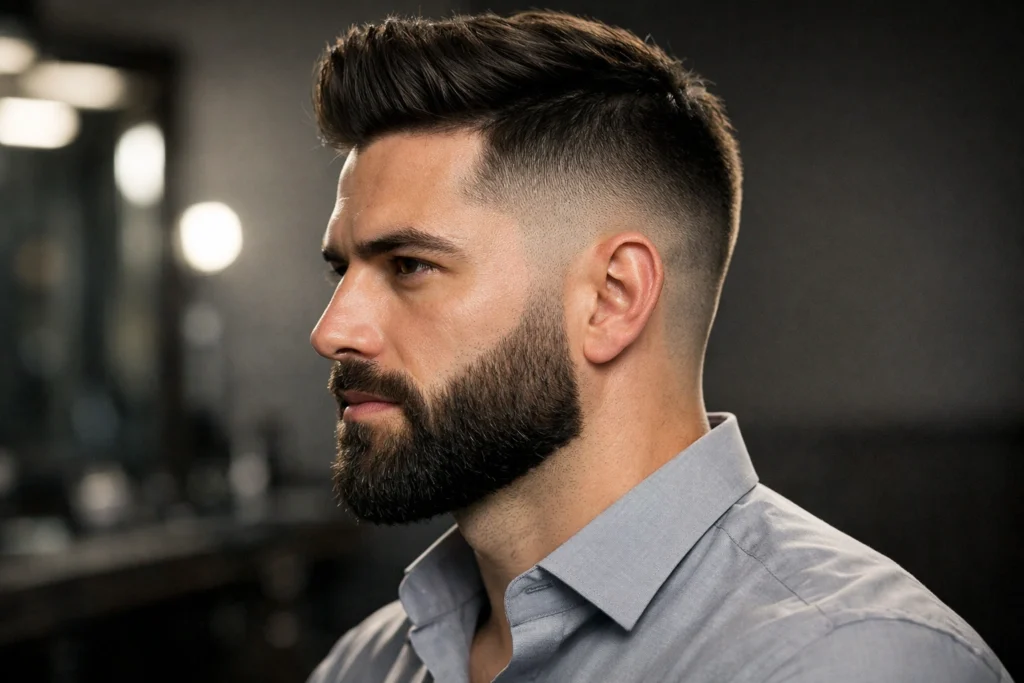
The faded beard is a contemporary, barbershop-refined style that blends a full beard with a fade on the sides, creating a seamless transition from the fuller beard at the chin to shorter stubble or skin at the sideburns. The effect is a modern, clean, and precisely tailored look that combines the elongating benefits of a full beard with the slimming benefits of shorter sides.
For men with double chins, the fade’s most important contribution is its narrowing effect on the sides of the face. By keeping the sideburn and temple area very short through a fade, the faded beard ensures that no visual width is added to the upper portion of the face. This makes the fuller chin and jaw area of the beard appear comparatively larger and more prominent, shifting the balance of the face in a more elongated direction.
This style requires regular barbershop visits to maintain the precision of the fade, typically every two to three weeks. Between visits, the beard itself should be conditioned and brushed daily to maintain its shape and prevent the sides from growing out too quickly and losing the graduated effect.
The Chin Strap Beard

The chin strap beard is a narrow strip of facial hair that runs from the sideburns down along the jawline to the chin, framing the lower face with a defined line of hair. While it does not provide the dense coverage of a full beard or goatee, the chin strap is a highly effective style for creating the visual impression of a jawline where the natural bone structure is soft or obscured, making it one of the more clever beard styles that help conceal a double chin through redirection rather than coverage.
The logic of the chin strap is similar to that of the anchor beard: by placing a visible line of hair along the path where the jawline should be, the chin strap draws the eye along that line and produces the impression of definition and structure. The surrounding clean-shaven skin contrasts with the chin strap to make the defined line appear more pronounced, reinforcing the jaw’s visual presence.
The chin strap must be kept very precisely trimmed. Any looseness or uneven growth immediately undermines the effect. A detail trimmer used every two to three days keeps the width consistent and the edges sharp. This style works best for men with relatively even and thick beard growth along the jawline.
The Yeard
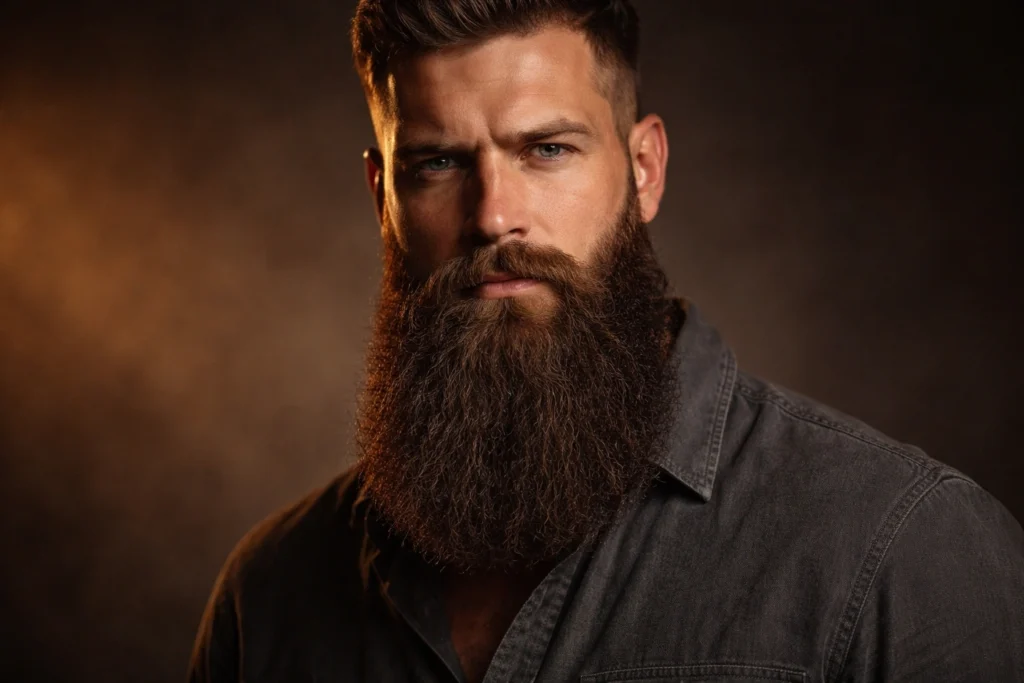
The yeard, a term combining the words year and beard, refers to a beard that has been grown continuously for approximately twelve months with minimal trimming or cutting. It is the longest and fullest option on this list and offers the most comprehensive concealment of a double chin by virtue of sheer volume and length. A yeard typically reaches four to eight inches or more in length and covers the entire chin, jaw, and upper neck area completely.
For men whose primary concern is maximum concealment without precise styling, the yeard is the most straightforward solution available. It requires patience above all else, as twelve months of uninterrupted growth is a meaningful commitment. The beard should not be entirely neglected during the growth period, however. Regular conditioning with beard oil, combing to train the hair to grow downward rather than outward, and occasional trimming of stray hairs to keep the shape controlled all contribute to a yeard that looks impressive rather than unkempt.
As the yeard reaches full length, the sheer weight of the beard causes it to hang downward naturally, which creates a powerful elongating effect on the face. The double chin disappears entirely beneath the cascading beard, and the face takes on a commanding, powerful appearance that few other grooming choices can replicate.
Beard Grooming Principles for Double Chin Concealment
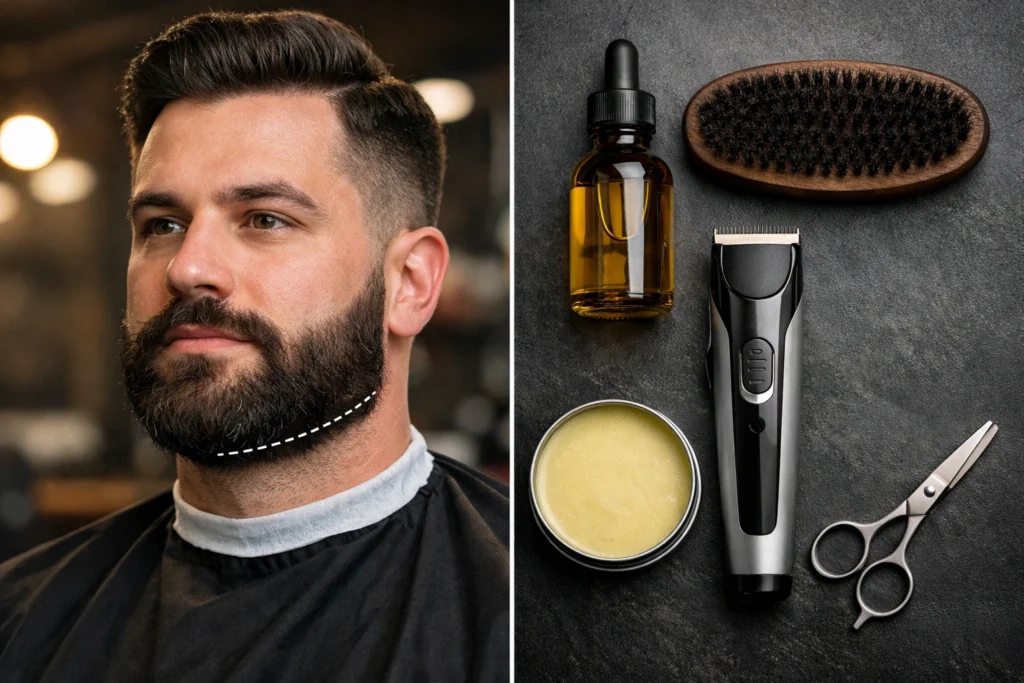
Understanding the individual styles is only part of the picture. The way a beard is maintained and shaped day to day determines whether it flatters the face or works against it. Several grooming principles apply universally across all beard styles that help conceal a double chin, and applying them consistently is what separates a beard that genuinely improves the appearance from one that merely sits on the face.
The single most important grooming principle for men with double chins is neckline placement. The neckline must be set just above the Adam’s apple, not high under the chin. A neckline placed too high creates a visible gap between the beard and the neck that frames the double chin from below and draws immediate attention to the area. A neckline placed at the correct lower position allows the beard to flow naturally over the submental area and cover it completely.
The second principle is the side-to-chin length ratio. In every effective beard style for double chin concealment, the sides of the beard are shorter than the chin. This ratio is non-negotiable. A beard with equal length all around adds roundness to the face and makes the double chin more prominent. A beard with short sides and a full, longer chin adds length and structure to the lower face and produces a slimming, elongating effect.
The third principle is regular conditioning and grooming. A beard that is dry, frizzy, or bushy adds uncontrolled volume in all directions and undermines the sculpted, intentional shape that makes these styles effective. Beard oil applied daily, a brush or comb used to train the hair into the desired direction, and regular trimming all combine to maintain a beard that consistently delivers the flattering effect it is capable of producing.
Beard Styles to Avoid with a Double Chin
Short stubble, the beardstache, and any style that keeps the beard uniformly short all around should be avoided by men with double chins. These styles leave the submental area visible and draw attention to the jawline’s softness rather than concealing it. The goal is always to add coverage and downward elongation, not to keep the problematic area exposed.
Conclusion
The relationship between beard style and facial perception is well established, and for men dealing with a double chin it represents one of the most accessible and effective grooming tools available. The 20 beard styles explored in this guide all share the fundamental qualities that make beard styles effective for concealing a double chin: length and volume at the chin, shorter sides, a well-placed neckline, and a shape that draws the eye downward and inward rather than outward and around.
Whether you choose the complete coverage of a full beard or Garibaldi, the sculpted elegance of a Van Dyke or Balbo, the structural ingenuity of an anchor or chin strap beard, or the sheer commitment of a yeard, the right choice comes down to your face, your beard growth capacity, and the amount of time you are prepared to invest in maintenance. Find your style, give it the grooming attention it deserves, and the double chin that once concerned you will become nothing more than a memory covered by a beard that commands respect.
You may also like this post: 20 Simple Yet Stylish Men’s Hairstyles for Thick Hair
Frequently Asked Questions
What is the best beard length for concealing a double chin?
For most beard styles, a length of two to four inches at the chin provides the best balance of coverage and manageability. This length is sufficient to fully conceal the submental area while remaining practical to groom and maintain. Shorter beards under one inch do not provide enough coverage to be effective for double chin concealment.
Where should I set my beard neckline if I have a double chin?
The neckline should sit just above the Adam’s apple, approximately one to two finger widths above it. Setting the neckline higher than this exposes the double chin area beneath the beard and draws attention to it rather than concealing it. The lower neckline placement is the single most important technique for effective double chin concealment with a beard.
Can a goatee effectively hide a double chin?
A standard goatee provides limited concealment because it is confined to the center of the chin. An extended goatee that reaches along the jawline is significantly more effective. For maximum coverage, a full beard or Garibaldi remains the strongest option. However, for men with patchy cheek growth who cannot grow a full beard, an extended goatee is the next best choice.
Should I keep my beard the same length all over if I have a double chin?
No. Uniform beard length all around adds roundness to the face and can actually make a double chin more prominent rather than less. The most flattering approach is to keep the sides shorter than the chin, creating a tapered effect that emphasizes vertical length over horizontal width. This side-to-chin ratio is a fundamental principle of all effective beard styles for double chin concealment.
How often should I trim my beard to keep the concealing effect sharp?
The frequency depends on the style. Styles with defined edges such as the Van Dyke, anchor beard, and chin strap require trimming every two to three days to maintain crisp boundaries. Fuller styles like the full beard and Garibaldi can be maintained with a trim every one to two weeks. Regardless of the style, the neckline should be checked and cleaned up at least once a week to ensure the beard continues to cover the double chin area effectively.
1 Comment