Introduction
A strong jawline is one of the most sought-after features in masculine facial aesthetics. It signals definition, structure, and confidence, and it is no surprise that men with softer or less defined jawlines often look for ways to sharpen their overall appearance. The most accessible and immediately effective solution available does not involve surgery, jaw exercises, or extreme dieting. It involves growing and shaping a beard with intention.
The right beard style does for the lower face what the right haircut does for the crown. It redefines proportions, introduces angles where none exist, draws the eye toward strength rather than softness, and creates the visual impression of a jaw that is sharper and more structured than it actually is. This is not a trick or an illusion in any negative sense. It is smart grooming, and it has been practiced by men who understood the relationship between facial hair and facial architecture for as long as beards have existed.
This article presents 20 beard styles that add structure to weak jawlines. Each style has been chosen for its ability to contour the lower face, add definition to the chin, tighten the silhouette of the jaw, or create angles that a naturally soft jawline does not possess. Whether you prefer a close, low-maintenance style or something with more presence and depth, there is a beard on this list that will work with your face shape, your hair growth pattern, and your daily grooming routine to give your jawline the definition it deserves.
The Short Boxed Beard
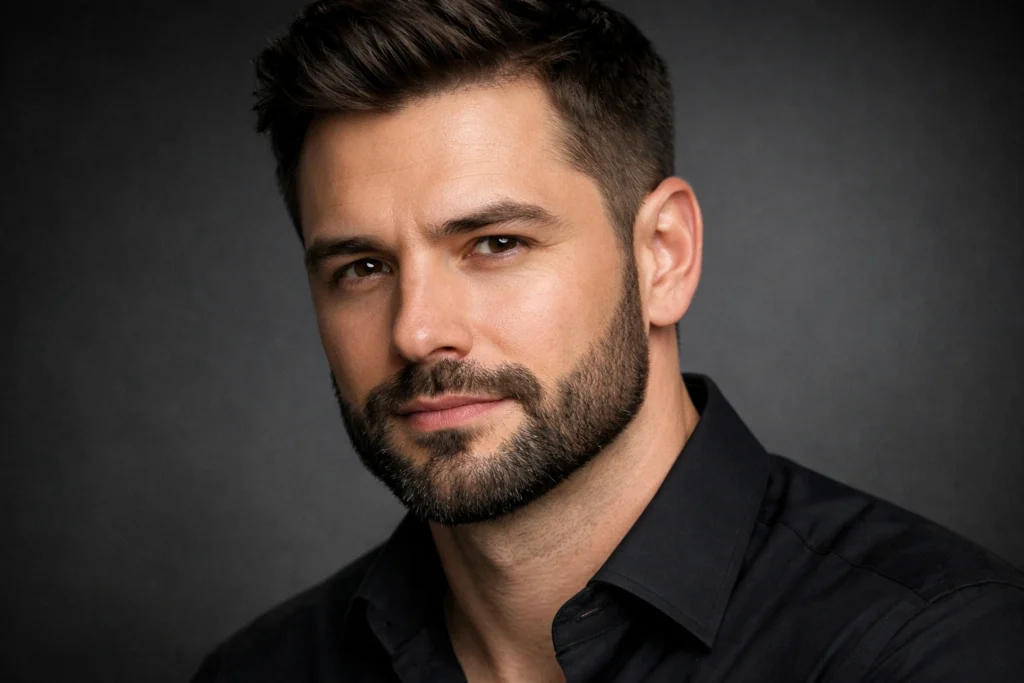
The short boxed beard is one of the most reliable and widely recommended beard styles for men with weak or undefined jawlines. It sits close to the face, covering the jaw, chin, and cheeks with a uniform length that is typically kept between half an inch and one inch. What distinguishes it from a simple beard is its crisp, clearly defined edges. The cheek line is set cleanly and the neckline is shaped with precision, creating a rectangular frame around the lower face that introduces hard angles where the natural jaw is soft.
This framing effect is the key to the short boxed beard’s effectiveness. When the edges of the beard are sharp, the jaw beneath them appears sharper by association. The eye reads the clean line of the beard as a structural boundary and interprets the jawline as being just as defined. A high-quality trimmer set to a consistent guard length handles the bulk of the maintenance, while a detailer or straight razor sharpens the edges every few days to keep the lines crisp and the structure intact.
Why Clean Lines Matter Most
With the short boxed beard, the quality of the edge work is more important than the length of the hair itself. Even a slightly uneven cheek line or a poorly placed neckline can undermine the entire effect. The neckline should sit approximately two fingers above the Adam’s apple, following the natural curve of the jaw, while the cheek line should be trimmed low enough to keep the focus on the jaw rather than the cheeks.
The Classic Goatee

The goatee is one of the oldest and most effective beard styles for adding visual structure to a weak chin and jawline. In its traditional form, it concentrates hair on the chin and connects to a mustache, drawing the eye downward and forward to the center of the face where the chin sits. This concentrated weight at the chin creates the impression of a more prominent, forward-projecting jaw even when the underlying bone structure is soft or receding.
The goatee works particularly well for men whose jawline weakness is most pronounced at the chin rather than along the sides of the jaw. By building density and definition directly at the chin point, the style creates a visual anchor for the lower face that the natural bone structure alone does not provide. Keep the edges of the goatee sharp and the mustache neatly trimmed so that the definition of the style reads clearly without any blurring at the borders. Beard oil applied daily keeps the hair soft, manageable, and healthy-looking, which reinforces the groomed, intentional quality that makes this style effective.
Goatee Length for Jawline Definition
A goatee worn at a slightly longer length on the chin, typically between half an inch and one and a half inches, adds more pronounced vertical elongation to the lower face. This additional length draws the chin point further downward, strengthening the overall profile and making the jaw appear more projected from the side.
The Van Dyke Beard
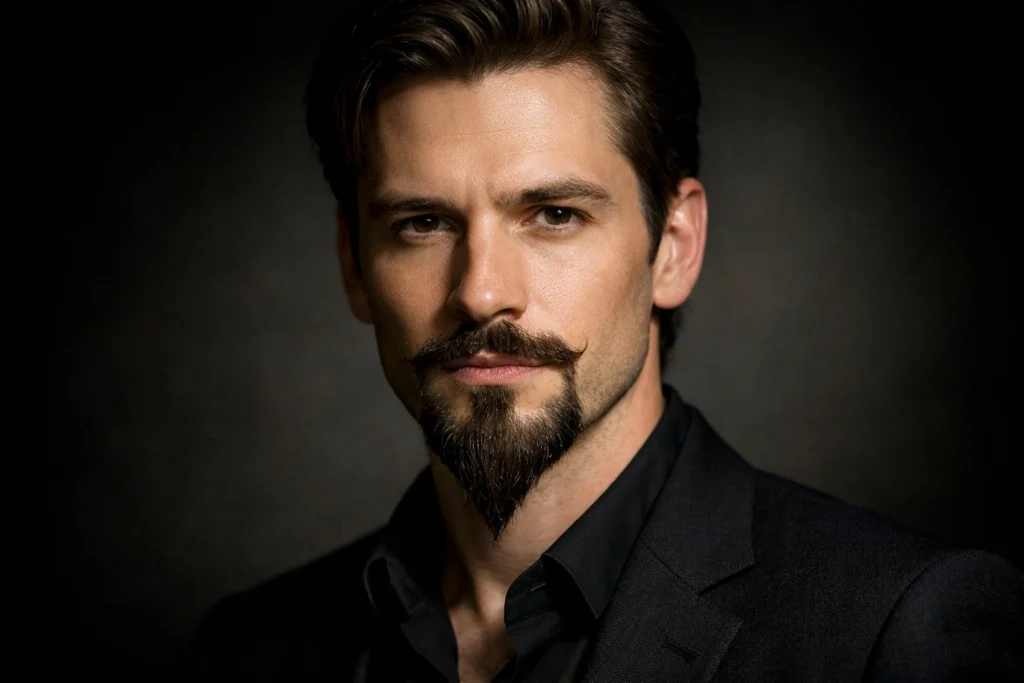
The Van Dyke is one of the most architecturally precise beard styles available to men with weak jawlines. Named after the seventeenth-century Flemish painter Anthony van Dyck, it combines a pointed chin beard with a mustache that is cleanly separated from the chin section by a shaved area on either side of the mouth. This separation creates a visually compelling contrast that draws the eye directly to the chin point, which is styled to taper to a defined point that projects confidence and sharpness.
For men with weak chins, the Van Dyke’s pointed lower section is particularly valuable. The point directs the eye downward and forward, creating the impression of a more prominent chin and a more angular lower face. The shaved areas on either side of the mouth keep the middle of the face clean and uncluttered, which prevents the soft areas of the jaw from becoming the focal point. This style requires regular maintenance to keep the separation clean and the chin point properly shaped, but the visual payoff for a weak jawline is significant.
Styling the Van Dyke Point
The angle and sharpness of the chin point determines how much elongation the Van Dyke delivers. A tighter, more acute point creates a more dramatic elongating effect, while a broader, rounder chin section is softer in appearance. For weak jawlines, a moderately pointed finish delivers the best balance between definition and wearability.
The Balbo Beard

The Balbo beard is a sophisticated and structurally intelligent style that works exceptionally well for men with weak jawlines and softer facial features. It features a floating mustache that does not connect to the chin beard, combined with a shaped beard on the chin and jaw that does not extend to the sideburns. This combination of connected and disconnected elements creates a layered visual effect that adds depth and dimension to the lower face without adding excessive width or bulk.
The Balbo’s separation between the mustache and the chin beard creates visual contrast that draws attention to the jaw and chin area specifically, which is precisely where men with weak jawlines want the eye to travel. The beard section itself can be shaped with clean, angular edges that introduce the structured lines the jaw naturally lacks. Philips grooming experts specifically note that the Balbo beard can be used to strengthen a weak jaw, and it tends to suit men with narrow or soft-featured faces particularly well. This is one of the more technically demanding styles to maintain, but a skilled barber can set the initial shape and provide guidance on maintaining it at home.
Balbo Beard Maintenance
The floating mustache of the Balbo requires regular trimming to prevent it from connecting to the chin beard, as that connection would transform the style into a different shape entirely. Trim the mustache every two to three days and shave the connecting area between the mustache and chin beard with a razor for a clean, precise separation.
The Chin Strap Beard
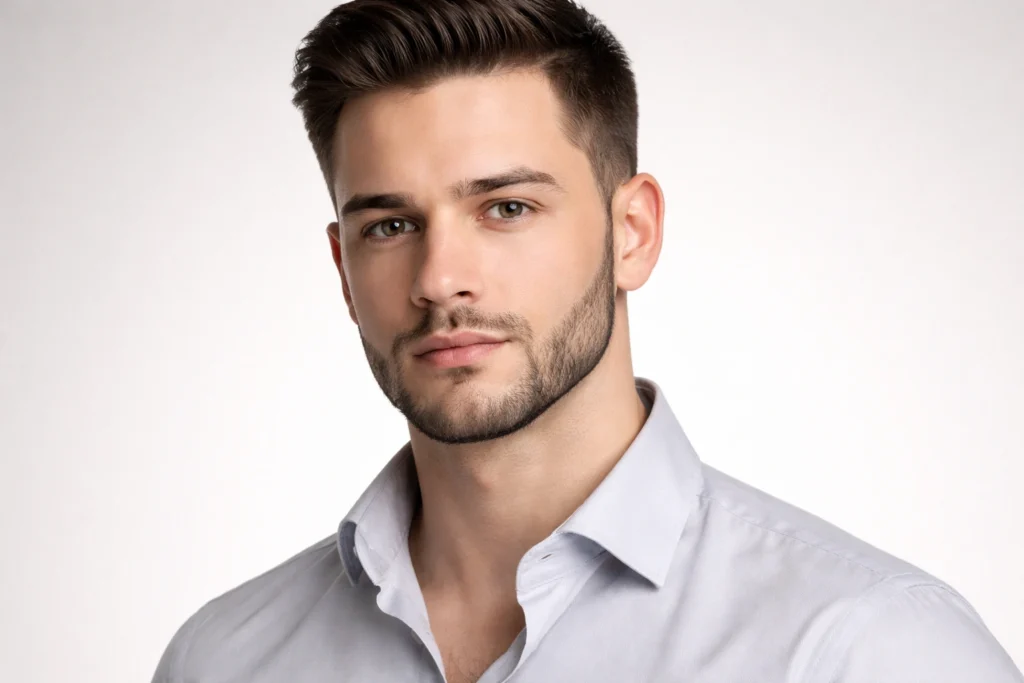
The chin strap beard is one of the most direct and deliberate tools available for adding structure to a weak jawline. It consists of a thin strip of beard that follows the natural line of the jaw from one sideburn, around the chin, and back up to the other sideburn, without a mustache. The effect is essentially a drawn outline of the jaw, which creates the visual impression of a defined, angular jawline regardless of what the underlying bone structure actually looks like.
For men whose jawline is soft or receding, the chin strap acts as scaffolding. It places a visible, structured line exactly where a defined jaw would naturally sit, and the eye reads that line as structural definition. The width of the strap determines how much presence the style carries: a very narrow strap of a few millimeters reads as precise and deliberate, while a slightly wider strap of half an inch adds more weight and mass to the jaw area. Both variations require precise daily maintenance with a razor or detailer to keep the edges sharp, as any softening of the lines undermines the structural effect that makes this style work.
Chin Strap Width Considerations
Men with particularly soft jawlines benefit from a slightly wider chin strap, as the additional width creates more visual mass along the jaw and makes the structure more convincing. Very narrow chin straps are best suited to men whose jawline already has some natural definition and only requires a degree of enhancement.
The Extended Goatee
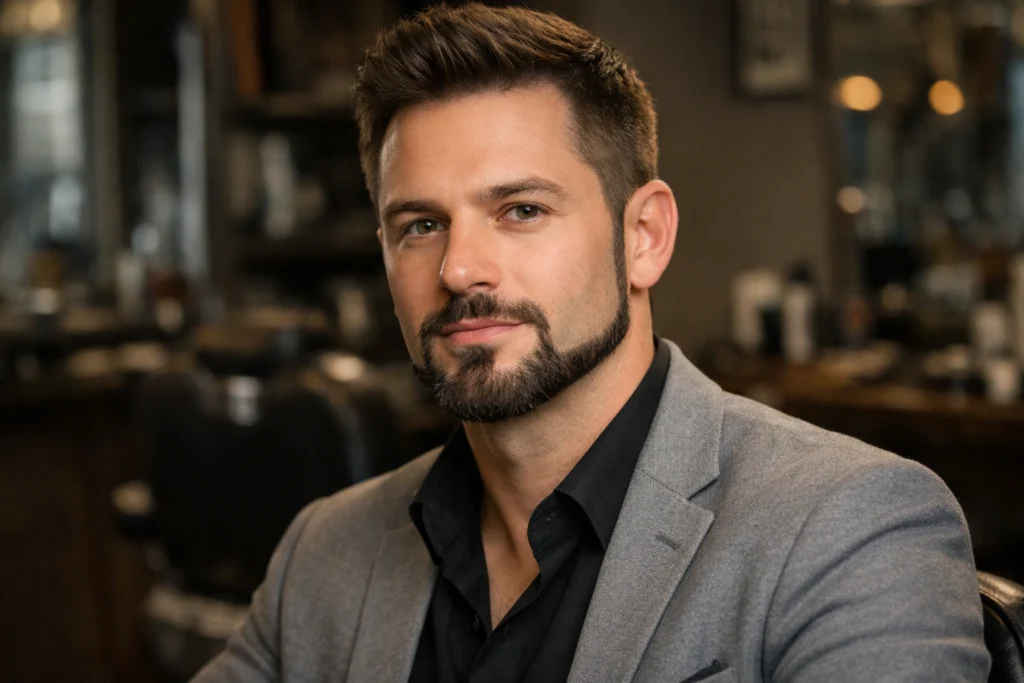
The extended goatee, sometimes called the tailback, builds on the classic goatee by extending the chin beard along the jawline on either side without the hair meeting at the sideburns. This extension of the beard outward from the chin toward the sides of the jaw adds width to the lower face at the chin level while simultaneously providing structure along the jaw itself. The result is a beard style that addresses weak jawline definition from multiple angles at once.
By letting the beard stretch along the jawline, the extended goatee builds visual width and structure at the most critical part of the face for men whose jaws lack definition. Many grooming specialists describe this style as a subtle but strategic approach to creating balance for rounder or softer facial structures. The extended goatee is also one of the easier styles on this list to maintain, as it does not require the same level of precision edge work as the chin strap or Van Dyke. Regular trimming to maintain a consistent length and clean definition at the cheek line and neckline is all that is required to keep this style performing at its best.
Pairing with a Haircut
The extended goatee pairs particularly well with haircuts that have closely cut or faded sides, as this combination reinforces the principle of keeping visual weight concentrated at the jaw and chin level. A high fade or taper fade paired with an extended goatee creates a cohesive grooming look that enhances the jaw’s apparent definition from multiple directions.
The Anchor Beard
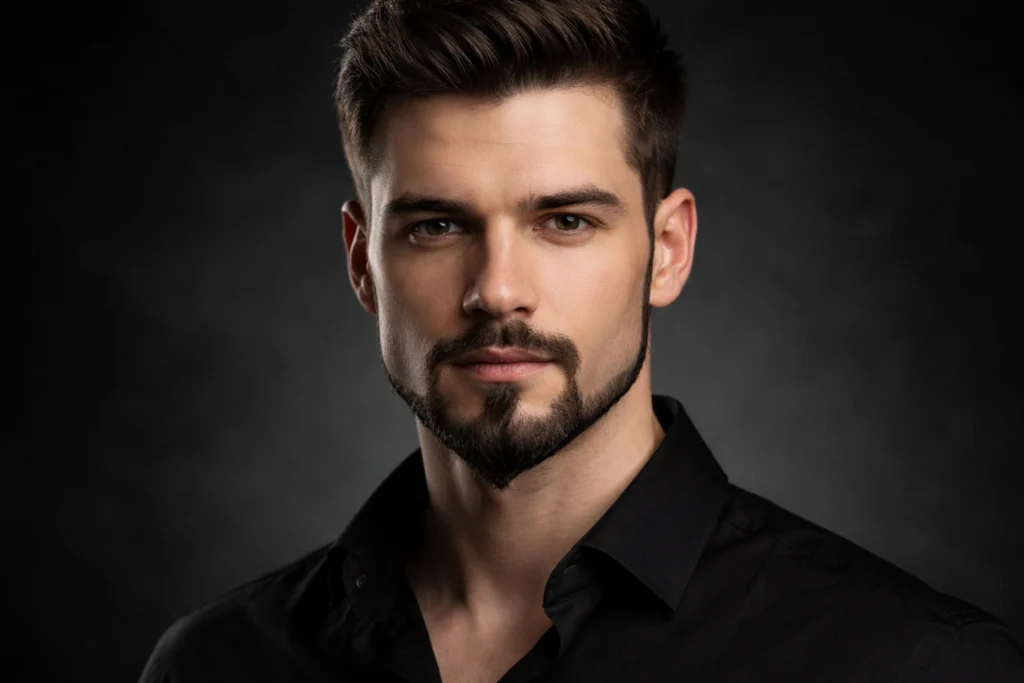
The anchor beard takes its name from its resemblance to a ship’s anchor when viewed from the front. It combines a pointed chin beard with a mustache and a narrow beard that traces the natural line of the jaw outward from the chin, creating a style that is both visually distinctive and highly effective at adding structure to a weak jawline. The pointed chin section directs the eye downward and forward, the jaw tracing creates angular definition along the sides, and the mustache ties the entire composition together at the top.
This style works because it maps a series of clean, deliberate lines onto the lower face that collectively create the impression of a structured, defined jaw. Each element of the anchor beard contributes to the overall effect of structure and angularity, making it one of the most comprehensive jawline-enhancing styles available. It requires a skilled barber to set the initial shape correctly, particularly the precise angle of the chin point and the clean lines of the jaw tracing, but once established it can be maintained at home with careful trimming every few days.
Anchor Beard Versus Van Dyke
While the Van Dyke focuses primarily on the chin point for its elongating effect, the anchor beard adds jawline tracing that the Van Dyke does not include. For men whose weakness extends along the sides of the jaw rather than only at the chin, the anchor beard is the more comprehensive solution.
The Heavy Stubble Beard

Heavy stubble, typically defined as three to five days of beard growth kept at a consistent length of between four and six millimeters, is one of the most underappreciated tools for adding structure to a weak jawline. Unlike light stubble, which can actually make a weak jawline appear softer by adding an undefined, hazy texture to the lower face, heavy stubble at a consistent length creates shadow and depth that sharpen the visual perception of the jaw significantly.
The key to making heavy stubble work for a weak jawline is precise neckline definition and a clean, low cheek line. The neckline should be kept sharp, sitting two fingers above the Adam’s apple, while the cheek line should be trimmed to remove any stray growth above the main beard area. This keeps the stubble concentrated on the jaw and chin where it does its structural work, rather than spreading upward onto the cheeks where it would blur the jawline rather than define it. A quality beard trimmer with a reliable four to six millimeter guard setting, used consistently every two to three days, delivers the evenness that makes heavy stubble look intentional and well-groomed.
Stubble versus Light Growth
The distinction between heavy stubble and light stubble is critical for men with weak jawlines. Light stubble at one to two millimeters does not create sufficient shadow to define the jaw and can actually draw attention to facial softness. Heavy stubble at four to six millimeters creates visible depth and shadow that reads as structure.
The Full Beard with Shaped Neckline

A well-maintained full beard is one of the most powerful tools available for a man with a weak jawline, but the key word in that sentence is well-maintained. An unshaped full beard that grows freely at the neckline and cheeks adds bulk without structure, which can make the jaw appear even less defined by surrounding it with shapeless volume. A full beard that is carefully shaped and maintained is an entirely different proposition.
The full beard should be trimmed progressively shorter on the sides and slightly longer at the chin. This tapering draws visual weight toward the chin point, elongating the lower face and creating the impression of a more prominent, projecting jaw. The neckline must be defined with particular care, as a clean neckline is what separates a structured full beard from an unkempt one. Regular application of beard oil keeps the hair healthy and manageable, while a boar bristle brush trains the hair to lie in the right direction and distributes natural oils evenly throughout the beard. For men with receding or soft chins, allowing the chin section of the full beard to grow slightly longer than the sides adds a pointed or elongated quality to the chin that directly compensates for the underlying structural weakness.
Maintaining the Full Beard Shape
Visit a barber every three to four weeks to reset the shape of a full beard. Between professional visits, maintain the cheek line and neckline with a trimmer or razor every three to four days. Allow the chin section to grow naturally between barber visits to maintain the elongating effect.
The Beard Fade
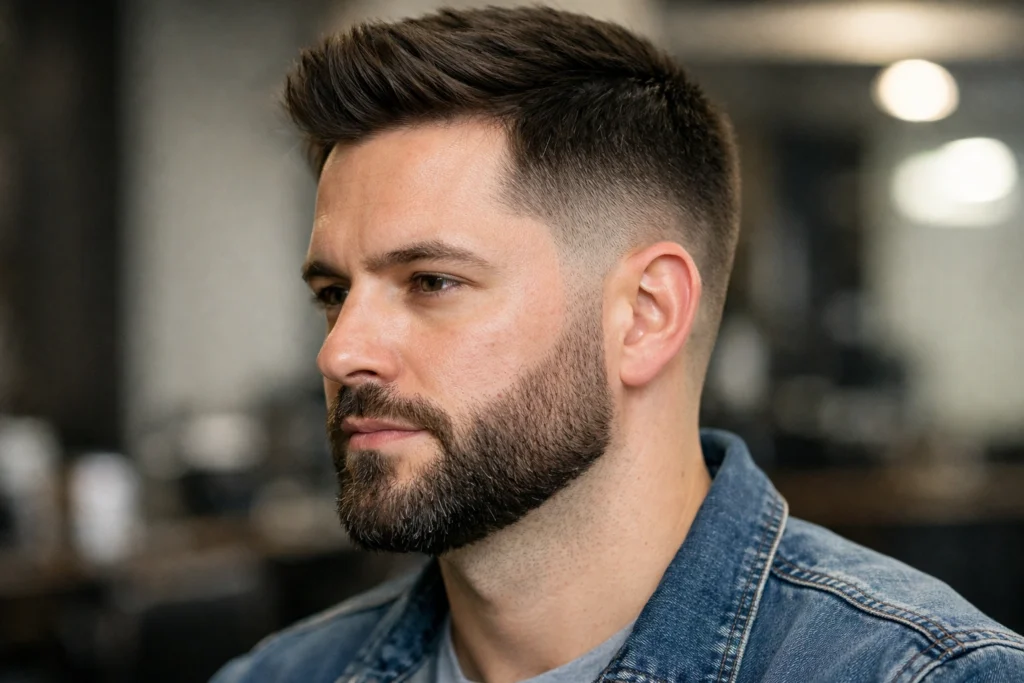
The beard fade is a contemporary technique rather than a specific beard shape, but its impact on the appearance of the jawline for men with weak facial structure is significant enough to earn its place on this list. A beard fade involves gradually blending the beard from a fuller length at the chin and jaw into shorter and shorter stubble as it moves upward toward the cheekbones and temples, eventually fading into the skin. This gradient effect creates a natural shadow that concentrates visual mass at the chin and lower jaw while keeping the upper portions of the face clean and uncluttered.
The practical effect of the beard fade on a weak jawline is to draw the eye downward to the chin and create the illusion of a more clearly defined jaw. The tight, almost invisible fade at the top of the beard and the fuller, more substantial growth at the bottom create a contrast that makes the lower jaw appear heavier, wider, and more structured than it actually is. This style pairs exceptionally well with a high fade haircut, as the two fades working together create a unified, cohesive grooming aesthetic that reinforces the jaw-defining effect of the beard fade from above. A barber with expertise in fade techniques is essential for this style, as the blending requires significant skill to execute cleanly.
Beard Fade and Face Shape
The beard fade works across all face shapes but is particularly well suited to men with round faces and soft jawlines because the progressive darkening and density toward the chin draws the eye in the exact direction needed to elongate the lower face and enhance its apparent definition.
The Pointed Goatee
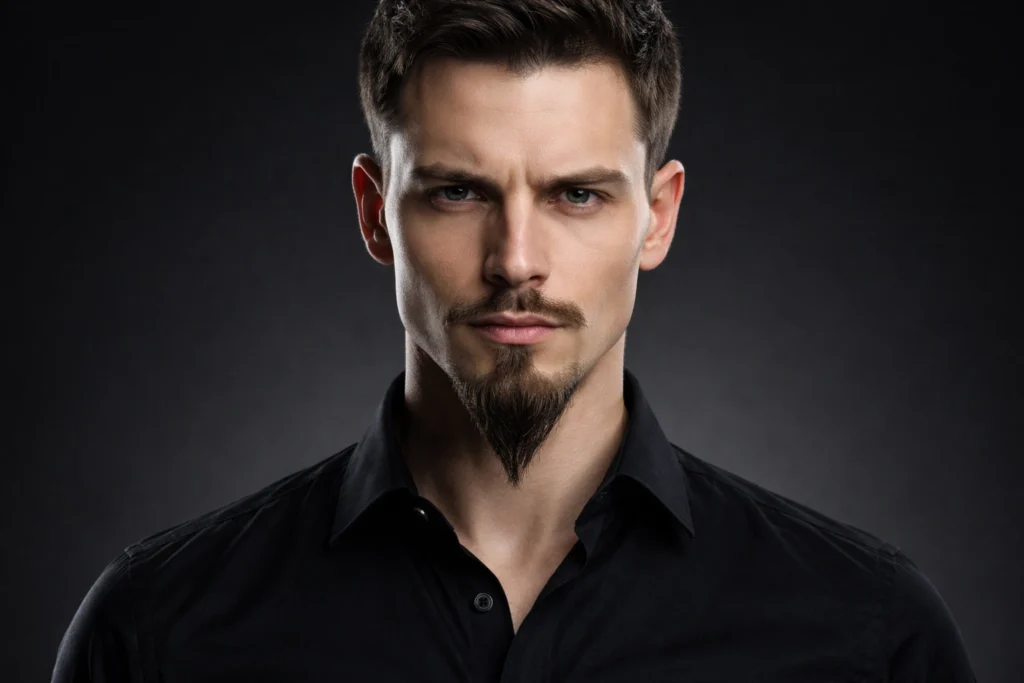
The pointed goatee is the most aggressively jaw-defining style on this list, and for men with significantly weak or receding chins it can deliver a transformation that no other beard style matches. It focuses all of the beard’s visual weight on the chin alone, styled to a deliberate downward-facing point that projects forward and downward from the chin. This creates the strongest possible impression of chin prominence and jawline definition by directing the eye to the most forward-projecting element of the lower face.
The pointed goatee requires keeping the cheeks and sides of the jaw completely clean-shaved, which keeps the focus entirely on the chin and prevents the soft areas of the jaw from drawing any visual attention. The mustache should be kept narrow and neatly trimmed so that it supports the goatee without competing with it for visual dominance. The point of the goatee itself should be maintained with a detailer or razor to keep the taper sharp and precise. A well-shaped pointed goatee on a man with a weak jawline is one of the clearest demonstrations of how strategic beard grooming can redefine facial structure without any intervention beyond a trimmer, a razor, and a consistent maintenance routine.
Growing the Point
Allow the chin section to grow to at least three quarters of an inch before attempting to shape the point, as shorter growth does not have enough length to taper to a convincing definition. Shape the sides of the chin beard inward at a gradual angle that brings the growth to a neat, downward-facing point at the lowest part of the chin.
Conclusion
A weak jawline is a starting point, not a limitation. Every one of the 20 beard styles covered in this article demonstrates that with the right shape, the right length, and the right maintenance routine, facial hair has the power to add genuine structural definition to any jawline. The transformation is not cosmetic in a superficial sense. It is a matter of proportion, contrast, and the deliberate placement of visual weight in the areas of the face where it creates the most flattering and authoritative impression.
The principles underlying all 20 of these styles are consistent: concentrate definition at the chin and jaw, keep the sides clean and close, introduce angular edges wherever possible, and maintain those edges with the discipline and regularity that sharp grooming demands. Take these principles to a skilled barber, identify the style that suits your face shape and your lifestyle, and commit to the maintenance that keeps it looking its best. Your jawline will look stronger for it.
Yoy may also like this post: 20 Beard Styles That Help Conceal a Double Chin
Frequently Asked Questions
Can a beard really make a weak jawline look stronger?
Yes, significantly. Strategic beard shaping places defined edges and visual weight exactly where the jaw needs structure. Styles such as the short boxed beard, chin strap, and pointed goatee create the illusion of a sharper, more defined jaw through deliberate contrast and angular line work rather than relying on bone structure alone.
What is the worst beard style for a weak jawline?
Full, round, unstructured beards that grow freely without shaped necklines or defined cheek lines are the least flattering for weak jawlines. They add bulk without definition, which makes the jaw appear even softer and less distinct. Any style that spreads width at the cheeks without concentrating weight at the chin will work against a weak jawline rather than in its favor.
How long does it take to grow a beard style that adds jaw definition?
Most of the shorter styles on this list, including heavy stubble, the chin strap, and the short boxed beard, are achievable within one to three weeks of growth. Styles requiring more length, such as the pointed goatee, the Van Dyke, and the full beard with shaped neckline, typically require four to eight weeks of growth before they can be shaped effectively.
Should I visit a barber to shape my beard for jawline definition?
Yes, particularly for the initial shaping. A barber who specializes in beard work can assess your specific jawline shape, recommend the most flattering style from the options available, and set the foundational lines that you then maintain at home. Getting the neckline and cheek line placement right from the start is critical, and a professional barber has the skill and perspective to do this more accurately than most men can manage on their own.
Does beard color affect how much structure a beard adds to the jawline?
Yes. Darker beards create more contrast against the skin, which makes the edges and shadows more visible and the structural effect more pronounced. Men with lighter or patchier beards may find that the definition effect is less dramatic. Using a beard dye one or two shades darker than your natural color can enhance the shadow and depth that create the jawline-defining effect, though this step is optional and should be approached carefully to avoid an unnatural result.
2 Comments