Introduction
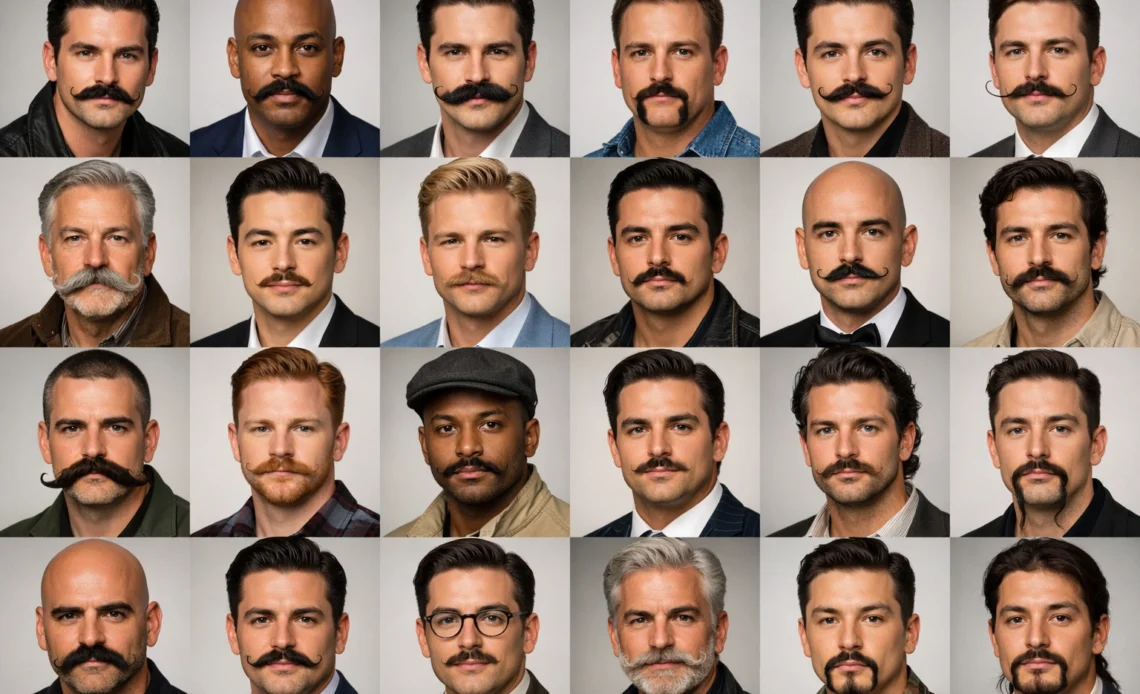
The mustache is back, and it is not apologizing for its absence. After years of living in the shadow of the full beard trend, the mustache is reclaiming its place as one of the most powerful and personality-driven grooming choices a man can make. In 2025, the upper lip is where style lives. From the rugged sweep of the horseshoe to the refined curl of the handlebar, from the effortless masculinity of the chevron to the cinematic boldness of the outlaw, mustache styles that turn heads are being worn with renewed confidence by men across every age group, profession, and personal aesthetic.
The mustache is a statement piece in a way that a beard simply cannot replicate. A beard covers, shapes, and frames. A mustache declares. It sits at the most expressive part of the face, above the mouth, and announces character before a single word is spoken. The right mustache communicates confidence, creativity, heritage, or rebellion, depending on the style, the man, and the moment. The wrong mustache says nothing but unfortunate things. The difference between the two is knowledge: understanding which styles exist, how they work, what they demand in terms of grooming commitment, and what they project to the world.
This guide covers 20 mustache styles that turn heads with authority. Each style is examined for its defining characteristics, its grooming requirements, the face shapes it suits best, and the kind of impression it creates. Whether you are growing your first mustache or looking to graduate from a standard trim to something with more presence, this list provides everything you need to make an informed, confident choice. The upper lip is a canvas. These are the twenty most compelling ways to use it.
The Handlebar Mustache
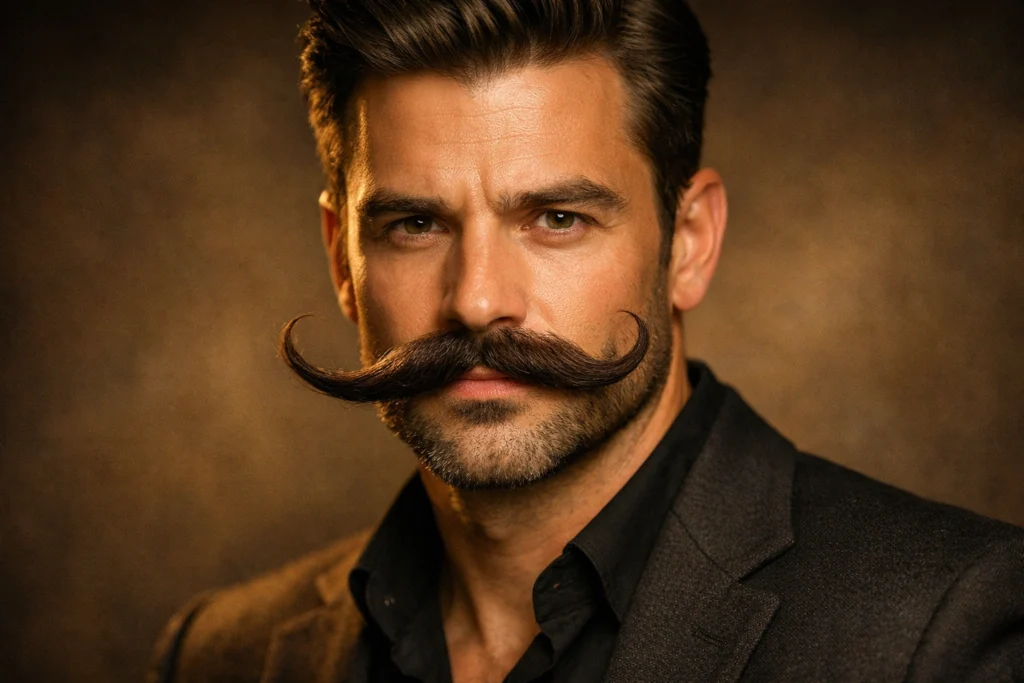
The handlebar mustache is the undisputed king of mustache styles that turn heads. It is impossible to wear without attracting attention, and when grown well and styled with precision, it is equally impossible to wear without attracting admiration. The defining feature of the handlebar is its swept, curling ends, which are trained and held in position with mustache wax, pointing upward and outward from the corners of the mouth in a sweeping arc that gives the face a theatrical, aristocratic energy.
The handlebar requires patience to grow and discipline to maintain. The hair needs to reach a length of at least two to three inches at the ends before the curl becomes meaningful, which typically requires three to four months of dedicated growth. Daily application of a medium to strong hold mustache wax, followed by careful twisting and training of the ends in the desired upward direction, builds the shape progressively over time. Once the style is established, the maintenance becomes a satisfying daily ritual rather than a chore.
The handlebar suits men with oval and round face shapes particularly well, as the horizontal spread of the curls adds width to the upper face and creates a strong visual anchor that balances rounded features. Men with strong, angular faces also carry it well, as the upward curl introduces a softening, theatrical quality to otherwise severe features. Celebrities from across the decades, ranging from Salvador Dali to modern men with a strong sense of personal style, have demonstrated that the handlebar mustache is not simply a style choice. It is a declaration of identity.
Wax Selection for the Handlebar
A strong hold wax is essential for maintaining the handlebar’s characteristic curl through the course of a full day. Apply a small amount of wax to the fingertips, warm it between the fingers until it becomes pliable, then work it through the ends of the mustache before twisting and shaping. For maximum hold in humid conditions, a firmer, heat-activated wax delivers the most reliable result.
The Chevron Mustache
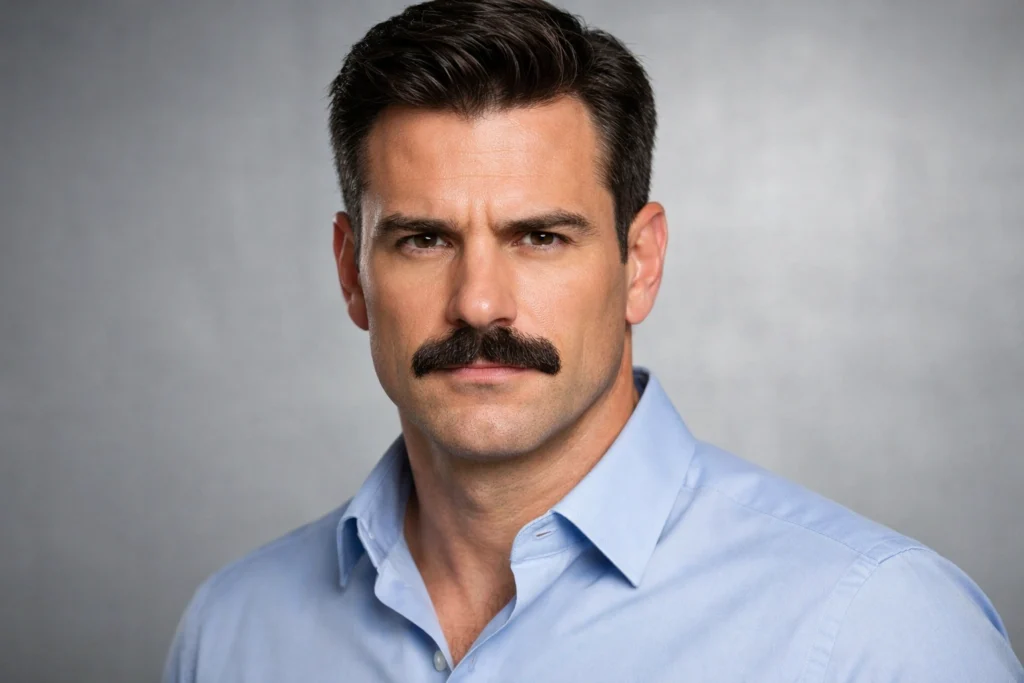
The chevron is the mustache that defined an era and continues to define masculine credibility decades later. Named for the inverted V shape it creates when the hair grows thick and full across the entire upper lip, the chevron is the style most associated with Tom Selleck and Freddie Mercury, two men who elevated the upper lip to something approaching an art form. It is a bold, no-nonsense mustache that does not rely on elaborate shaping or theatrical styling to command attention. Its power comes entirely from its density, coverage, and clean edges.
The chevron covers the full width of the upper lip and hangs just slightly over the lip line in its most classic form. The edges are trimmed cleanly, the base is kept sharp, and the overall impression is one of masculine authority delivered without pretense. It is one of the most straightforward mustache styles to maintain: regular trimming of the outer edges and the lower border is all that is required, with no wax or product necessary to hold the shape. This simplicity is part of its appeal. The chevron does not try to be clever or elaborate. It simply is.
This style suits virtually every face shape but performs particularly well on square and oblong face shapes, where the wide coverage of the chevron adds horizontal presence to the upper face and balances the strong geometry of the jaw. Men with round faces should ensure the chevron does not add excessive width. Keeping the outer edges trimmed back slightly from the full natural extent of the hair prevents this from becoming an issue.
Trimming the Chevron
Trim the chevron with a quality pair of mustache scissors or a precision trimmer, cutting along the lower edge to keep the border clean and preventing overhang beyond the lip. The outer corners should be trimmed to a natural angle that follows the crease at the corner of the mouth. Resist the temptation to take the edges too high, as this begins to narrow the style into a less impactful version of itself.
The Horseshoe Mustache
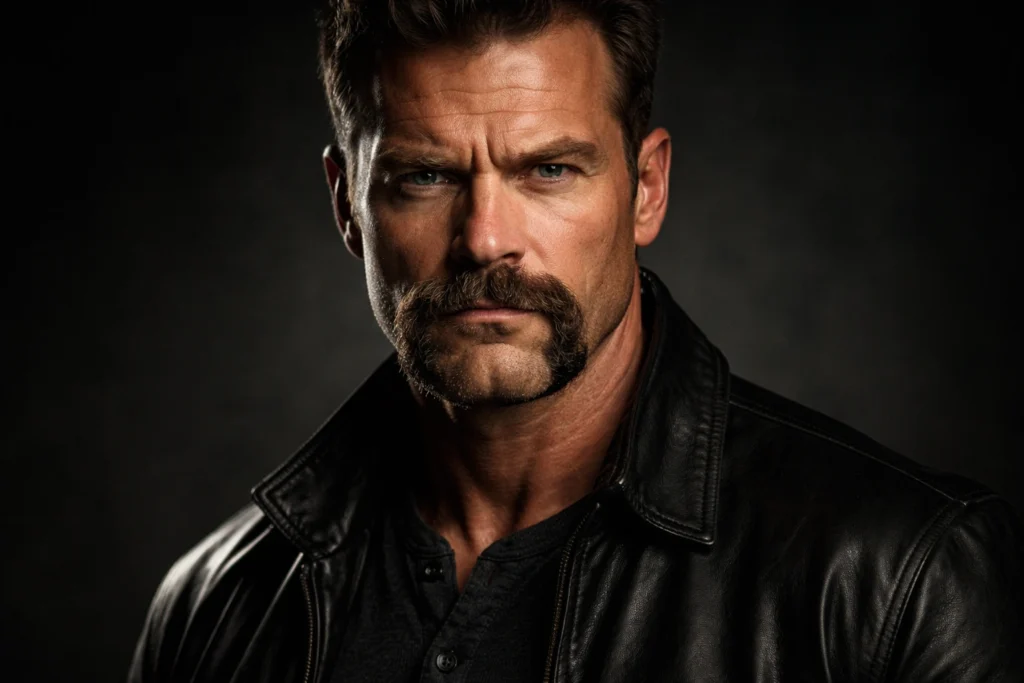
Few mustache styles that turn heads do so with the immediate, visceral impact of the horseshoe. It is bold, assertive, and carries a cultural weight that connects it to motorcycles, rock music, and a particular strain of American masculinity that is unapologetically confrontational. The horseshoe consists of a full mustache at the upper lip combined with two vertical strips of hair that run downward along the corners of the mouth to the chin, forming an upside-down U or horseshoe shape.
The horseshoe frames the mouth in a way that no other mustache style does, creating a contained, powerful composition that draws intense attention to the lower face. It suits strong-featured men, particularly those with square or rectangular face shapes, and it pairs effectively with a shaved or closely cropped head. Worn by wrestlers, athletes, and men who want their appearance to communicate a degree of physical authority, the horseshoe is not a style for the tentative groomer. It requires commitment, both to the growth process and to the personality projection it demands.
Maintenance involves keeping the vertical strips even in width, typically around one centimeter, and ensuring the horizontal upper section maintains clean, defined edges. The strips should run straight downward from the corners of the mustache to the jawline without widening or tapering, which preserves the clean, geometric quality that makes the horseshoe so visually striking.
Horseshoe Width Calibration
The width of the vertical strips in a horseshoe mustache should be consistent from top to bottom. Use a precision trimmer guided by a beard shaping tool to maintain symmetrical width on both sides. Any variation in width between the left and right strips is immediately noticeable and undermines the clean geometry of the style.
The Walrus Mustache
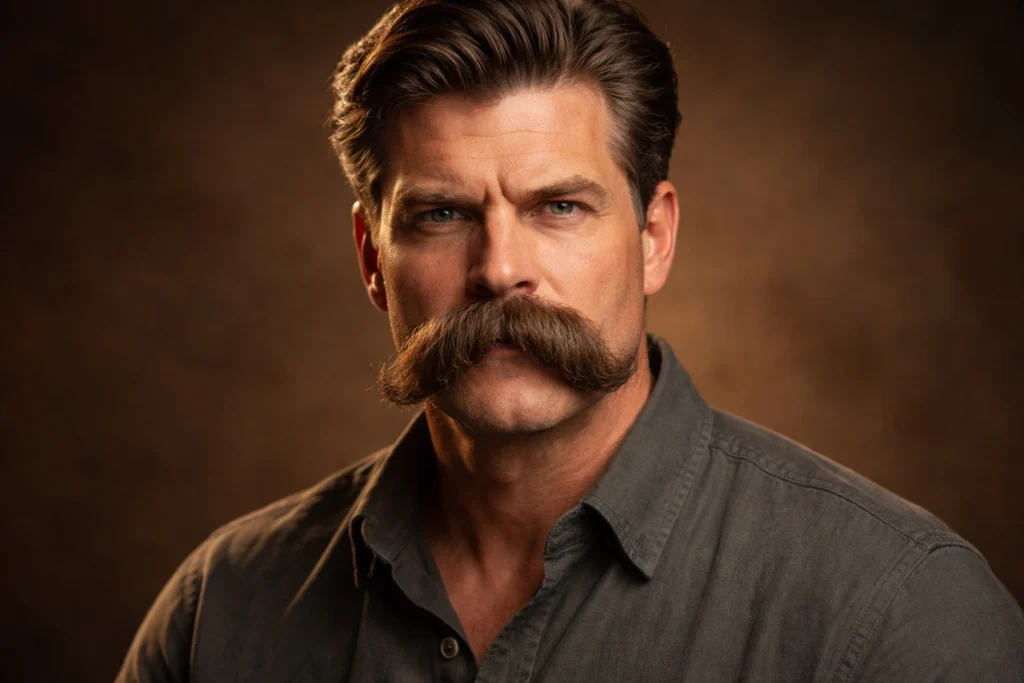
The walrus mustache is one of the most overtly masculine and boldly textured mustache styles available, and its capacity to turn heads is substantial. It is a thick, full, and deliberately overgrown mustache that completely covers the upper lip and hangs downward over the mouth in a dense, heavy curtain of hair. Named for the large marine mammal whose whiskers it resembles, the walrus is a statement of unapologetic abundance, a mustache that does not ask for permission or operate within modest grooming conventions.
The walrus requires significant facial hair density and several months of growth before it reaches its characteristic fullness. Men with naturally thick, coarse facial hair are the best candidates for this style, as finer hair tends to produce a less convincing version that lacks the weight and presence the walrus demands. A quality beard oil or conditioner applied daily keeps the hair soft and manageable, reducing the risk of the mustache becoming wiry or difficult to control. The lower edge hangs naturally below the lip without being trimmed back, which is the defining grooming choice of this style.
The walrus suits square and rectangular face shapes best, where the dense horizontal coverage of the mustache adds visual balance to strong, wide features. Men with narrower or more elongated face shapes may find the walrus adds too much horizontal weight, making the face appear shorter than it is.
The Pencil Mustache
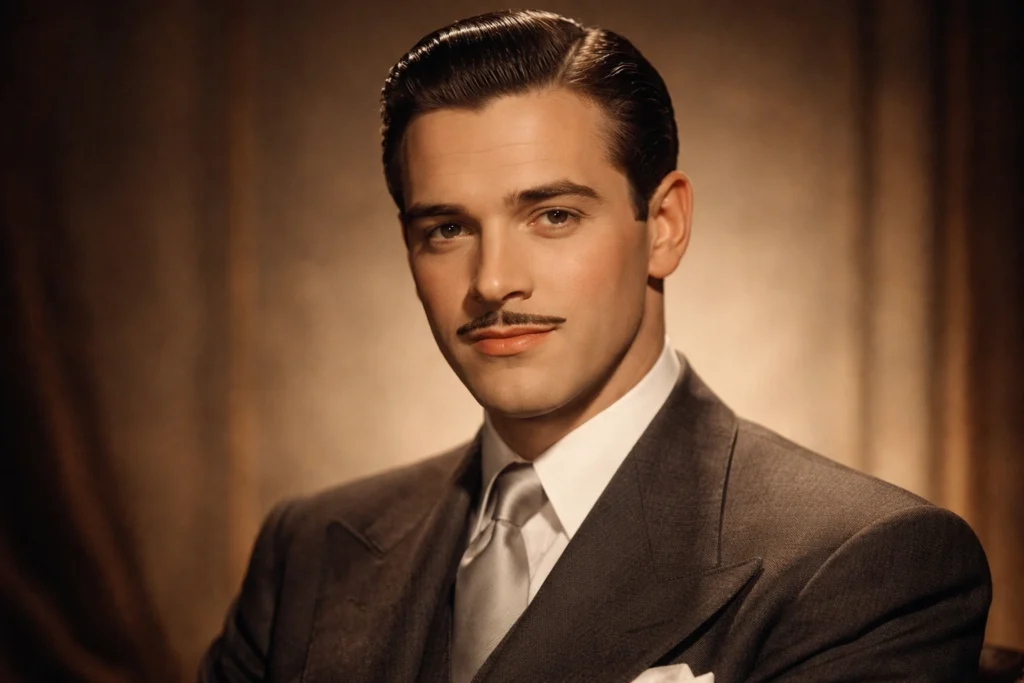
The pencil mustache is the most refined and historically resonant of all mustache styles that turn heads through elegance rather than volume. It is a thin, precisely trimmed line of hair that sits directly above the upper lip, spanning the width of the mouth or slightly less, with the edges kept immaculately sharp and the hair trimmed to a height of just two to three millimeters. The pencil mustache evokes old Hollywood, with figures like Clark Gable, Errol Flynn, and Cary Grant defining its cultural golden age in the 1930s and 1940s.
The pencil mustache made a significant modern comeback through Brad Pitt’s portrayal of Lt. Aldo Raine in Inglourious Basterds and has continued to attract contemporary adherents who appreciate its association with debonair confidence and period-specific elegance. Wearing a pencil mustache today communicates a strong sense of personal style, historical awareness, and the willingness to be distinctly individual in a grooming landscape where fuller styles dominate.
This style requires daily edge maintenance. Because the pencil mustache is defined entirely by its precise, sharp line, any blurring of the borders through growth immediately compromises the style. A straight razor or fine precision trimmer must be run along the upper and lower edges every one to two days. It works best on men with dark, dense facial hair, as lighter or sparser hair struggles to create the clean, visible line this style depends upon.
Face Shape Considerations for the Pencil
The pencil mustache suits oval and oblong face shapes most naturally, as its narrow horizontal width does not add significant visual mass to the face. Men with round or very wide faces should approach this style with caution, as the thin line can appear disproportionately delicate against broad features.
The Beardstache
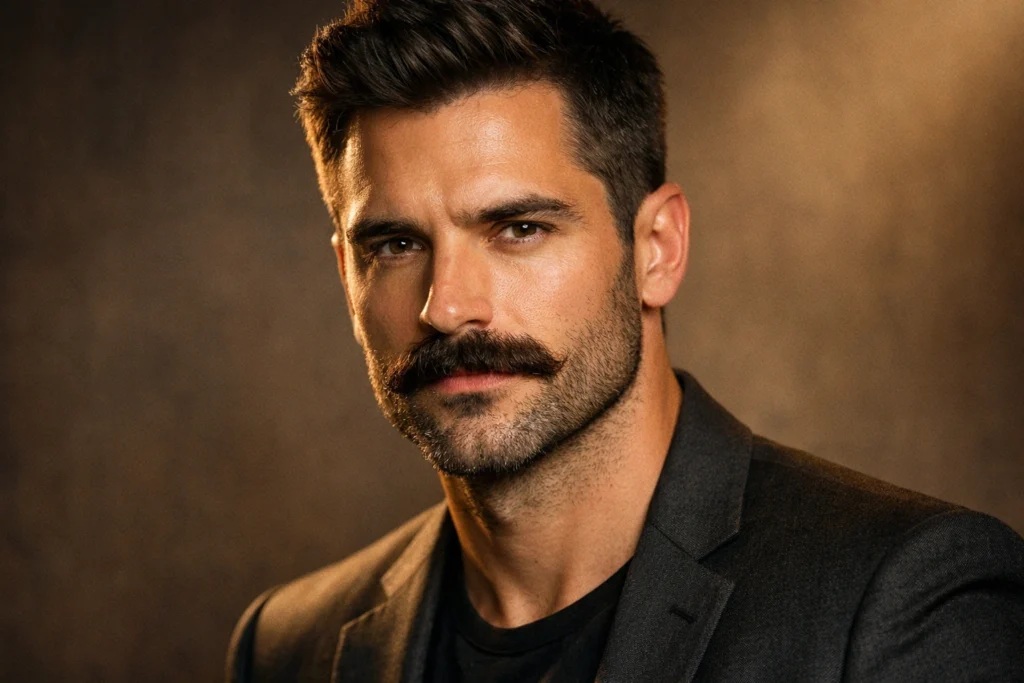
The beardstache occupies a fascinating middle ground between the mustache and the beard and represents one of the most versatile and genuinely contemporary mustache styles that turn heads in the current grooming landscape. It combines a full, prominent, deliberately grown mustache with short stubble or a lightly trimmed beard on the rest of the face, creating a layered look where the mustache is unmistakably the dominant feature while the surrounding beard provides texture, context, and support without competing for attention.
Henry Cavill’s signature beardstache brought this style to mainstream prominence and demonstrated its power to enhance strong facial features with a modern, masculine sophistication. The contrast between the full mustache and the shorter surrounding beard creates depth and dimension that a standalone mustache or standalone beard cannot replicate. The beardstache suits men who want the expressive character of a mustache combined with the coverage and facial framing benefits of a beard, delivered in a package that is both bold and controlled.
Maintaining the beardstache requires regular trimming of the surrounding beard to keep it shorter than the mustache, ensuring the visual hierarchy between the two elements remains clear. The mustache itself should be kept at a length and fullness that reads as the focal point of the style, typically five to eight millimeters or more, while the surrounding beard sits at two to three millimeters. A small amount of mustache wax or balm keeps the mustache shaped and directed, while a precision trimmer maintains the surrounding beard at its correct shorter length.
Mustache Dominance in the Beardstache
The single most important grooming decision in maintaining a beardstache is ensuring the mustache always reads as visibly fuller and longer than the surrounding beard. If the beard is allowed to grow to a similar length, the beardstache loses its defining contrast and becomes simply a full beard. The visual separation between the two lengths is the feature that makes this style work.
The Outlaw Mustache
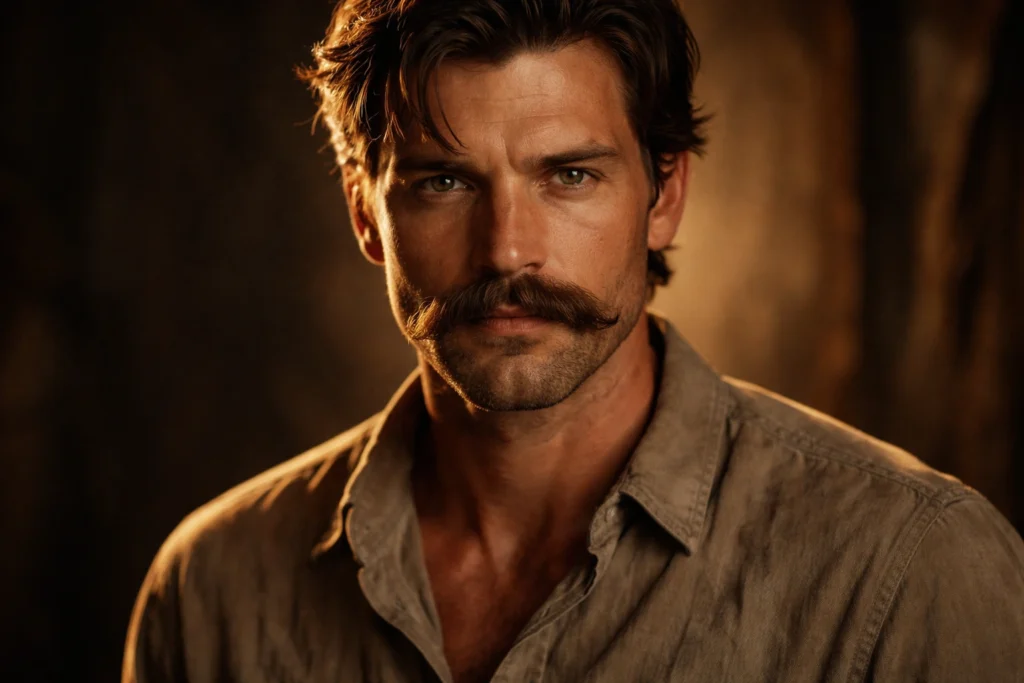
The outlaw mustache is one of the most discussed and celebrated mustache styles of the current era, brought to widespread attention by actors including Pedro Pascal and Paul Mescal, whose natural, slightly downward-curving mustaches became cultural talking points and grooming reference points for men looking for a style that projects rugged authenticity without theatrical elaboration. The outlaw is characterized by a full, natural mustache that follows the curve of the upper lip, with the corners allowed to drop slightly downward rather than being trimmed into a horizontal line or waxed into an upward curl.
This natural downward curve gives the outlaw mustache a distinctive western, cinematic quality that reads as effortlessly masculine and thoroughly at ease with itself. It does not demand wax, elaborate maintenance, or a daily styling ritual. It simply grows, is kept at a controlled length through regular trimming, and wears its natural direction without apology. The outlaw suits men who want a mustache that communicates a strong, self-possessed character without the connotations of vintage or theatrical grooming that accompany styles like the handlebar or pencil.
The outlaw works on most face shapes and suits a wide range of personal styles, from the casual and outdoorsy to the smart casual and professional. It pairs naturally with short stubble or a lightly maintained beard, creating a cohesive, lived-in grooming look that appears unforced and genuine.
The Lampshade Mustache
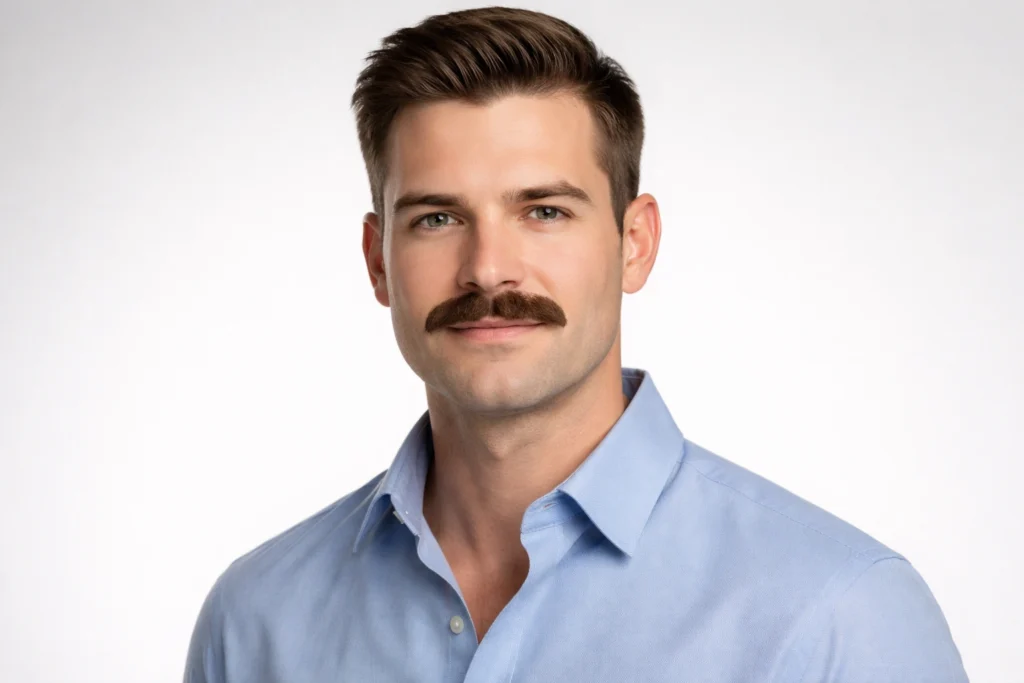
The lampshade mustache is a clean, precisely shaped style that sits between the breadth of the chevron and the narrowness of the pencil, offering a moderate width with a flat, horizontal lower edge and gently angled upper corners that taper slightly inward. The overall silhouette resembles the shape of a lampshade viewed from the front, which gives the style its name and its distinctive visual quality: structured, defined, and thoroughly intentional without the elaborate styling demands of more complex styles.
For men who want a mustache that reads as deliberate and well-considered without committing to the maintenance intensity of a handlebar or the bold cultural associations of a horseshoe, the lampshade offers an ideal middle ground. It is a mustache style that communicates grooming awareness and personal refinement while remaining appropriate across professional and social settings. The flat lower edge must be maintained with precision, as this is the feature that distinguishes the lampshade from a natural or untrimmed mustache. Regular trimming with mustache scissors or a fine precision trimmer along the lower border keeps the shape clean and intentional.
Lampshade Versus Chevron
The primary difference between the lampshade and the chevron is in the upper shaping. The chevron’s upper edge follows the natural contour of the lip closely, while the lampshade’s upper corners are cut at a slight angle, creating a trapezoidal silhouette that is more geometric and structured. Men who find the chevron too natural and unstructured but the handlebar too elaborate will find the lampshade is the style that occupies exactly the right position between the two.
The Imperial Mustache
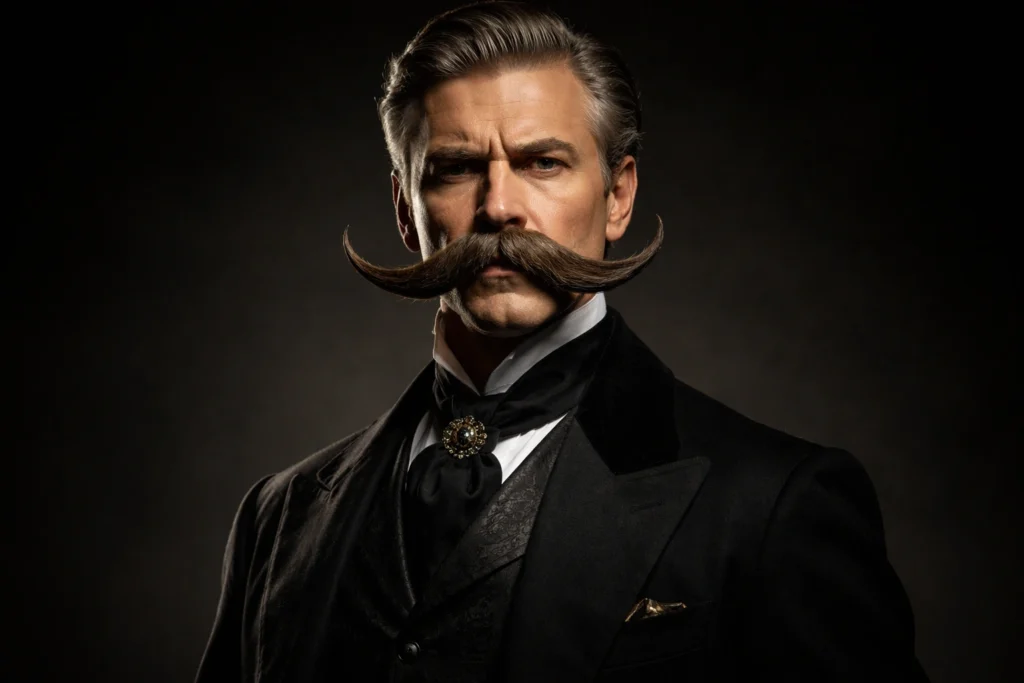
The imperial mustache is among the most historically significant and visually dramatic of all mustache styles that turn heads, carrying with it the weight of nineteenth-century European aristocracy and the personal grooming traditions of men who understood the mustache as an emblem of status and refinement. The imperial consists of a full mustache at the upper lip combined with ends that are waxed and styled upward rather than horizontally as in the handlebar. The result is a commanding, upward-pointing silhouette that adds genuine height to the face and projects an extraordinary degree of personality and presence.
Kaiser Wilhelm II is the most historically famous wearer of the imperial mustache, and the association between this style and European aristocratic culture gives it a theatrical, larger-than-life quality that makes it one of the most genuinely attention-commanding mustache styles available. It is not a subtle choice, and men who wear it must be prepared for the full measure of attention it generates. The imperial requires strong hold mustache wax applied generously to the ends, which are then shaped upward and inward toward the center in a tight, sharp upward point.
This style suits men with broad, strong face shapes and is best worn by those who have both the hair density and the personal confidence to carry a genuinely theatrical grooming statement. It pairs naturally with formal attire and is perhaps the most dramatically head-turning mustache style on this entire list.
The Gunslinger Mustache
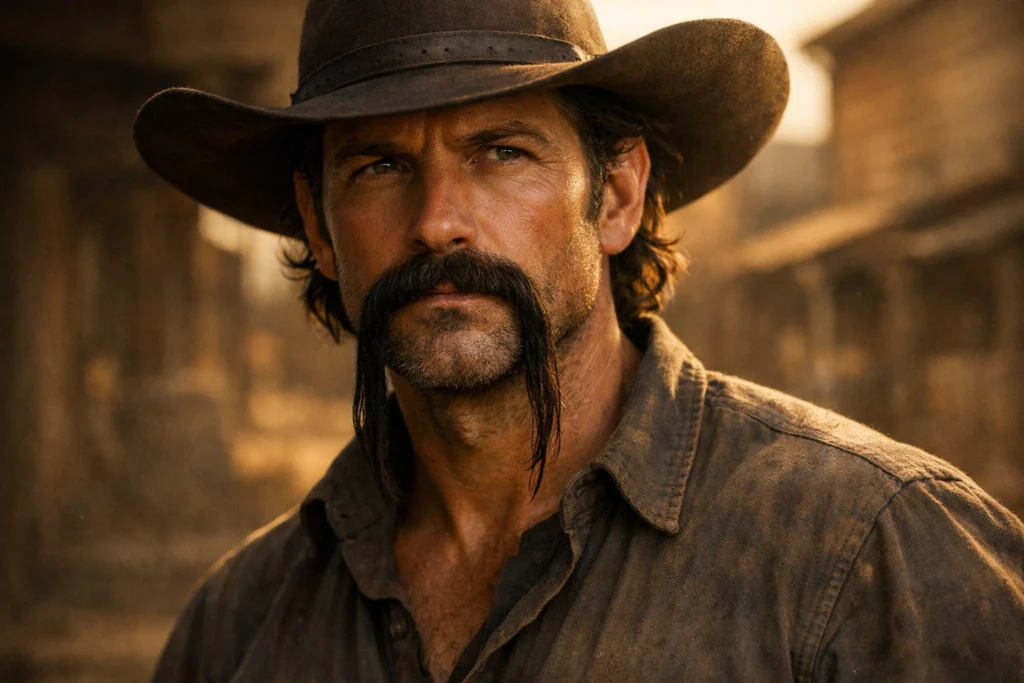
The gunslinger mustache is the western answer to the handlebar, combining a full, wide mustache across the upper lip with long, downward-hanging extensions at the corners that fall below the chin without connecting to form the complete horseshoe shape. Named for its association with the gunslingers and cowboys of American western mythology, this style carries a powerful cultural weight that connects it to themes of frontier independence, rugged self-reliance, and a very specific strain of masculine confidence.
Where the horseshoe’s vertical strips run down from the corners of the mouth to the chin in a contained, geometric shape, the gunslinger’s extensions hang more freely, sometimes tapering toward a point at their lower ends and sometimes trimmed bluntly. The overall impression is looser and more organic than the horseshoe, which gives the gunslinger a slightly less aggressive but equally bold character. This style requires significant length to achieve its defining proportions, making it a long-term grooming commitment. Regular conditioning keeps the hanging extensions soft and manageable, while a light styling product maintains their direction and prevents them from spreading laterally.
The Gunslinger and Modern Styling
The gunslinger is experiencing a notable revival among men who want a mustache style with strong character and cultural heritage. Pairing a gunslinger with a clean-shaved face and a simple, well-fitted outfit creates a compelling contrast between formal restraint and expressive grooming that communicates individual style with remarkable effectiveness.
The Hungarian Mustache
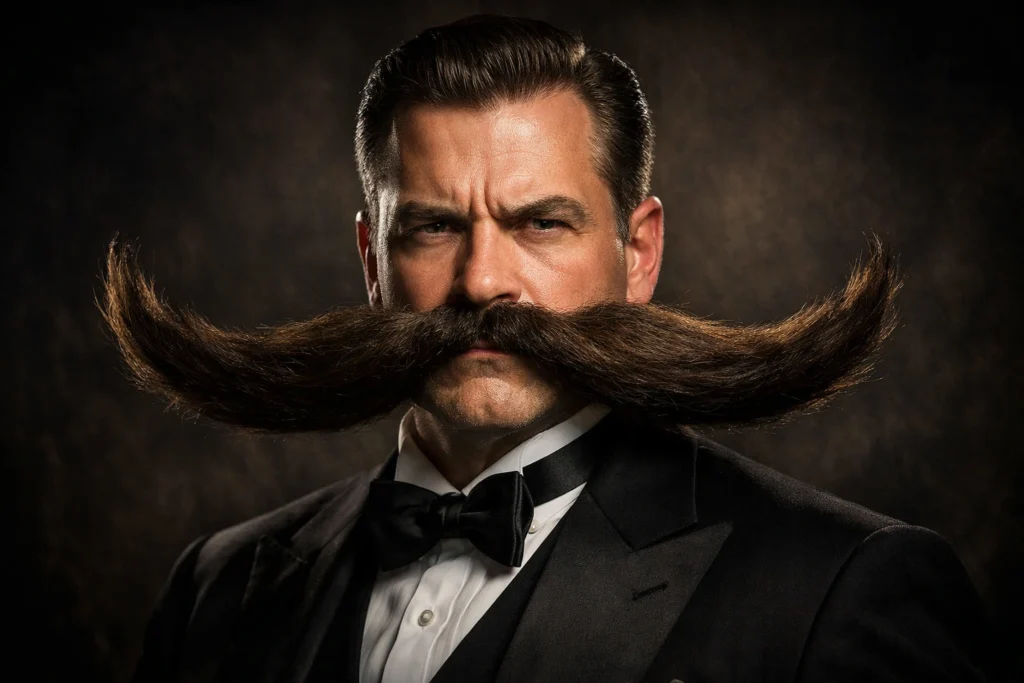
The Hungarian mustache is the most theatrical and structurally impressive of all the major mustache styles, and it earns its position as one of the mustache styles that turn heads most reliably through sheer scale and the undeniable statement of grooming commitment it represents. The Hungarian is a very large, bushy mustache that extends significantly beyond the corners of the mouth on both sides, with the ends styled outward and slightly upward in broad, sweeping wings that give the face an imposing, commanding presence.
Distinguished from the handlebar by its greater overall volume and the breadth of its lateral extension, the Hungarian is less about precise curls at the ends and more about the powerful width and fullness of the entire mustache. It requires considerable facial hair density, months of dedicated growth, and regular grooming with a stiff-bristled mustache comb and a strong hold wax to maintain the characteristic winged shape. It is a style with deep roots in central European grooming culture and carries associations with the kind of confident, unapologetically individual masculinity that refuses to blend into its surroundings.
The Hungarian suits men with broad, strong face shapes and works best as a standalone mustache, worn without a beard, so the full scale and drama of the style is given the uncontested visual space it requires. Men who grow a Hungarian mustache are not making a grooming choice. They are making a personal statement about who they are and how they choose to present themselves to the world.
Building the Hungarian’s Volume
Daily brushing of the mustache outward from the center using a stiff-bristled mustache comb trains the hair to grow in the lateral direction the Hungarian requires. Apply wax after brushing to set the direction. Over time, the hair develops a natural tendency to follow this path, making the daily maintenance progressively easier as the style matures.
Conclusion
The twenty mustache styles covered in this guide represent the full spectrum of what a well-chosen upper lip statement can achieve. From the timeless masculine authority of the chevron and the theatrical elegance of the handlebar, through to the cinematic ruggedness of the outlaw and the grand drama of the Hungarian, every style on this list has been selected for its capacity to turn heads with confidence and intention.
Choosing a mustache is an act of self-knowledge. The styles that work best are those that align with the wearer’s face shape, hair density, lifestyle, and personality. A mustache grown without thought for these factors will always appear as though it grew by accident rather than design. A mustache chosen with care, grown with patience, and maintained with consistency will do something more valuable than simply turn heads. It will communicate exactly who you are before you say a word.
You may also like this post: 20 Stylish Beard Ideas for Round Faces That Enhance Your Jawline
Frequently Asked Questions
How long does it take to grow a mustache style that turns heads?
Most impactful mustache styles require a minimum of four to six weeks of growth to reach a length where meaningful shaping becomes possible. More dramatic styles such as the handlebar, Hungarian, and gunslinger require three to six months of consistent growth before they achieve the length and volume needed for their defining characteristics.
What mustache styles work best for men with thin or sparse facial hair?
The pencil mustache, the lampshade, and the outlaw mustache are the best choices for men with thinner or sparser facial hair. These styles work within the natural limitations of lighter growth rather than demanding a density the hair cannot provide. The chevron also works for moderately dense hair when kept at a controlled, groomed length.
Do mustache styles that turn heads suit all face shapes?
Most mustache styles can be adapted to suit a range of face shapes, but the best results come from matching style width and volume to facial proportions. Wide, full mustaches suit square and rectangular faces. Narrower styles suit oval and oblong faces. Round faces benefit from styles that add horizontal breadth at the center, such as the outlaw or chevron, without hanging down to add vertical length.
What products are essential for maintaining a head-turning mustache?
A strong hold mustache wax is essential for styled mustaches such as the handlebar, imperial, and Hungarian. Mustache scissors or a precision trimmer are necessary for maintaining clean edges on all styles. A fine-toothed mustache comb helps distribute wax evenly and trains hair direction over time. Beard oil or conditioner applied daily keeps the hair soft and the skin beneath it healthy.
Can mustache styles be worn in professional environments?
Yes. Many of the mustache styles on this list are entirely appropriate for professional settings. The chevron, pencil, beardstache, lampshade, and outlaw are all professional-grade styles when kept clean and well-maintained. More theatrical choices such as the imperial, Hungarian, and fully curled handlebar are better suited to creative industries or personal occasions where individual expression is valued over conservative grooming norms.
1 Comment