Introduction
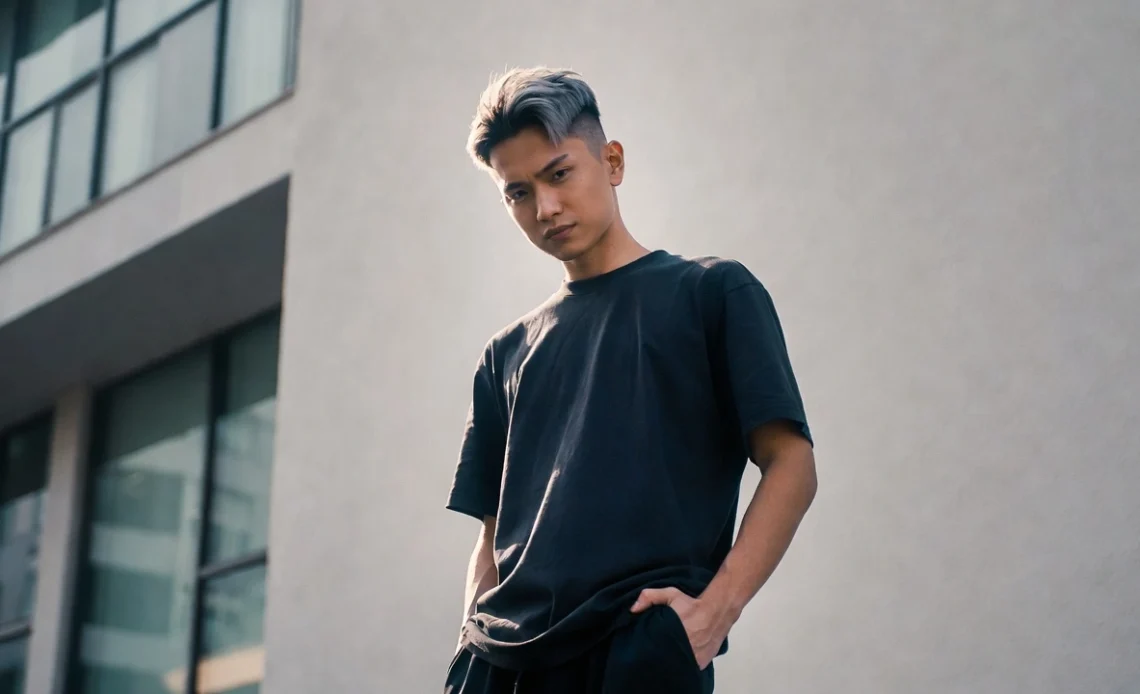
Asian men have some of the most versatile hair in the world. Naturally thick, dark, and predominantly straight, it holds shape with remarkable consistency, responds beautifully to both structured cuts and relaxed styling, and carries color with a depth that many other hair types simply cannot match. Yet for all its advantages, Asian hair also presents specific challenges: the tendency to sit flat against the crown, the resistance to wave or curl without professional treatment, and the way heavy bulk can make certain styles appear shapeless rather than structured.
In 2026, the conversation around hairstyles for Asian men has matured significantly. The era of copying a single K-pop idol and calling it a day is behind us. Today, the most compelling styles on the streets of Seoul, Tokyo, Shanghai, and Singapore are those that balance modern sensibility with personal authenticity. Whether you are drawn to the clean minimalism of a crew cut, the soft romanticism of curtain bangs, or the bold geometry of a two-block undercut, there is a direction in this guide that will speak to your personality, your face shape, and the life you actually live.
This article covers 14 of the most fashion-forward hairstyles for Asian men right now, why each one works, how to style it, and which face shapes and hair types it suits best.
The Two-Block Cut
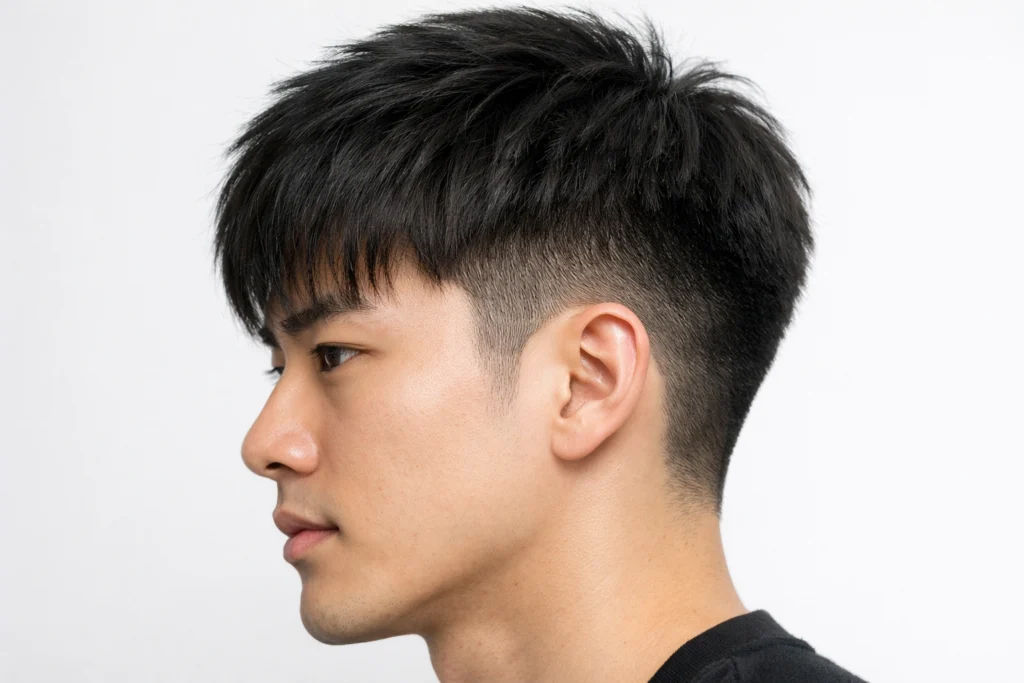
The two-block cut has become the defining hairstyle of modern Asian men’s grooming, and its dominance shows no sign of fading in 2026. The principle is elegant in its simplicity: the sides and back are cut very short or shaved close, while the top retains significant length and volume. This contrast creates a clean, architectural silhouette that frames the face with precision.
What makes the two-block so enduringly popular is its flexibility. On any given day, the top can be worn flowing naturally, slicked back with a light pomade, pushed forward into a soft fringe, or styled into a more structured shape with clay. K-pop culture introduced this cut to a global audience, but it has long since escaped that niche and become a mainstream staple worn by students, professionals, and artists alike.
The style suits oval, square, and heart face shapes particularly well. Men with rounder faces may want to ask their barber for slightly more length and volume at the crown to add vertical proportion. A lightweight mousse or texturizing cream is all you need to bring the top to life each morning.
Curtain Bangs
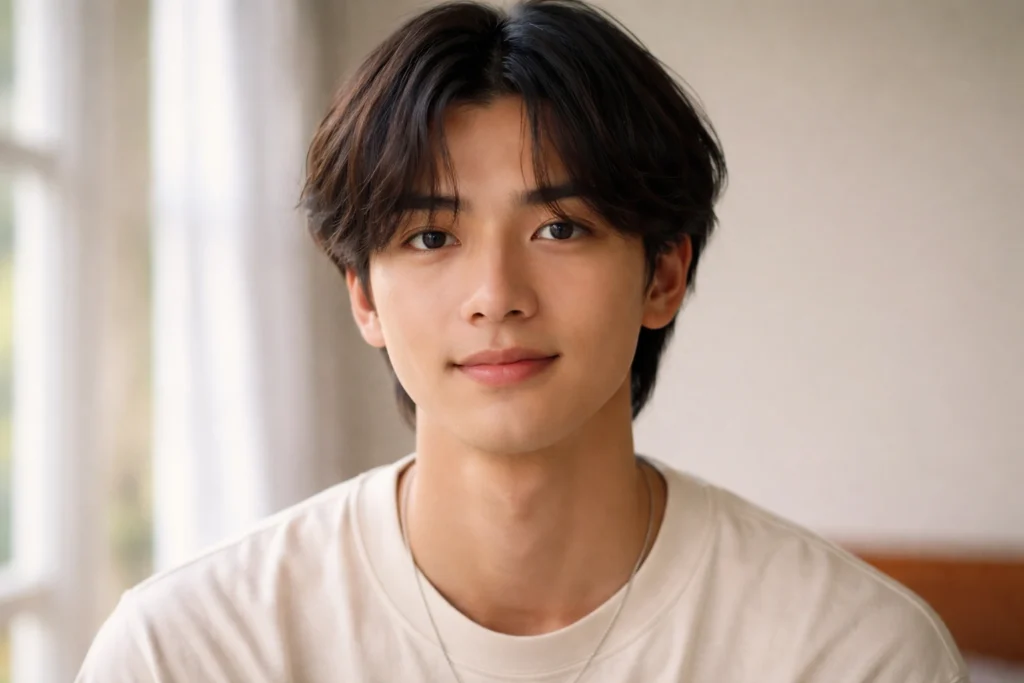
Curtain bangs have moved from a niche K-drama aesthetic to one of the most universally flattering hairstyles for Asian men in 2026. The defining feature is a center or slightly off-center part that allows the fringe to fall softly on either side of the forehead, framing the face the way curtains frame a window.
Unlike heavier, blunt bangs that can overwhelm a face, the curtain style is light and airy. It softens strong jawlines, reduces the visual width of broad foreheads, and adds a romantic, approachable quality to the overall appearance. When paired with a gentle taper on the sides rather than a severe fade, the result is a hairstyle that reads as effortlessly stylish rather than overtly groomed.
Styling curtain bangs requires a blow dryer and a round brush or your fingers. Blow the fringe slightly outward while drying to encourage the natural parting shape. Finish with a small amount of texturizing paste or light cream to define the movement without making the hair stiff. This style works particularly well with medium-length hair overall, roughly chin level on the sides.
The Textured Crop
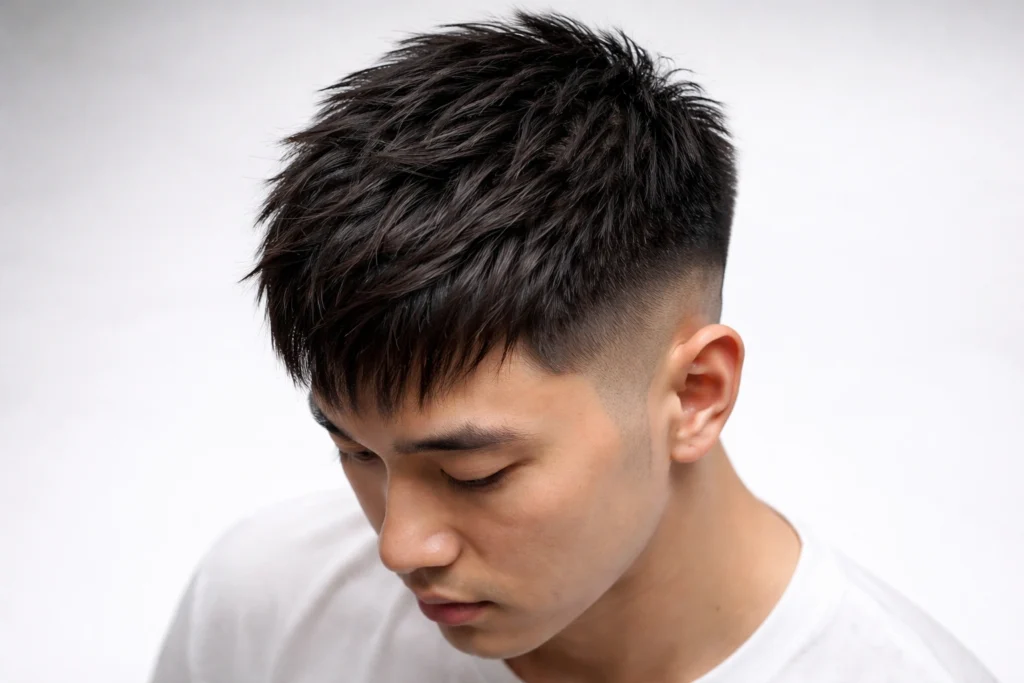
The textured crop is the answer for Asian men who want something low maintenance that still looks intentional and modern. It is a short haircut, typically with a taper or fade on the sides, and choppy, uneven layers on top that introduce movement and dimension into what would otherwise be a flat surface.
The choppy layers are the key detail. They prevent Asian hair from sitting in that classic “helmet” formation, where thick straight hair simply lies flat and featureless against the skull. By breaking up the top section with layers at varying lengths, the barber creates the illusion of texture and volume without requiring significant daily effort from the wearer.
This is a style that suits virtually every face shape because the barber can adjust the length and direction of the fringe to complement individual proportions. A matte clay applied to slightly damp hair and worked through with the fingertips is all the styling product you need. Refresh with a light sea salt spray on days between washes.
The Slick Back with Taper Fade
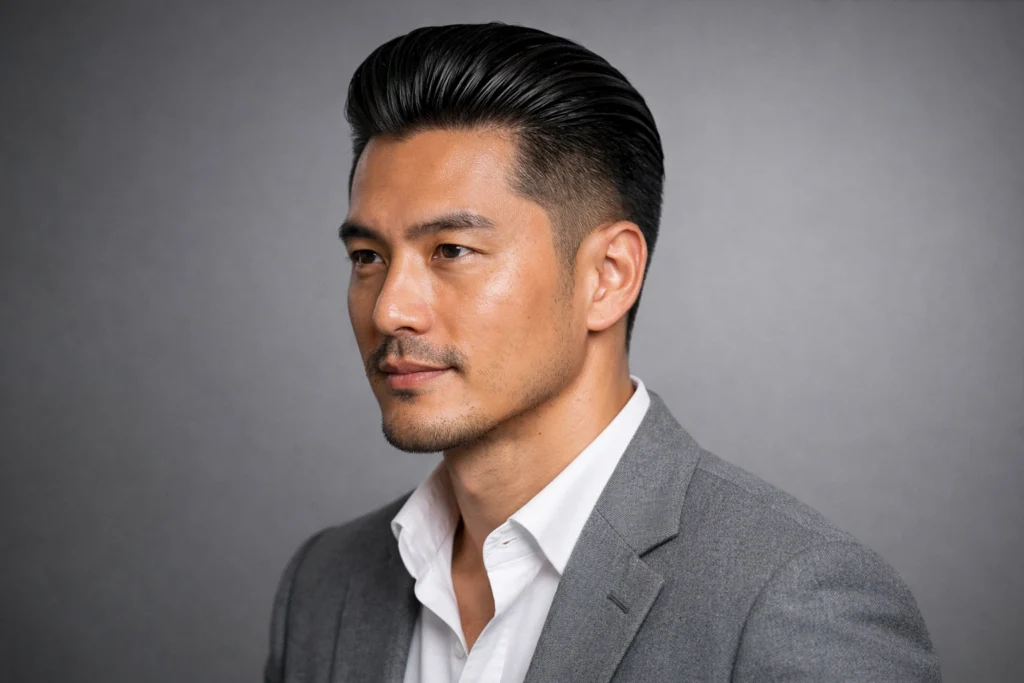
The slick back is one of the oldest men’s hairstyles on record, and in 2026 it has been thoughtfully updated for Asian men through the addition of a low taper fade on the sides. The result is a style that feels simultaneously classic and contemporary, equally appropriate in a boardroom and at a rooftop bar.
The taper fade begins just above the ears and shortens gradually down to the neckline, adding clean modern lines without the starkness of a high skin fade. The top hair is left longer, combed straight back from the forehead, and held in place with a lightweight pomade that provides hold without the greasy heaviness of traditional styling products.
This cut works best for men with naturally straight hair because the sleek combed-back top requires a smooth, uniform surface. It is an excellent choice for professional environments where more expressive cuts might feel out of place. Oval and elongated face shapes carry this style particularly well.
The Korean Wolf Cut
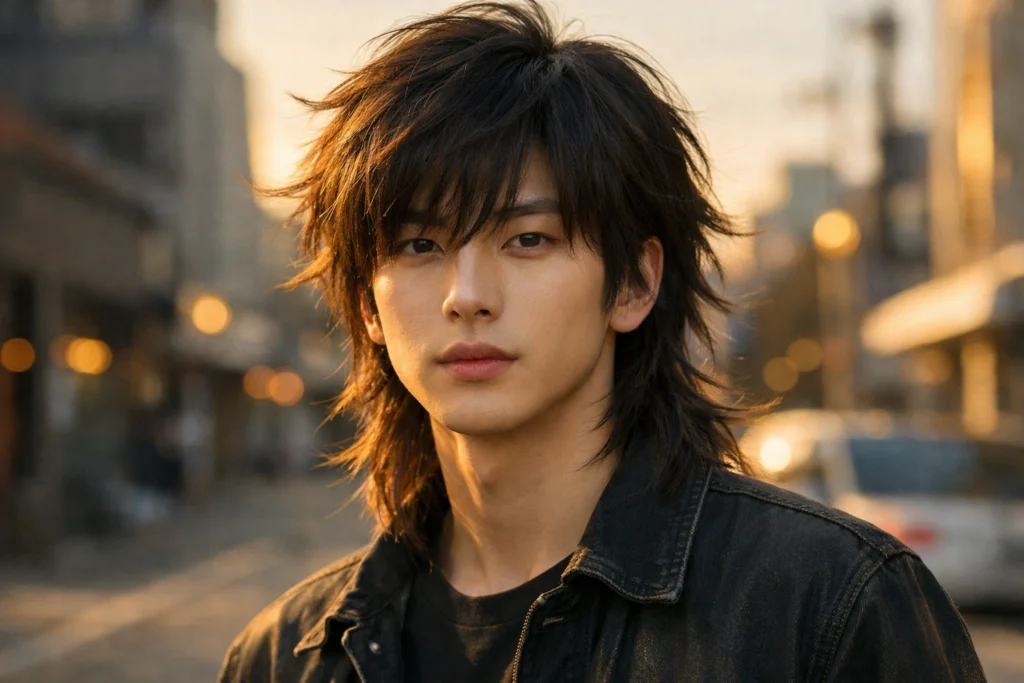
The wolf cut arrived from Korean streetwear culture and has established itself as one of the most distinctive and genuinely creative hairstyles for Asian men in recent memory. It blends the structure of a shag cut with the volume and layering of a mullet, creating a look that is simultaneously retro and entirely current.
The defining characteristic is its layered, voluminous top that transitions into longer, lighter layers at the back and sides. The contrast between the heavier crown and the wispy, flowing ends gives the hair a dynamic, almost windswept quality even when standing still. It is a style with genuine personality, and it suits men who are comfortable attracting attention.
To achieve the wolf cut on Asian hair, which tends to be heavier and stiffer than the hair types it was originally designed for, a subtle perm or texturizing treatment can help introduce the movement and natural wave that makes the layers flow correctly. Without that treatment, regular blow-drying technique and a volumizing mousse become essential parts of the daily styling routine.
The French Crop
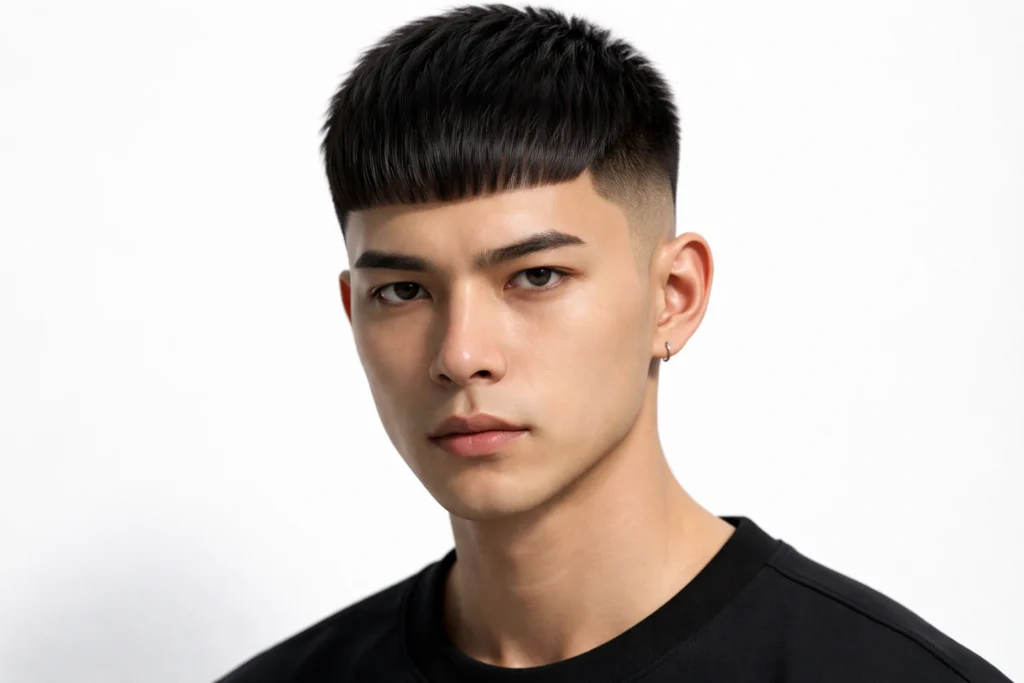
The French crop occupies a comfortable space between classic and current, making it one of the most reliably stylish choices for Asian men who want a clean, structured look without committing to the severity of a buzz cut or the expressiveness of a fashion-forward style.
The crop features a short fringe that sits horizontally across the forehead, just above the eyebrows or slightly higher. The sides and back are tapered or faded, and the overall silhouette is tight and precise. It is a hairstyle that communicates competence and attention to detail without appearing to try too hard.
Asian hair handles the French crop exceptionally well. The natural thickness of the hair gives the fringe its characteristic density, and the dark color creates strong visual contrast against fair skin. A small amount of matte paste applied to the fringe and pressed forward is the only styling step required. The crop is also one of the lowest-maintenance styles on this list, requiring a simple trim every three to four weeks to stay sharp.
The Undercut
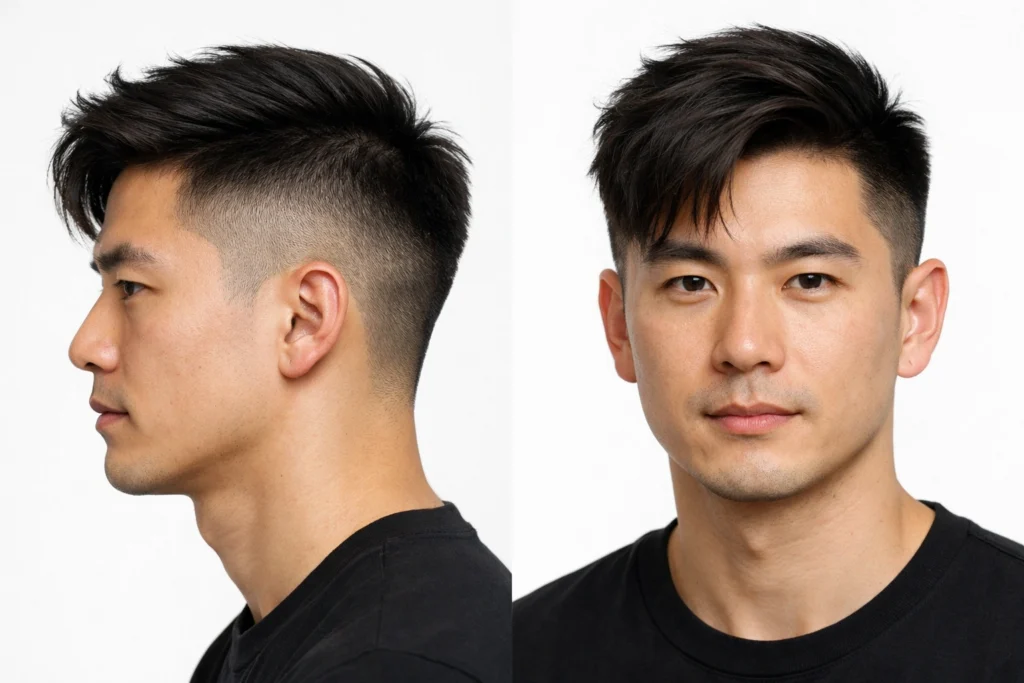
The undercut is a perennial in Asian men’s hairstyle culture, and it earns its place on this list because it remains one of the most versatile foundations a hairstyle can have. At its core, the undercut involves removing the bulk from the sides and back while leaving the top long enough to style in multiple ways.
The diversity of the undercut lies in what you do with the top. It can be worn slicked back for a polished, professional look. It can be pushed forward into a textured fringe for a more casual daily style. It can be swept to one side for an asymmetrical effect. For longer tops, it can even be pulled into a small top knot or half-up style. Few other haircuts offer this degree of versatility within a single cut.
In 2026, the most popular interpretation pairs the undercut with a softer, more gradual fade rather than a hard, shaved side. This reduces the severity of the contrast and gives the overall silhouette a more relaxed, approachable character. A strong matte clay or fiber paste is the product of choice for styling the top.
The Pompadour
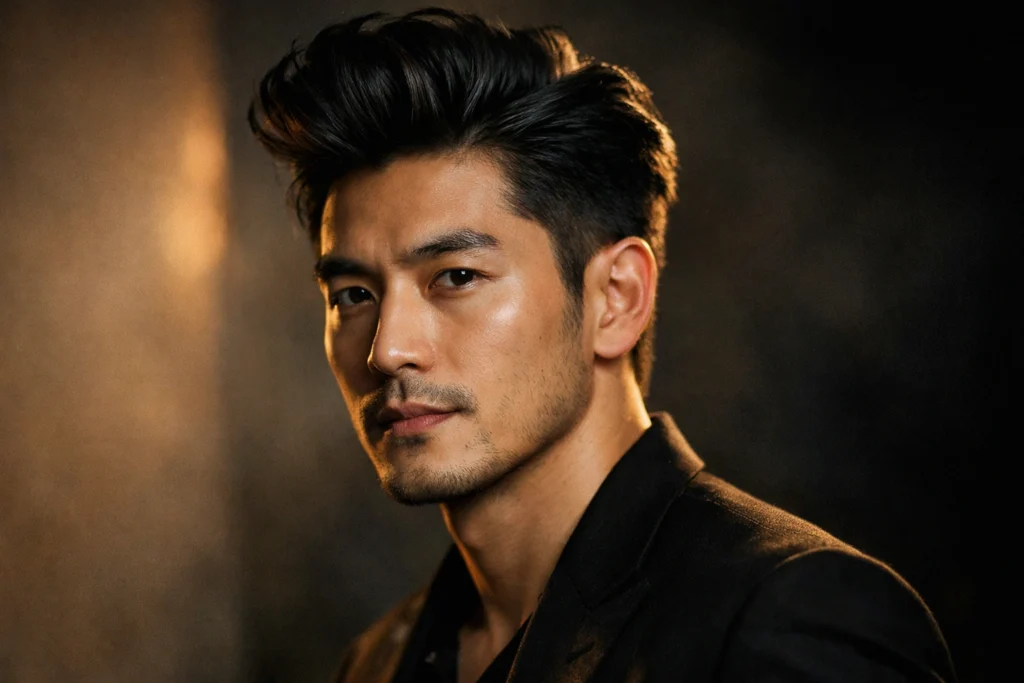
The pompadour brings volume, height, and a confident, fashion-forward energy to Asian men’s hairstyles in 2026. The style is defined by its swept-back top, which builds height at the front before falling naturally backward. This upward lift creates vertical proportion that is especially flattering for men with rounder or wider face shapes.
The 2026 version of the pompadour has moved away from the heavily gelled, almost sculptural interpretation of earlier decades. Modern pompadours for Asian men are softer, with a more natural lift achieved through blow-drying technique and a medium-hold pomade rather than maximum-hold gel. The result is a style that has clear structure but still moves naturally throughout the day.
This hairstyle rewards effort. Achieving the right shape requires a good blow dryer, a medium round brush, and about five minutes of technique. Once the shape is set, however, a single application of pomade holds it reliably through most daily activities. Men with oval and oblong face shapes tend to look best with this style.
The Buzz Cut with Skin Fade
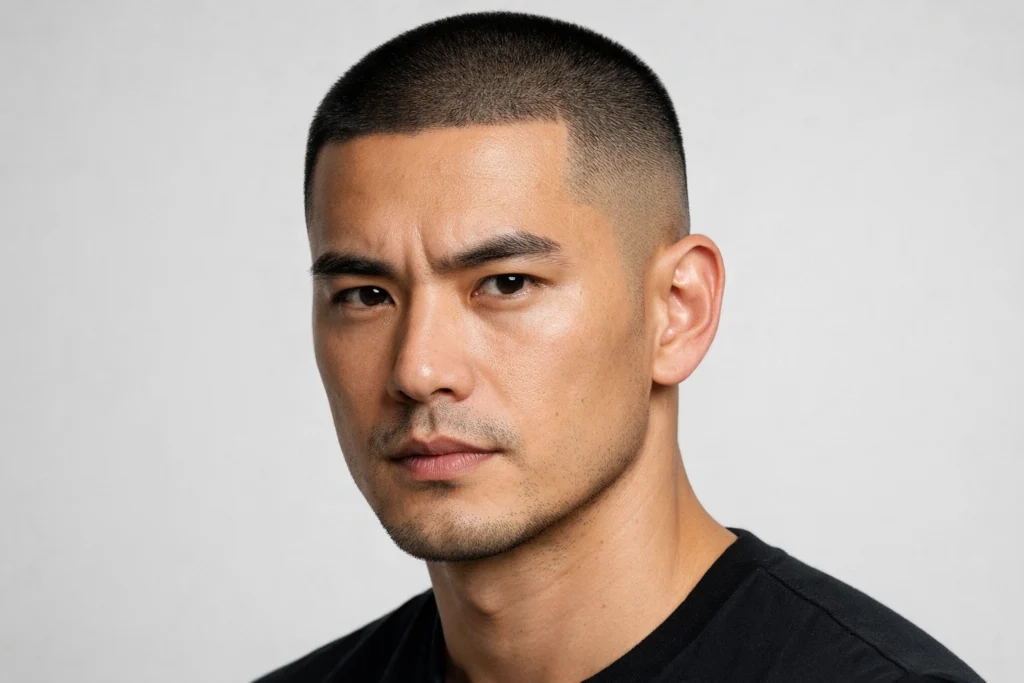
For Asian men who value simplicity, confidence, and minimal daily styling, the buzz cut with a skin fade is one of the strongest choices in 2026. The cut reduces the hair on top to a uniform short length while the fade on the sides transitions from skin at the bottom to the buzz length at the crown, creating a seamless gradient that reads as intentional and modern.
The buzz cut strips away styling complexity and puts facial features at center stage. Strong jawlines, prominent cheekbones, and clear skin all benefit from the uncluttered frame this cut provides. It is an assertive choice that signals comfort in one’s own appearance.
This style suits men with well-defined facial features and good skin. It is also, notably, one of the most practical choices for men living in hot, humid climates, where heavier styles can feel uncomfortable and require constant product reapplication. Maintenance is straightforward: a trim every two to three weeks keeps the fade looking clean.
The Side Part
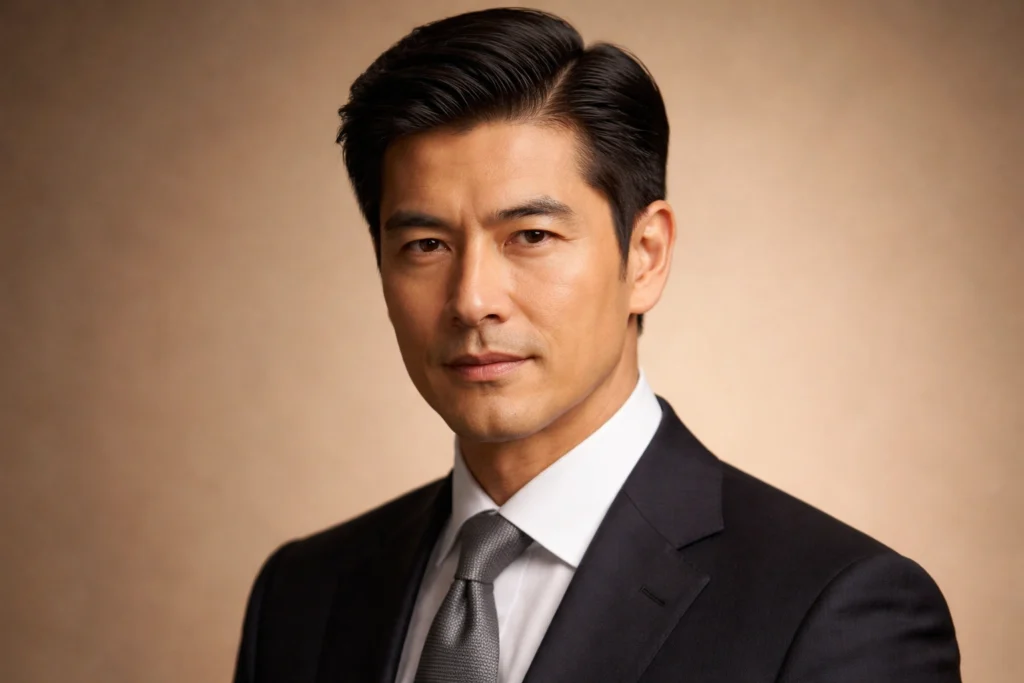
The side part is one of those timeless hairstyles that periodically re-enters the mainstream with a slightly updated sensibility, and in 2026 it is very much back. The modern interpretation for Asian men leans into the 3:7 ratio part, where slightly less than a third of the hair falls to one side and the majority sweeps to the other, creating a polished, asymmetrical composition.
When paired with a cushion perm or a light wave treatment, the side part gains additional volume and movement at the roots, preventing the flat appearance that naturally straight Asian hair can develop when combed flat to the side. This combination of structured parting and natural bounce creates a look that works in both formal and casual contexts.
The side part sharpens the jawline, adds the appearance of facial length for rounder face shapes, and carries a refined, mature quality that younger styles sometimes lack. A medium-hold pomade or styling cream, applied sparingly and combed through with a fine-tooth comb, produces the best result.
The Man Bun and Half-Up Style
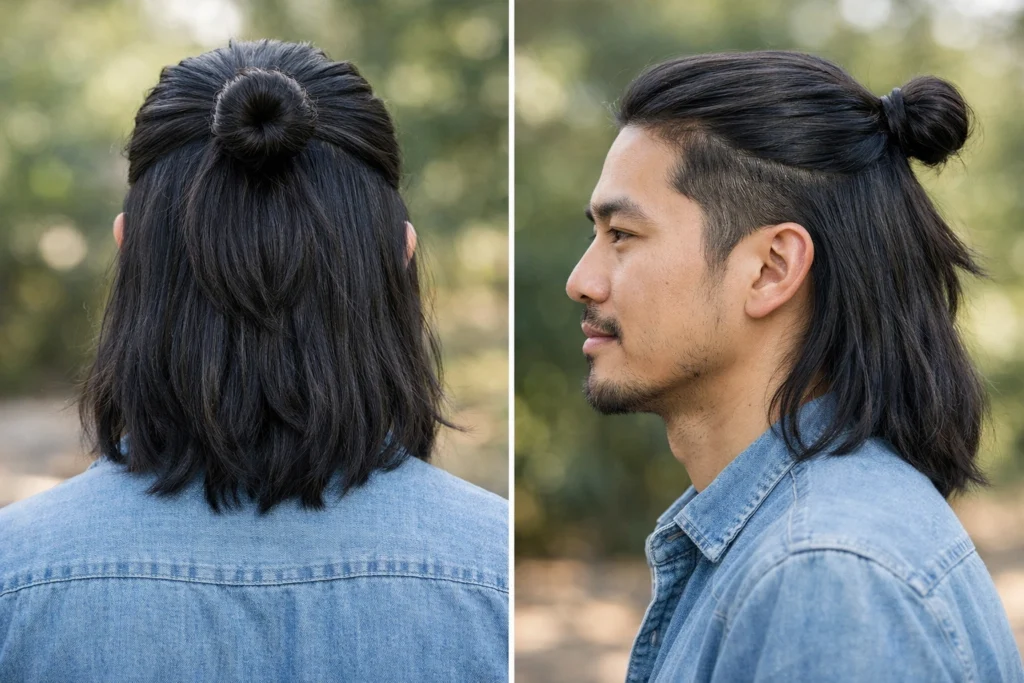
As more Asian men embrace longer hair in 2026, the man bun and its softer variation, the half-up half-down style, have emerged as sophisticated, practical options that handle length gracefully. Both styles are especially effective for men growing their hair past the shoulders who want to maintain a neat, pulled-together appearance for daily life.
The man bun gathers all the hair and ties it at the crown or slightly behind. The half-up style takes only the top layer and ties it back, leaving the lower portion to fall freely around the shoulders. Both look strongest when the sides are kept relatively tidy through regular trims or a gentle taper, preventing the bulk from spreading outward and making the overall silhouette appear shapeless.
A light texturizing spray or matte finishing oil applied before tying the hair back adds polish and prevents flyaways. This style suits all face shapes and is one of the few on this list that works across the full range of Asian hair textures, from fine and straight to naturally wavy.
The Faux Hawk
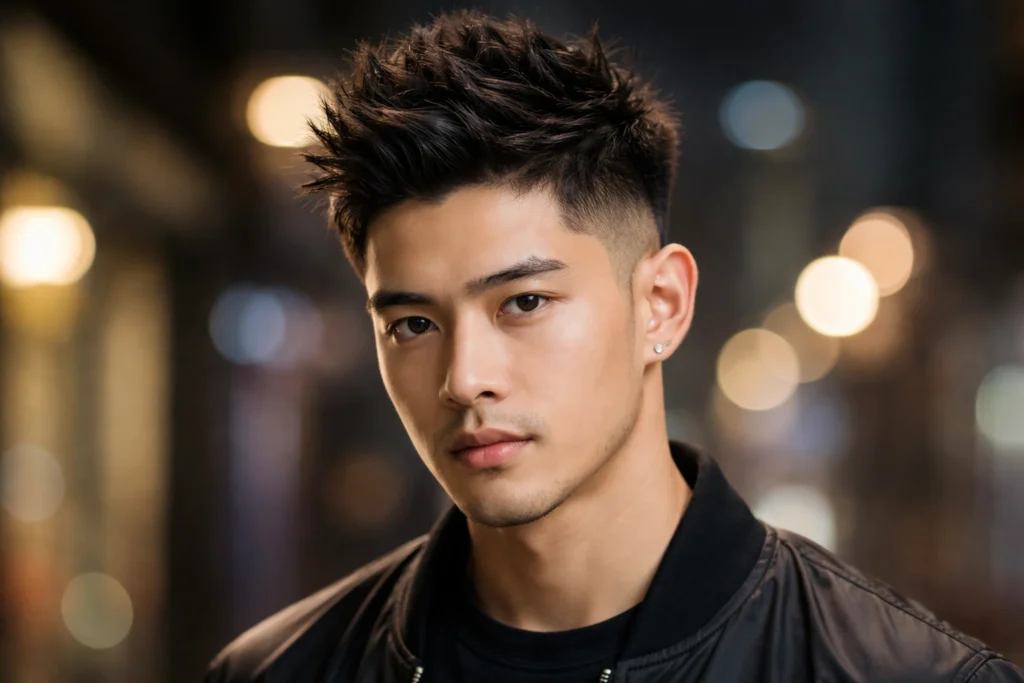
The faux hawk offers the visual drama and personality of a true mohawk without the commitment of shaved sides. The sides are kept short through a fade or tight taper, while the central strip of hair through the crown is lifted and shaped upward to create height and movement along the top of the head.
In 2026, the faux hawk for Asian men has evolved toward a softer, more textured interpretation. Rather than spiked, gelled spires, the contemporary version uses matte paste to create a tousled, lifted texture that reads as confident and creative without looking harsh or costume-like. The fade on the sides can be adjusted from a gentle low fade to a dramatic skin fade depending on how bold you want the contrast to be.
This style suits oval and heart face shapes particularly well and is an excellent choice for men who want a weekend or evening style that stands out from the crowd. It can be somewhat toned down for daytime wear by reducing the height of the central strip and smoothing the texture slightly.
The Layered Perm
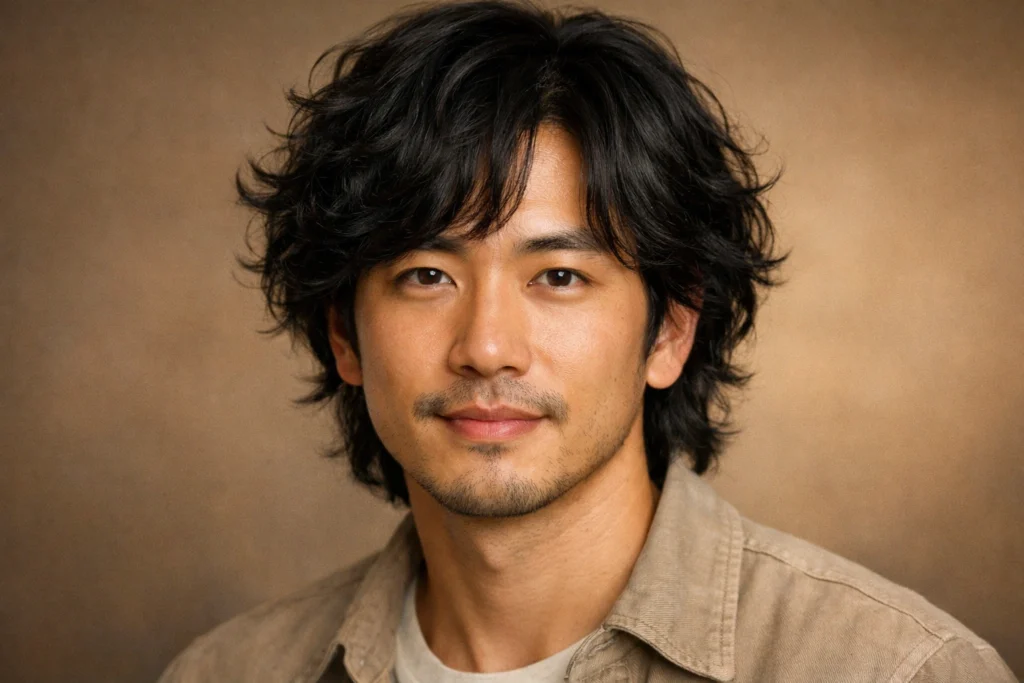
The Korean-influenced soft perm has become one of the most transformative hairstyles available to Asian men in 2026, and for good reason. Where naturally straight Asian hair has a tendency to lie flat and heavy, a professionally applied soft perm introduces gentle wave, bounce, and movement that fundamentally changes how the hair behaves and how styles land on the head.
The layered perm combines the wave treatment with a layered cut that removes bulk from the ends while keeping volume at the crown. The result is hair that moves, flows, and responds to styling in a way that straight hair simply cannot. Curtain bangs, wolf cuts, and two-block styles all become significantly more dynamic and textured after a soft perm treatment.
It is important to note that the quality of the perm matters enormously. A poorly executed perm on Asian hair can result in frizz, uneven curl patterns, and damage. Choosing an experienced stylist who specializes in Asian hair textures and perm techniques is essential. With the right application, a soft perm lasts three to five months and transforms the daily styling experience.
The Modern Bowl Cut
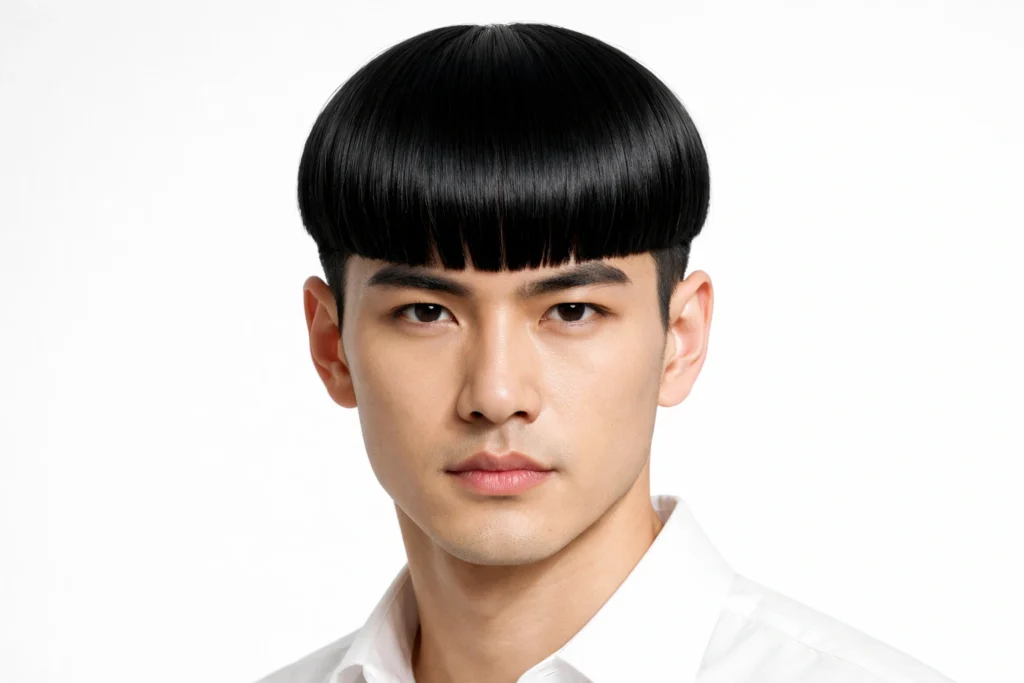
The bowl cut had a complicated decade in the early 2000s when it became the punchline of countless style jokes. In 2026, it has been completely rehabilitated. The modern bowl cut for Asian men retains the characteristic round shape of the original but introduces tapered or faded edges, lighter layering through the top, and a more refined, intentional finish that makes it look directional rather than accidental.
The appeal of the modern bowl cut lies in its clean, almost architectural silhouette. The rounded fringe and the way the hair curves uniformly around the head creates a bold, confident visual statement. It requires thick hair to execute well, which makes Asian men natural candidates for the style. The dark color of most Asian hair gives the bowl cut a graphic, high-contrast quality that works especially well for men who appreciate strong, minimalist aesthetics.
Styling is minimal. A small amount of lightweight serum or styling cream smoothed through the hair from roots to ends is sufficient. The cut itself does the work. Regular trims every three to four weeks are necessary to keep the shape precise.
Conclusion
The landscape of hairstyles for Asian men in 2026 is richer, more varied, and more thoughtfully considered than it has ever been. From the polished confidence of the slick back to the creative energy of the wolf cut, from the minimalist simplicity of the buzz cut to the transformative impact of a soft perm, there is a direction here for every personality, every lifestyle, and every face shape.
The best hairstyle is always the one that makes you feel like the most authentic version of yourself. Use this guide as a starting point, bring images to your barber or stylist, and be open to their technical input about what will work best for your specific hair type and facial structure. Great hair is the result of knowing what you want, finding the right person to execute it, and committing to the consistent care and styling that keeps it looking its best every day.
You may also like this post: 15 Modern Mid Taper Fade Haircuts for Men
Frequently Asked Questions
Which hairstyles for Asian men work best for thick, straight hair?
A: Thick, straight Asian hair holds structure exceptionally well, making it ideal for the two-block cut, the French crop, the slick back, and the modern bowl cut. These styles take advantage of the hair’s natural weight and density. If you want more movement and texture, a soft perm can open up a wider range of styles including the wolf cut and curtain bangs.
How do I add volume to Asian hair that tends to sit flat?
A: A blow dryer is your most important tool. Blow-drying upward and away from the scalp lifts the roots and sets the hair in a more voluminous position. A volumizing mousse applied to damp hair before drying enhances this effect. For a more permanent solution, a cushion perm or root perm applied professionally will add lasting lift and body.
How often should Asian men get a haircut to maintain these styles?
A: Most of the styles on this list benefit from a trim every three to four weeks to stay sharp and well-proportioned. Fade-based styles like the buzz cut with skin fade and the textured crop require the most frequent maintenance. Longer styles like the man bun or the wolf cut can go five to six weeks between trims without losing their basic shape.
Are Korean-inspired hairstyles suitable for all Asian men regardless of their background?
A: Absolutely. While Korean pop culture has been a major driver of many of the trends discussed in this article, the underlying cuts and techniques work for Asian men of all backgrounds. The two-block, curtain bangs, and the soft perm are all rooted in techniques that complement Asian hair textures broadly. The style can be adapted to reflect any individual’s personal aesthetic.
What styling products work best for Asian men’s hair in 2026?
A: Matte clay and fiber paste are the most versatile choices because they provide hold without the stiffness or shine of gel, making hair look natural and textured rather than slicked or stiff. Lightweight mousse is excellent for adding volume before blow-drying. Texturizing spray works well for refreshing styles between washes. For sleek, polished looks like the slick back or side part, a light-hold pomade gives a clean finish without greasiness.
1 Comment