Introduction
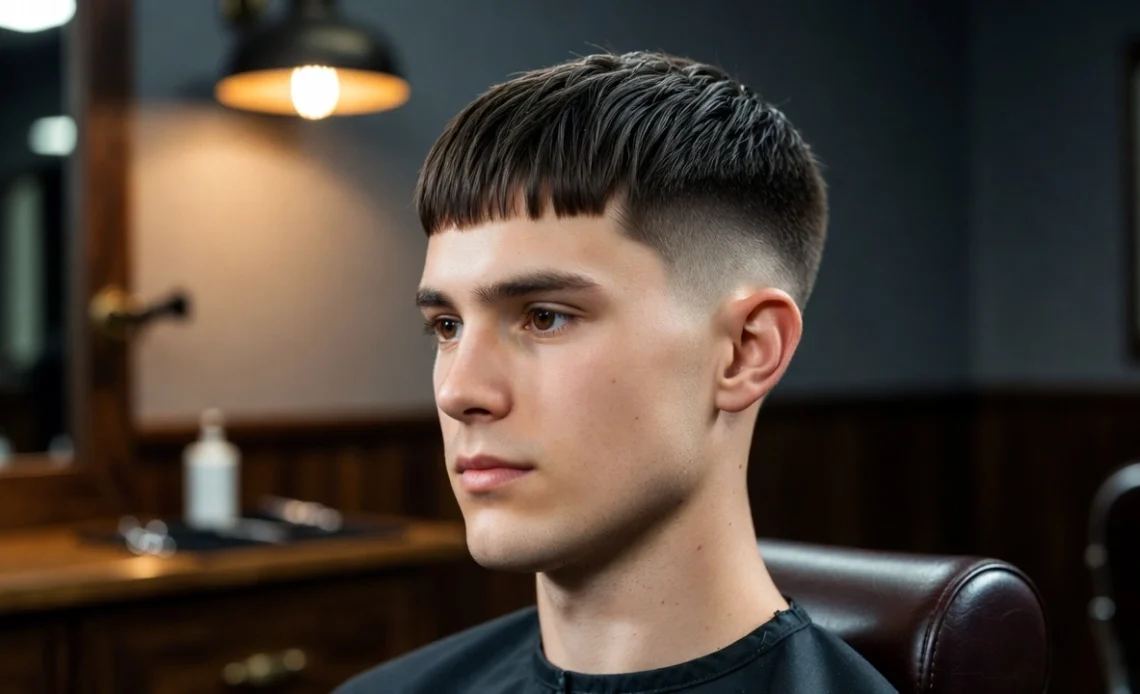
Few hairstyles have endured the test of time quite like the Caesar haircut. Named after Julius Caesar himself, this classic look has been a staple of mens grooming for decades, and it continues to evolve with modern trends. What makes the Caesar cut so compelling is its simplicity and adaptability. Whether you have straight, wavy, or curly hair, whether you want something low-maintenance or sharp and detailed, the Caesar delivers.
At its core, the Caesar haircut is defined by short, horizontally cut bangs that sit flat across the forehead, paired with an even length on top that is usually one to three inches long. The sides and back are typically cut shorter, often faded or tapered, giving the style a clean, structured look. But within that simple framework, there is an enormous range of variation. Modern barbers and stylists have taken the Caesar cut to new heights, blending it with fades, textures, hard parts, and beard combinations that make it feel completely fresh.
In this guide, you will find 20 stylish Caesar haircuts that cover every taste, hair type, and lifestyle. From the clean-cut classic to edgy textured takes, each style is explained so you can walk into the barbershop with confidence and walk out looking sharp.
The Classic Caesar Cut
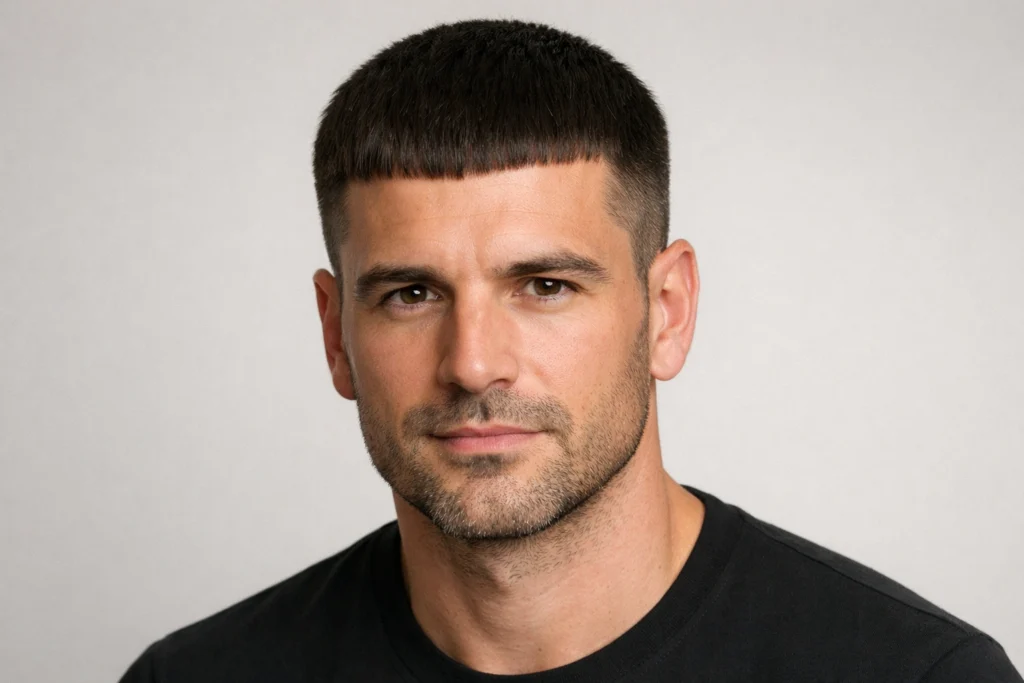
The original Caesar haircut remains one of the most recognizable styles in mens grooming. It features short, even hair on top, typically one to two inches long, with the signature horizontal fringe that lies flat across the forehead. The sides and back are cut to a uniform short length, giving the entire head a clean and consistent silhouette.
This cut works exceptionally well for men with oval or round face shapes. It draws attention to the forehead and creates a balanced, symmetrical look. The classic Caesar is also one of the easiest styles to maintain. A little pomade or light hold cream is usually all that is needed to keep it in place throughout the day.
If you value simplicity without sacrificing style, the classic Caesar is a timeless choice that never goes out of fashion.
Caesar Cut with a Low Fade
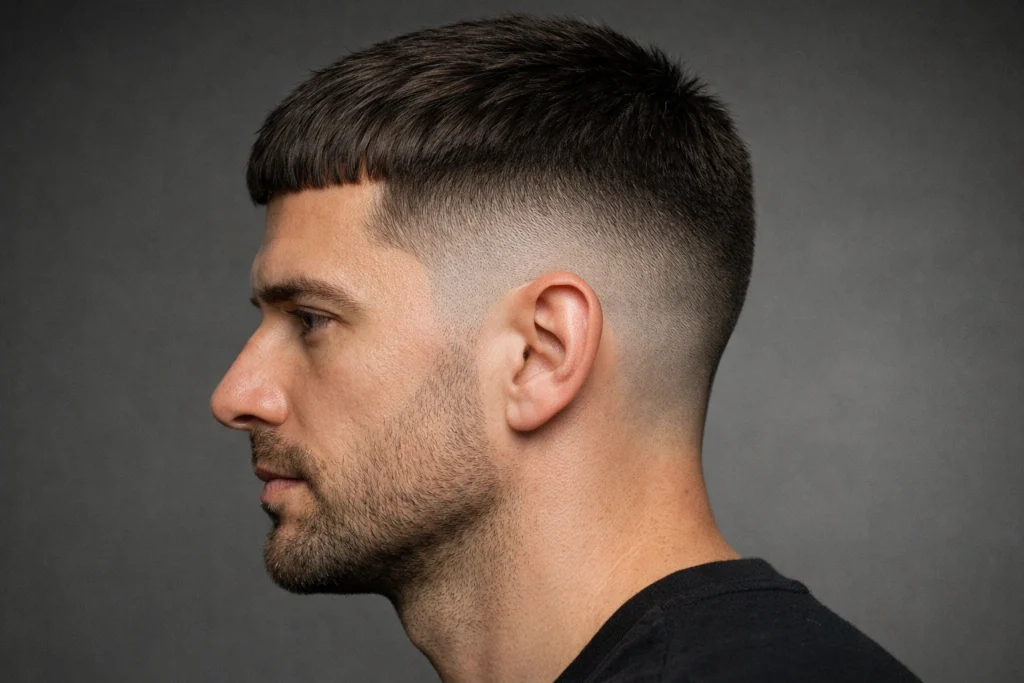
Adding a low fade to the Caesar cut introduces a modern edge while preserving the traditional feel of the style. The fade begins just above the ear and gradually transitions from shorter skin to the natural hair length on the sides. This gradual blend creates a polished finish that looks clean and deliberate.
The low fade suits most face shapes and works particularly well for men who want a professional appearance without going too dramatic. The contrast between the faded sides and the fuller top creates depth and visual interest without requiring too much length on top.
Ask your barber for a one or two guard on the fade, and make sure the transition is smooth. Pair it with a matte clay or a medium hold pomade for the best finish.
Caesar Cut with a High Fade
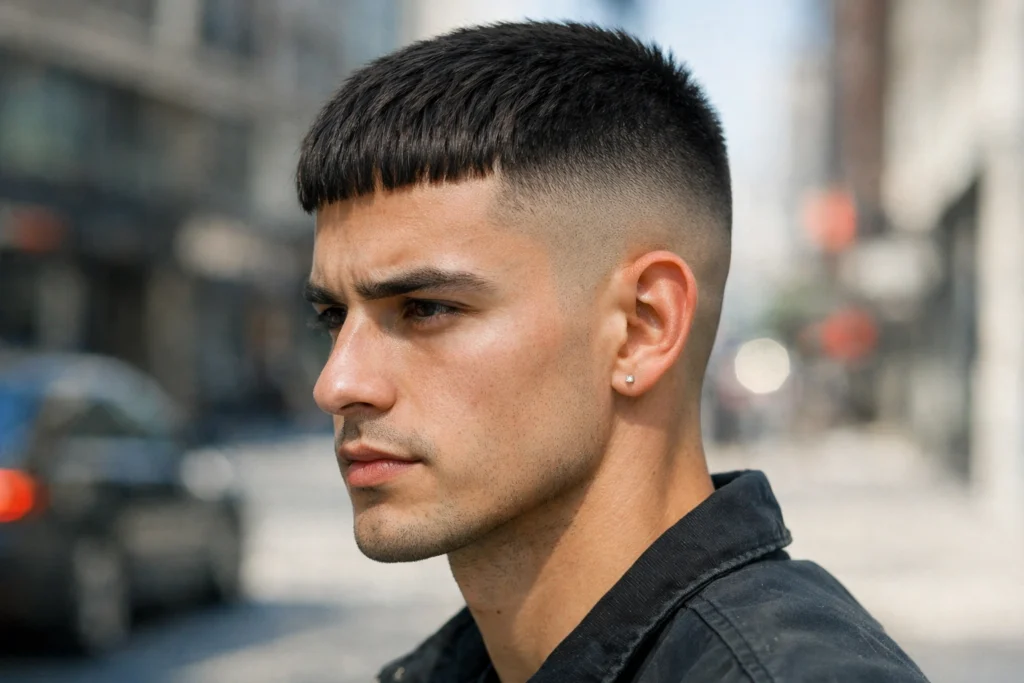
The high fade version of the Caesar takes contrast to the next level. The fade starts much higher on the head, often just below the temples, and drops sharply to a skin-close cut at the sides. This creates a bold, striking silhouette that makes the top section pop.
This style suits men with strong, defined features, particularly those with angular jaw lines or prominent cheekbones. It has become a go-to choice in urban barbershops and is widely popular among younger men who want something contemporary and attention-grabbing.
The high fade Caesar pairs beautifully with a slight texture on top, adding movement and dimension to what would otherwise be a very structured look.
Textured Caesar Haircut
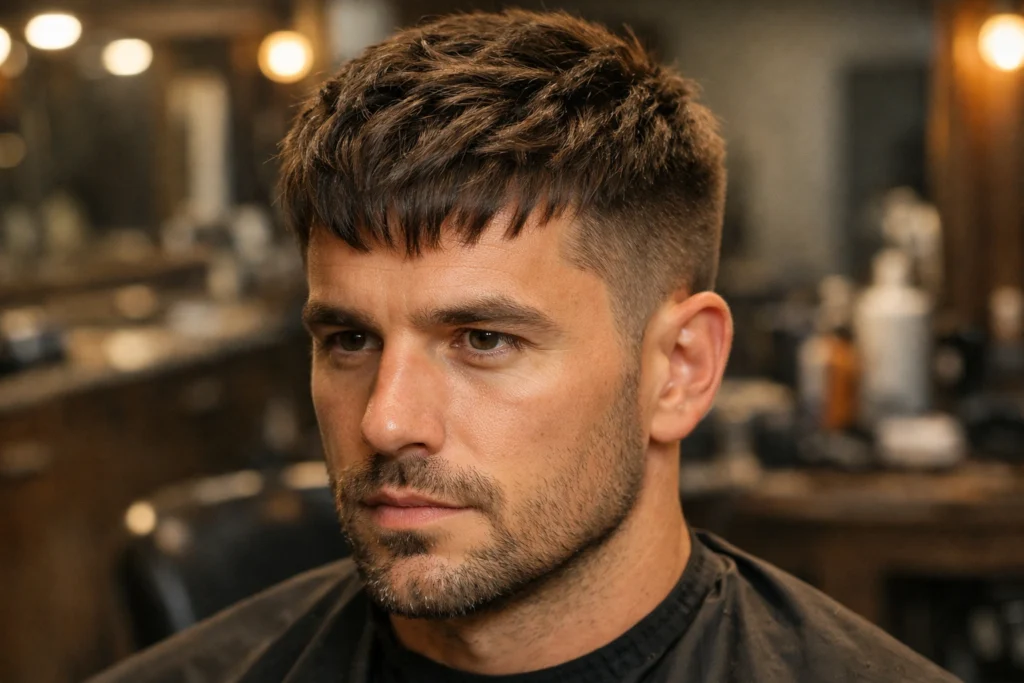
Texture is one of the biggest trends in mens hairstyling, and the Caesar cut benefits enormously from it. A textured Caesar uses cutting techniques such as point cutting or razor finishing to create a lived-in, tousled effect on the top section. Instead of lying perfectly flat, the hair has subtle movement and individual strands that give the style a more relaxed personality.
This version of the Caesar suits men with naturally thick or slightly wavy hair. It is also a great option for those who prefer a less structured appearance while still maintaining a groomed look. A light sea salt spray or a matte finishing paste works perfectly to enhance the texture without weighing the hair down.
Caesar Cut with a Hard Part
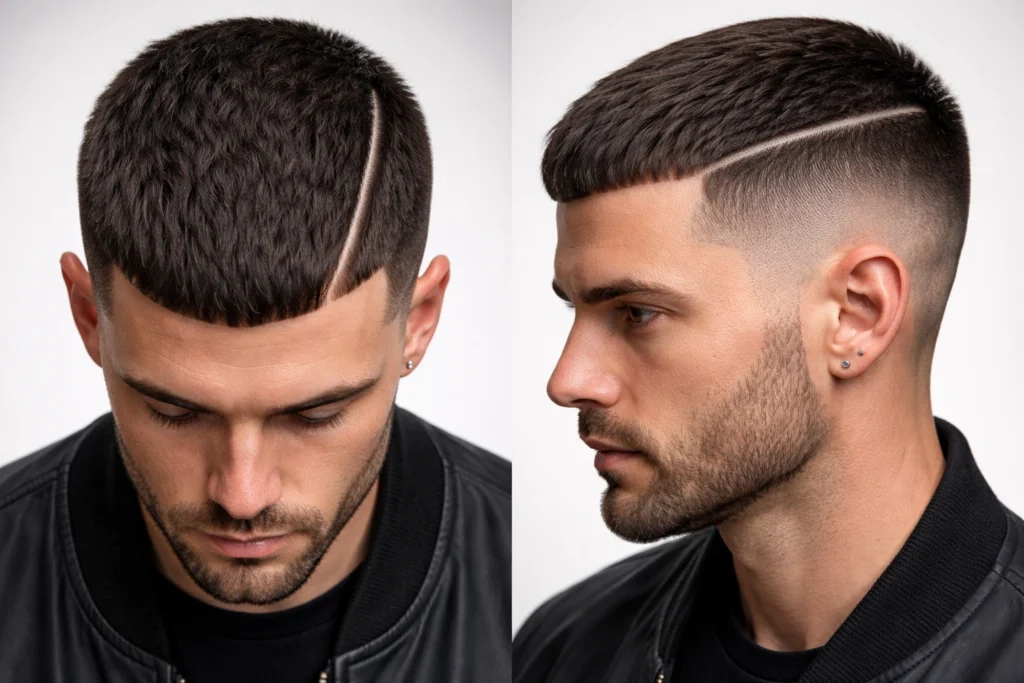
The hard part is a barbering technique where a razor-sharp line is shaved directly into the scalp, typically on one side of the head, to create a defined parting. When combined with a Caesar cut, this detail adds a graphic, modern element that elevates the entire look.
The hard part gives the Caesar a sense of precision and intentionality. It is particularly effective on the high fade variation and works well for men who want their haircut to communicate confidence and attention to detail. The line itself can be straight or slightly curved, and it is usually placed where a natural part would fall.
This style is popular in professional settings and is equally at home in casual environments. It is a small addition that makes a significant visual impact.
Curly Caesar Haircut

Men with naturally curly hair often struggle to find styles that celebrate rather than fight their texture. The curly Caesar is the perfect solution. Instead of fighting the curl pattern, this version embraces it, keeping the top at a length where the curls can form properly while still maintaining the horizontal fringe that defines the Caesar style.
The curly Caesar typically works best with a low to mid fade on the sides, which prevents the hair from looking too voluminous or unbalanced. The top length is usually kept between one and a half and two and a half inches to allow the curls to fully develop.
Moisturizing products such as curl creams or light-hold gels are ideal for maintaining definition and preventing frizz. This style is both practical and expressive, making it a favorite among men with natural curl patterns.
Caesar Haircut with a Beard

One of the most powerful combinations in modern mens grooming is the Caesar cut paired with a well-maintained beard. The contrast between the structured haircut and the fuller, more natural beard creates a masculine balance that looks effortlessly put together.
This combination works with virtually any beard length, from a short stubble to a full-grown beard. The key is to make sure the beard lines are clean and that the neckline is well-defined. A barber can help blend the sideburns smoothly into the beard to ensure the transition looks intentional rather than accidental.
Shorter beards tend to complement the sleek, minimal lines of the Caesar, while longer beards create a more rugged contrast. Either way, the result is a confident, mature look that feels completely current.
Caesar Cut for Thick Hair
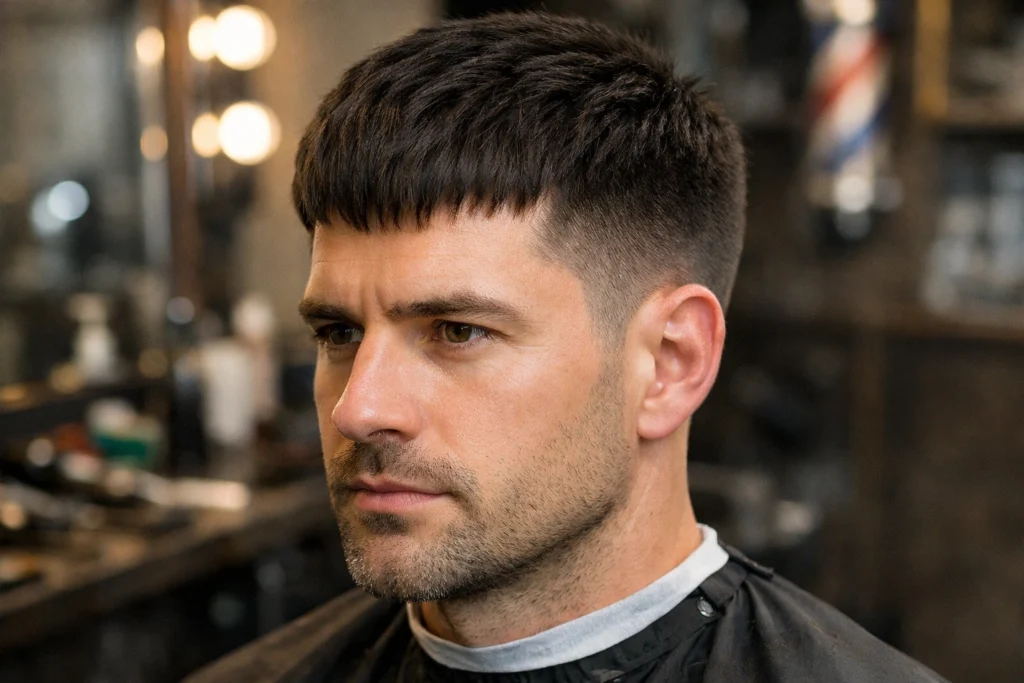
Men with thick hair sometimes feel limited in their styling choices because many cuts can look bulky or heavy. The Caesar cut, when executed correctly, is actually one of the best options for thick hair. By keeping the top at a controlled length and blending the sides with a taper or fade, the barber removes bulk without sacrificing the density that makes thick hair so visually rich.
Point cutting and thinning techniques are often used in this variation to reduce weight and introduce texture. The result is a Caesar that sits well, holds its shape throughout the day, and does not require excessive product to manage.
Medium hold products with a matte finish tend to work best for thick hair, as they provide control without making the hair look greasy or overdone.
Caesar Cut for Thin or Fine Hair

On the opposite end of the spectrum, the Caesar cut is equally flattering for men with thin or fine hair. Because the style keeps the hair relatively short and close to the head, it avoids the flat, limp appearance that longer styles can create on fine hair types.
The horizontal fringe actually creates the illusion of density, making the hairline look fuller and more substantial. When styled with a volumizing mousse or light-hold pomade, a fine hair Caesar can look remarkably full and well-groomed.
The key is to avoid cutting the top too short, as a little length helps create the appearance of thickness. A one and a half to two-inch top length is usually ideal for fine hair.
Caesar Cut with a Skin Fade
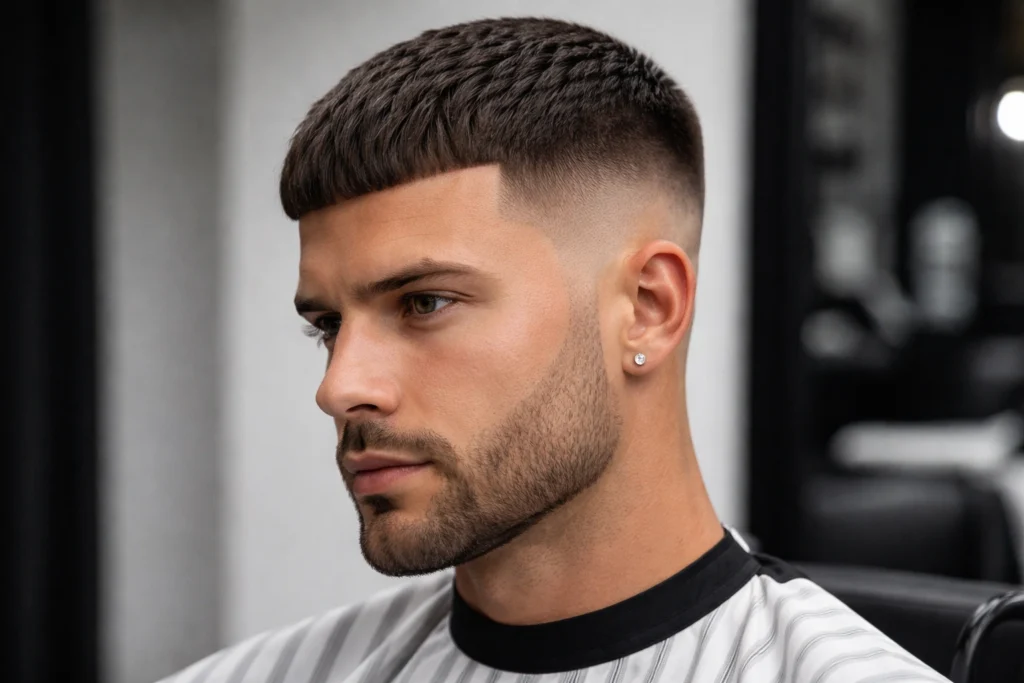
The skin fade is one of the cleanest and most popular fade variations available, and it pairs brilliantly with the Caesar cut. A skin fade, also called a bald fade, takes the hair down to the skin at the sides and gradually builds up to the natural hair length. The result is an almost surgical level of precision that looks incredibly sharp.
This style is particularly popular in competitive athletic circles and has also become mainstream in professional environments. It communicates a high level of grooming awareness and works best when maintained with regular barbershop visits every two to three weeks.
A skin fade Caesar can be dressed up with a light pomade for formal occasions or worn as-is for a naturally clean everyday appearance.
Disconnected Caesar Haircut
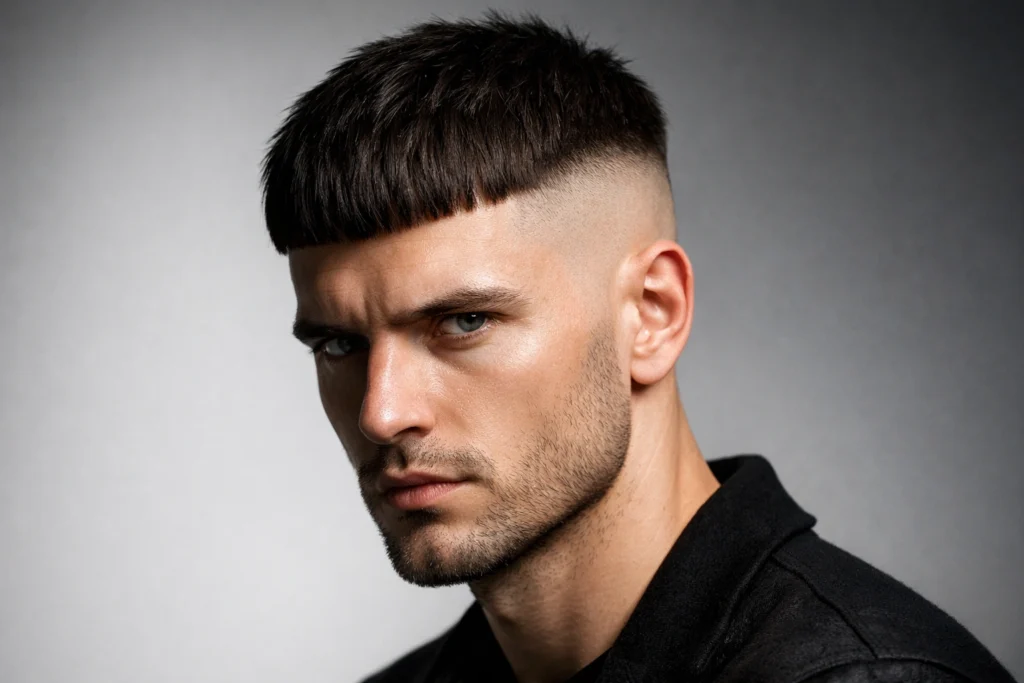
The disconnected Caesar is a bold, fashion-forward interpretation of the classic style. In this variation, there is a strong visual contrast between the top and sides, with no gradual blending between them. The sides are cut very short or even shaved, while the top maintains a noticeably longer, fuller look.
This disconnection creates a dramatic silhouette that feels modern and editorial. It is a popular choice in style-conscious communities and works especially well with textured or wavy hair on top, where the natural movement of the hair reinforces the dramatic contrast.
This is not the most understated option, but for men who want their haircut to make a statement, the disconnected Caesar delivers every time.
Caesar Cut with Waves
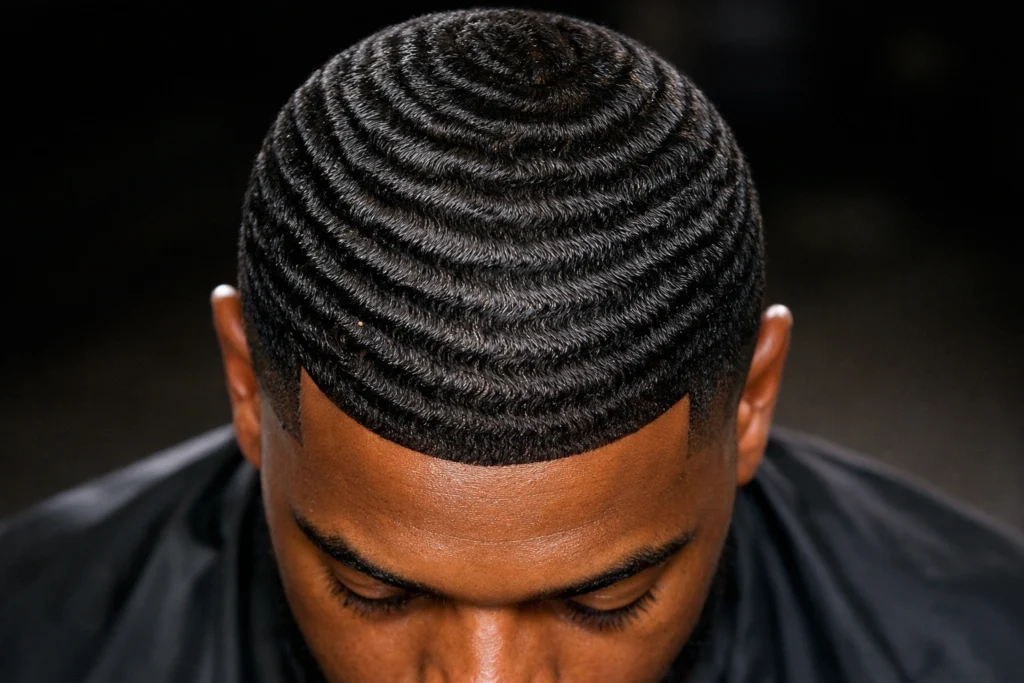
The wave pattern is a highly regarded grooming achievement among men with coarser or thicker hair types, and the Caesar cut provides the ideal canvas for it. By keeping the hair at a consistent short length and using wave-training techniques such as regular brushing and du-rag use, the hair develops a beautiful 360-degree wave pattern.
This style requires commitment and consistency, but the payoff is a visually striking look that combines the clean lines of the Caesar with the intricate, rippling texture of well-developed waves. A light wave grease or pomade applied during the training process helps the pattern set more definitively.
The Caesar with waves is a celebrated style that carries cultural significance and demands respect for the grooming discipline behind it.
Modern Caesar with Undercut
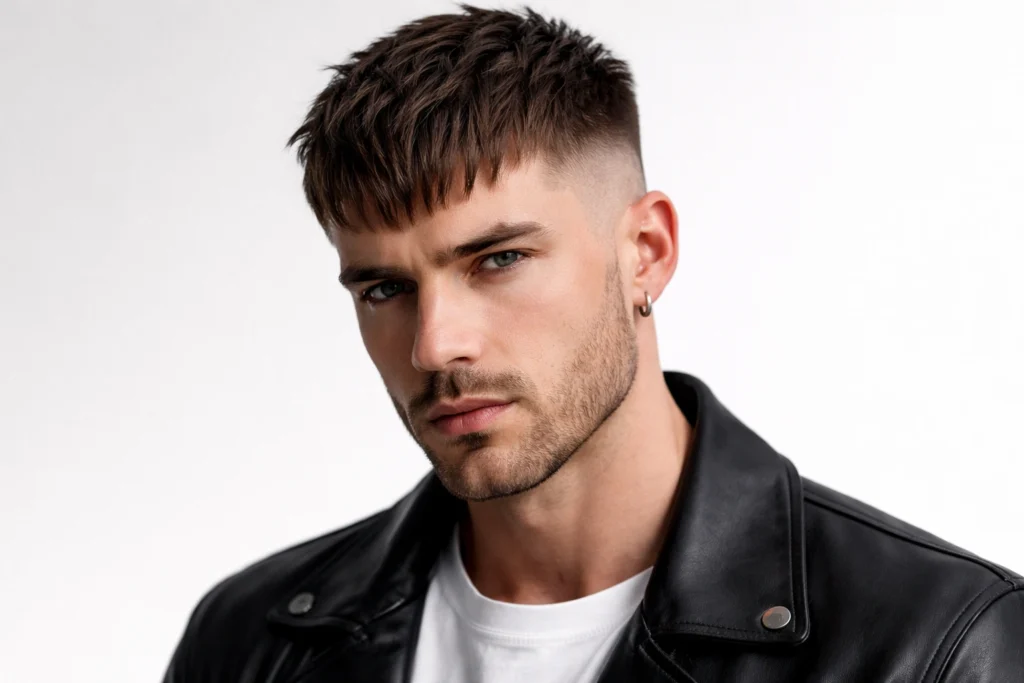
The undercut adds a dramatic structural element to the Caesar cut by creating a sharp horizontal disconnect between the top and the sides. Unlike a fade, which gradually blends the lengths, an undercut cuts the sides very close while leaving the top long enough to fall over the shorter section slightly.
This variation has a strong fashion influence and is popular in editorial and runway-adjacent styling contexts. It works particularly well with straight or slightly wavy hair that has natural weight and movement. When the hair on top is longer, it can be swept to the side or left to fall naturally, revealing the undercut beneath.
The modern Caesar with undercut is for the man who appreciates classic inspiration filtered through a contemporary lens.
Caesar Cut with Line Up
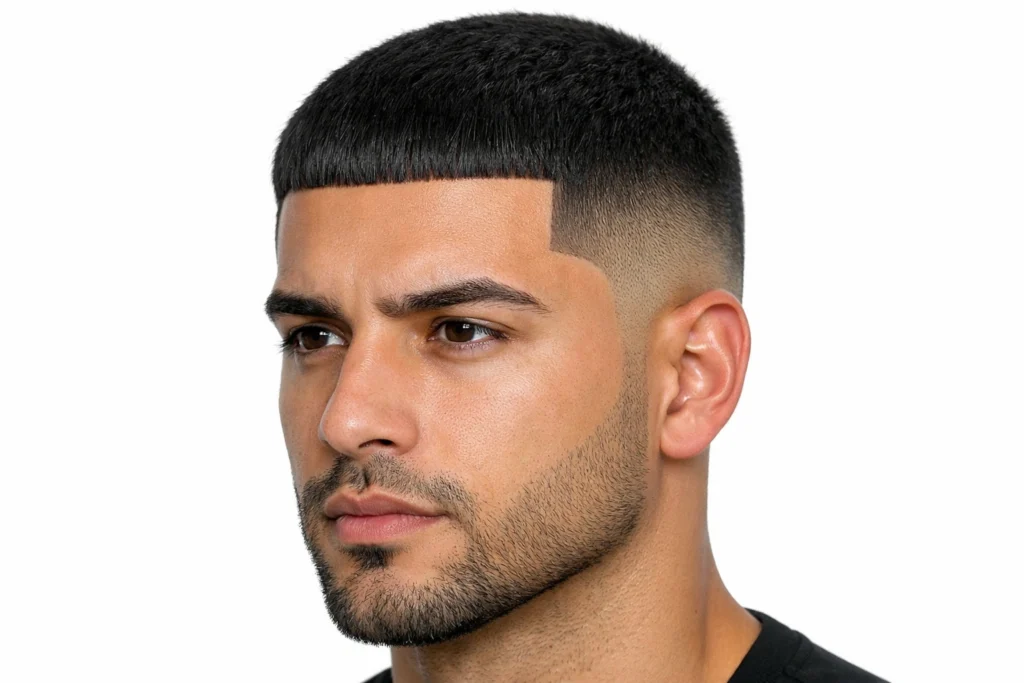
A line up, also known as an edge up, is a barbering technique that creates a perfectly straight, crisp hairline along the forehead, temples, and sideburns. When applied to a Caesar cut, the line up adds a level of definition and sharpness that transforms the entire look.
The precision of a good line up requires skill and a steady hand. When done well, it makes the haircut look incredibly clean and freshly done. It is a detail that other people notice even if they cannot immediately identify what makes the haircut look so polished.
The Caesar with line up is a strong choice for special occasions, professional presentations, or any time you want to make a particularly put-together impression.
Caesar Haircut for Older Men

The Caesar cut is not just for younger men. In fact, it is one of the most flattering styles for men in their forties, fifties, and beyond. The clean lines and modest length give an appearance of neatness and self-care without looking like an attempt to appear younger than one is.
For older men with thinning hair, the Caesar cut can disguise hair loss by keeping all the hair at a similar short length, making the overall look uniform and intentional rather than patchy. Grey hair also looks particularly distinguished in a Caesar cut, as the style allows the natural silver tones to read clearly.
A classic or slightly textured Caesar with a conservative taper is usually the best choice for older men seeking a timeless, age-appropriate look.
Caesar Cut with Pompadour Influence
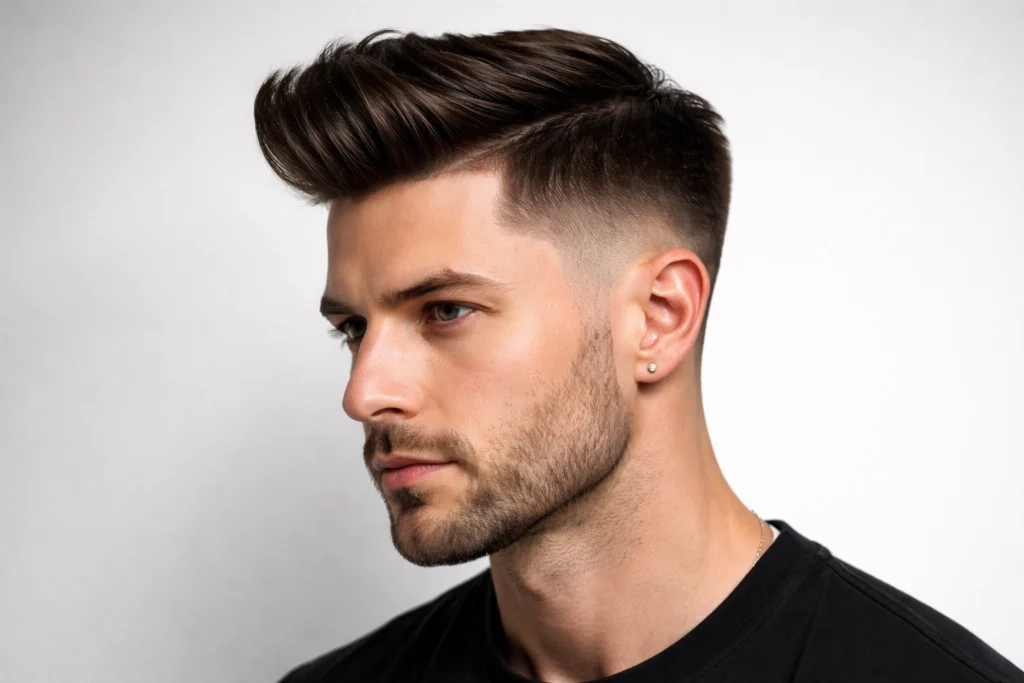
Blending the Caesar with a pompadour influence creates a hybrid style that has height, drama, and sophistication. In this variation, the front of the hair is pushed upward and slightly back, giving the Caesar more volume at the hairline rather than letting it lie completely flat.
The pompadour Caesar requires a bit more product and styling time but rewards the effort with a look that feels both classic and current. It works particularly well with thick or coarse hair that has enough natural body to support the lifted front section.
A medium to strong hold pomade is ideal for this style. Work it through the hair while using a blow dryer to build the volume at the front, then refine the shape with a comb or brush for a polished result.
Caesar Cut for Black Men

The Caesar cut has deep cultural roots within Black grooming traditions and remains one of the most celebrated and versatile styles in that context. For Black men, the Caesar typically features a precise edge up, a well-defined hairline, and a top section that works with the natural texture of the hair.
Whether the hair is tightly coiled, loosely curled, or somewhere in between, the Caesar adapts beautifully. Paired with waves, a clean fade, or a detailed line up, this style communicates both grooming mastery and cultural pride.
Many Black barbers have refined the Caesar cut into an art form, incorporating detailed designs, sharp partings, and technical fades that elevate it far beyond a simple short cut. It is a style that continues to evolve and inspire.
Low Maintenance Caesar Cut

For men who want to look put together without investing significant time in their grooming routine, the low maintenance Caesar is the answer. This version keeps the hair at a practical short length, uses a simple taper rather than a skin fade, and relies on minimal product for daily styling.
The beauty of the low maintenance Caesar is that it grows out gracefully. Because all sections of the hair are kept at similar lengths, the style remains acceptable even as it grows, which means fewer barbershop visits without looking unkempt.
A light touch of a water-based product is usually all that is needed to style it in the morning. For men with demanding schedules or those who simply prefer simplicity, this version is a practical and perennially appropriate choice.
Conclusion
The Caesar haircut is a true cornerstone of mens grooming, and its enduring popularity is no accident. It is versatile, accessible, and capable of being adapted to virtually any hair type, face shape, or personal style. From the clean precision of a skin fade Caesar to the bold statement of a disconnected variation, the twenty styles explored in this guide demonstrate just how much range this single cut offers.
Whether you are visiting a barbershop for the first time or looking to refine a style you have been wearing for years, the Caesar cut gives you a strong foundation to work from. The key is to communicate clearly with your barber, know your hair type, and choose a variation that genuinely suits your lifestyle and aesthetic. Once you find the right version of the Caesar for you, it is a style that will serve you well for years to come.
You may also like this post: 18 Modern Fade Haircut Styles for a Fresh Look in 2026
Frequently Asked Questions
What is a Caesar haircut exactly?
A Caesar haircut is a short mens hairstyle defined by horizontally cut, flat-lying bangs and an even length on top, usually paired with shorter tapered or faded sides. It is named after the Roman leader Julius Caesar.
Who does the Caesar haircut suit best?
The Caesar cut suits most men across face shapes and hair types. It is particularly flattering for oval, round, and square face shapes and works well for straight, wavy, curly, and coarse hair textures.
How often should I get a Caesar haircut trimmed?
For sharp versions with skin fades or precise edge ups, a trim every two to three weeks is ideal. For low maintenance variations with tapers, every four to six weeks is usually sufficient.
What products work best for a Caesar haircut?
Light to medium hold products work best for most Caesar styles. Matte clay or pomade adds texture and control without shine. For pompadour-influenced versions, a stronger hold product is recommended.
Can the Caesar haircut work for thinning hair?
Yes. The Caesar cut is actually one of the better choices for thinning hair because the uniform short length across the top creates the appearance of fullness and makes thinning less noticeable than with longer, uneven styles.
1 Comment