
Introduction
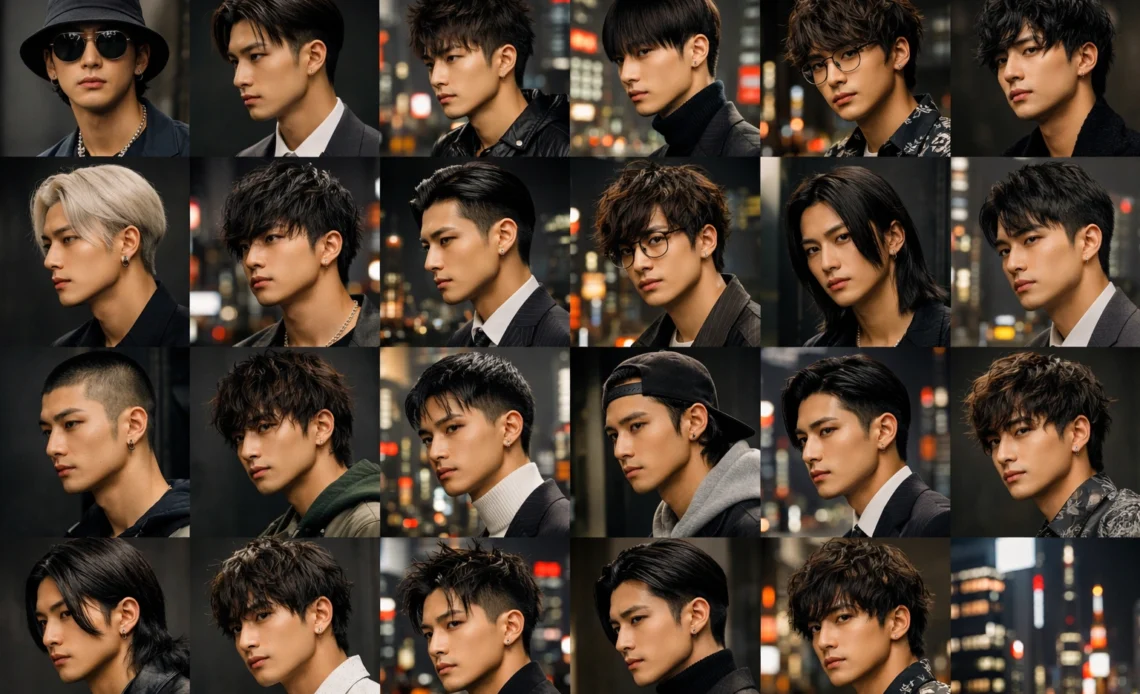
Japanese grooming culture occupies a unique and fascinating position in the global conversation about men’s style. While Western haircuts have long been defined by structure, volume, and bold contrast, the Japanese approach to men’s hairstyling operates on a different set of values entirely. Precision, natural movement, balance between tradition and contemporary culture, and an acute sensitivity to the silhouette of the individual are the foundations on which Japanese-inspired hairstyles are built. The result is a body of styles that are simultaneously refined and expressive, grounded in cultural heritage and completely fluent in the language of modern fashion.
Japanese-inspired hairstyles for men have gained remarkable global popularity, and that popularity is not simply a product of trend-chasing. These styles earn their worldwide following because they genuinely work. They suit a wide range of face shapes and hair types, they translate naturally from street fashion to professional settings, and they carry with them a depth of aesthetic consideration that elevates them above the purely functional. Whether the influence comes from J-pop idol culture, Tokyo street style, traditional samurai imagery, or the visual world of anime and manga, the hairstyles that emerge from Japan consistently deliver a level of individuality and craft that is difficult to find anywhere else.
This guide explores 20 of the most compelling and wearable Japanese-inspired hairstyles for men. Each entry covers the defining characteristics of the style, why it works aesthetically, the type of man it suits best, and the styling approach that brings it to life. Whether you are looking for a bold, expressive statement or a clean, understated look with a distinctly Japanese character, the styles in this guide offer the full spectrum of what Japanese-inspired men’s hairstyling has to offer.
The Two Block Cut
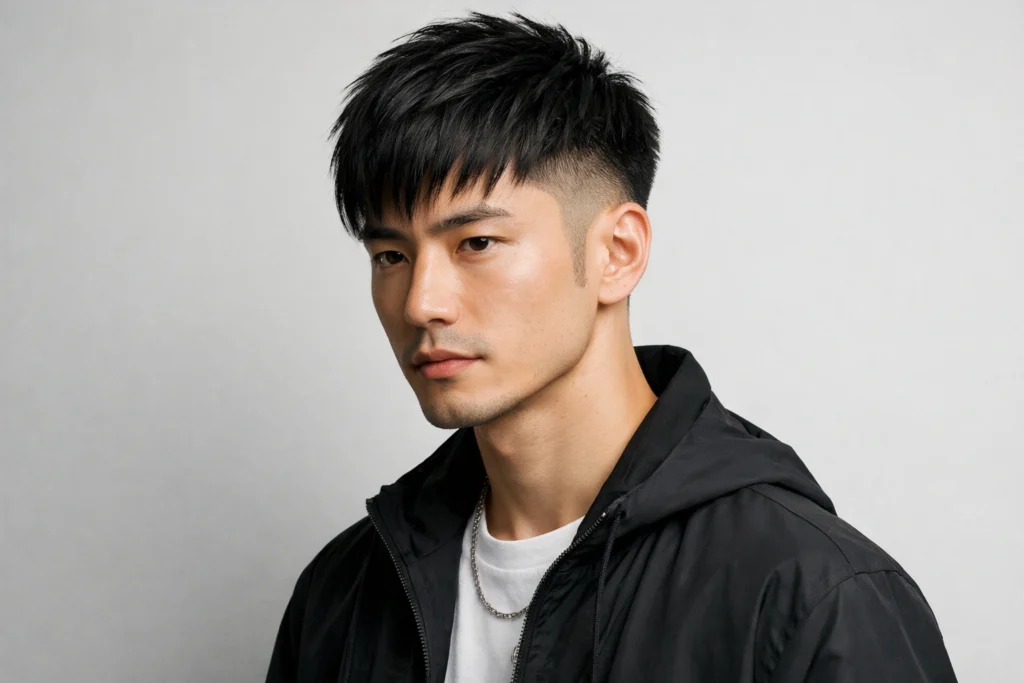
The two block cut is arguably the most globally recognized of all Japanese-inspired hairstyles and its dominance in barbershops across East Asia and increasingly worldwide is entirely justified. It features closely cropped or faded sides and back, the first block, paired with a noticeably longer top, the second block, creating a strong, defined contrast between the two sections that gives the style its name. The top can be styled in multiple ways: swept forward, pushed back, parted to the side, or left textured and natural.
What distinguishes the two block cut from a standard undercut is the precision of the shaping and the deliberate attention given to the transition between the two sections. Japanese stylists approach this cut with an exactness that produces a cleaner, more considered result than most Western interpretations. The style suits straight to slightly wavy hair and works across all face shapes. For styling, a lightweight wax or pomade applied through the top and worked into the desired direction delivers a finish that holds without appearing stiff or overdone. The two block cut is the entry point for any man wanting to explore Japanese-inspired hairstyles with a modern, immediately wearable result.
Styling the Two Block Top
The most popular approach in Japanese barbershops is to style the top slightly forward and to one side, creating a soft, asymmetric fall that adds personality without demanding significant product or effort. A small amount of clay or matte pomade applied to slightly damp hair and finished with the fingers produces this result in minutes.
The Japanese Undercut
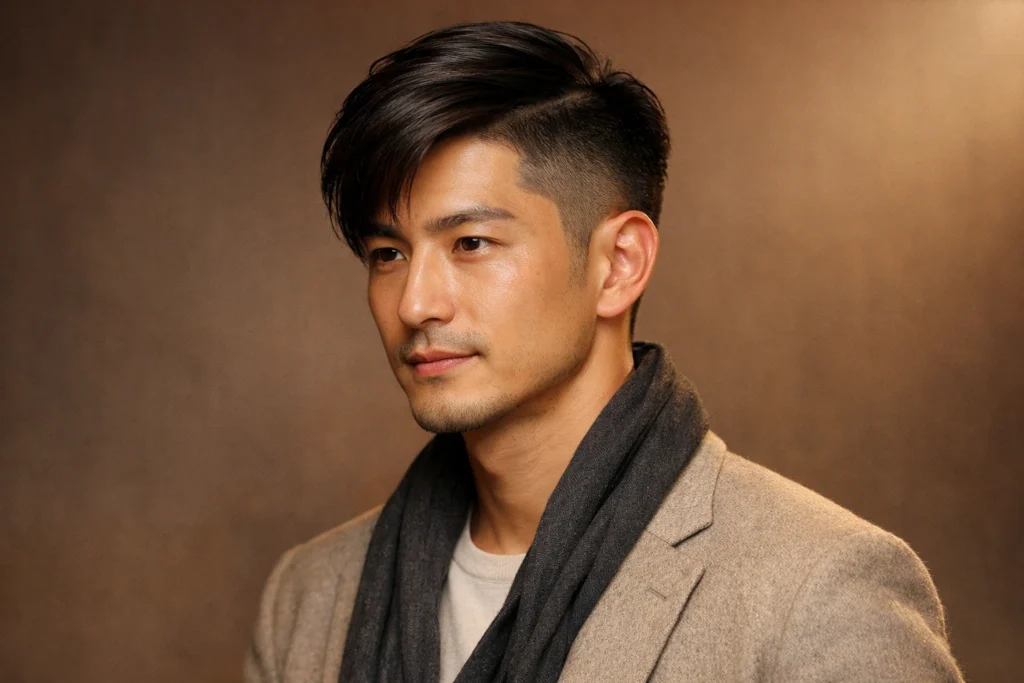
The Japanese undercut takes the Western undercut concept and refines it through the lens of Japanese precision grooming. The sides and back are cut very short or faded close, while the top retains significant length that can be styled in various directions. Where the standard undercut tends toward boldness and drama through strong contrast, the Japanese undercut frequently incorporates subtle fading, a more carefully calibrated length on the top, and a greater emphasis on the natural movement and weight distribution of the hair.
This is a style with genuine versatility. The long top can be slicked back for a sleek, polished result suitable for professional settings, parted and combed to one side for a classic, refined look, or textured and pushed in a natural direction for a more casual, expressive finish. Men with thick, straight hair, which is the predominant hair type in Japan and the texture for which this style is most optimized, will find the Japanese undercut performs exceptionally well. A quality pomade for sleek styling or a matte clay for a more textured, contemporary finish are the two primary product choices, depending on the occasion.
Undercut Length Ratio
The most flattering Japanese undercut maintains a significant but not extreme length differential between the top and sides. A top length of approximately three to five inches against sides faded to skin or very short provides the ideal contrast for the style’s characteristic two-tone visual effect.
The Modern Samurai Bun
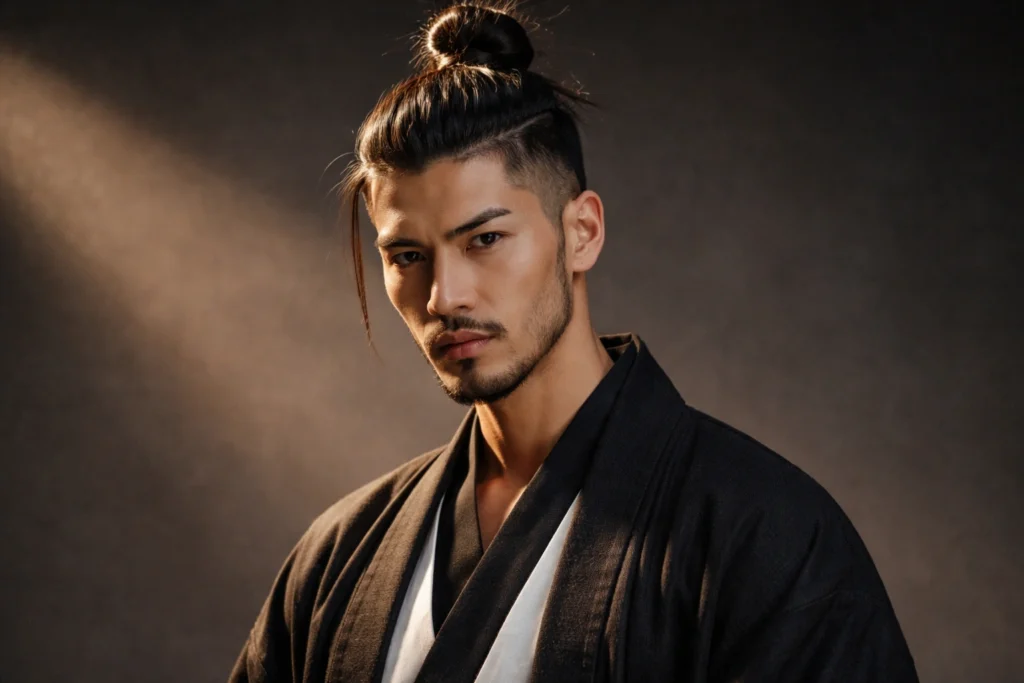
The modern samurai bun is a direct descendant of the chonmage, the traditional topknot worn by samurai warriors and sumo wrestlers throughout Japanese history. In its contemporary interpretation, it moves away from the shaved pate that characterized the historical original and instead features a medium to long length on top gathered into a topknot or bun, often paired with a taper or fade on the sides that gives the overall style a modern, sharp quality.
This is a hairstyle with genuine cultural weight and contemporary style credentials. The topknot adds considerable vertical height and creates a strong, confident silhouette that commands attention without being ostentatious. It is particularly well suited to men with medium to long hair and works beautifully when paired with an undercut on the sides, which reinforces the contrast between the gathered top and the closely cut sides. A smoothing serum applied through the hair before gathering it into the bun keeps flyaways controlled and gives the bun a clean, intentional finish. The modern samurai bun is one of the most expressive and culturally resonant Japanese-inspired hairstyles available to men today.
Bun Height and Placement
Wearing the bun high on the crown of the head produces the most traditional and visually striking result. A bun worn lower toward the nape of the neck creates a more casual, relaxed interpretation of the style that suits men who want the samurai bun concept in a less formal expression.
The Japanese Soft Perm
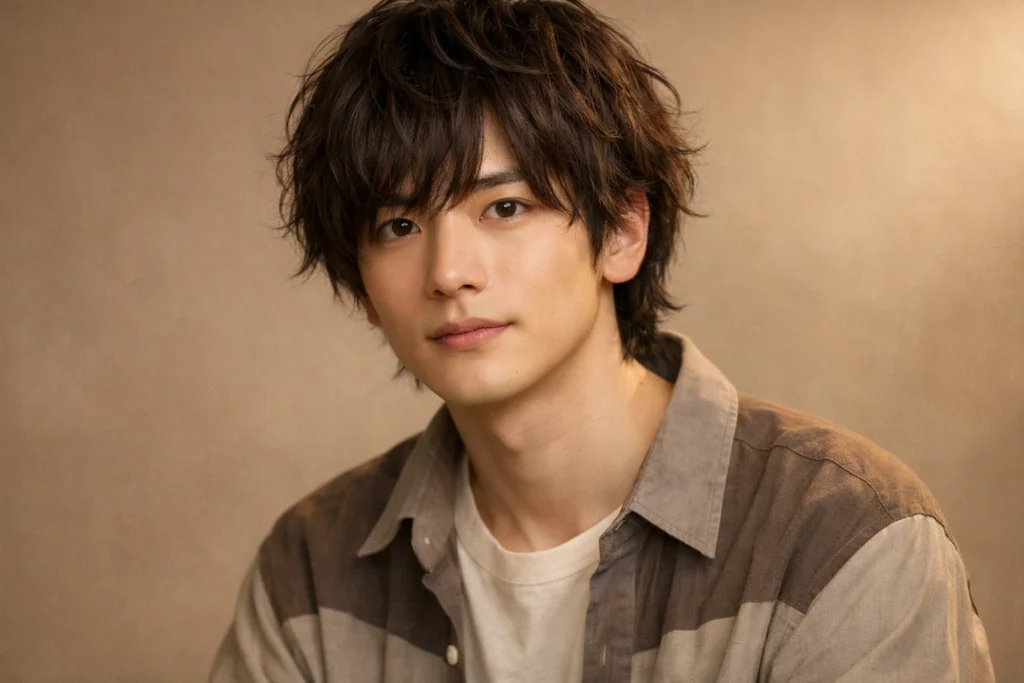
The soft perm is one of the most significant and widely embraced trends in Japanese men’s grooming, offering a gentle wave or curl pattern to hair that would otherwise sit flat and straight. Unlike the aggressive perms of earlier decades, the Japanese soft perm uses low-heat chemical processing to introduce soft, natural-looking waves that add volume, movement, and a distinctly romantic, youthful energy to the hair without appearing overdone or artificially structured.
For men with naturally straight hair who want a more textured, dimensional look without committing to daily styling effort, the soft perm is an exceptionally practical solution. The waves maintain their shape with minimal product, and the natural movement the perm introduces suits a wide range of lengths from short to medium. A light curl cream or mousse applied to damp hair and allowed to air dry is typically all that is required to define the waves and keep them looking fresh. The soft perm is particularly popular among younger Japanese men and is strongly associated with the aesthetic of J-pop and J-drama culture, lending it an immediately recognizable cultural character that distinguishes it from any Western styling approach.
Soft Perm Maintenance
The soft perm requires a conditioning treatment once or twice a week to keep the chemically processed hair hydrated and prevent the waves from becoming frizzy or brittle. Deep conditioning masks applied once a week extend the life of the perm and maintain the soft, touchable quality that defines this style.
The Japanese Textured Fringe
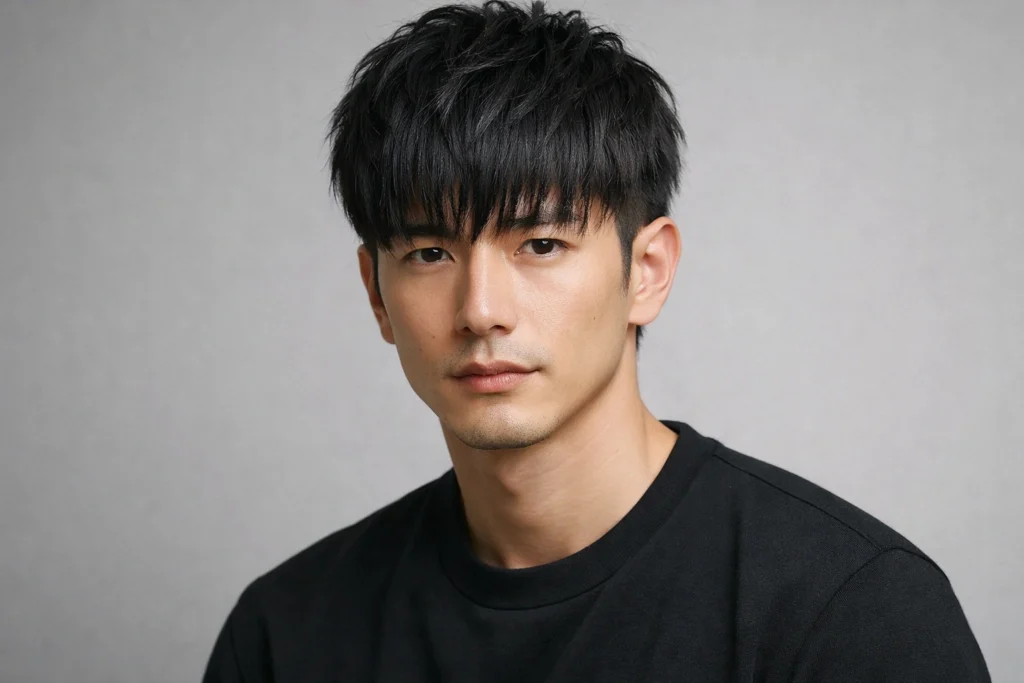
The Japanese textured fringe is a style defined by a precisely cut forward-falling fringe that sits across or just above the brow line, complemented by textured, layered length through the rest of the top and closely cut or tapered sides. The fringe itself is the focal feature of the style, and in Japanese barbershops it receives a level of attention and precise shaping that elevates it from a simple haircut element to an intentional style statement.
The texture through the fringe and the top of the hair is produced through point-cutting and scissor-over-comb techniques that remove weight and introduce natural movement, resulting in a finish that looks deliberately disheveled in the most refined possible way. This is not the blunt, flat fringe of a French crop but a fringe with internal layering and directional variety that catches light and moves with the head in a way that static, uniformly cut fringes never achieve. A small amount of matte clay or texturizing paste worked through the fringe enhances its natural movement and holds the layers in their intended directions throughout the day. This style is one of the most authentically Japanese in character on this list.
Fringe Length Options
The most popular fringe length in Japanese men’s styling falls approximately to the middle of the forehead or to the brow line. A fringe that reaches the eyes introduces a softer, more expressive quality associated with J-pop and idol culture, while a shorter fringe above the brow reads as sharper and more tailored.
The Japanese Pompadour
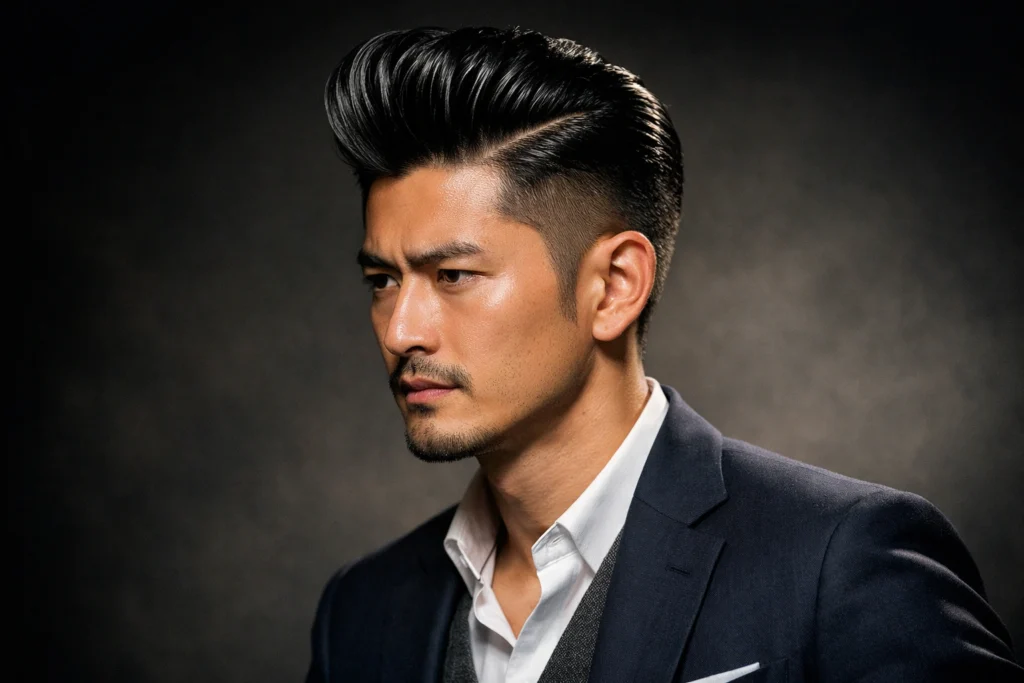
The Japanese pompadour takes the Western classic and reinterprets it through a lens of restrained elegance and precise structure that transforms it into something distinctly different from its origin. The hair is styled upward and backward from the forehead with height and volume at the front, but the Japanese interpretation keeps this volume controlled and deliberate rather than exaggerated, and the overall finish tends toward a cleaner, more refined silhouette than the theatrical versions associated with American rockabilly culture.
The sides are kept short through a fade or taper that provides contrast and keeps the proportions balanced, and the styling product used is typically a high-shine pomade that gives the finished look a polished, lacquered quality. This is a hairstyle for men who want presence and polish in equal measure. It suits formal occasions, fashion-forward casual settings, and professional environments where a degree of personal expression through grooming is welcomed. Apply pomade generously to damp hair, use a round brush and blow dryer to build the volume at the front and crown, then finish with a comb for clean surface definition.
Modern Japanese Pompadour Variations
Contemporary Japanese stylists frequently add a hard part to the side of the pompadour, introducing a sharply defined line that adds geometric structure to the style and prevents it from reading as too soft or retro. This detail is a signature of the modern Japanese approach to what is otherwise a traditional style.
The Wolf Cut
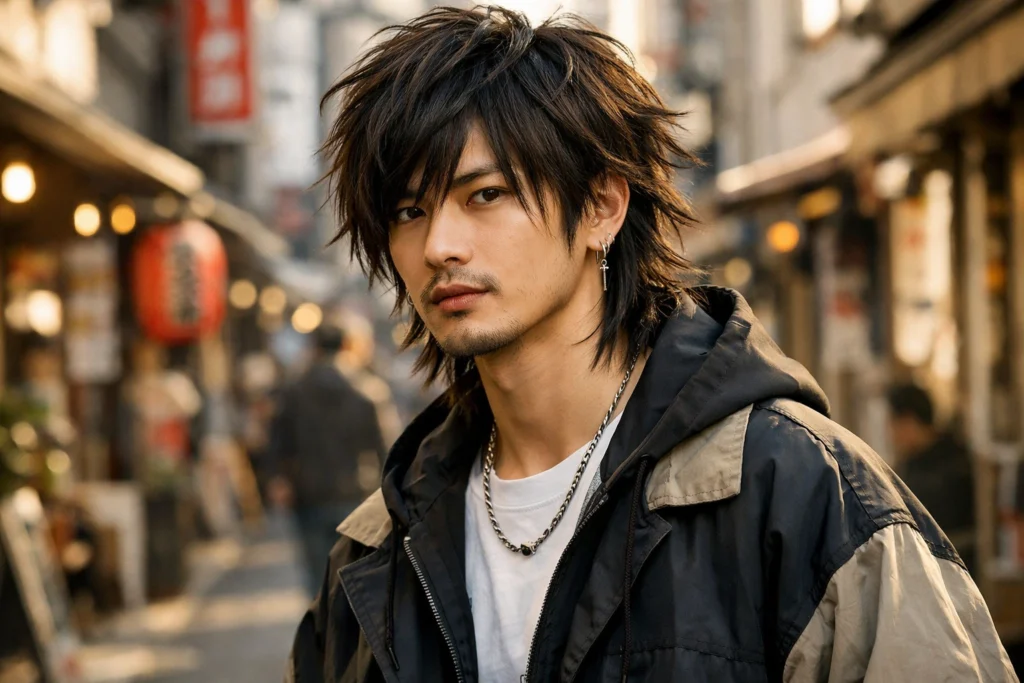
The wolf cut arrived in Japan through a combination of Korean pop culture influence and a domestic appetite for textured, high-movement styles, and it has since become one of the most requested haircuts in Japanese barbershops. It features heavily layered hair with a distinctive shaggy, voluminous quality through the crown and a lighter, more feathered finish through the lengths and ends. The wolf cut blurs the line between a classic shag and a modern mullet, creating a style that is simultaneously retro in reference and thoroughly current in execution.
For Japanese men’s hairstyling, the wolf cut has been adapted with the characteristic precision and attention to layering that defines the Japanese approach, producing results that have more internal structure and intentional texture than many Western interpretations. A sea salt spray or a light volumizing mousse applied to damp hair and scrunched while drying brings out the textured, multi-directional quality that makes the wolf cut so visually compelling. It suits men with medium to long hair and works particularly well on straight to wavy hair textures, both of which respond naturally to the layered shaping this cut employs.
Wolf Cut and Face Shape
The wolf cut suits oval, oblong, and heart-shaped face shapes particularly well, as the volume through the crown and the lighter lengths around the face create a balanced, softening frame. Men with very round faces may find the additional volume through the sides requires careful calibration to avoid adding unwanted width.
The Middle Part Curtain Style
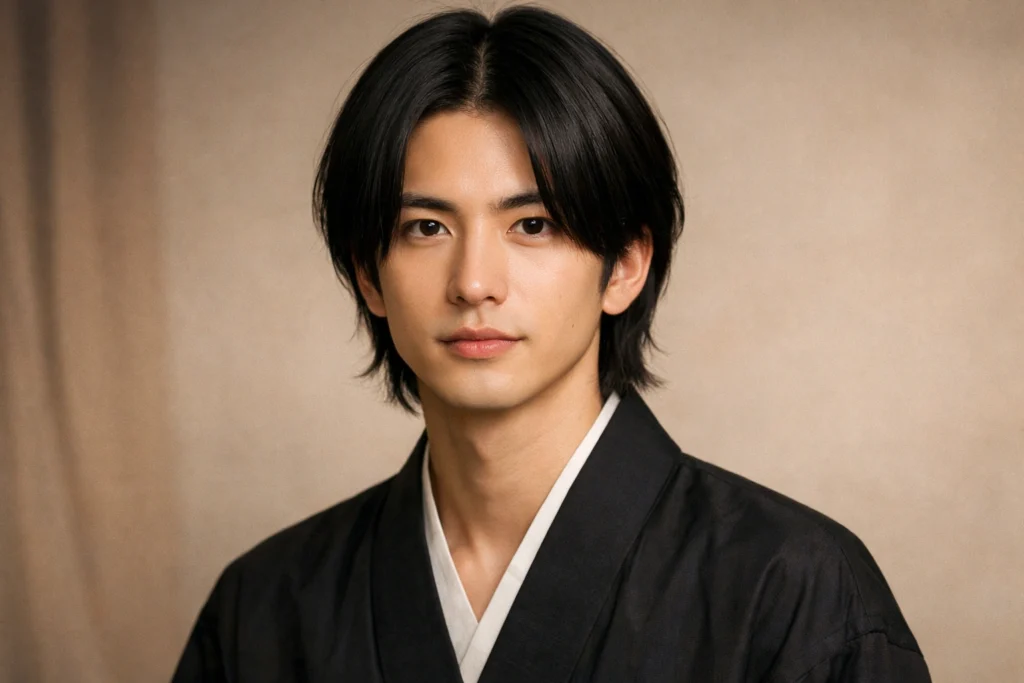
The middle part curtain style is a Japanese-inspired hairstyle with deep roots in both traditional Japanese aesthetics and the contemporary visual culture of J-drama and idol fashion. It features a clean central parting that divides the hair symmetrically, allowing it to fall on both sides of the face in soft, face-framing lengths that create a balanced, almost architectural quality. In Japanese men’s grooming, this style is associated with a particular kind of understated refinement that reads as effortlessly cool rather than studied or effortful.
The style works best at a medium length that allows the curtain sections to reach at least to the jawline, providing the face-framing effect that is central to its appeal. A smoothing cream or a light serum applied through damp hair and finished with a wide-tooth comb or the fingers maintains the clean central part and keeps the curtain sections smooth and directed. The middle part curtain style has a natural, relaxed quality during the day that can be elevated for evening settings with a small amount of additional product for shine and definition. It is one of the most versatile Japanese-inspired hairstyles on this list and suits almost every face shape and hair texture.
Middle Part Precision
The quality of the center part is the defining element of this style. A clean, precise part using a fine-tooth comb on damp hair before applying any product produces the symmetrical, intentional quality that distinguishes a well-executed curtain style from an unkempt one. Take the time to set the part clearly before styling the lengths on each side.
The Japanese Fade with Textured Top
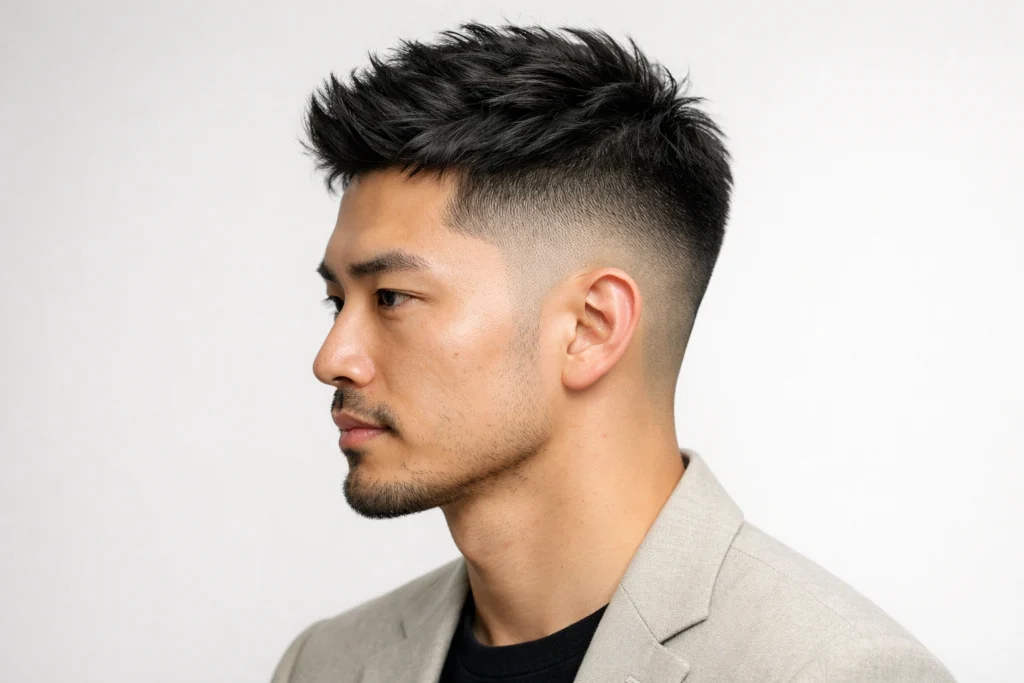
The Japanese fade with textured top brings together the precision of modern barbering with the textural sensibility that characterizes Japanese hair culture. The sides are faded smoothly from skin or very short hair at the base through to a longer length as they approach the crown, creating a seamless graduation that keeps the sides breathable and the overall silhouette clean. The top is left at a moderate length and finished with deliberate textural work that creates natural-looking dimension and movement.
What makes this a distinctly Japanese interpretation of the fade is the attention given to the top section. Rather than simply leaving the top long for structural contrast, Japanese stylists shape the top through point-cutting and texturizing techniques that give the hair a natural, airy quality quite different from the more sculpted approaches common in Western barbering. A matte clay or a soft wax applied lightly through the top and worked with the fingers produces the natural, low-shine finish that is characteristic of Japanese street-style grooming. The Japanese fade with textured top suits men who want a contemporary, sharp base cut combined with the more organic, expressive quality of Japanese hair texture work.
Fade Grade Selection
For an authentically Japanese aesthetic, a mid fade is the most widely used option, as it maintains a visible but not overly dramatic contrast between the sides and top. A high fade introduces a bolder, more Western-barbershop quality that can also work well but shifts the character of the style significantly.
The Long Layered Flow
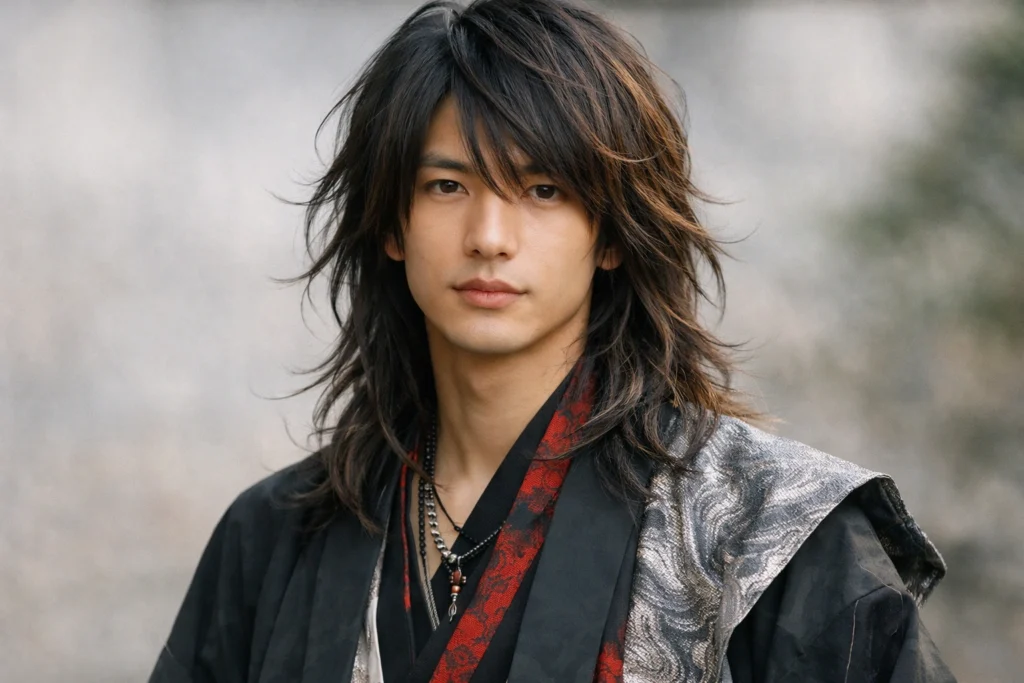
The long layered flow is a Japanese-inspired hairstyle for men who prefer to wear their hair at a longer length and want a style that combines the precision of Japanese cutting technique with the natural, effortless movement of layered long hair. Layers are introduced throughout the length to remove bulk, create internal volume, and allow the hair to move freely without appearing flat or shapeless. The result is a flowing, visually lightweight long style that carries obvious references to J-pop culture, Japanese rock musicians, and the artistic expression that has always been central to Japanese men’s fashion at its most creative.
This is a style that benefits enormously from regular conditioning treatments, as long hair is significantly more susceptible to dryness and breakage than shorter styles. A deep conditioning mask applied once a week and a lightweight leave-in conditioner used daily keeps the layers soft, separated, and free from the frizz or static that can undermine the natural, flowing quality of the style. For formal occasions, the long layered flow can be gathered loosely or styled with a smoothing serum for a sleeker finish. For everyday wear, sea salt spray or a light texturizing cream enhances the layers’ natural movement and gives the style the relaxed, effortless quality that defines it.
Color and the Long Layered Flow
Many Japanese men with this style incorporate subtle highlights, soft auburn tones, or gentle brown shading that adds dimension and warmth to the layered lengths. Color at long lengths catches light in a way that flat, uniform dark hair does not, enhancing the visual interest of the layers and adding a softness to the overall impression of the style.
The Anime-Inspired Textured Spikes
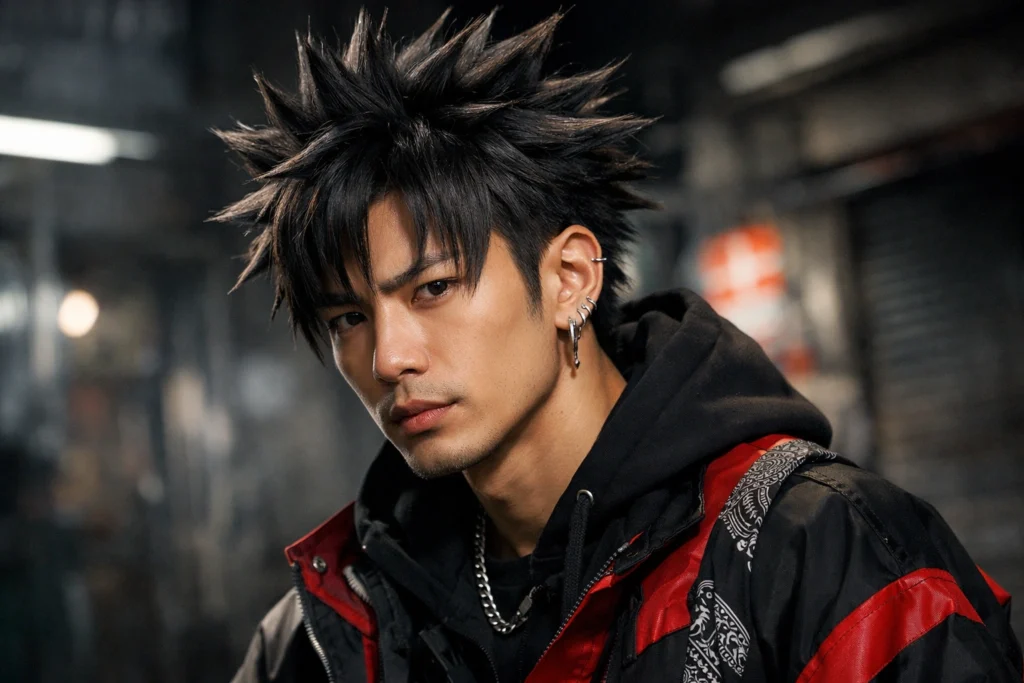
Anime-inspired textured spikes represent the most expressive and culturally specific entry on this list, drawing directly from the visual language of Japanese animation, manga, and the street fashion subcultures that have built their aesthetic identities around these art forms. The style features multiple directional spikes through the top and crown of the head, created through scissor work that removes weight at the tips and leaves individual sections with sharp, defined ends. The spikes are not rigid or heavily gelled as in older Western interpretations but carry a natural, feathered quality that makes them appear organic rather than constructed.
This is a hairstyle for men who want to wear their cultural reference points openly and with confidence. It suits the creative community, musicians, designers, and anyone who gravitates toward the bolder end of the Japanese fashion spectrum. A strong hold matte wax applied section by section through dry hair, with each section lifted and defined individually before the wax sets, produces the characteristic multi-directional spike pattern. The anime-inspired textured spike hairstyle works best on straight to slightly wavy hair of short to medium length and suits men with oval, oblong, or defined face shapes that provide a strong structural base for the expressive upper silhouette the style creates.
Spike Control and Definition
The key difference between spikes that look intentional and those that appear messy is the way individual sections are worked. Rather than applying product to all the hair at once and pushing it upward, work section by section, defining each spike before moving to the next. This approach produces the clean, separated quality that distinguishes the Japanese aesthetic from a less considered execution.
Conclusion
Japanese-inspired hairstyles for men represent one of the most thoughtful and culturally rich bodies of grooming knowledge available to any man who takes his appearance seriously. From the clean, modern practicality of the two block cut and the Japanese fade to the cultural depth of the modern samurai bun and the expressive boldness of anime-inspired textured spikes, the styles covered in this guide demonstrate the full breadth of what Japanese hair culture has contributed to global men’s grooming.
The common thread running through all 20 Japanese-inspired hairstyles is a shared commitment to precision, natural movement, and the careful balance of individual elements into a harmonious whole. These are not accidental haircuts or trend-driven shortcuts. They are the product of a grooming tradition that takes the relationship between a man’s hair, his face, and his overall presentation seriously. Whether you adopt one of these styles entirely or draw from the Japanese aesthetic to inform your own existing approach to grooming, the influence of Japanese hair culture will make your choices more considered, more intentional, and significantly more compelling.
You may also like this ppost: 20 Easy Summer Haircuts for Men to Stay Cool and Stylish
Frequently Asked Questions
What is the most popular Japanese-inspired hairstyle for men globally?
The two block cut is the most widely recognized and requested Japanese-inspired hairstyle for men worldwide. Its combination of closely cropped sides, a longer stylable top, and the precision with which Japanese barbers execute the transition between the two sections has made it a genuinely global phenomenon far beyond its East Asian origins.
Do Japanese-inspired hairstyles only suit straight hair?
While most Japanese-inspired hairstyles are designed with the straight to slightly wavy hair textures common in Japan in mind, many adapt well to other textures. The wolf cut, long layered flow, and soft perm-inspired styles work particularly well on wavy or lightly curly hair. Men with coarser or curlier textures may need additional product or a modified cutting approach to achieve the intended effect.
What styling products are most commonly used for Japanese-inspired hairstyles?
Matte clays and lightweight waxes are the most commonly used products for Japanese-inspired hairstyles, as they provide hold and texture without adding the heavy shine or rigidity that many Japanese styles specifically avoid. High-shine pomades are used for styles like the Japanese pompadour and the slicked-back undercut. Sea salt sprays and texturizing creams work well for longer, more natural styles like the wolf cut and long layered flow.
How do I ask my barber for a Japanese-inspired haircut?
The most effective approach is to bring reference photographs from Japanese grooming resources or social media showing the specific style you want. When describing the cut verbally, emphasize the precision of the shaping, the importance of natural movement in the top section, and whether you want a matte or polished finish. Terms like two block cut, Japanese undercut, or soft perm are widely understood in most barbershops with any knowledge of Asian hair culture.
Are Japanese-inspired hairstyles appropriate for professional environments?
The majority of Japanese-inspired hairstyles are appropriate for professional environments. Styles like the two block cut, Japanese undercut, Japanese pompadour, middle part curtain style, and Japanese fade with textured top all suit office settings comfortably. More expressive styles like the anime-inspired textured spikes and wolf cut are better suited to creative industries or casual professional environments. The modern samurai bun, when worn neatly, is also increasingly accepted across professional settings.
1 Comment