
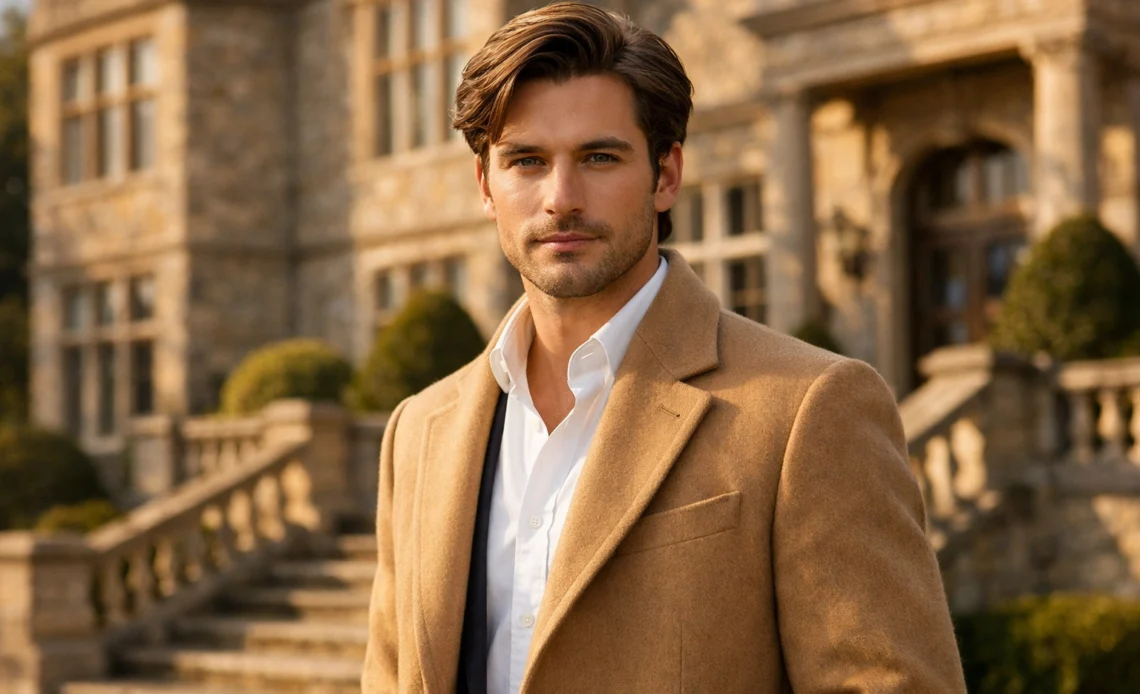
Some hairstyles are born from a moment in time. They peak, they fade, and within a few years they look like a relic of whatever decade produced them. Old money flow haircuts are the opposite of that. They were refined over generations, carried forward through Ivy League tradition, European heritage grooming, and the quiet confidence of men who never needed their hair to announce itself. These cuts move. They breathe. They look like they belong to the man wearing them, not to a trend board or a barber’s social media feed.
The concept of flow in men’s hair is simple: the hair is long enough on top to have natural movement, shaped well enough to look intentional, and worn with just enough product to control without stiffening. When that principle is applied through an old-money lens, which values restraint, quality, and effortless polish, the result is a category of haircuts that looks sophisticated at every occasion. This article covers 20 of the most enduring old money flow haircuts, explains what makes each one work, and gives you the knowledge to walk into any barber’s chair and ask for exactly the right thing.
What Makes a Haircut an Old Money Flow Cut
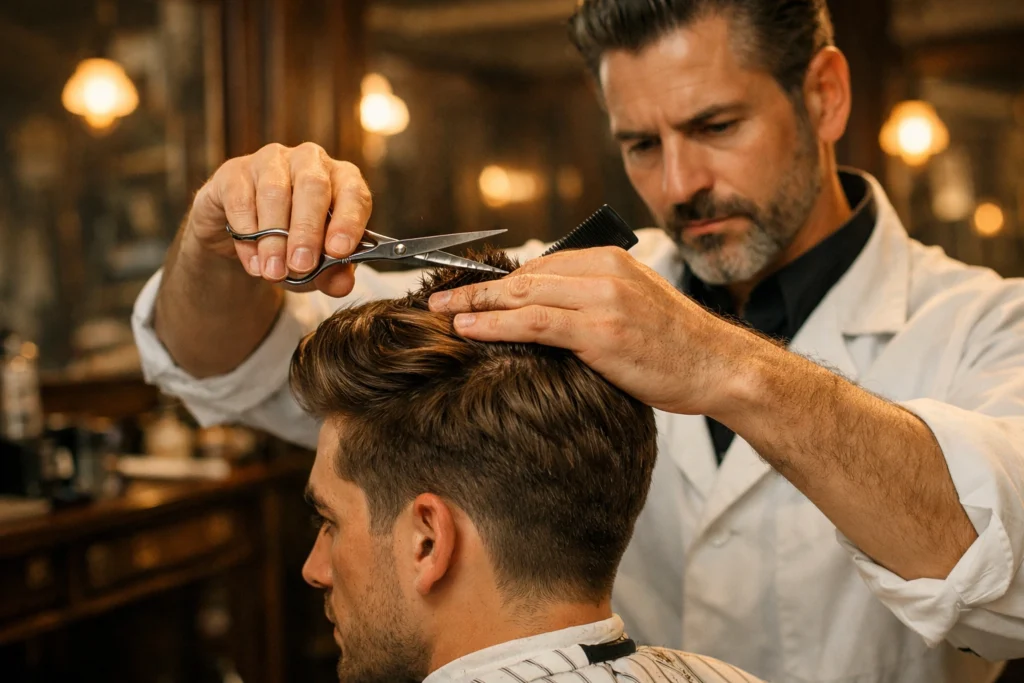
Not every medium-length hairstyle qualifies as an old money flow cut, and understanding the distinction helps you choose and wear these styles with real intention. The defining characteristic of old money flow is movement that looks uncontrived. The hair falls, sweeps, or curves in ways that suggest nature rather than effort, even when a skilled barber and a quality styling cream were very much involved.
Old money flow cuts share several consistent traits. The top is long enough to move, typically between three and six inches depending on the style. The sides are tapered rather than faded, meaning the hair shortens gradually without ever exposing the scalp. The finish is always matte or near-matte rather than high-shine, because the old-money aesthetic treats a glossy, gel-heavy look as excessive. And the cutting technique leans heavily on scissors rather than clippers, which produces softer edges and a more organic overall shape.
What separates this category from simply having medium-length hair is the intention behind every element of the cut. The proportions are balanced. The shape complements the face. The movement is directional but not forced. These are haircuts built on the logic of heritage grooming, and once you understand that logic, every style in this article begins to make sense.
The Classic Flow with Side Part
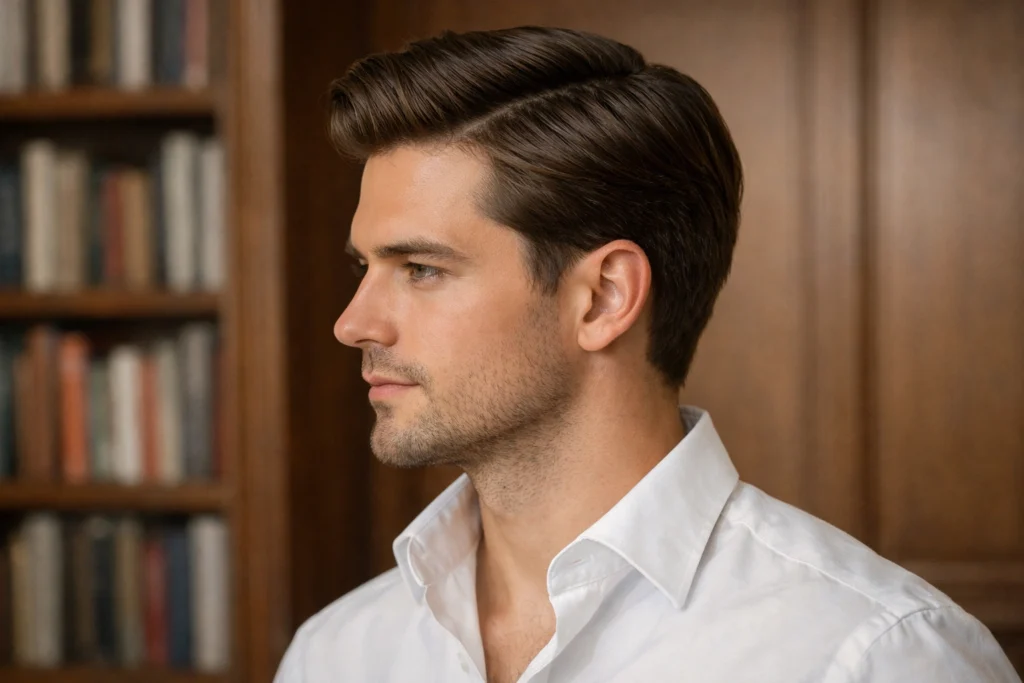
The side-parted flow is the foundational old money haircut, and it earns that status by being the most versatile and broadly flattering cut in this entire category. The hair on top sits at medium length, typically three to four inches, combed to one side from a clean, natural part. The movement flows outward and slightly downward from the part, creating a gentle sweep that gives the silhouette shape without rigidity.
This is the cut that Cary Grant made synonymous with masculine elegance in the 1930s and 1940s. It is also the cut that Jon Hamm wore for years on screen to embody a particular brand of mid-century authority. In contemporary styling, Ryan Gosling and Matt Bomer have both used softer, slightly textured versions to show how naturally the style adapts to modern sensibilities.
To get it right, ask your barber for a scissor cut on top with natural side part and a low taper on the sides and back. At home, work a small amount of lightweight pomade through damp hair, establish the part with a wide-tooth comb, and blow-dry with a round brush for soft volume. The result should look like it came together in three minutes even when it took eight.
The Ivy League Flow
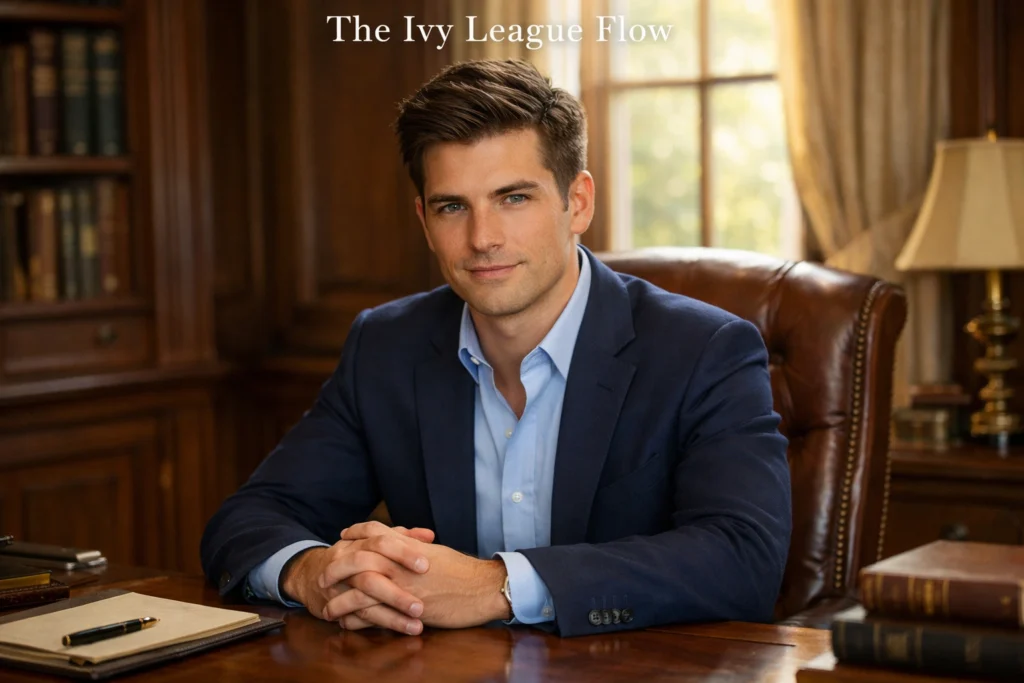
The Ivy League cut is, at its core, a precisely controlled flow haircut. It features two to four inches of length on top with enough texture to move, a subtle side part or forward sweep, and tapered sides that keep the silhouette clean and balanced. It is one of the most recognizable old money haircuts in existence because it was literally designed by and for the men who defined the old-money world: students and faculty at the most prestigious universities in the country.
John F. Kennedy wore it as a young politician and it became one of the defining images of his public persona. Cary Grant used it throughout his film career. What makes the Ivy League a flow cut rather than simply a short cut is that essential top length that allows for natural movement. Styled forward and slightly to the side, it flows. Worn slightly looser on casual days, it still looks entirely appropriate. A small amount of matte clay or styling cream is all it needs.
The Low Taper Flow
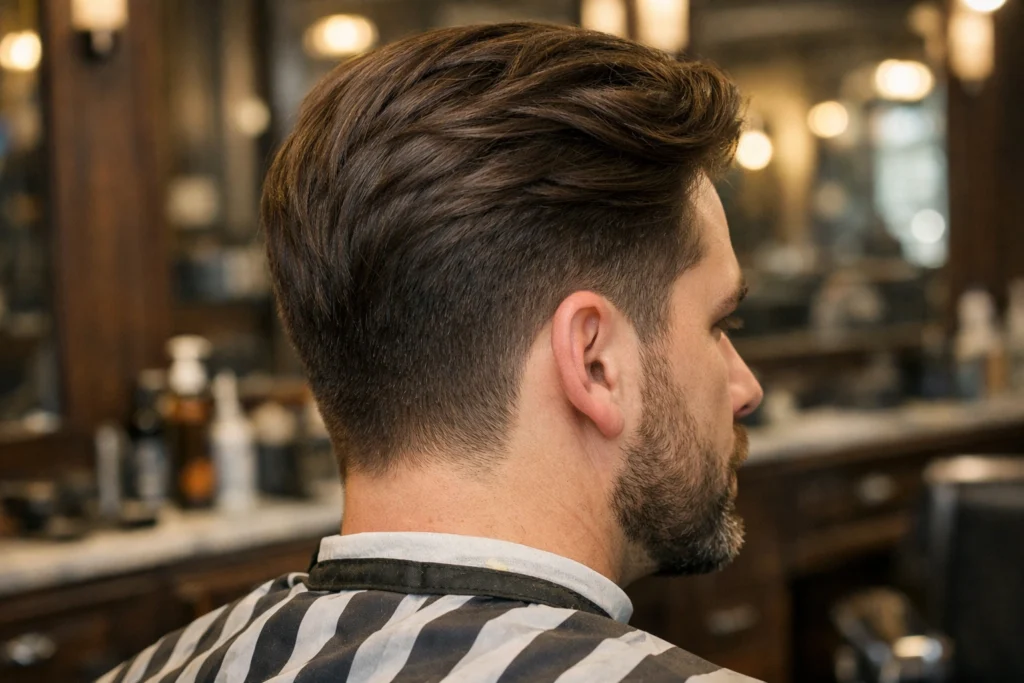
The low taper flow has become one of the most talked-about old money haircuts of recent years, and the reason is straightforward: it manages to feel both current and deeply traditional at the same time. The sides and back are tapered with a low taper line that sits close to the natural hairline, keeping the sides controlled without any dramatic contrast. The top is left at medium length with enough volume and movement to flow naturally backward or to one side.
This cut avoids the skin fade entirely, which is what places it firmly in old-money territory rather than contemporary barbershop culture. The gradual taper creates a soft, clean silhouette that looks equally at home under a blazer collar or a rugby shirt. Styled with a light cream and minimal direction, the top finds its own natural movement, which is exactly the quality that defines old money flow.
The Bro Flow

Of all the old money flow haircuts, the bro flow is the most relaxed. The hair is grown to a medium to longer length, usually four to six inches or more, and worn brushed back from the face with very little product and even less deliberate structure. It moves freely. It responds to wind. On a man who carries himself well and pairs it with quality clothing, it communicates an effortless, inherited kind of confidence that feels completely at home in coastal settings, sailing clubs, and summer estates.
The bro flow is not unkempt. That distinction matters. The hair is still trimmed regularly to maintain shape around the neckline and sides. It is conditioned, healthy, and clearly cared for. It simply looks as though it did all of that on its own. A leave-in conditioner or a very light styling cream worked through dry hair with the fingers is all the product this style requires. Think of the men photographed at Martha’s Vineyard or the Hamptons in early summer, and the bro flow is exactly what you see.
The 80/20 Flow
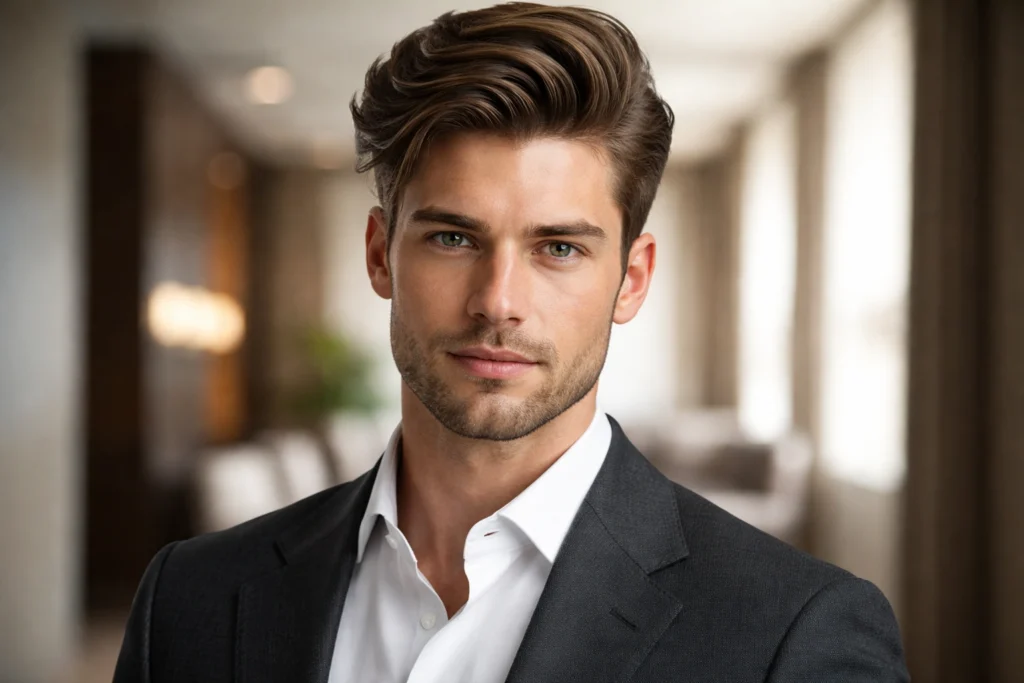
The 80/20 cut has circulated widely in grooming conversations in recent years, earning its reputation as one of the most classic and consistently elegant old money flow cuts available. The name refers to the proportion of the part: approximately eighty percent of the hair is swept to one side, twenty percent to the other, creating a deep side part with considerable natural flow.
This asymmetry gives the cut a bold but refined quality. The dominant side carries real movement and volume, while the minor side stays close and controlled. The result is a hairstyle that looks sharp without looking studied, distinctive without being loud. It works in professional environments because the structure is visible, and it works on weekends because the movement keeps it from feeling stiff. A small amount of pomade with light to medium hold is the ideal product for this cut.
The Curtain Flow

The curtain haircut, sometimes called the curtain flow, is one of the more recognizable old money styles of the last several decades. The hair is parted in the center or slightly off-center and falls to both sides, framing the face with symmetrical or near-symmetrical movement. The length typically sits between two and four inches on top, long enough to flow outward from the part toward the temples or ears.
This is a style deeply associated with the 1990s through the influence of figures like Brad Pitt and Leonardo DiCaprio, but its roots are considerably older, appearing in European aristocratic grooming traditions well before either of them was born. Worn today with a modern taper and a quality styling cream, the curtain flow reads as polished and quietly stylish. It suits oval, square, and oblong face shapes particularly well, as the outward movement of the hair softens any strong angles.
The Textured Ivy League Flow
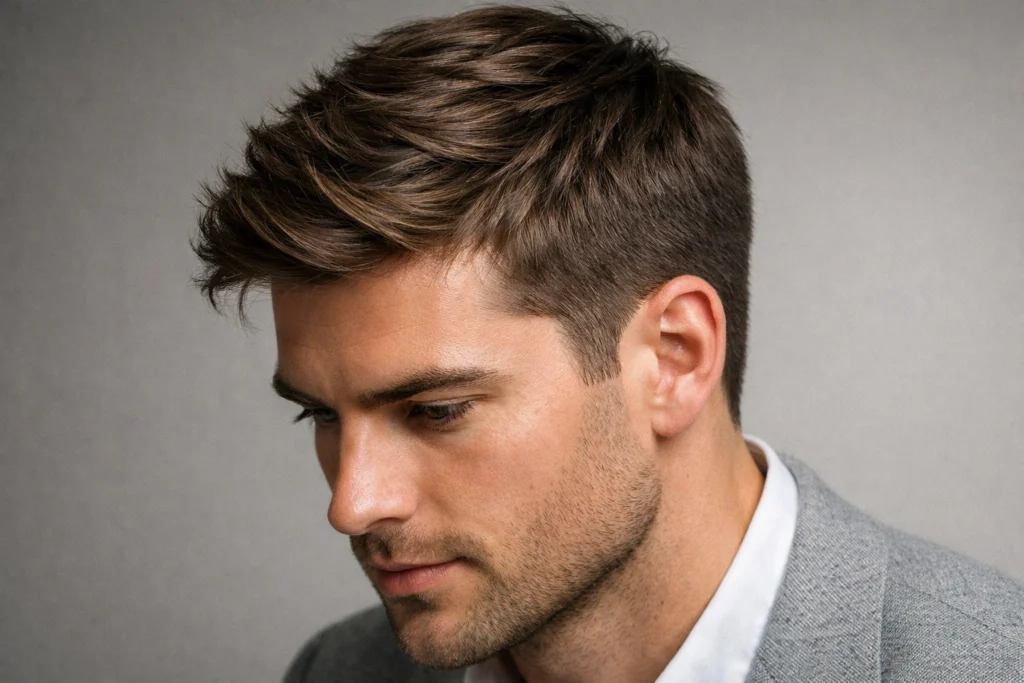
The textured Ivy League flow is a slightly more modern interpretation of the classic Ivy League cut, introduced for men who want the structure and heritage credibility of the original but with a bit more personality and visible movement. The sides remain tapered and the overall shape stays conservative, but the top is cut with more layering and scissor texture that creates separation and depth in the hair.
This additional texture amplifies the flow quality of the cut. The hair on top moves more freely, responds more naturally to the breeze, and gives the finished look a slightly less institutional feel while retaining all of its polish. It is an ideal choice for men in their twenties and thirties who appreciate the old-money aesthetic but want a cut that does not feel borrowed directly from a 1960s yearbook photograph.
The Layered Flow Cut
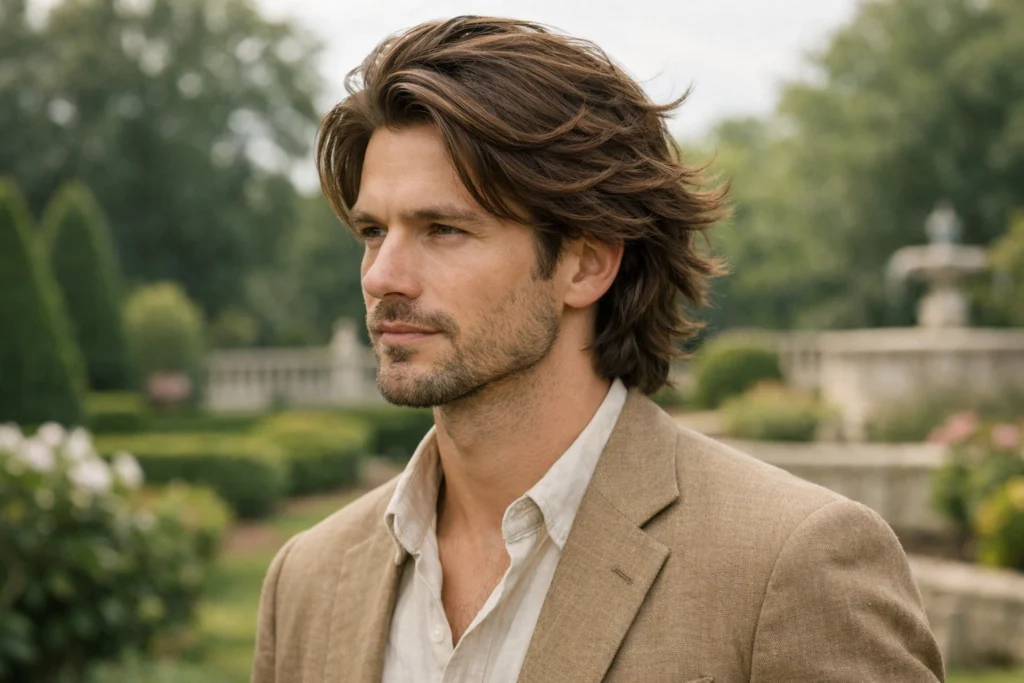
The layered flow cut takes the medium-length old money concept and adds deliberate layering through the top and crown to create real volume and movement. The hair is cut with scissors in stacked layers that build progressively from the sides inward, which means the silhouette has shape and structure without appearing heavy or static.
When this cut is worn on hair with natural wave or slight curl, the layers activate the texture and produce a result that looks genuinely luxurious. The movement is visible from a distance. The shape stays controlled without any product-heavy intervention. A small amount of styling cream or curl cream worked through damp hair, followed by a light blow-dry with a diffuser, is all this cut needs to perform at its best.
The Natural Wave Flow

Men with naturally wavy hair are, in many ways, the ideal candidates for old money flow cuts, because their natural texture does most of the work the cut is designed to accomplish. The natural wave flow takes that existing movement and shapes it with a proper taper, a scissor cut on top, and just enough layering to give the waves definition and direction.
The result is a hairstyle that looks as though it required nothing at all, which is the highest possible compliment in old-money grooming. The hair moves, catches light, and falls into place with an ease that men with straight hair spend considerable effort trying to replicate. A leave-in conditioner and a light wave cream are the only products this cut needs. Worn with classic clothing, it carries the energy of a man who grew up sailing, studying abroad, and never once thinking too hard about his hair.
How to Maintain Old Money Flow Haircuts
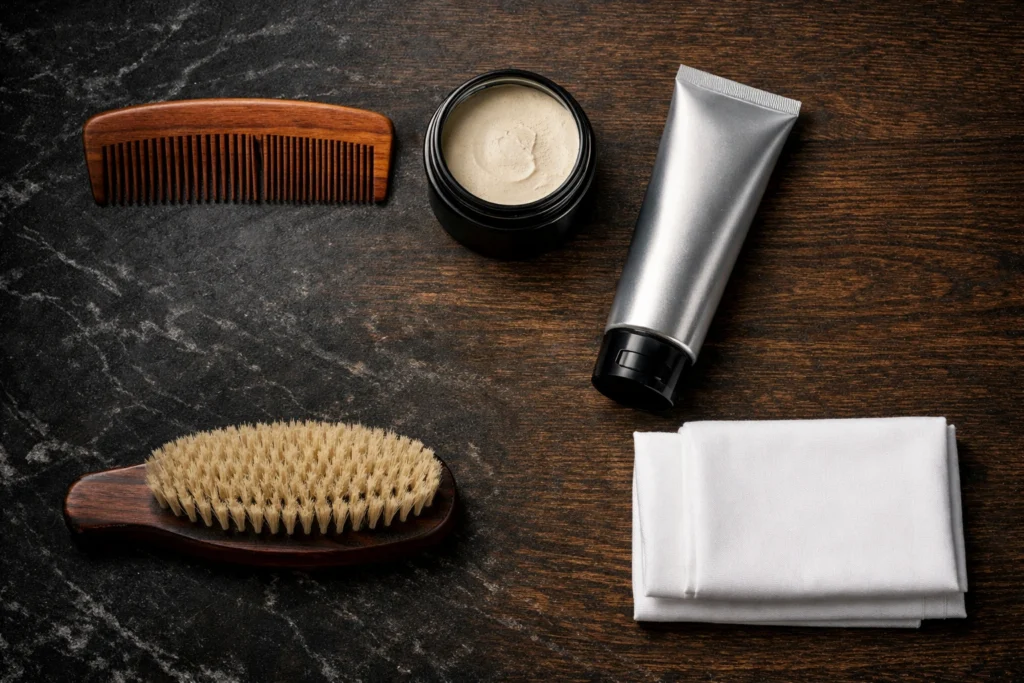
Maintaining old money flow haircuts requires commitment to a consistent schedule and a disciplined approach to product and daily care. The cuts in this category depend on precise proportions, clean necklines, and healthy hair to perform at their best, and all three of those things deteriorate without regular attention.
A visit to the barber every three to five weeks is the standard for most flow cuts. This frequency maintains the taper at the sides, keeps the neckline sharp, and ensures the top length stays within the range where it flows correctly rather than becoming shapeless or heavy. Between visits, a quality shampoo used two to three times a week and a good conditioner applied consistently keep the hair responsive and naturally lustrous.
For daily styling, the products that serve old money flow cuts best are lightweight styling creams, matte pomades, and leave-in conditioners. The goal is always to add enough control to give the cut its shape without removing the movement that defines it. Using too much product is the most common mistake men make with these styles. A dime-sized amount is almost always sufficient. The hair should feel touchable, move when the wind catches it, and look like it was styled by a person who knows what they are doing without appearing to have tried particularly hard.
Conclusion
Old money flow haircuts occupy a rare position in men’s grooming. They are simultaneously low-effort and high-impact, deeply traditional and entirely current, relaxed in spirit and precise in execution. Every style in this article has been worn with distinction for decades, and every one of them will continue to be worn with distinction decades from now.
The key to wearing any of them well is understanding what the cut is designed to do, choosing the one that suits your face shape and natural hair texture, and maintaining it properly between visits to a skilled barber. Beyond that, these cuts ask very little of the men who wear them. A small amount of the right product, a comb or a set of fingers, and the confidence to let the hair do what it was cut to do. That quiet ease is, ultimately, what old money flow has always been about.
You may also like this post: 20 Iconic Old-Money Men’s Hairstyles That Never Go Out of Style
Frequently Asked Questions
What is an old money flow haircut exactly?
An old money flow haircut is a classic medium-length men’s hairstyle characterized by natural movement, tapered sides without skin fades, and a matte or near-matte finish. The top is long enough to flow and sweep naturally, while the overall shape stays clean, balanced, and polished.
Which old money flow cut works best for straight hair?
The classic side part flow, the Ivy League flow, and the 80/20 cut all perform exceptionally well on straight hair. Straight hair holds the part and the directional sweep cleanly, which gives these cuts their most precise and polished expression.
How do I ask my barber for an old money flow haircut?
Tell your barber you want a scissor cut on top with three to four inches of length, a low taper on the sides and back with no skin fade, and a natural side part or center part depending on the style. Bringing a reference photo is always a reliable way to communicate exactly what you want.
What products should I use for old money flow haircuts?
Lightweight matte pomades, styling creams, and leave-in conditioners are the best choices. Brands like American Crew, Murdock London, and Baxter of California offer quality options. Avoid heavy gels or high-shine products, as they stiffen the hair and eliminate the natural movement that defines these cuts.
How long does it take to grow hair long enough for a flow cut?
Most men need between three and six months of growth from a short haircut to achieve enough length for a basic flow cut. The exact time depends on individual hair growth rate and the specific style being targeted. During the growing-out phase, regular trims to shape the neckline and sides prevent the process from looking unkempt.
1 Comment