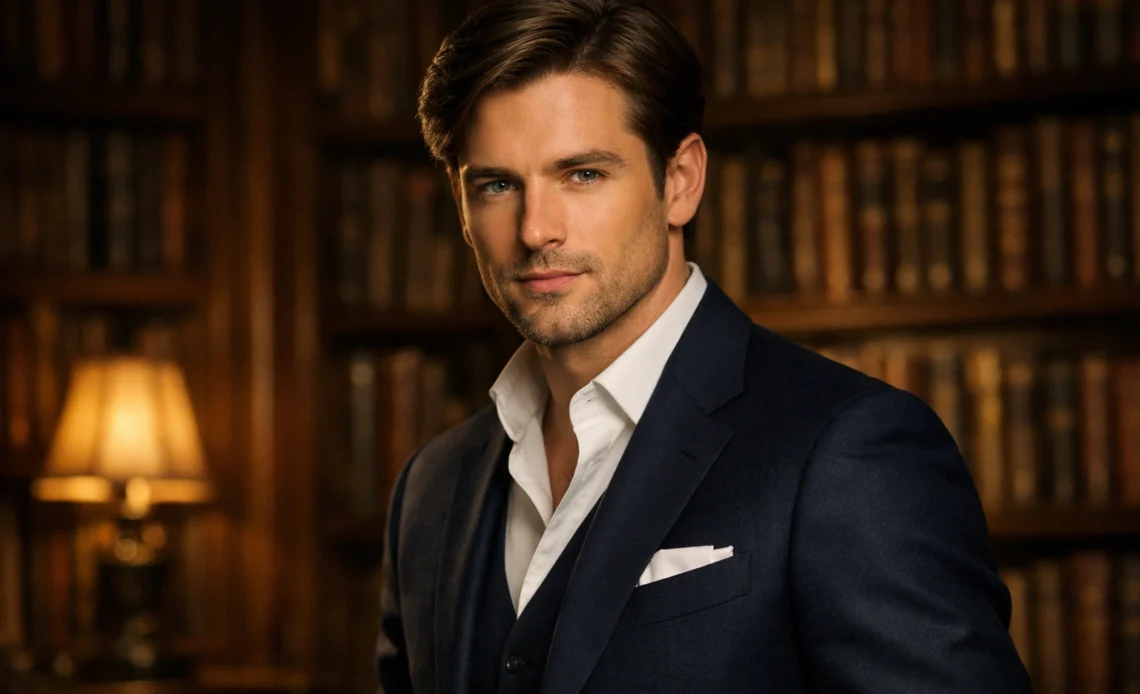
There is a certain kind of grooming that does not chase trends. It does not follow what is hot on social media this week or what celebrity just debuted a new look on a red carpet. Instead, it relies on something far more durable: tradition, proportion, and the quiet confidence of a man who has never needed to prove anything through his appearance. That is the philosophy behind old-money men’s hairstyles, and it is why these cuts have outlasted every fad that has come and gone over the past century.
The old-money aesthetic, rooted in Ivy League campuses, European aristocracy, and the social calendars of legacy families, has always treated hair as part of a broader statement. Clean lines, natural texture, and effortless structure are its defining qualities. These are not hairstyles that shout for attention. They earn it. Whether you are heading into a boardroom, stepping onto a sailboat, or attending a dinner where the silverware has been in the family for generations, these cuts are always appropriate. This guide walks through 20 of the most iconic old-money men’s hairstyles and explains exactly what makes each one a permanent fixture in the world of refined masculine grooming.
The Philosophy Behind Old-Money Men’s Hairstyles
Before examining individual styles, it is worth understanding the grooming values that define this entire category. Old-money hairstyles prioritize restraint above all else. There are no dramatic skin fades that expose the scalp, no heavy gel finishes that look stiff under light, and no trend-driven shapes that will appear dated in eighteen months.
The goal is effortless polish. A man wearing an old-money hairstyle should look as though he walked out of the house with minimal effort and still managed to appear more put-together than someone who spent forty-five minutes in front of a mirror. This is achieved through precise cutting technique, healthy hair that responds well to light product, and a shape that works with the natural growth pattern rather than against it.
Medium length on top, typically between three and six inches, is the standard sweet spot. The sides are tapered, not faded to skin. And the preferred products are lightweight pomades, styling creams, and matte clays that add control without sacrificing movement. If a hairstyle could appear in a Ralph Lauren advertisement from any decade between 1970 and today, it belongs in the old-money category.
The Classic Side Part
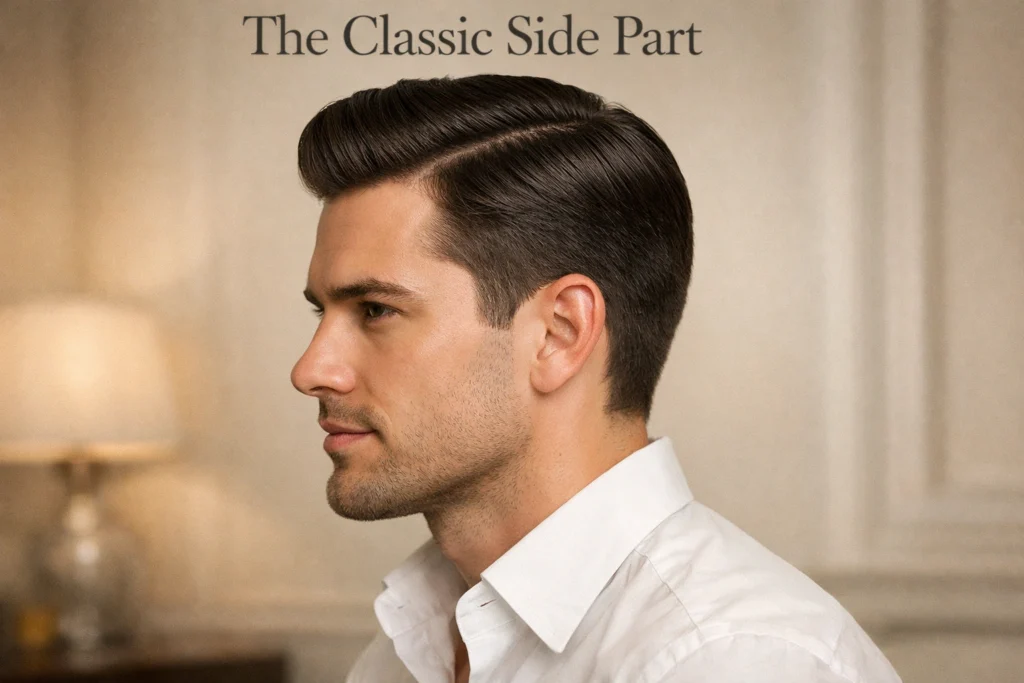
If there is one hairstyle that defines old-money grooming more than any other, it is the classic side part. This cut emerged in the 1920s and 1930s, popularized by Hollywood icons like Cary Grant and Fred Astaire, and it has never lost its standing. The hair on top is kept at medium length, combed cleanly to one side with a defined part running from the crown toward the temple. The sides are tapered for a balanced, structured silhouette.
What makes the side part so enduringly powerful is its versatility. Worn sharp with a fine-tooth comb and a touch of pomade, it is appropriate for a legal deposition or a black-tie reception. Worn softer with fingers and a light cream, it suits a weekend brunch or a casual afternoon. Jon Hamm wore it to define an era of masculine elegance in television. George Clooney built a second career as a silver fox largely on the strength of this single hairstyle. Ryan Gosling wears a looser, slightly textured version that proves the cut adapts beautifully to modern sensibilities.
To achieve it, apply a small amount of lightweight pomade to damp hair, use a fine-tooth comb to establish the part, and blow-dry the top toward the part while using a round brush for subtle volume.
The Ivy League Cut
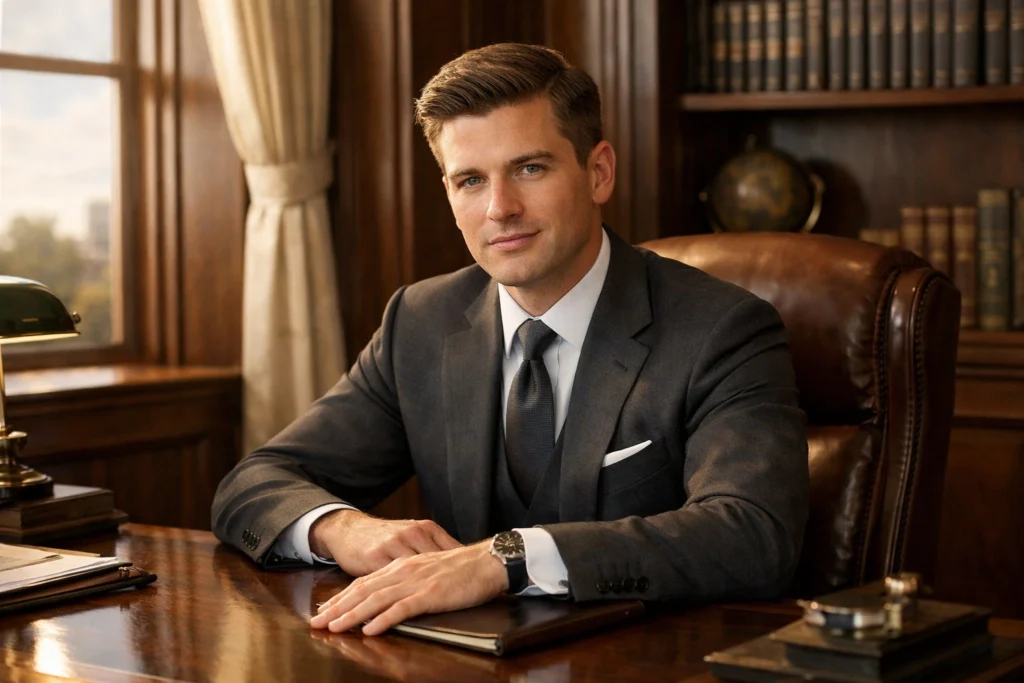
The Ivy League cut is arguably the most recognized old-money hairstyle in existence. It features short, tapered sides with enough length on top, usually two to four inches, to allow for a slight side part or a natural forward sweep. The cut is clean, masculine, and quietly authoritative. It communicates that the wearer values precision without being obsessed with it.
John F. Kennedy made this cut synonymous with political power and educated confidence. Cary Grant wore it on screen to project intellectual sophistication. Today it remains the first recommendation for any man entering a professional environment who wants to signal both competence and refinement without drawing attention to his appearance. A small amount of matte product worked through damp hair and a light comb through the top is all the styling this cut ever needs.
The Classic Taper
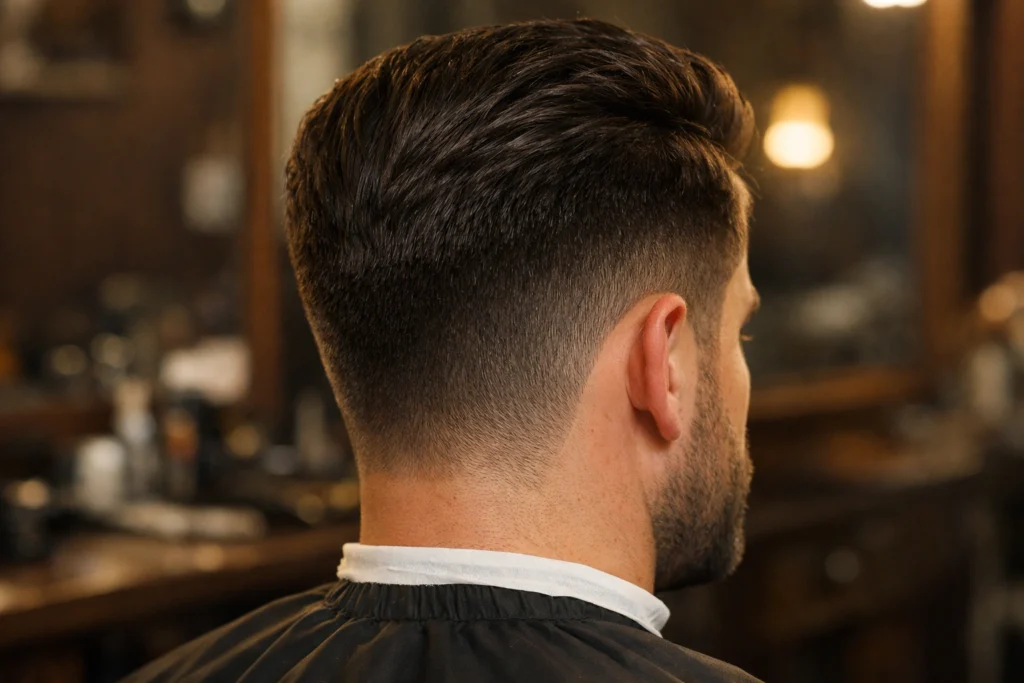
The classic taper is an old-school barbershop cut that has survived every trend cycle since the mid-twentieth century. The sides and back are clipped progressively shorter as they descend toward the neckline, blending seamlessly into a longer top that can be styled back, to the side, or with natural movement. Unlike a fade, the taper never reaches the skin, which gives it that distinctly old-money refinement.
This is a highly functional cut that works with straight, wavy, and even slightly coarse hair. Styled back with a high-shine pomade, it carries the energy of a 1950s Italian businessman. Worn more loosely with a matte cream, it reads as modern and relaxed. Three to four inches on top is the ideal length for maximum styling flexibility.
The Gentleman’s Crew Cut

The crew cut has been part of the masculine grooming vocabulary for decades, associated with military discipline, collegiate tradition, and athletic confidence. In the old-money context, it is worn with slightly more length on top than a standard military crop and with soft scissor blending rather than aggressive clipper lines. The result is a cut that looks neat and controlled without appearing institutional.
This is the hairstyle for the man who wants to look sharp with virtually zero daily effort. A light dusting of texture powder adds just enough definition to keep the top looking structured and full. It suits most face shapes and hair types, and it requires only a trim every three to four weeks to maintain its sharp neckline.
The Slick Back
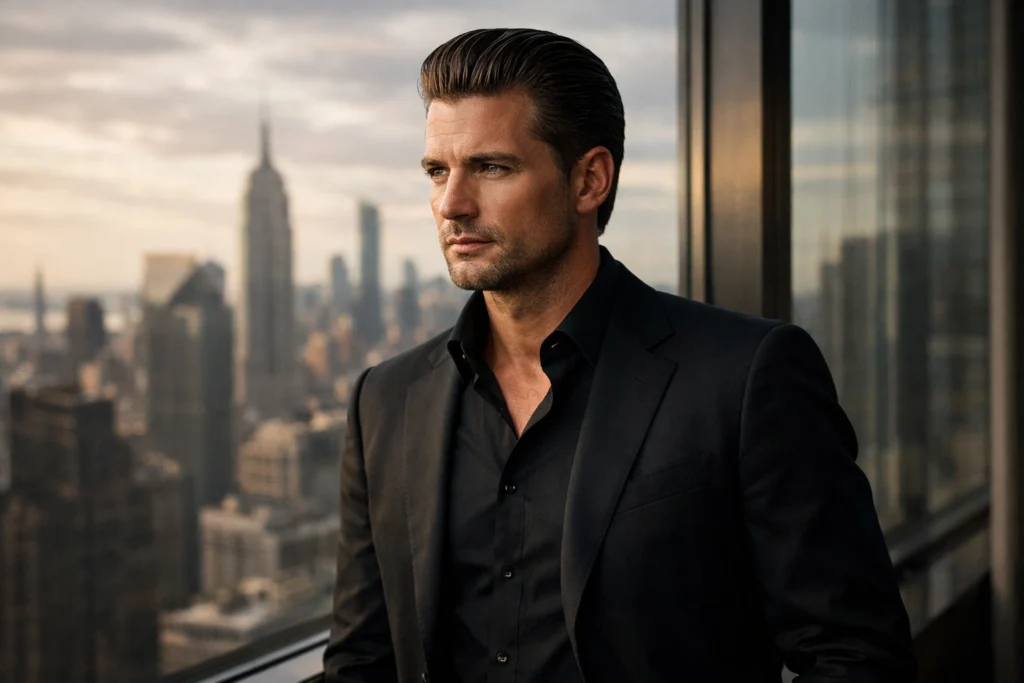
The slick back is a study in confident authority. The hair is grown to medium length on top and combed straight back from the forehead, with the sides tapered cleanly. In the old-money interpretation, the key is restraint with product. Heavy, high-shine gels that create a wet, plastic-looking finish are not part of this aesthetic. Instead, a light pomade or styling cream keeps the hair in place while preserving natural movement and a soft, touchable finish.
European businessmen and statesmen have favored this style for generations. Think of the polished directorial figures in Italian and French cinema, or the quietly powerful executives photographed at Davos. The slick back communicates that a man is in control without needing to advertise it.
The Loose Pompadour
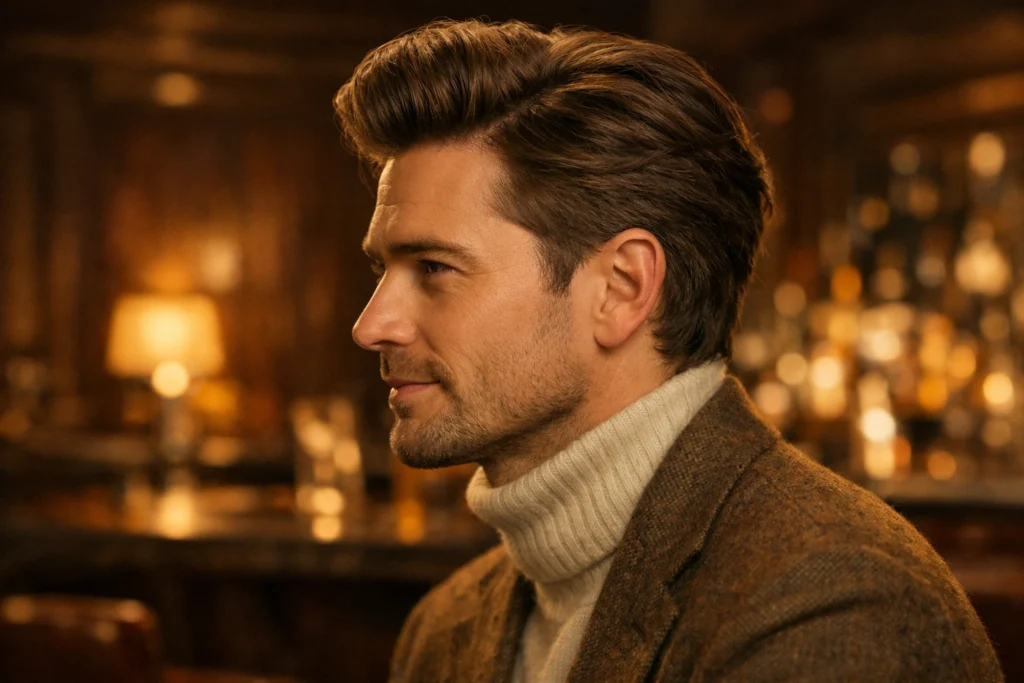
The classic pompadour, in its original form, belongs to rock and roll. The old-money version is considerably more subdued. Volume at the front of the head is maintained, but it is soft and natural rather than architectural. The sides stay neat and tapered, and the overall shape reads as refined rather than theatrical.
This is a favorite from the 1950s and 1960s among European heirs and style icons who wanted just a hint of personality in their grooming. A small amount of clay or matte pomade provides the necessary lift while keeping the finish from looking overdone. It is, in a sense, a pompadour for a man who would never be caught dead at a pompadour.
The Natural Wave Side Sweep
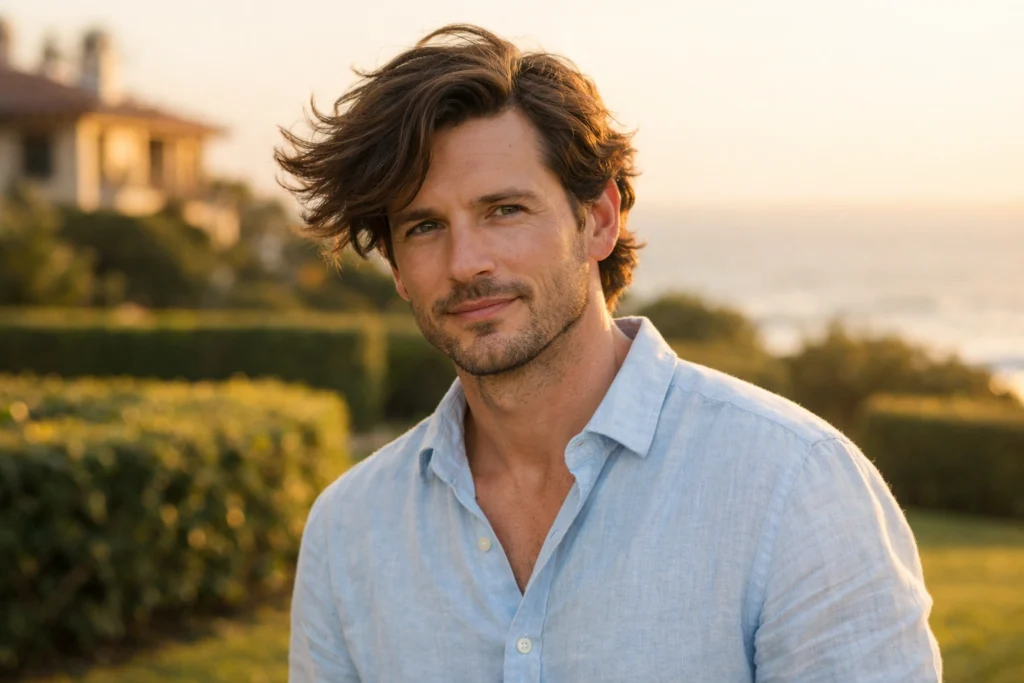
Men with naturally wavy or loosely textured hair have a distinct advantage in the old-money grooming world. When that wave is trimmed properly, kept at medium length, and swept gently to one side with a styling cream, the result looks like a level of grooming sophistication that took considerable effort. In reality, it took almost none.
This is the hairstyle of the man who attended boarding school and never quite lost the effortless nonchalance he developed there. It celebrates natural texture rather than suppressing it. A leave-in conditioner or light curl cream keeps the waves defined without making them look product-heavy. Think of the young men photographed at weekend polo matches or garden parties, whose hair seems to have been arranged by a favorable wind rather than a comb.
The Scissor Cut
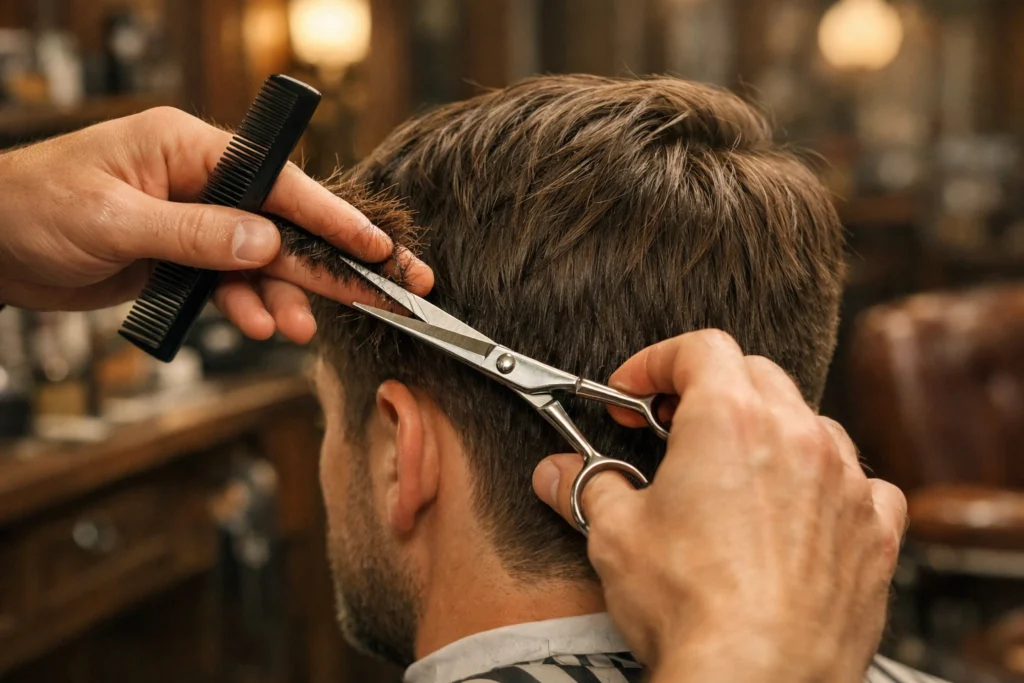
The scissor cut refers not to a single specific shape but to a method of cutting that produces noticeably different results than clipper work alone. Hair cut entirely with scissors has a natural, organic softness at the edges. There are no harsh lines, no abrupt transitions, and no geometric precision that reads as contrived. The result is a hairstyle that looks like it has always been there, like it belongs to the person wearing it.
This is old-money grooming at its most organic. A well-executed scissor cut communicates that the wearer visits a skilled barber rather than a quick-service chain. The texture is visible but subtle, and the overall shape retains movement without looking unsettled. It is the haircut equivalent of wearing a properly tailored jacket rather than something selected from a rack.
The Bro Flow
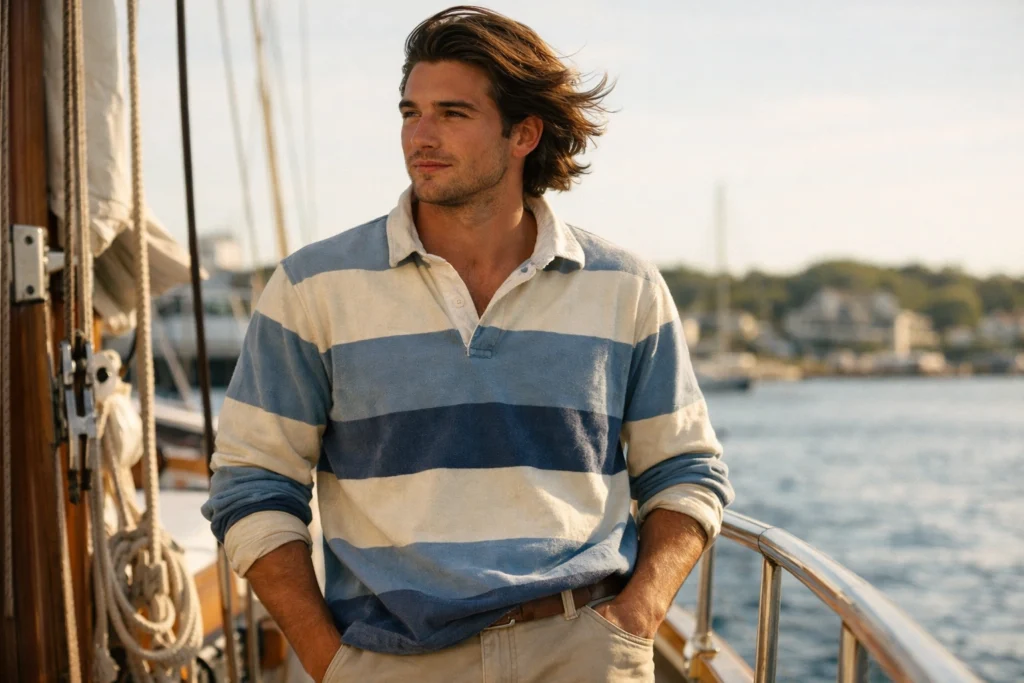
The bro flow occupies the more relaxed end of the old-money spectrum. It is a medium to longer length style, typically four to six inches or more on top, that is brushed back or to the side and allowed to move naturally. There is no aggressive structure, no defined part, and no product-heavy finish. The hair simply falls where it wants, guided by a light hand and a quality conditioner.
This is the hairstyle for weekends on the water, afternoons at the club, or evenings where formality has been quietly set aside. Think of the young men photographed at Nantucket or Martha’s Vineyard, wearing faded chinos and sun-bleached Oxford shirts, their hair pushed back by the sea breeze. It looks entirely uncontrived, and that is precisely the point.
The Wolf Cut and Longer Textured Styles
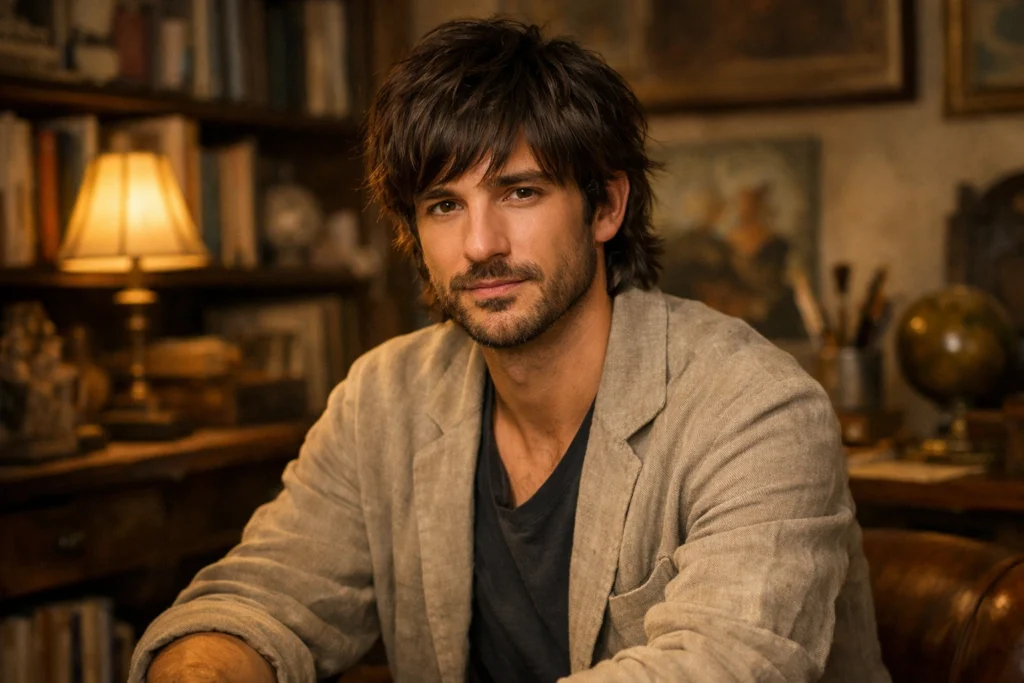
For men who wear their hair longer, the old-money approach favors soft layering and conservative tapering at the sides rather than dramatic volume or intentional messiness. The wolf cut, when executed with restraint, falls into this category. Long layers through the top and crown create movement, while a subtle taper keeps the perimeter from looking unkempt. This style suits men in creative or artistic fields who still want to project refinement.
Beyond the wolf cut, longer old-money styles in general share the quality of looking intentional without looking labored. They are the choice of the gentleman who reads well-worn paperbacks in a well-stocked library, who knows the difference between a good vintage and a great one, and who has never needed a trend to inform him how to carry himself.
Styling Products That Belong in the Old-Money Kit
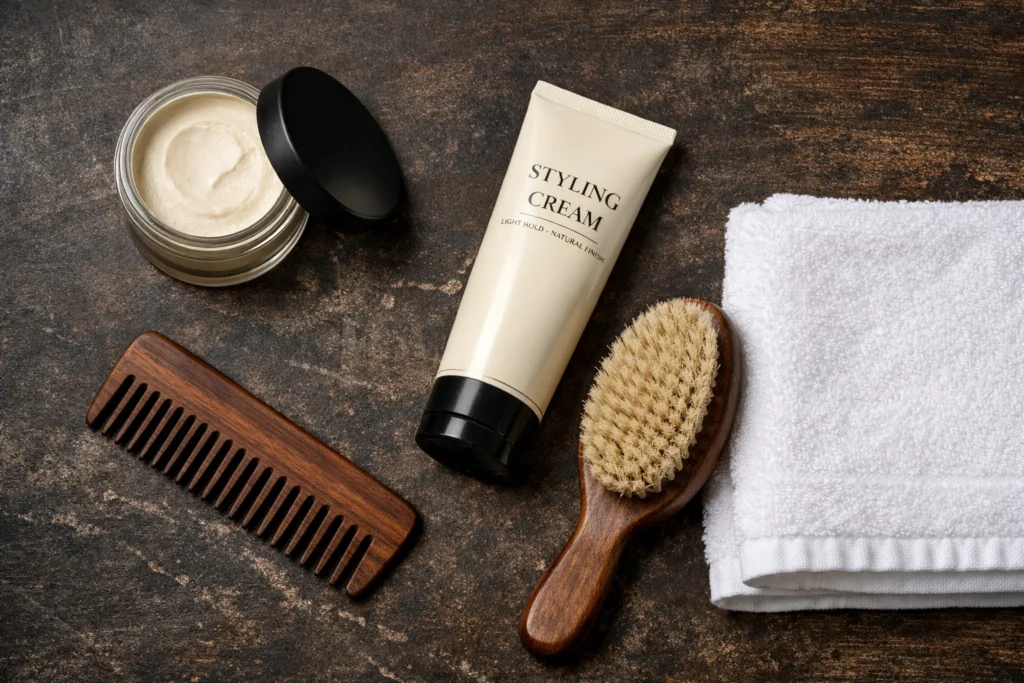
No discussion of old-money men’s hairstyles is complete without addressing product. The brands most associated with this grooming tradition, including American Crew, Baxter of California, and Aesop for men, all produce lightweight, high-quality pomades and styling creams that provide control without stiffness.
The rule is simple: use less than you think you need, and choose formulas with a matte or natural finish rather than a high-shine or wet look. A dime-sized amount of product worked through damp hair before blow-drying is almost always sufficient. These hairstyles are meant to look like they happened naturally. The product is there to support that illusion, not to announce itself.
Regular maintenance matters as much as daily styling. Old-money grooming standards demand a visit to the barber every three to five weeks to keep tapers sharp, necklines clean, and overall shape balanced. Healthy, well-conditioned hair is also non-negotiable. Scalp care, quality shampoo, and regular conditioning treatments give the hair the natural vitality that makes these cuts look their best.
Conclusion
Old-money men’s hairstyles have endured not because they are fashionable but because they are correct. They are built on principles of proportion, restraint, and natural elegance that do not expire. From the iconic side part worn by Cary Grant in the 1930s to the natural wave sweep that is equally at home in 2025, these cuts share a single defining quality: they make a man look like himself at his best, without any of the effort showing.
The right old-money hairstyle is not found on a trending page. It is found by understanding your face shape, your natural hair texture, and the kind of life you want your appearance to reflect. Then it is executed by a skilled barber, maintained with good product, and worn with the quiet confidence that has always been the true signature of old-money style.
You may also like this post: 20 Military-Inspired Haircuts That Exude Power and Respect
Frequently Asked Questions
What exactly defines an old-money men’s hairstyle?
An old-money men’s hairstyle is characterized by clean structure, medium length, tapered sides without skin exposure, and a polished but natural finish. These cuts prioritize restraint and timeless proportion over current trends or dramatic styling.
Which old-money hairstyle works best for a professional environment?
The Ivy League cut and the classic side part are the strongest choices for professional settings. Both communicate discipline and polish without drawing unnecessary attention, making them well-suited for corporate, legal, and executive environments.
What products should I use for old-money hairstyles?
Lightweight pomades, matte styling creams, and texture powders are the preferred tools. Brands like American Crew, Baxter of California, and Aesop produce products that offer the control and natural finish these styles require. Avoid heavy gels or any product that creates a high-shine, stiff finish.
How often should I get a trim to maintain these styles?
A visit to the barber every three to five weeks is the standard for maintaining the clean necklines, sharp tapers, and balanced proportions that define old-money grooming.
Can old-money hairstyles work for men with curly or wavy hair?
Absolutely. The natural wave side sweep and the bro flow are specifically well-suited for wavy hair. Even curly hair can carry an old-money aesthetic when properly shaped, layered, and kept at a moderate length with a light styling cream.
1 Comment