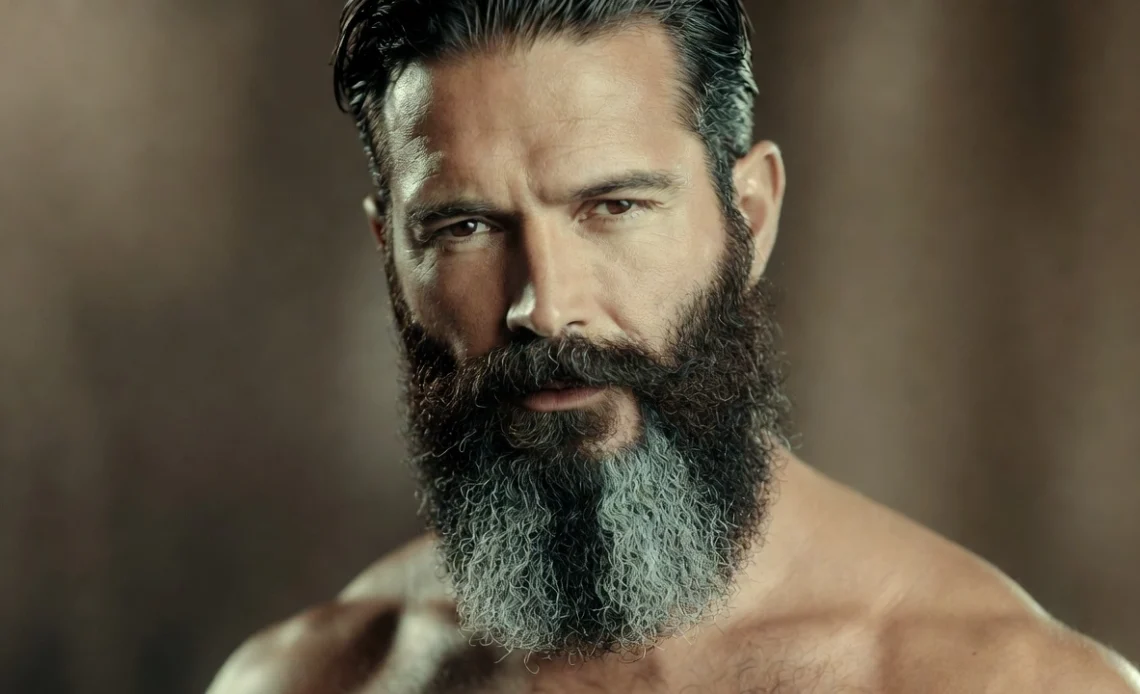
There is a particular kind of confidence that only a long beard can convey. It is not the sharp, precise confidence of a boxed beard or the casual appeal of heavy stubble. It is something older, more deliberate, and significantly more committed. Long beard styles communicate that a man has invested real time and genuine care into an aspect of his appearance that most men never fully explore. The result is a look that commands attention, projects character, and defines masculine style in ways that shorter grooming choices simply cannot replicate.
In 2026, long beards are experiencing a cultural moment defined by intention and authenticity. The unkempt, neglected beard of recent years has given way to long beard styles that are deliberately cultivated, well-conditioned, and shaped with care. Men are growing longer beards not because they have abandoned grooming but because they have embraced it at a deeper level. This guide covers 22 of the most compelling long beard styles trending right now, with everything you need to grow, shape, and maintain each look at its absolute finest.
The Classic Long Full Beard
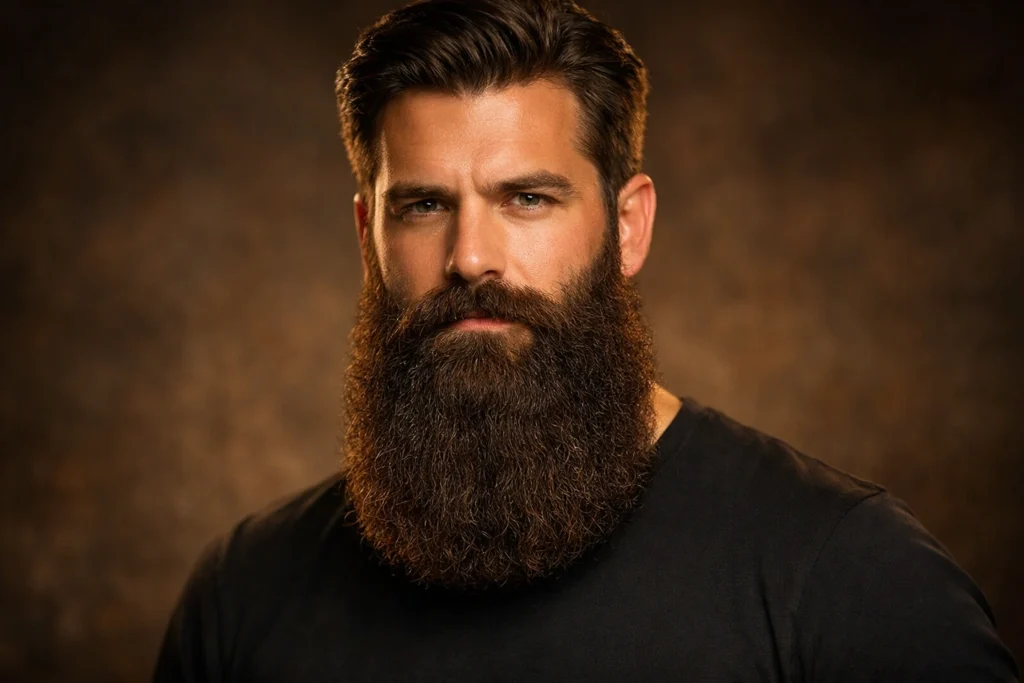
The classic long full beard is the foundation from which all other long beard styles emerge. It features consistent growth across the cheeks, jawline, chin, and upper lip, allowed to reach a length of three inches or beyond, creating a broad, dense, and commanding presence that is as close to timeless masculine grooming as anything available to a man today.
What distinguishes a great long full beard from a neglected one is condition and shape. The hair should be soft, hydrated, and free from the brittleness and split ends that develop when longer beards are not properly maintained. Daily beard oil application, regular brushing with a quality boar bristle beard brush, and periodic trims to remove damaged ends are the three non-negotiable practices that keep this style performing at the commanding level that justifies the months of growth required to achieve it.
The Viking Beard
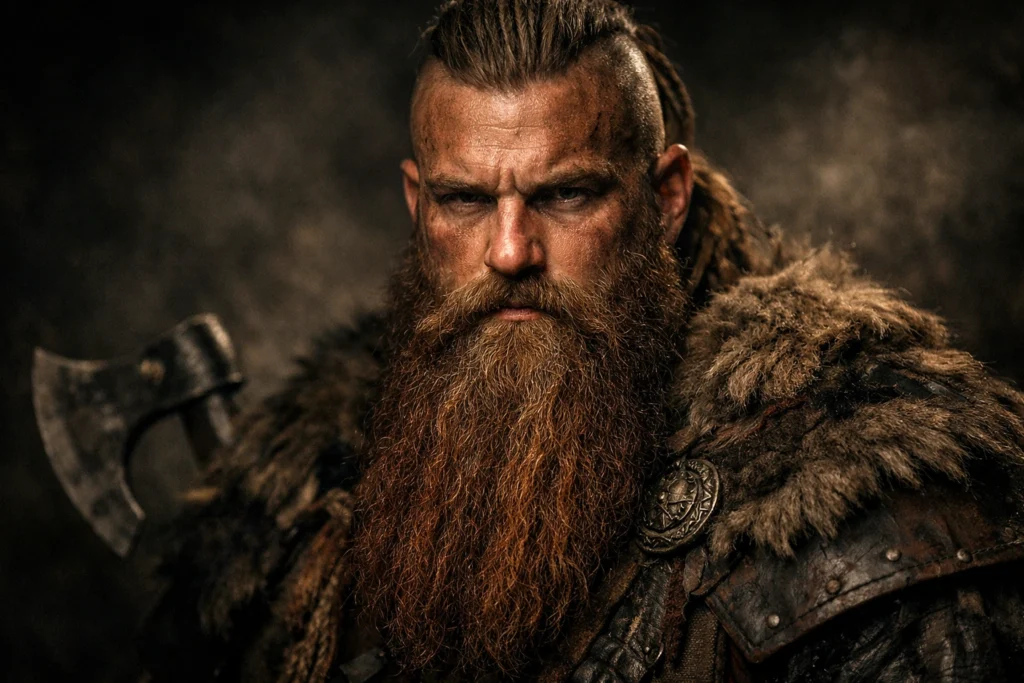
The Viking beard is the long beard style that carries the most immediate cultural and historical weight. Characterized by impressive length, considerable density, and a deliberately rugged quality that references the grooming traditions of Norse warriors, it projects a primal masculinity that few other styles can approach. In 2026, the Viking beard is worn by men who value authentic self-expression and are willing to commit to the months of growth and daily maintenance that this level of length genuinely demands.
Growing a convincing Viking beard requires patience measured in months rather than weeks. Once the length is established, daily beard oil application is essential to prevent the longer hair from becoming dry and prone to breakage. Brushing distributes natural oils and product throughout the full length, and periodic trimming to remove split ends keeps the beard looking powerful rather than simply large. Braiding the beard or mustache in the Norse tradition adds an additional layer of individual expression for men who want to fully commit to the aesthetic.
The Ducktail Beard
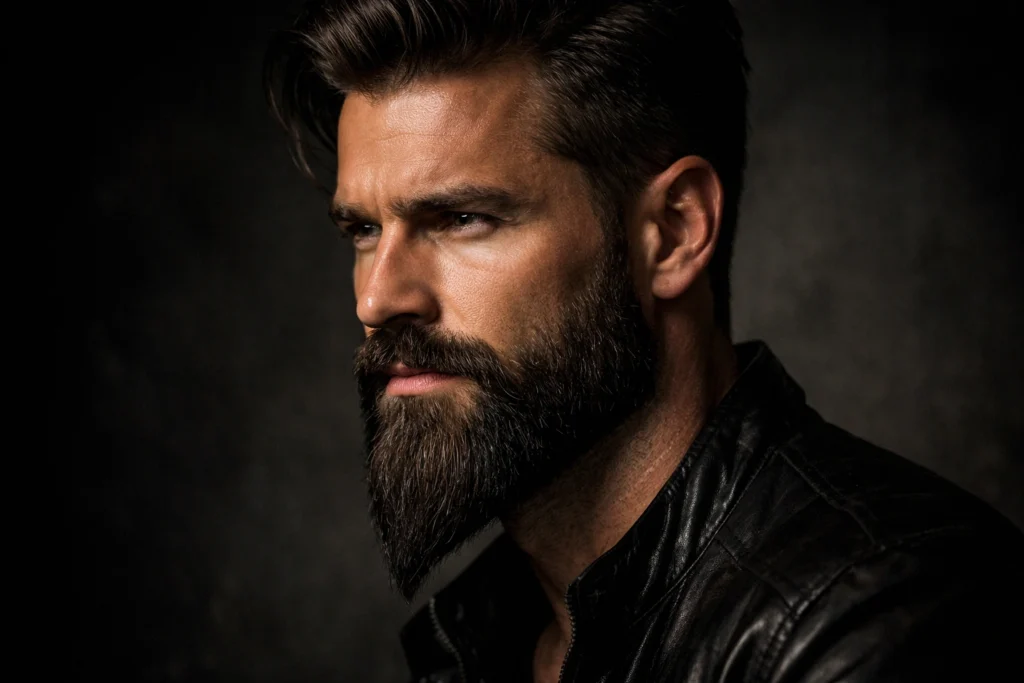
The ducktail beard is among the most visually distinctive of all long beard styles, featuring a full beard shaped to taper to a pointed or duck-tail form at the chin while the sides are trained to be slightly shorter and blended into the longer central section. Its historical associations with Viking culture give it an inherently rugged quality, while the deliberate shaping of the lower edge gives it a refinement that prevents it from appearing simply unkempt.
Achieving the ducktail shape requires the beard to reach a minimum of three to five inches in length before the tapering silhouette can be effectively formed. A skilled barber shapes the sides and defines the central point with precision trimming, and the maintenance appointment schedule of every four to six weeks keeps the distinctive silhouette clean and intentional. It suits oval and square face shapes particularly well, where the downward tapering point adds visual length to the face.
The Garibaldi Beard
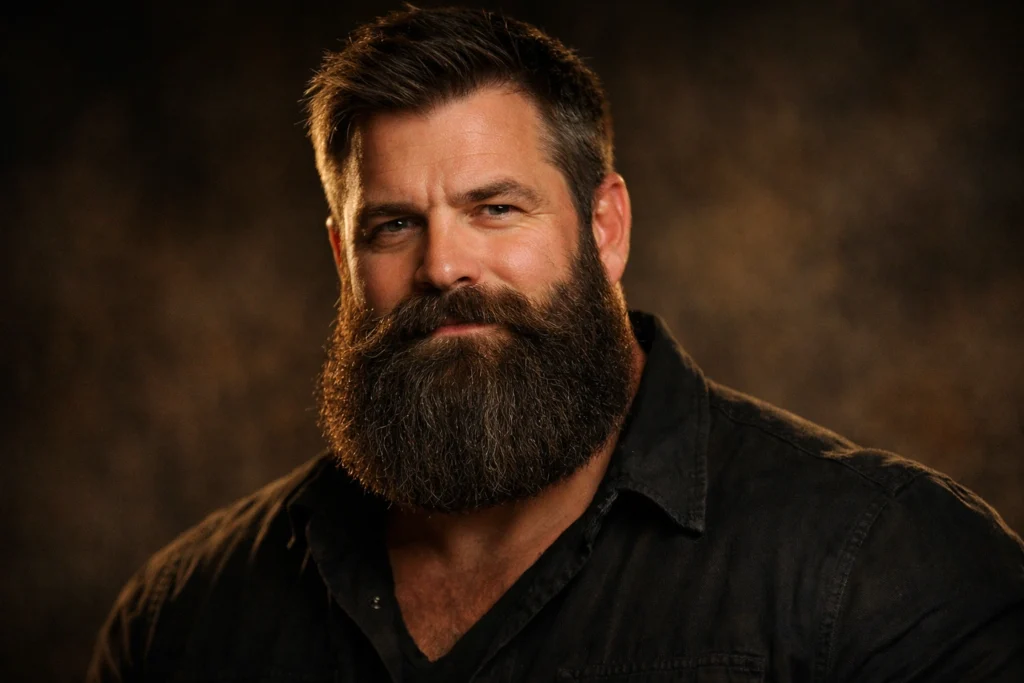
Named after the Italian general and nationalist Giuseppe Garibaldi, this distinctive style features a wide, full beard grown to approximately four to six inches with an intentionally rounded lower edge that distinguishes it from the standard full beard. The Garibaldi is one of the most charismatic of all long beard styles because it manages to appear simultaneously commanding and approachable, projecting confidence without aggression.
The rounded lower edge is the defining characteristic that gives the Garibaldi its name and its appeal. Achieving this rounded silhouette requires careful trimming to remove the central beard hair that would otherwise grow to a longer point, creating the wide, even bottom edge that defines the style. Daily beard oil applied generously throughout the length keeps the longer hair from becoming dry and unmanageable, and regular brushing distributes the product evenly while training the growth direction.
The Bandholz Beard
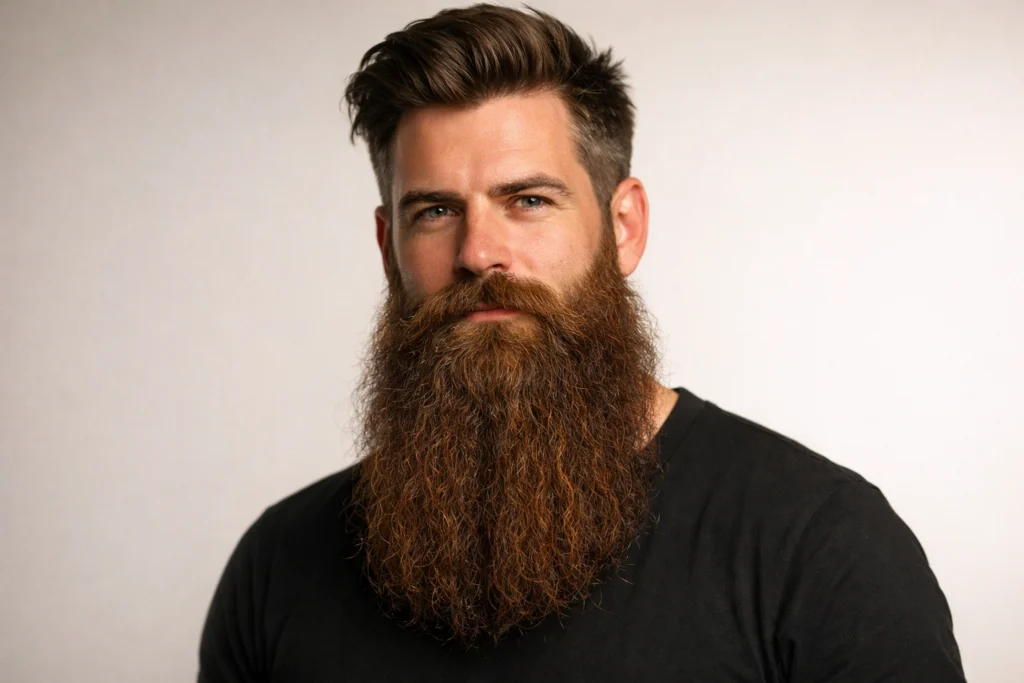
The Bandholz beard takes its name from Eric Bandholz, the founder of Beardbrand, who popularized this particular style and became one of the most recognizable bearded figures in the modern men’s grooming industry. It is a long, full, entirely natural beard that is allowed to grow without significant shaping, celebrating the beard’s natural growth pattern and texture in its fullest and most authentic expression.
The Bandholz is genuinely one of the most demanding long beard styles to wear well precisely because it relies entirely on condition and natural health rather than shape for its visual impact. The beard must be exceptionally well-maintained, washed regularly with a quality beard shampoo, conditioned to prevent dryness, and treated daily with beard oil to maintain the softness and flexibility that prevents the longer hair from appearing unkempt. Men with naturally thick, even beard growth are the strongest candidates for this style.
The Long Lumberjack Beard
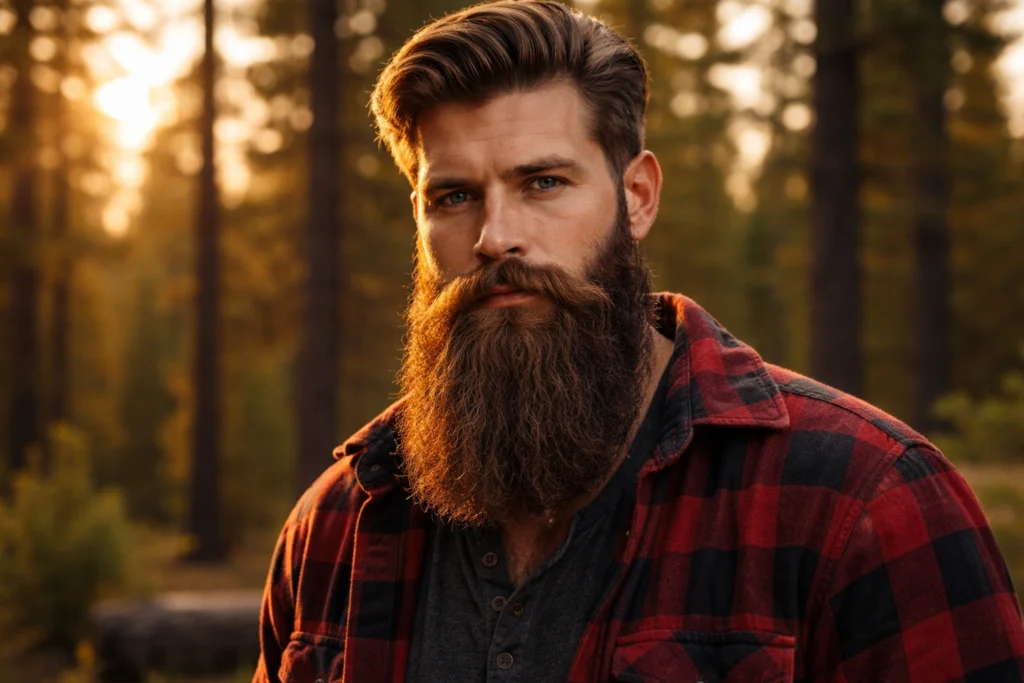
The lumberjack beard is the full beard taken to its most unapologetically rugged expression. It is long, thick, and cultivated with deliberate intention despite its decidedly natural appearance. In 2026, the lumberjack beard has evolved from its peak association with urban hipster culture into something more genuinely masculine and purposefully worn. Men who wear a lumberjack beard today understand that appearing effortless at this length requires significant effort behind the scenes.
Daily beard oil is the single most important maintenance tool for a lumberjack beard, applied generously throughout the full length every morning to prevent the dryness and brittleness that longer beard hair is particularly susceptible to. A quality beard brush distributes oil evenly and trains growth direction, while regular washing with a beard-specific shampoo removes product buildup and environmental debris. Periodic trims every six to eight weeks maintain the overall shape and remove the split ends that compromise the beard’s visual health.
The Long Verdi Beard
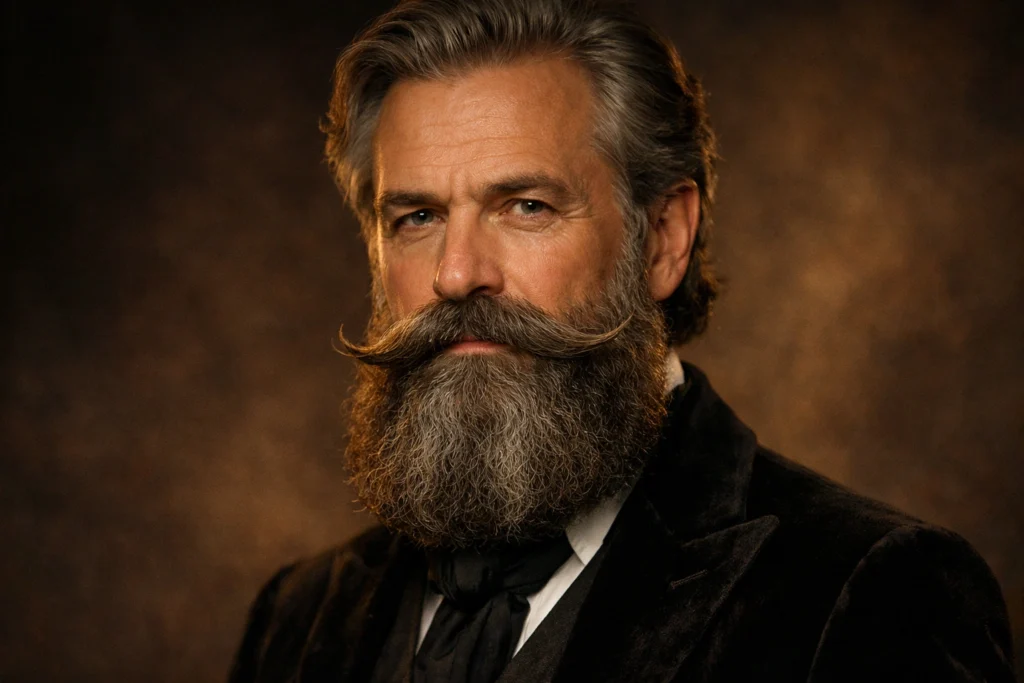
The Verdi beard, inspired by the Italian opera composer Giuseppe Verdi, is among the most distinguished and artistically associated of all long beard styles. It features a full, rounded beard of medium-to-long length combined with a mustache that is kept slightly longer than the beard and styled with wax so that its ends gently overhang the beard below, creating a composed, intentional relationship between the two elements that reads as genuinely cultured.
This is one of the more demanding long beard styles to maintain because it requires both a reasonably full natural beard growth and the discipline to keep the mustache separately shaped and styled as a distinct element within the overall composition. A quality mustache wax with medium hold is an essential grooming tool, and blow-drying the beard on a low heat setting while brushing it downward helps achieve and maintain the rounded silhouette that defines this style at its best.
The Long Yeard Beard
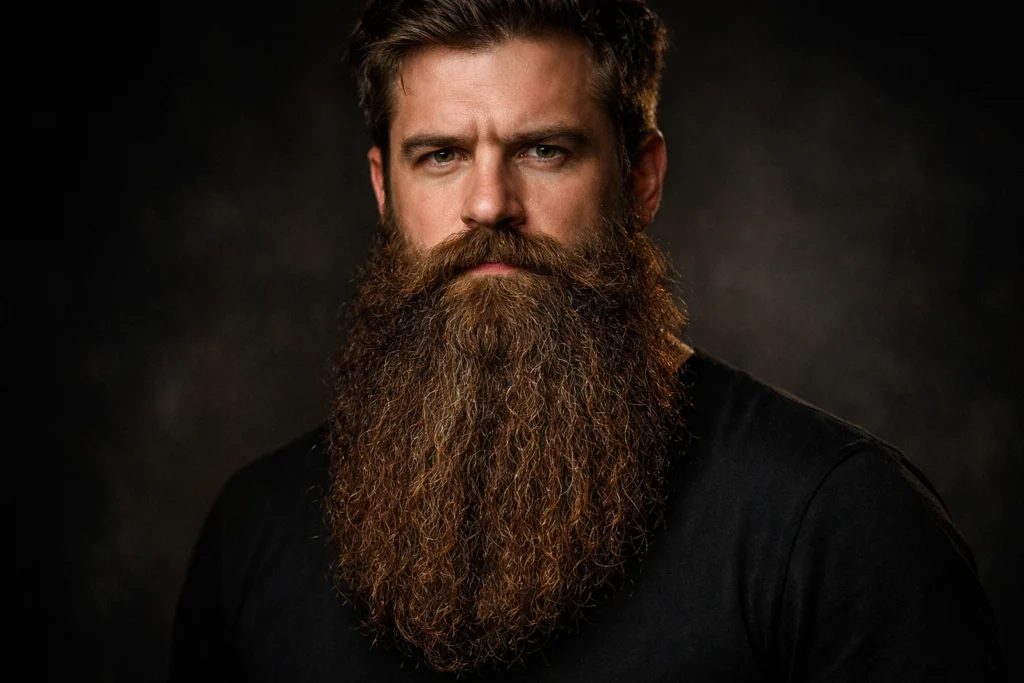
The yeard is precisely what its name implies: a beard that has been grown uninterrupted for a full year. It represents one of the most significant personal grooming commitments a man can make, requiring twelve months of continuous growth without trimming before the style can be properly evaluated. The result is typically a beard of impressive length, often reaching the chest, that carries its own unique texture and growth pattern determined entirely by the individual’s genetics.
Growing a yeard successfully requires exceptional daily care throughout the full twelve-month commitment. Beard oil must be applied from the earliest weeks of growth, long before the beard reaches any significant length, to establish the conditioning habits that will be essential when the hair becomes long enough to be genuinely vulnerable to dryness and breakage. The yeard is a style for men who are committed to the process as much as the result.
The Long Beard With Fade
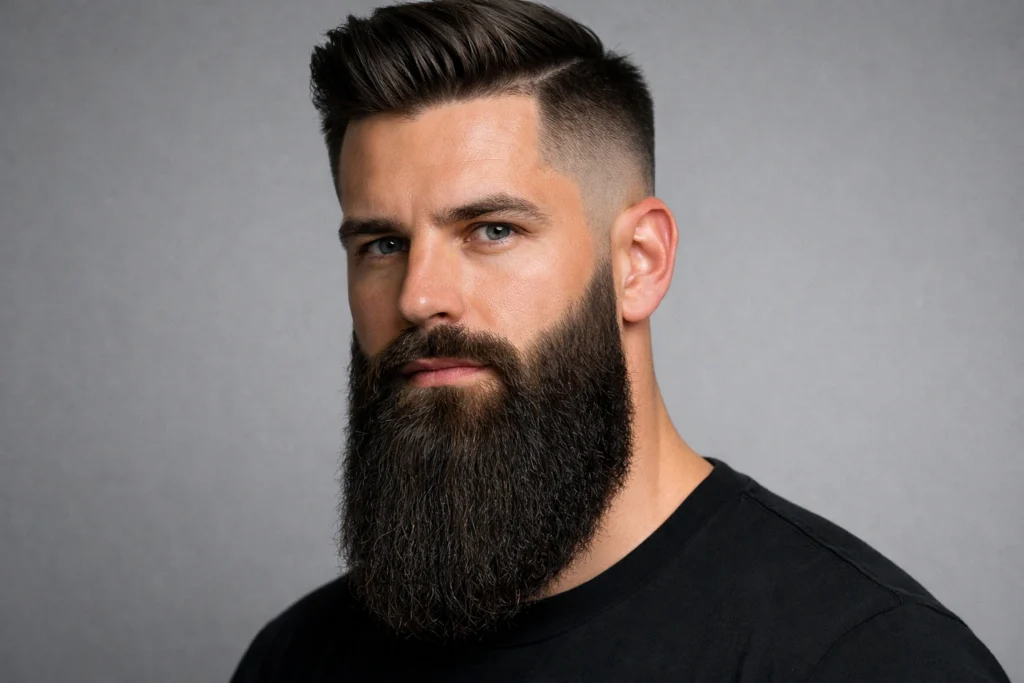
The long beard with fade is one of the most technically sophisticated long beard styles available in 2026, combining the impressive length and presence of a long beard with the barbershop precision of a seamless fade that creates a visual transition from the haircut on the sides of the head down into the beard below. When executed well, the beard fade makes the entire lower face appear sharper, the jawline stronger, and the overall composition more unified and intentional.
A skilled barber is essential for executing a convincing beard fade, as the blending must be precise and consistent throughout. The long beard itself should have enough density to provide a meaningful gradient from the fuller chin section to the shorter areas near the temples. This combination suits men with denser, fuller beard growth that can sustain both the length of the style and the graduated shading of the fade that gives it its defining visual quality.
The Long Braided Beard
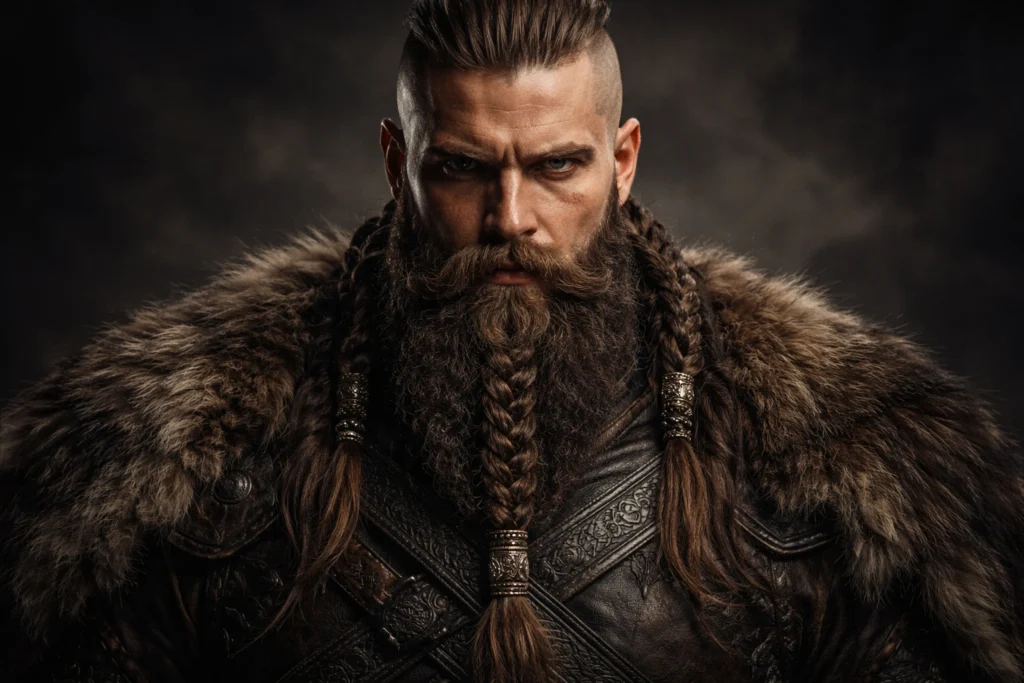
The long braided beard has deep roots in Viking and Norse grooming tradition and has experienced a significant cultural resurgence in recent years among men who want to combine impressive beard length with distinctive styling that sets their look apart from conventional long beard approaches. Braiding the beard, whether in a single central braid at the chin, multiple smaller braids throughout, or elaborate braiding that includes the mustache, adds a layer of craftsmanship and individual expression to a long beard that no product or trimming technique can replicate.
Maintaining a braided beard requires that the hair be long enough to hold a braid securely, typically a minimum of three to four inches of length at the braiding point. A small amount of beard balm or wax applied before braiding helps the hair hold its structure throughout the day. Unbraiding and properly conditioning the hair each evening prevents the mechanical stress of repeated braiding from causing breakage in the longer sections.
The Long Beard With Mustache
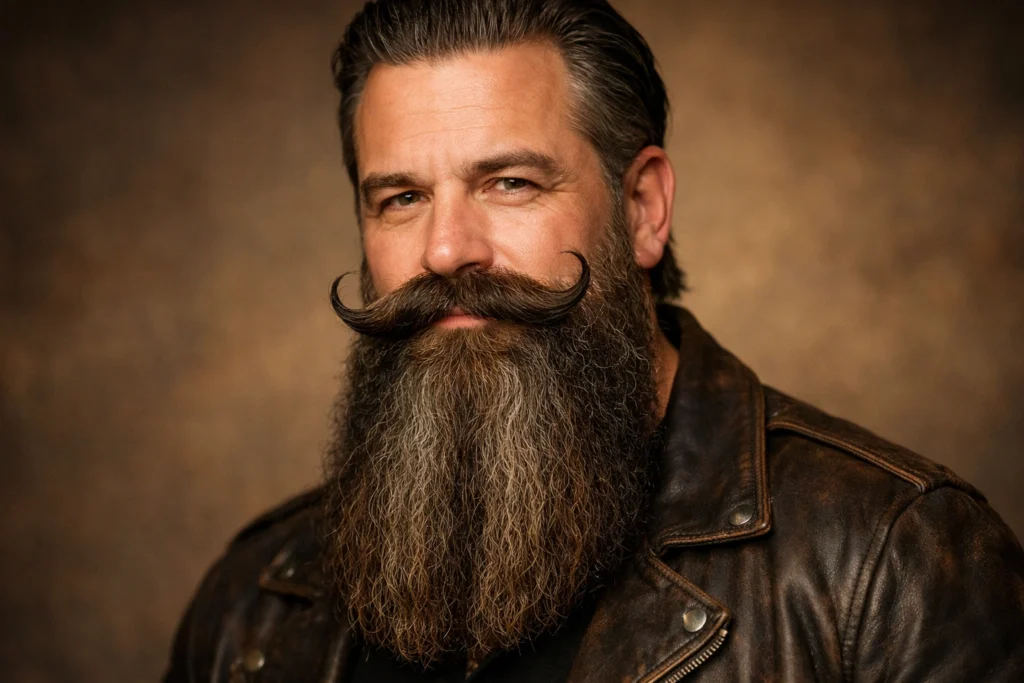
The long beard with a deliberately full and styled mustache is one of the most expressive combinations available in 2026, placing equal visual emphasis on both the beard and the mustache as independent elements within a single unified composition. The mustache is allowed to grow to a length where it can be shaped and styled, whether in a classic handlebar form with wax-held ends, a wide chevron that sits fully above the beard below, or a natural, fuller shape that integrates organically with the beard beneath it.
The key to wearing this style successfully is maintaining a clear visual distinction between the mustache and the beard below, even as both grow to significant lengths. Regular mustache wax application keeps the upper element shaped and controlled, while the beard is managed with oil and balm to maintain softness and direction. This style suits men with confident, expressive personalities who want their grooming to communicate something genuinely distinctive about their character.
The Long Chin Curtain Beard
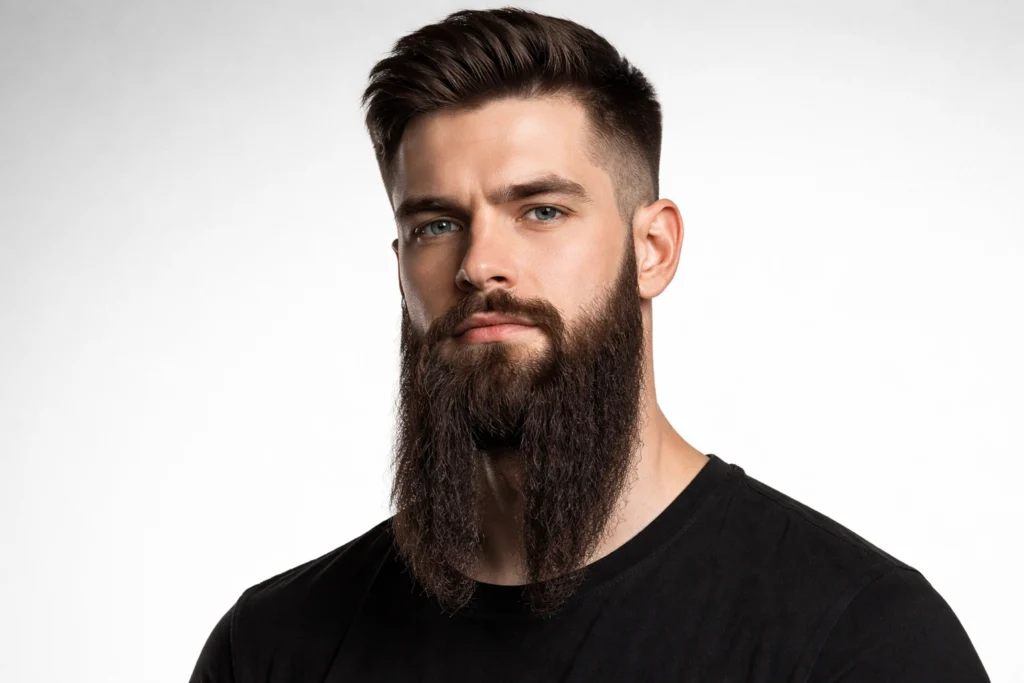
The chin curtain beard, sometimes known as the Lincoln beard after Abraham Lincoln who famously wore this configuration, features a full beard grown along the jawline and chin without a connecting mustache. The cheeks are covered, but the upper lip is clean-shaven, creating a distinctive curtain-like framing of the lower face that carries a strong historical and cultural resonance.
In its long version, the chin curtain beard allows the jaw and chin hair to grow to substantial length while keeping the upper lip area clean-shaven. This creates a profile silhouette that is unlike any other long beard style, with the beard framing the lower face and chin like a dramatic curtain. It suits men with strong, defined jawlines and requires consistent shaving of the upper lip to maintain the essential contrast that defines the style.
The Long Natural Textured Beard
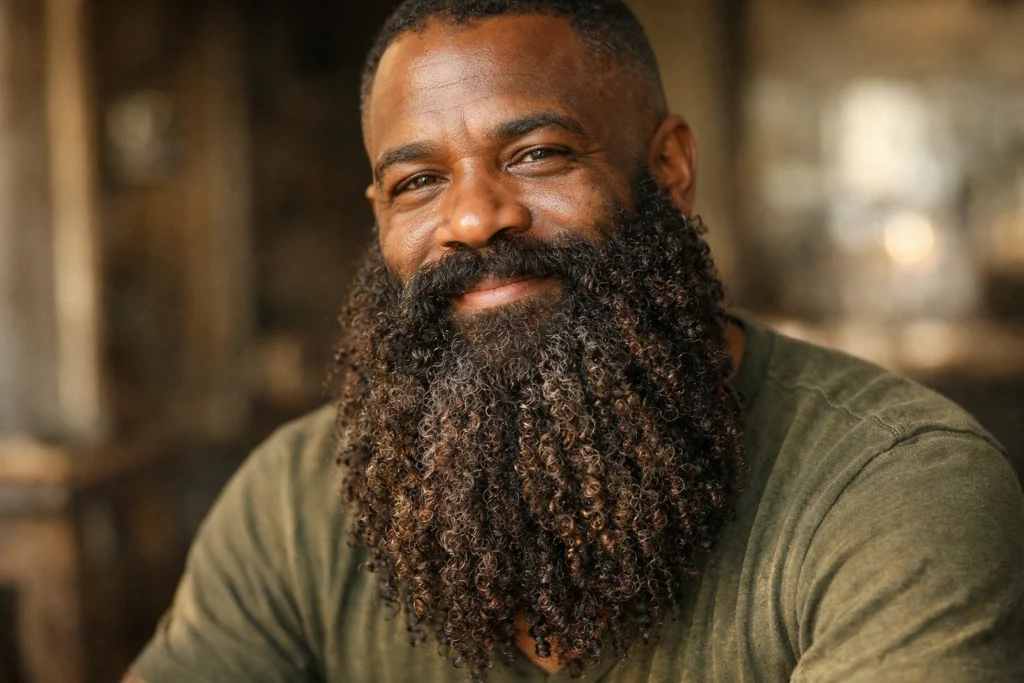
The natural textured long beard has emerged as one of the defining grooming expressions of 2026, celebrating the inherent curl pattern, wave, and unique texture of each individual’s beard growth rather than attempting to tame or reshape it into a conventional straight form. For men with naturally curly or coily beard hair, this style is one of the most liberating and visually striking options available, as the natural curl adds significant volume and dimensional character to a long beard that straight hair simply cannot replicate.
Managing a long natural textured beard requires products formulated for curly or coily hair, including curl-enhancing creams and defining gels that work with the natural pattern rather than fighting against it. A wide-tooth comb or pick is the appropriate grooming tool for detangling without disrupting the curl structure. Regular deep conditioning treatments are essential for maintaining the moisture levels that curly beard hair is particularly prone to losing.
The Long Beard With Shaved Head
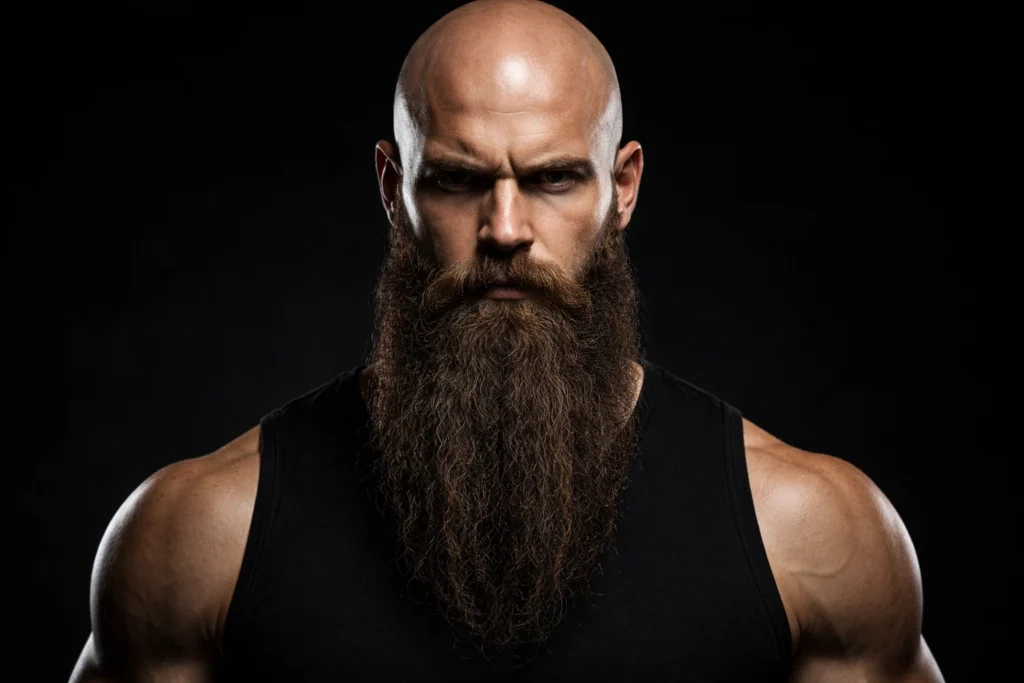
The combination of a shaved head or very closely cropped hair with a long, well-developed beard is one of the most striking and visually dramatic grooming choices a man can make. The extreme contrast between bare skin on the head and impressive length on the lower face creates a silhouette that is unmistakably bold and projects a kind of physical confidence that few other grooming combinations can match.
This combination particularly suits men whose hair is thinning or receding, as the deliberate choice to embrace a shaved head removes the visual anxiety of thinning coverage while the long beard below adds significant masculine presence and visual weight to the overall appearance. It also suits men with strong facial bone structure, where the contrast between the bare upper head and the full lower beard highlights the face’s natural architecture.
The Long Beard With Long Hair
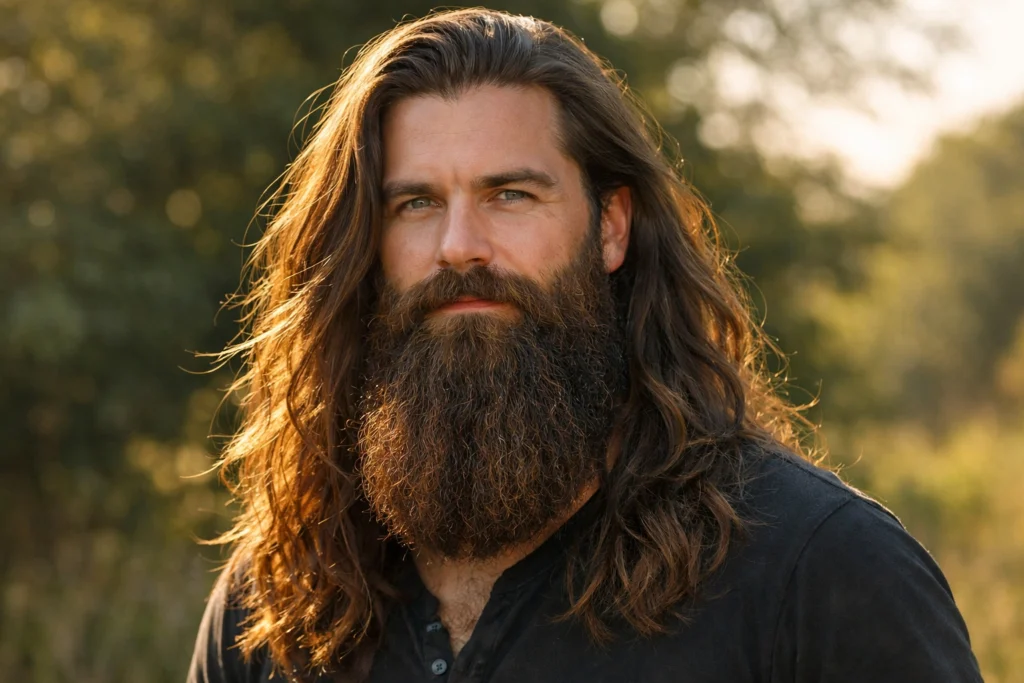
Pairing a long beard with long, well-maintained hair creates one of the most powerful complete masculine style statements available. When both the beard and the hair on the head are allowed to grow to significant lengths and are both maintained in excellent condition, the overall effect is one of total, unhurried commitment to a personal style that makes no concessions to convention.
The critical factor in wearing long hair with a long beard successfully is condition in both areas simultaneously. Long hair and long beard hair both require consistent conditioning, regular trimming to remove split ends, and protective styling habits that prevent the mechanical damage that long hair accumulates over time. A man who wears both with genuine care and intention creates a look that communicates extraordinary commitment to personal expression.
The Long Hollywoodian Beard
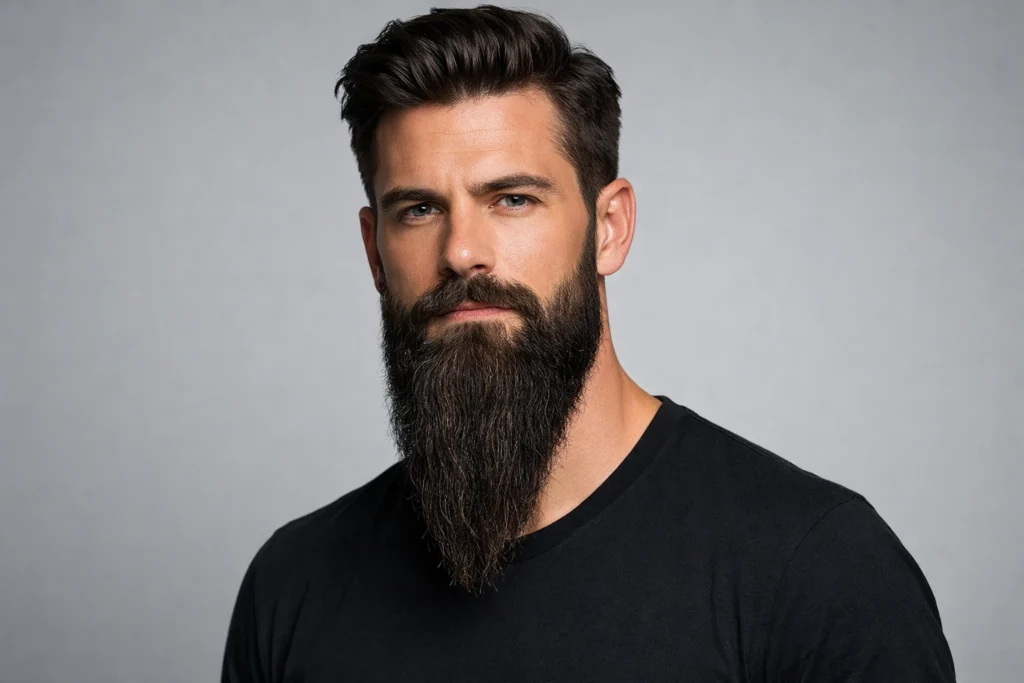
The Hollywoodian beard keeps the full length and visual weight at the jaw and chin while maintaining lower or clean cheek lines, creating a look that concentrates the beard’s presence along the jawline and lower face without the full cheek coverage of a traditional full beard. The result is a style that suits men with slower or sparser cheek growth, as it works with the natural growth pattern rather than revealing its limitations.
In its long version, the Hollywoodian allows the chin and jaw hair to grow to impressive lengths while the cheek area is either lightly maintained or kept cleanly shaved. The overall effect is a long beard that creates a strong lower face presence without the width that full cheek coverage would add, making it particularly flattering for men with rounder face shapes where reducing visual width is desirable.
The Long Beard Fade With Design
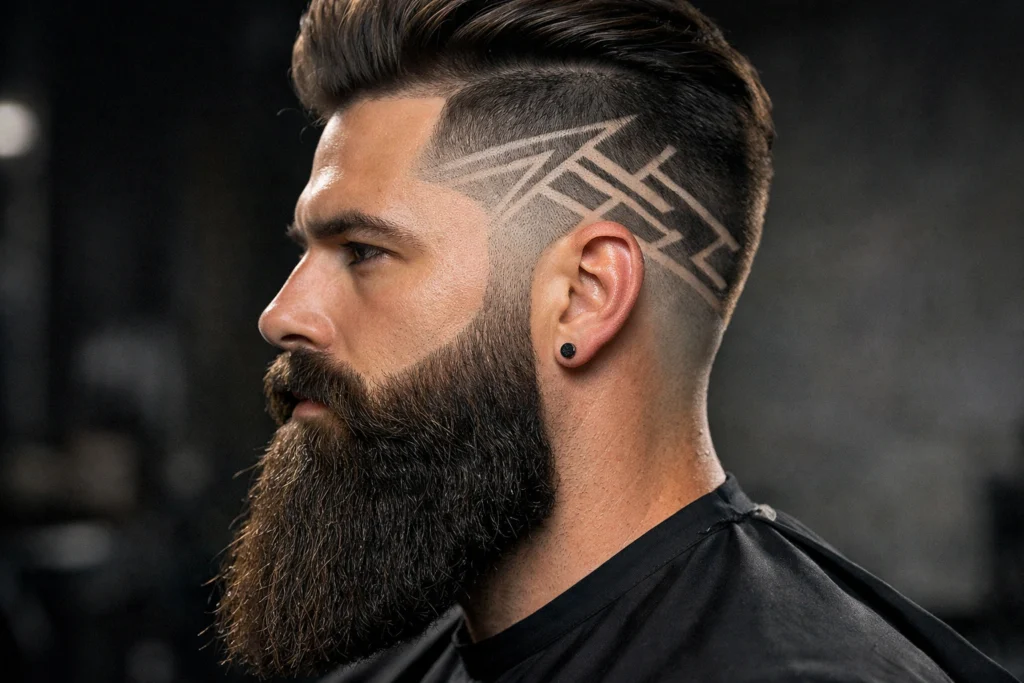
Taking the technical sophistication of the long beard with fade a step further, incorporating a custom razor-etched design into the faded sides of the beard creates a look that is genuinely unique to the individual wearing it. Geometric patterns, flowing lines, or abstract shapes etched along the beard fade area transform the haircut and beard into a single piece of body art that communicates a deeply personal sense of style.
Because shaved designs grow out within two to three weeks, this approach requires a committed barber relationship to maintain its visual impact. The design element works best when it complements the overall shape and length of the beard rather than competing with it, and the most effective designs are those that are created collaboratively between the man and his barber to reflect something specific about his personality and aesthetic.
The Long Patchy Beard
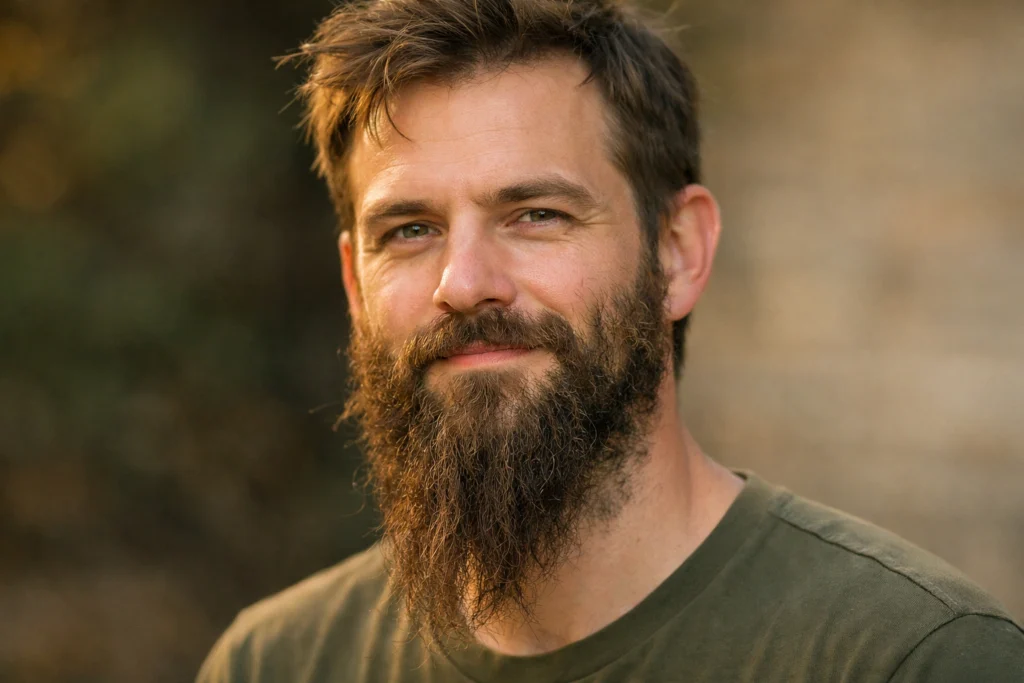
The patchy long beard is experiencing a significant reappraisal in 2026, as the cultural expectation of uniform, dense beard coverage has given way to a broader acceptance of individual growth patterns in their natural form. Men with uneven beard growth who previously avoided longer beard styles because of patchy areas are discovering that allowing the beard to grow to a longer length actually minimizes the visual impact of unevenness, as the length creates more overall visual mass that draws attention away from areas of lesser density.
Strategic shaping that emphasizes areas of stronger growth while minimizing areas of patchiness, combined with beard oil and balm to keep all the hair in optimal condition, allows a patchy long beard to look intentional and well-considered rather than simply neglected. The natural textured approach, which embraces variation and organic form, is particularly well-suited to men with naturally uneven growth patterns.
The Long Beard With Defined Neckline
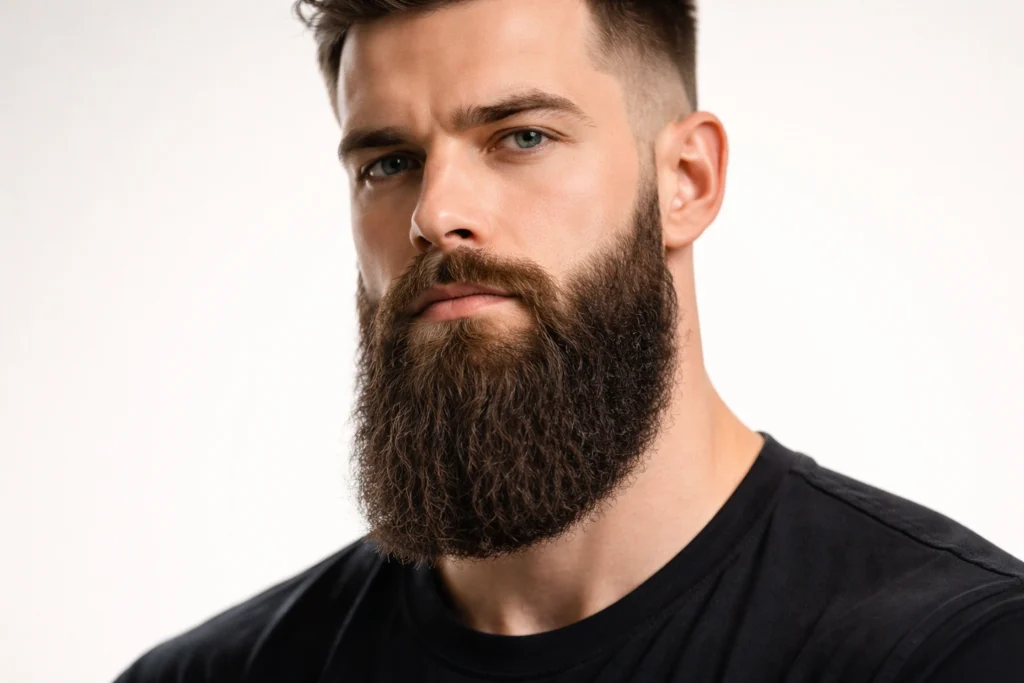
One of the most significant decisions in long beard maintenance is how to treat the neckline. A well-defined neckline, positioned correctly just above the Adam’s apple and following the natural curve of the jaw, transforms a long beard from something that appears to simply grow downward from the face into a structured, intentional style with a clear boundary that gives the overall look visual authority.
Many men growing long beards make the mistake of either shaving the neckline too high, which creates an unnatural floating quality to the beard, or neglecting it entirely, which allows the beard to blend indistinguishably into the neck. The correct neckline placement and consistent maintenance of that boundary, done at every barber visit or self-grooming session, is one of the most impactful refinements a man can make to an already long beard.
The Long Salt and Pepper Beard
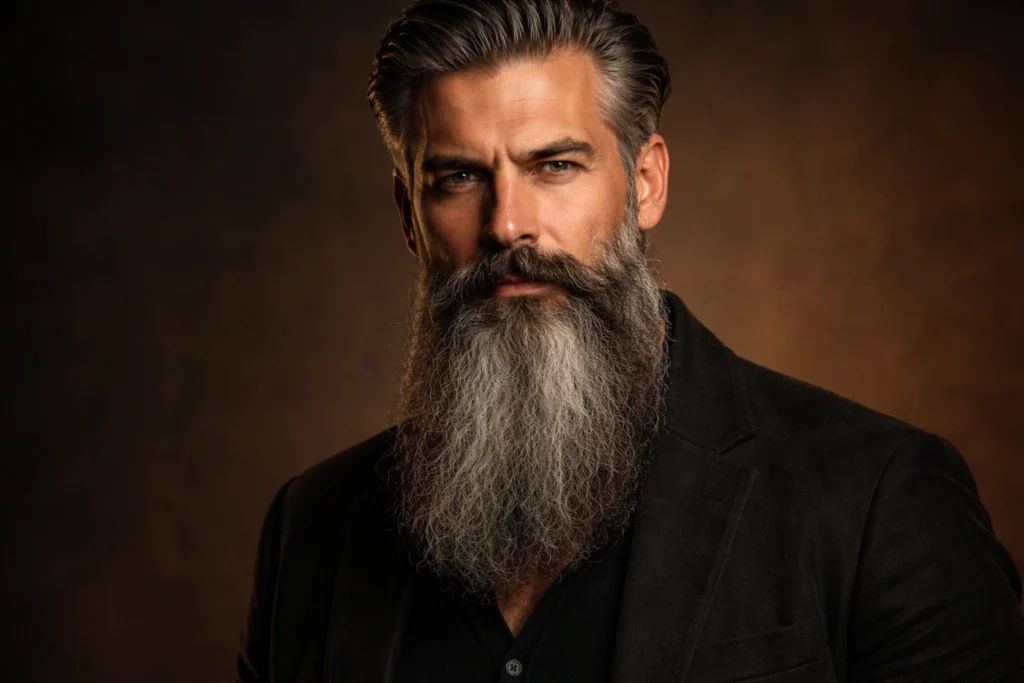
The salt and pepper long beard is one of the most visually striking and culturally celebrated grooming expressions available to men in their 40s, 50s, and beyond. The natural interplay of dark and silver tones through a long, well-maintained beard creates a visual texture and depth that no single-color beard can replicate, and the cultural associations of silver beard hair with wisdom, experience, and distinguished masculinity have never been stronger than they are in 2026.
Caring for a salt and pepper long beard requires the same foundational practices as any other long beard, with additional attention to the silver sections, which tend to be slightly coarser and more prone to dryness than darker beard hair. A quality conditioning beard oil applied daily keeps both the silver and dark sections equally soft and manageable. Some men choose to use a toning product to enhance the silver sections and prevent any yellowing, while others embrace the full natural spectrum of their coloring.
The Long Beard With Mustache Wax Styling
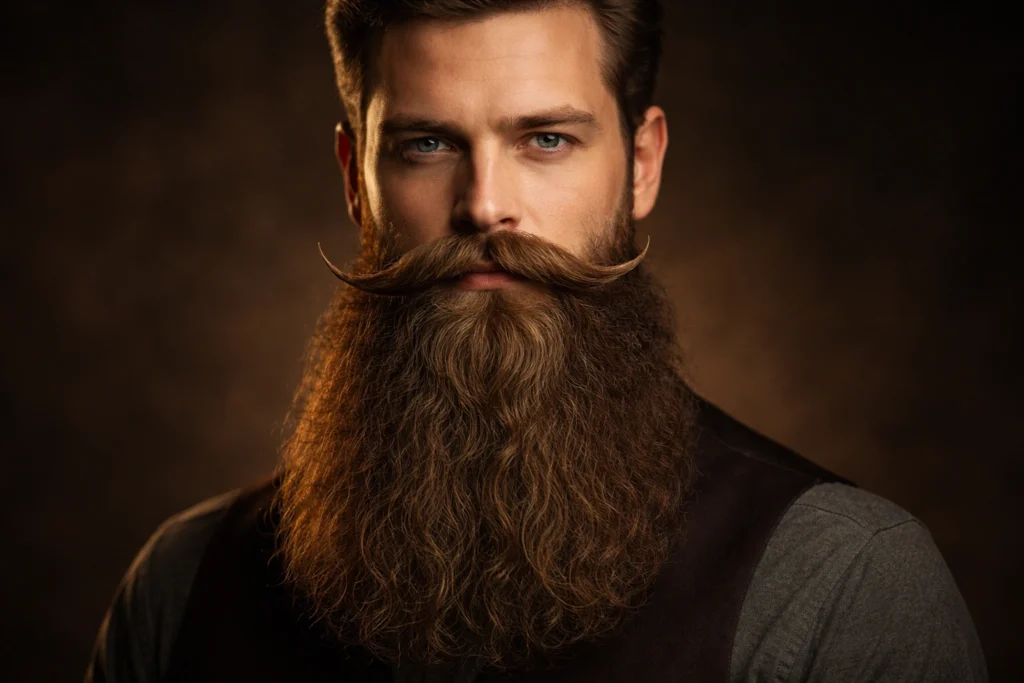
Incorporating deliberate mustache wax styling into a long beard look adds a layer of artisanal grooming craft that elevates the overall appearance from impressive to genuinely exceptional. The contrast between the natural, flowing length of the beard and a precisely waxed and shaped mustache, whether in a traditional handlebar form, a military style with upturned ends, or a simple but firmly held natural shape, creates a visual tension between wildness and control that is one of the most compelling aesthetic dynamics available in men’s grooming.
Quality mustache wax is essential for achieving and holding mustache shapes throughout the day, particularly at longer mustache lengths where the weight of the hair works against upward or outward styling directions. Applying wax to a clean, dry mustache and shaping with fingertips and a fine-tooth mustache comb produces the most precise and long-lasting results.
The Long Beard for Different Face Shapes
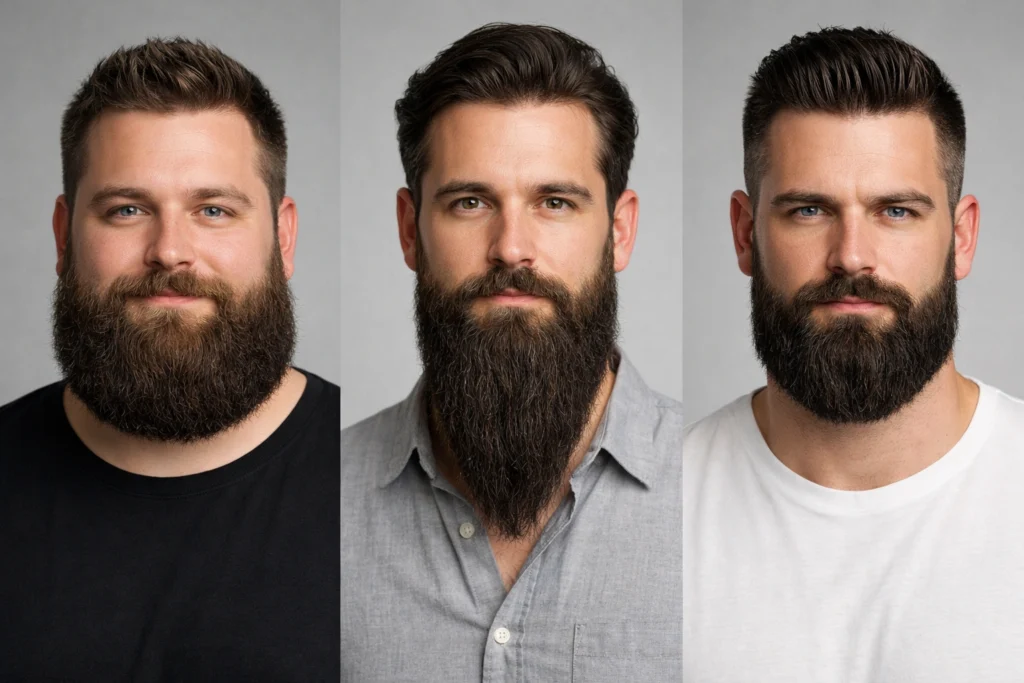
Understanding how different long beard styles interact with individual face shapes is perhaps the most practical knowledge a man can have before committing to months of growth. The goal of any beard style, long or otherwise, is to create the impression of an oval face shape, which is broadly considered the most balanced and universally flattering proportion.
Men with round faces benefit from long beard styles that add vertical length, such as the ducktail beard with its downward-pointing chin shape, or a long full beard kept slightly shorter on the sides and longer at the chin. Men with square faces can wear almost any long beard style with great success, as the beard softens the angular quality of a square jaw while adding vertical length. Men with longer, more narrow face shapes should favor wider long beard styles such as the Garibaldi that add horizontal visual weight and balance the face’s natural length with breadth. Consulting with a skilled barber who understands the relationship between face shape and beard styling is always the most reliable first step before beginning any significant beard growth journey.
Conclusion
Long beard styles define masculine style in 2026 not because they are fashionable in a seasonal sense but because they represent genuine commitment, consistent care, and a willingness to invest in a personal appearance that communicates something real about who a man is. Every style in this guide, from the natural authenticity of the Bandholz to the historical resonance of the Viking beard, shares a foundational requirement of dedication and discipline.
Choose the long beard style that genuinely reflects your personality, face shape, and lifestyle. Work with a skilled barber who understands long beard maintenance and can shape your growth in directions that flatter your natural structure. Invest in quality beard care products and commit to the daily habits that keep longer beard hair in the condition it needs to look truly exceptional. The result will be a long beard that does not simply cover your face but defines it with the kind of masculine style that never goes unnoticed.
You may also like this post: 20 Timeless Beard Styles for Men: Bold, Clean and Perfect for 2026
Frequently Asked Questions
How long does it take to grow a long beard?
Most men can grow a beard that qualifies as genuinely long, typically three inches or more, within three to six months of uninterrupted growth. Individual growth rates vary significantly based on genetics, age, overall health, and hormone levels. The average beard grows approximately half an inch per month, meaning a six-inch beard requires approximately one year of continuous growth. Patience combined with excellent daily care during the growth phase produces the best results at full length.
What beard care products are essential for long beard maintenance?
The three most essential products for long beard maintenance are beard oil, beard balm, and a quality beard brush or wide-tooth comb. Beard oil conditions both the hair and the skin beneath, preventing the dryness and brittleness that longer beard hair is particularly vulnerable to. Beard balm adds light hold and control, preventing flyaways and keeping the shape consistent between barber visits. A beard brush distributes product evenly throughout the full length and trains growth direction over time. For styles involving a styled mustache, a quality mustache wax is also essential.
How often should a long beard be washed?
Long beards should be washed with a dedicated beard shampoo two to three times per week. Washing too frequently strips the natural oils that are particularly important for keeping longer beard hair soft and manageable. Washing too infrequently allows product buildup, dead skin cells, and environmental debris to accumulate in the longer hair, which can cause itching, dryness, and an unpleasant appearance. Following each wash with a beard conditioner and applying beard oil once the hair is towel-dried and slightly damp produces the best conditioning results.
Which long beard style suits a round face best?
Men with round faces benefit most from long beard styles that add significant vertical length to the face’s overall silhouette, counteracting the natural width of a round face shape with downward visual emphasis. The ducktail beard, with its characteristic downward-pointing chin, is one of the most effective choices. A long full beard kept shorter on the sides and allowed to grow longer at the chin achieves a similar elongating effect. Styles that add significant width at the sides, such as the Garibaldi, are generally less flattering for round face shapes.
How do I prevent beard itch when growing a long beard?
Beard itch during the early weeks of growth is caused primarily by dry skin beneath the beard and the sharpened ends of recently trimmed hair as they grow out. Applying beard oil daily from the very earliest stages of growth, before the beard reaches any significant length, conditions the skin and prevents the dryness that causes itching. Washing the beard and the skin beneath it regularly with a gentle beard shampoo removes dead skin cells that contribute to itching. As the beard grows longer, the hair ends soften and the acute itching phase typically resolves within the first four to six weeks of growth.
1 Comment