Introduction
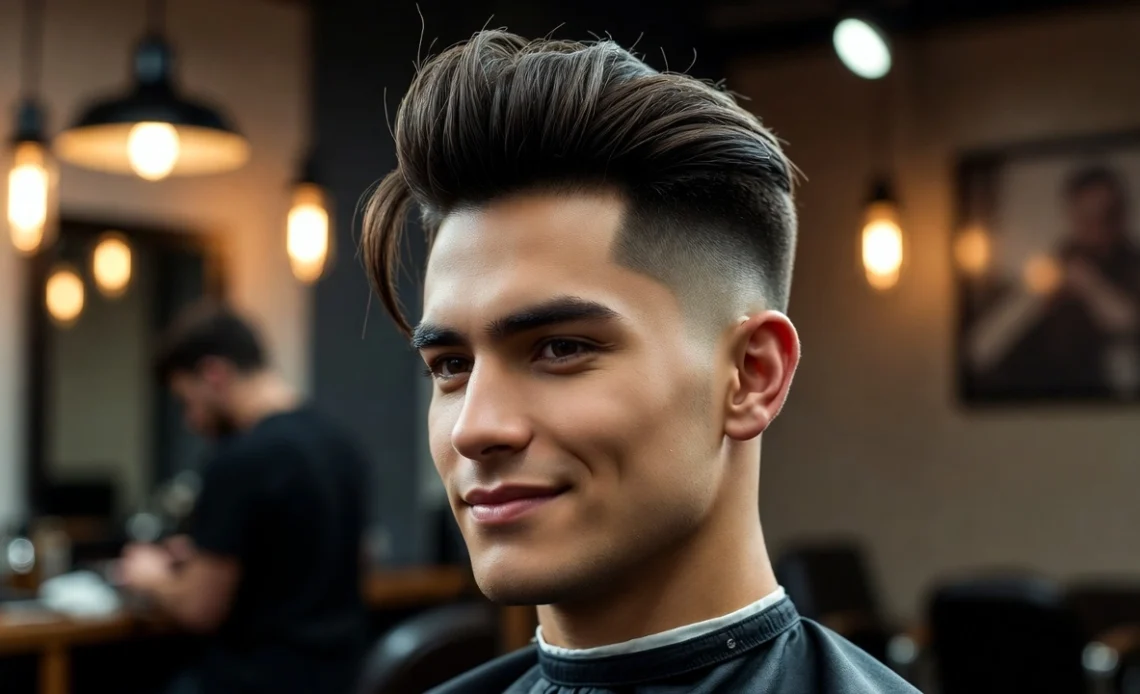
The quiff has spent decades proving it is not a trend. It is a foundational pillar of men’s grooming that keeps finding new ways to stay relevant. From the rockabilly teenagers of the 1950s who first swept their hair upward and back to create something rebellious and magnetic, to the polished professionals and creative types of 2026 who wear modern interpretations with effortless confidence, the quiff has never really left. It simply evolves.
What separates the quiff from other volume-forward hairstyles is its structural honesty. The hair goes up and slightly back from the forehead, creating height, framing the face, and signaling a man who pays attention to how he presents himself. Unlike the pompadour, which relies on dramatic backward sweep, or the simple brush-up, which lacks directional intention, the quiff occupies a precise middle ground. It is bold without being theatrical. It is groomed without being stiff. In 2026, that balance is exactly what the best-dressed men are after.
This guide covers fifteen of the most compelling quiff hairstyles men are wearing right now. Each one is distinct in character, suitable for a specific hair type or lifestyle, and achievable with the right product and technique. Whether you are walking into a barber for the first time with a quiff in mind or looking to evolve a cut you have worn for years, these fifteen styles give you an authoritative starting point.
The Classic High Volume Quiff
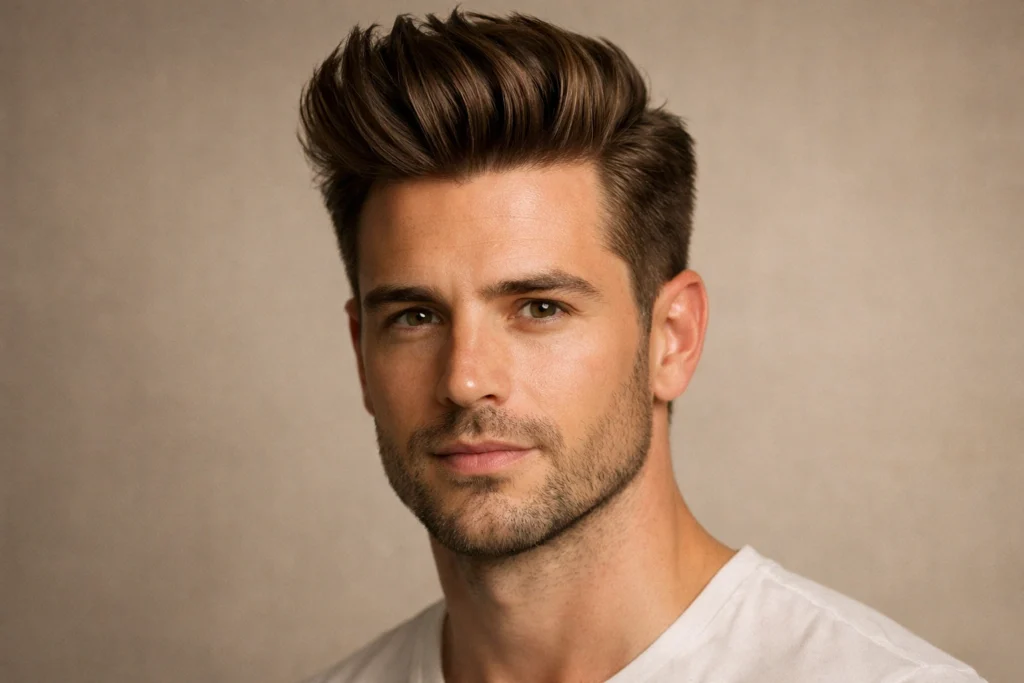
The classic high volume quiff is the original template from which every other variation in this guide is drawn. It features short, clean sides, a longer top section, and a front that is swept upward and slightly back to create a bold, elevated silhouette. The finish is smooth and structured, and the overall impression is one of confident, deliberate grooming.
This version of the quiff works exceptionally well for men with straight or thick hair because the natural weight of the strands helps hold the elevated shape without requiring extreme amounts of product. The silhouette is immediately readable as a quiff, and the clean finish makes it suitable for both professional and social settings.
How to Achieve It
Apply a small amount of blow-dry cream to damp hair and use a vented brush to direct the front section upward and slightly backward while the dryer works through the roots. Once dry, a medium to high hold pomade or styling cream pressed through the top section locks the shape. Finish with a light mist of hairspray if extra longevity is needed throughout the day.
The Textured Quiff
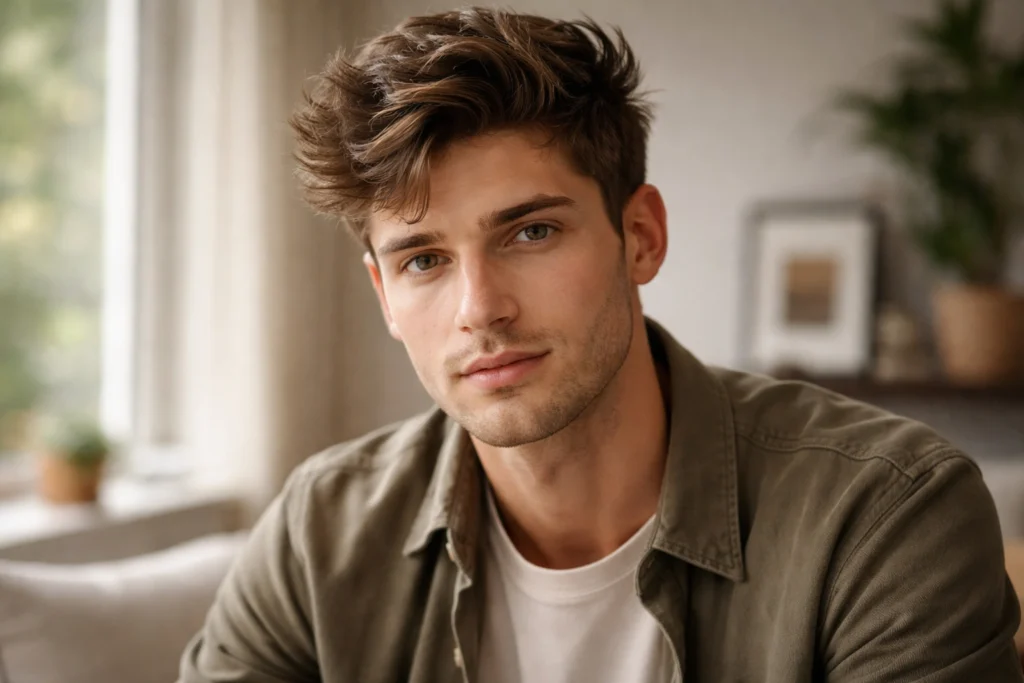
The textured quiff is the interpretation that resonates most strongly with men in 2026. It takes the structural foundation of the classic quiff and introduces visible separation between strands, choppy layering, and a matte, natural finish that reads as contemporary and effortless rather than sculpted and stiff.
This version is particularly well-suited to men with naturally thick or wavy hair, where the natural movement of the strands contributes authentic dimension to the style. A matte clay or texturizing paste worked through the top section with the fingers rather than a comb produces the organic, layered quality that defines this look. The result has serious visual interest without appearing overdone.
Why It Works in 2026
Men across age groups are moving away from high-shine, overly structured styling in favor of looks that appear natural and slightly lived-in. The textured quiff answers that shift directly, delivering height and presence without sacrificing wearability.
The Quiff with Mid Fade
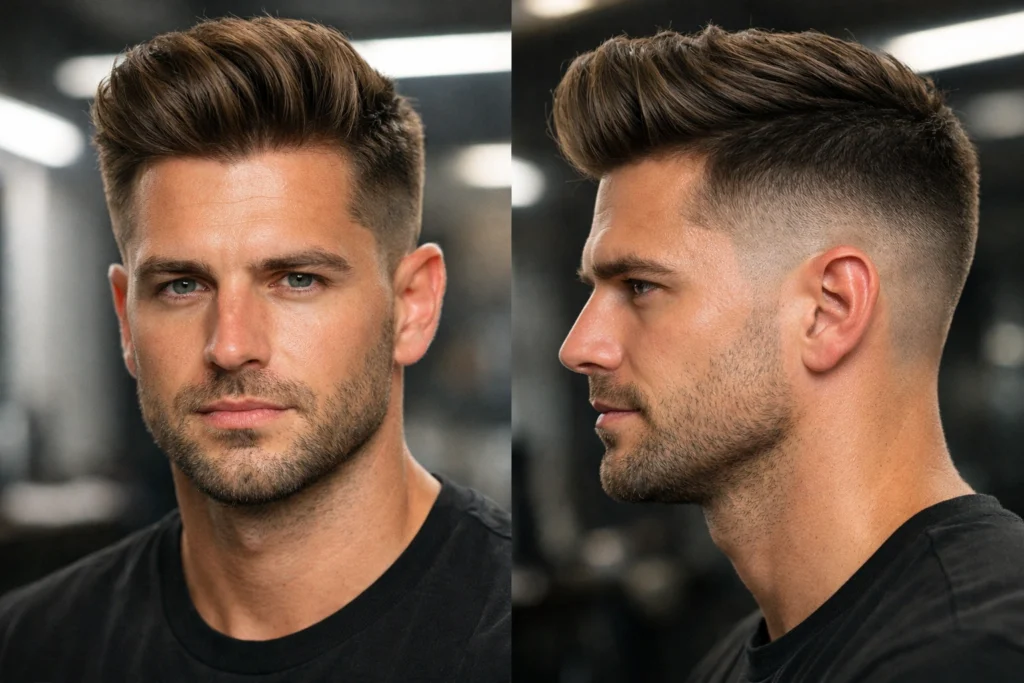
Pairing a quiff with a mid fade is one of the most reliable combinations in contemporary men’s barbering. The mid fade tapers the sides from a natural length at the temples down to a close crop or skin at the ear level, creating a clean structural contrast that sharpens the overall silhouette without the severity of a full skin fade.
This combination works across a wide range of face shapes and hair types, making it one of the most universally flattering options in this guide. The mid fade adds definition and modern sharpness while the quiff on top provides the softness and volume that prevent the look from feeling too aggressive. It transitions naturally from casual to smart-casual contexts without any significant restyling.
The Quiff with Skin Fade
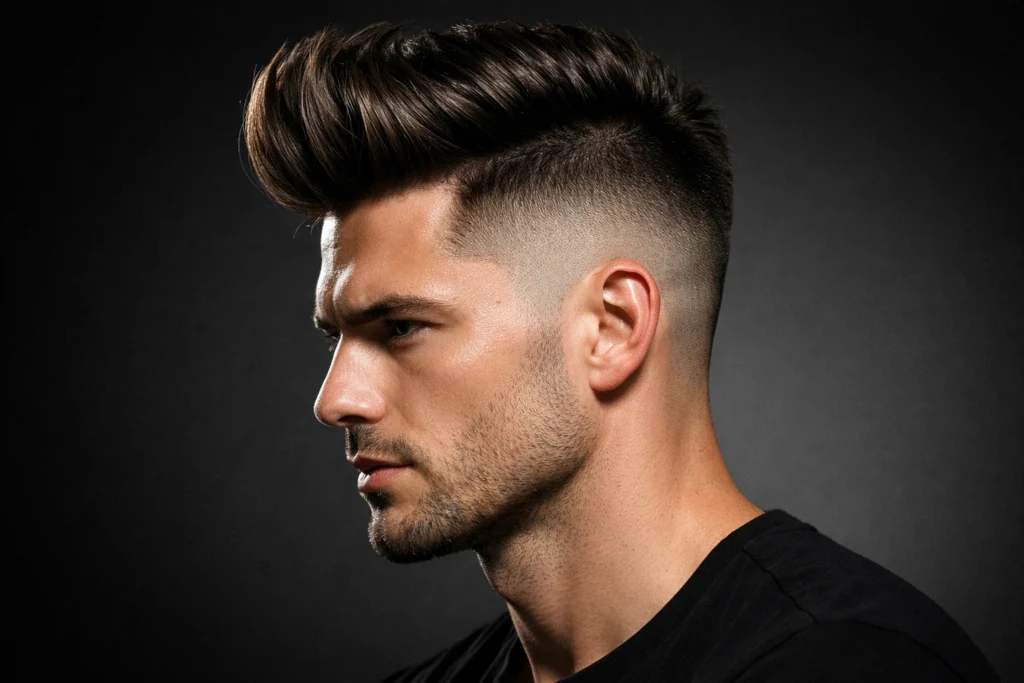
Taking the contrast further, the quiff with a skin fade pairs the volume-forward top section with sides and back that taper all the way to bare skin. The result is a high-impact, fashion-forward interpretation of the quiff that places maximum emphasis on the styled top section by creating an almost architectural base beneath it.
This is the version of the quiff favored by men who want their hairstyle to make a clear visual statement. It is sharp, urban, and deeply intentional. The skin fade demands regular maintenance at the barber to keep the graduation line crisp, typically every two to three weeks, and the quiff on top needs consistent styling effort to justify the precision of the cut beneath it.
The Messy Quiff
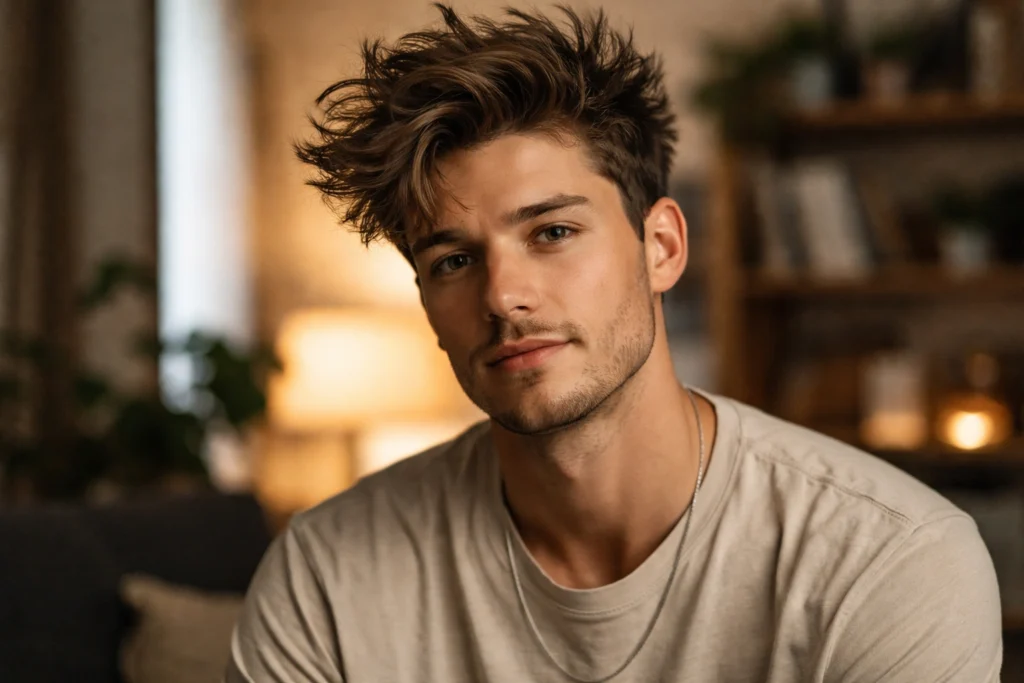
The messy quiff is a deliberate exercise in controlled disorder. The front section is lifted and swept back in the general shape of a quiff, but the finish is tousled, irregular, and textured in a way that communicates a relaxed, carefree attitude. This look carries genuine wearability because it does not demand perfect execution each morning.
Men with naturally wavy or slightly unruly hair find this version of the quiff particularly accessible. The natural texture of the hair provides the raw material for the messy finish, and a light-hold wax or hair clay worked through the damp top section before air-drying is all that is needed to guide the shape without over-controlling it.
Who It Suits Best
The messy quiff is an excellent choice for creative professionals, younger men, and anyone who wants a style that looks intentional without requiring precise daily styling. It also ages particularly well on men in their thirties and forties, where an overly structured look can sometimes feel at odds with the broader aesthetic they are projecting.
The Short Quiff
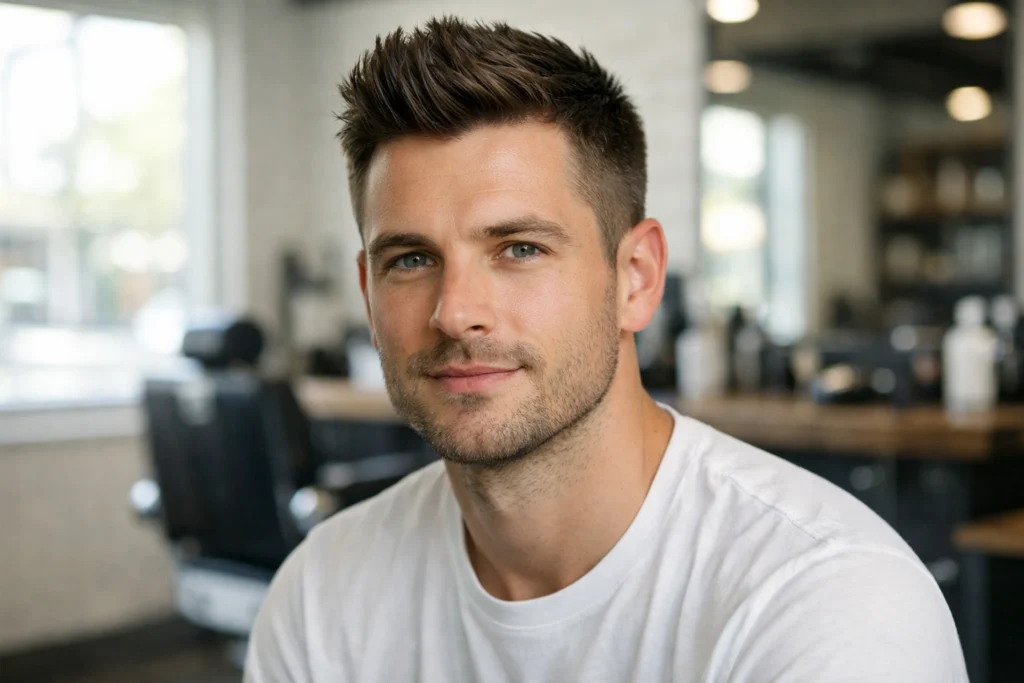
The short quiff scales the classic silhouette down to a compact, low-maintenance format that retains the style’s defining character while significantly reducing the time and product required to achieve it. The top section is cut shorter than in a full quiff but still long enough to create visible lift and directional sweep from the front.
This is the ideal entry point for men who are new to the quiff and want to test the style without a significant commitment in length or styling time. It suits virtually every face shape and hair type and holds its shape throughout the day with minimal product. A small amount of texture powder or light wax applied to dry hair in the morning is typically sufficient.
The Long Quiff
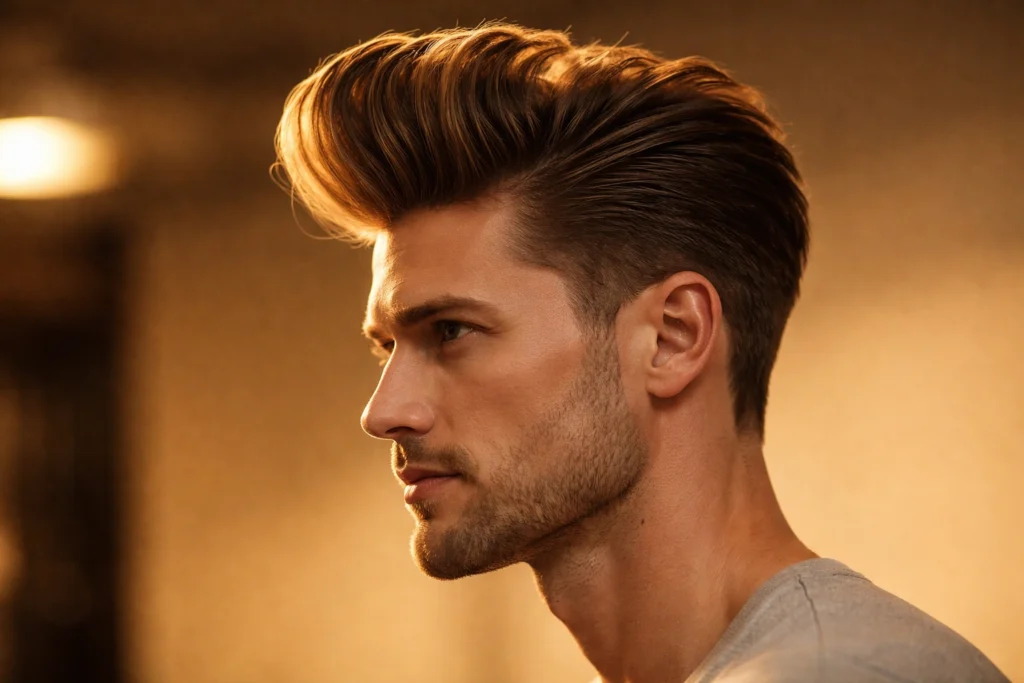
At the other end of the spectrum, the long quiff is for men who want the style to make a full, unapologetic statement. The top section is kept at three to five inches or longer, providing dramatic height and a sweeping, flowing quality as the hair moves upward and back. The sides are kept shorter to balance the weight of the top and maintain the quiff’s signature structure.
Long quiffs require a higher investment in both styling time and product. Blow-drying with a round or vented brush is essential to build the volume and direction that the length requires. A strong hold product is also necessary to keep the top section elevated throughout the day rather than collapsing under its own weight by mid-afternoon.
The Quiff with Taper
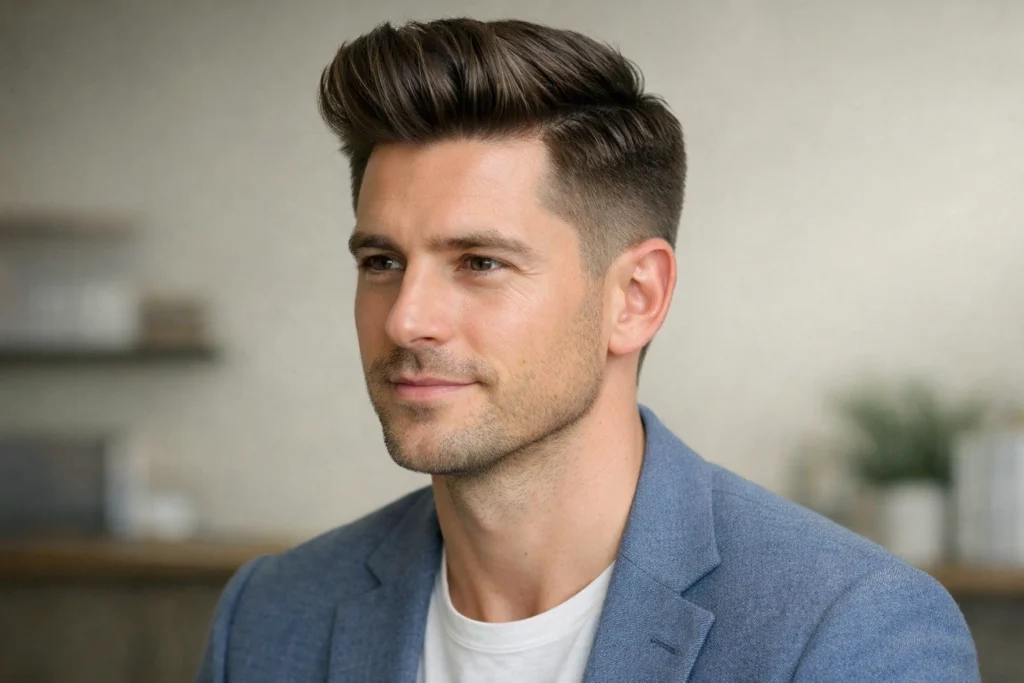
The quiff with a taper differs from the fade variations in that the sides are gradually reduced in length rather than cut down to skin. The result is a softer, more conservative interpretation of the structural contrast that defines quiff styling. The taper blends naturally around the ear and neckline without hard graduation lines, giving the overall cut a clean but understated quality.
This combination is particularly well-suited to professional environments where a more conservative grooming standard is expected. The taper does not announce itself the way a skin or mid fade does, which means the quiff on top can do its visual work without the cut as a whole feeling too barber-sharp for a boardroom or client-facing setting.
The Side Part Quiff
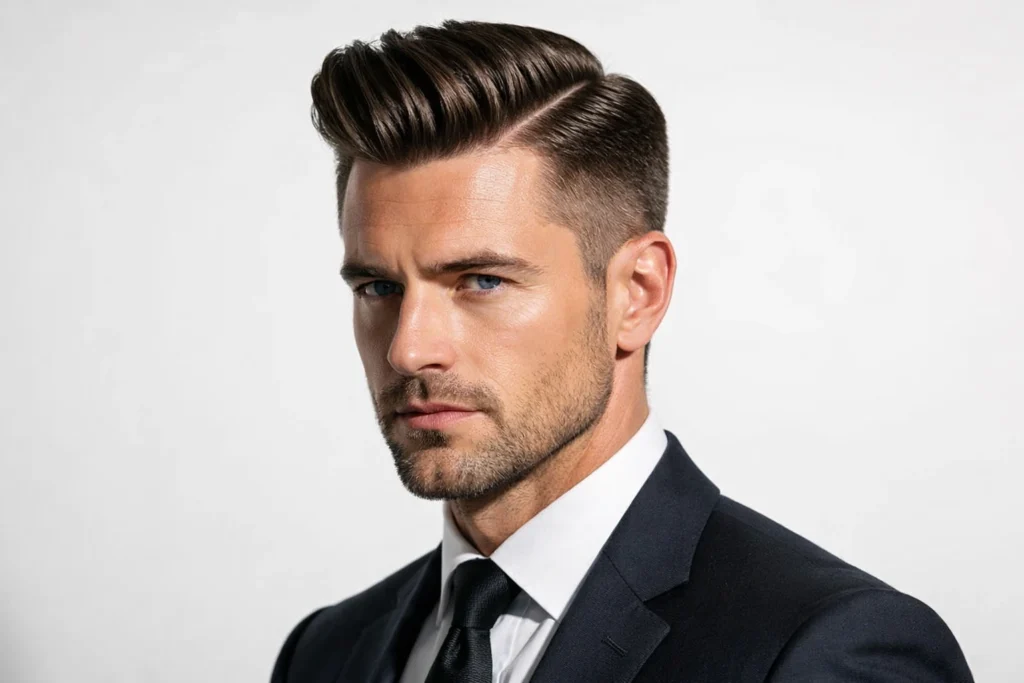
The side part quiff introduces a structural element to the classic silhouette by adding a defined parting on one side before sweeping the front section upward and across. The result is a hybrid of the quiff and the classic side part that carries a refined, sophisticated character suited to formal occasions and polished everyday style.
A hard parting cut into the scalp with a razor delivers the most defined version of this look, though a comb-drawn parting through styled hair produces a softer alternative that is slightly easier to maintain. The side part quiff works particularly well on men with straight or fine hair, where the parting sits cleanly and the swept top section lies with controlled precision.
The Quiff with Beard
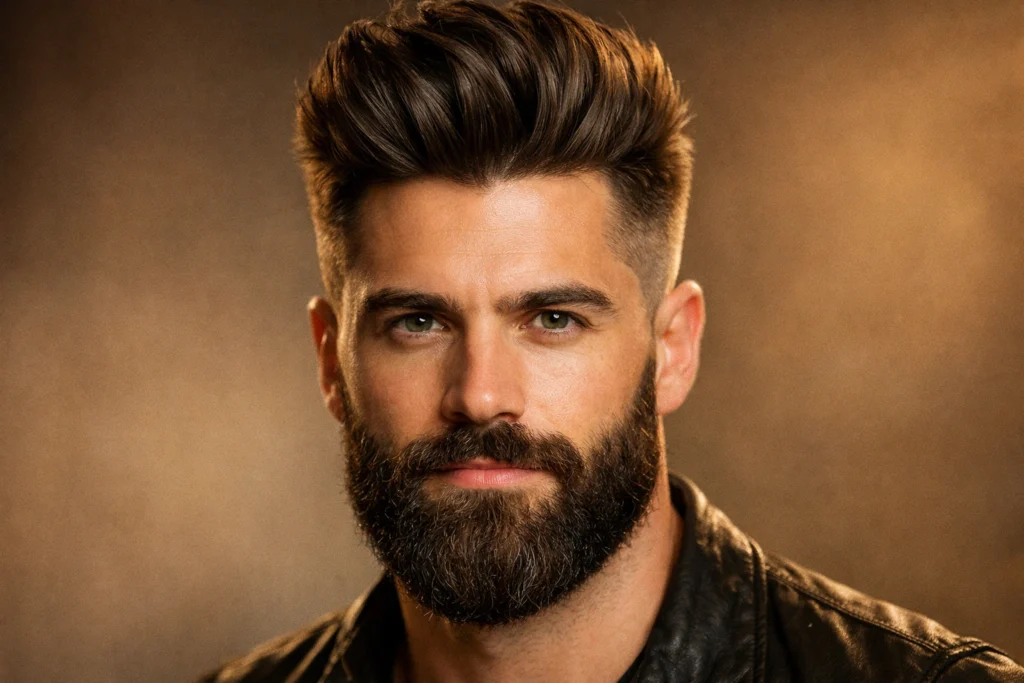
The combination of a quiff with a full or medium-length beard is one of the most commanding looks a man can wear in 2026. The volume and height of the quiff on top work in visual harmony with the weight and fullness of the beard below, creating a balanced silhouette that frames the face from both above and below.
This look suits men with oval, square, and rectangular face shapes particularly well. The height of the quiff adds vertical dimension while the beard provides horizontal fullness, creating a proportional frame that enhances most facial structures. Keeping the fade or taper on the sides clean is especially important in this combination, as the gradient between the beard and the scalp hair needs to be intentional and well-blended.
The Curly Quiff
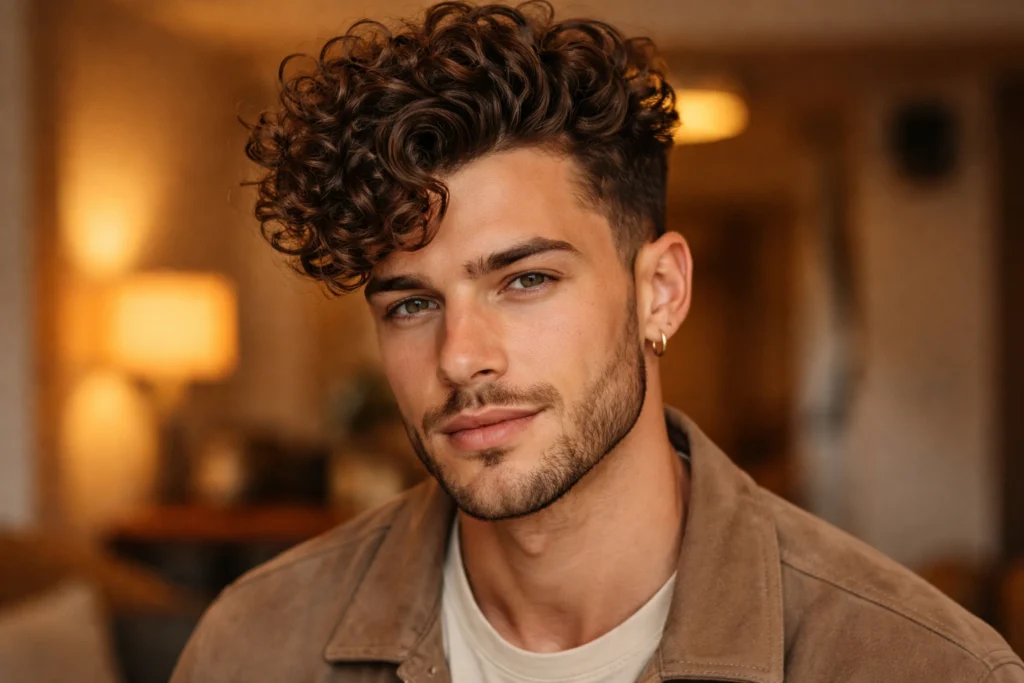
Men with naturally curly hair have historically been steered away from the quiff on the assumption that the curl pattern would disrupt the style’s signature shape. That assumption is outdated. The curly quiff is a fully viable and visually striking interpretation that embraces the natural volume and texture of curly hair rather than fighting it.
The curls in the top section create a lifted, voluminous front that has its own organic energy. Rather than lying flat and swept back as in a straight-hair quiff, the curly version rises with a lively, dimensional character that turns heads for all the right reasons. A curl-defining cream applied to damp hair and diffused on a low heat setting produces well-shaped, lifted curls that hold the quiff silhouette naturally.
The Disconnected Quiff
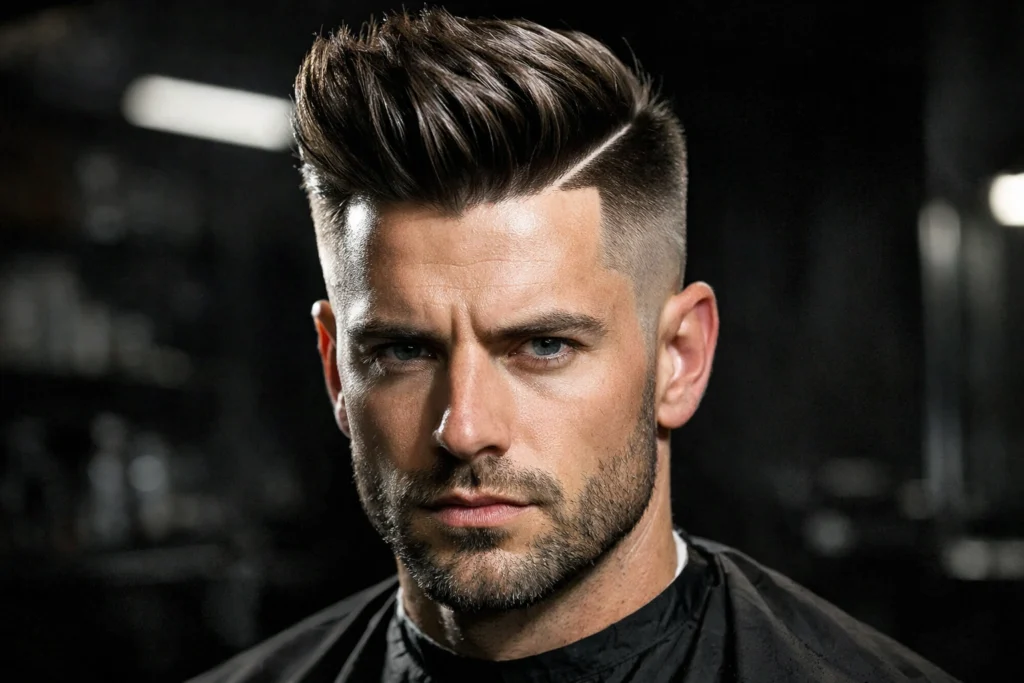
The disconnected quiff is a technically precise and visually dramatic interpretation favored by men who want a hairstyle that reads as genuinely fashion-forward. The sides are cut with a hard line rather than a graduated blend, creating a sharp visual break between the close-cropped sides and the longer, styled top section.
This version requires a barber with strong technical skills and attention to detail, as the precision of the disconnection line defines the quality of the entire cut. The disconnected quiff suits men with angular facial features and those who gravitate toward bold, structured aesthetics in their overall style. It demands regular maintenance to keep the disconnect line sharp, typically every two to three weeks.
The Soft Quiff
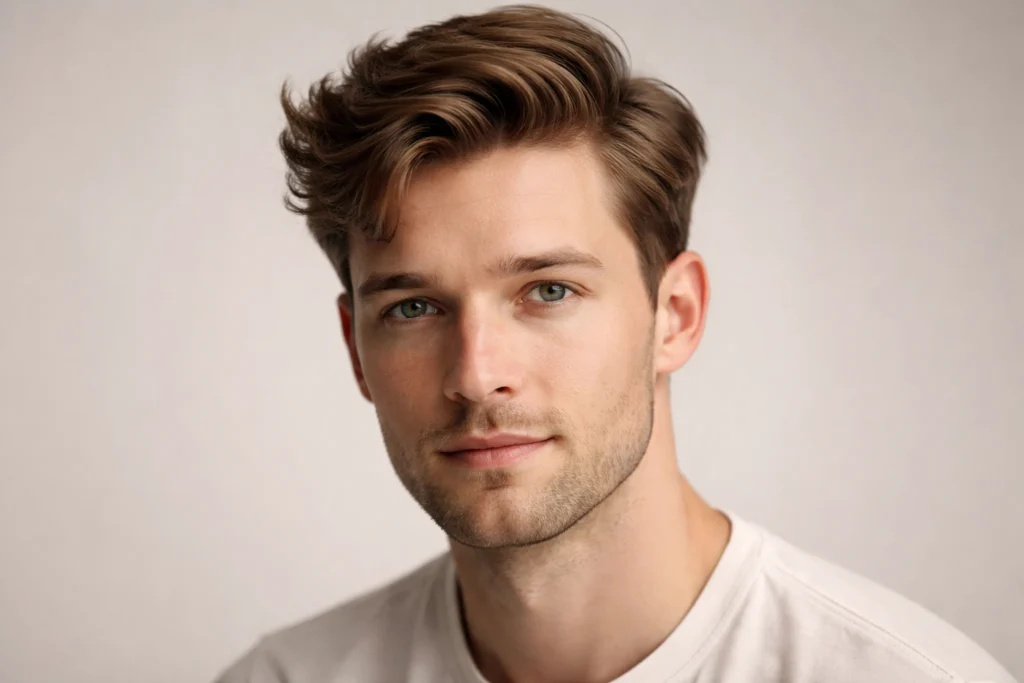
The soft quiff is the most understated version of the style in this guide, and it is none the worse for it. Rather than reaching for dramatic height or sharp structural contrast, the soft quiff achieves a gentle wave-like lift at the front that creates subtle volume and a quiet sense of dimension without any overt statement-making.
This is the ideal quiff for men who appreciate the style’s aesthetic principles but prefer a look that does not demand attention. It works naturally on fine to medium hair and holds its shape with very little product. A light hold styling cream or a small amount of natural finish wax gives the front section just enough definition while preserving the soft, understated character of the look.
Best Occasions for the Soft Quiff
The soft quiff transitions seamlessly from the office to casual social settings. Its conservative proportions and refined finish make it one of the most genuinely versatile interpretations in this guide, equally at home in a boardroom presentation and a weekend dinner.
The Feathered Quiff
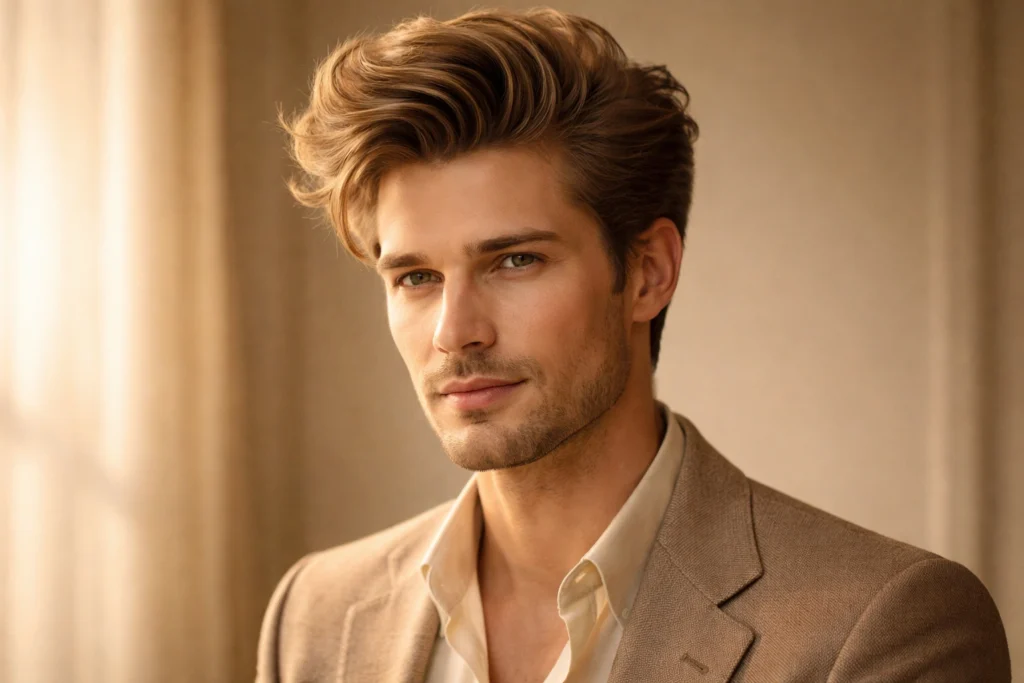
The feathered quiff introduces a layered, airy quality to the top section that gives the style a light, dimensional finish reminiscent of the best 1970s-inspired haircuts while remaining entirely contemporary in overall feel. The layers in the top section are cut to produce a weightless, floating quality as the hair sweeps upward and back.
Volumizing mousse applied before blow-drying builds the lift that the feathered layers need to read as intentional rather than simply thin. A light serum or natural-finish wax applied over the finished style can add the faint sheen that distinguishes feathered styling from the matte textured approaches used in other quiff variations. This look suits men with fine to medium hair where the feathering technique creates the impression of fullness and body.
The Business Quiff

The business quiff is the professional man’s answer to the question of how to wear a distinctive, characterful hairstyle within the context of a conservative work environment. It takes the essential elements of the classic quiff but scales back the height, refines the finish, and tightens the overall proportions to produce a look that communicates grooming, style, and authority without crossing into territory that might feel distracting in a formal setting.
Product choice is critical for this version. A light to medium hold pomade with a natural rather than high-gloss finish delivers the controlled shaping the business quiff requires without creating a shellacked appearance. The sides are kept clean and close, either with a conservative taper or a low fade, and the overall silhouette maintains a structured tidiness that reads as boardroom-appropriate from every angle.
Conclusion
The fifteen quiff hairstyles covered in this guide demonstrate just how far the style extends beyond its original form. It is a framework as much as a hairstyle, one that accommodates different hair types, different face shapes, different lifestyles, and different personal aesthetics without losing its essential identity. From the dramatic precision of the disconnected quiff to the quiet confidence of the soft quiff, from the natural vitality of the curly quiff to the sharp urban energy of the skin fade version, there is a quiff in 2026 for every man who wants to wear it.
The most important step is finding the version that genuinely suits you rather than simply choosing the one that looks best on someone else. Take this guide to your barber, reference the variations that resonate most, and work with a professional who can tailor the cut to your specific growth pattern, hair texture, and facial structure. A well-executed quiff is not just a haircut. It is a statement about the kind of man you choose to be every morning when you look in the mirror.
You may also like this post: 14 Modern Curtain Bangs Looks for Men
Frequently Asked Questions
What face shapes suit quiff hairstyles for men?
A: The quiff works well across most face shapes because the height it creates adds vertical dimension that benefits round and square faces, while the swept styling softens angular features on square and rectangular faces. Oval faces are the most universally accommodating and suit every variation in this guide. Men with very long or narrow faces may want to choose a shorter or softer quiff to avoid adding unnecessary vertical length to the silhouette.
How much hair length is needed to get a quiff?
A: A minimum of two to three inches on top is generally required for the quiff to take shape effectively. Shorter versions like the short quiff can be achieved with slightly less length, while the long quiff and feathered quiff require three to five inches or more. Your barber will be able to advise whether your current length is sufficient or whether a growing period is needed before committing to certain variations.
What is the best product for styling a quiff?
A: Product choice depends on the finish and hold level the specific quiff variation requires. Matte clay and texturizing paste suit textured and messy quiff styles. A medium to high hold pomade with a natural finish works well for classic and business quiff interpretations. Volumizing mousse and blow-dry cream are useful pre-styling tools for building the base volume that longer and feathered quiffs require. As a general rule, avoid heavy, high-shine products unless the specific variation calls for a polished finish.
Can men with thinning hair wear a quiff?
A: Yes, with the right adjustments. The short quiff and soft quiff are the most suitable variations for men with thinning hair, as they work with reduced volume rather than demanding dramatic height. A texture powder applied at the roots before styling adds lift and the appearance of thickness without weight. Avoiding heavy products that can flatten fine or thinning hair is essential, and choosing a barber who understands how to cut around areas of thinning will significantly improve the result.
How often does a quiff hairstyle need to be maintained?
A: The top section of a quiff generally requires a trim every four to six weeks to maintain the intended length and shape. If the cut includes a skin fade or mid fade, the fade will need refreshing every two to three weeks as it grows out faster than the longer top sections. The taper and disconnected quiff variations require similar maintenance schedules. Staying consistent with barbershop visits is what keeps any quiff variation looking intentional rather than overgrown.
1 Comment