Introduction
The comb over has lived many lives. In its earliest form it carried associations with conservatism and attempts to conceal thinning hair, but that narrative has long been replaced by something far more compelling. Today the comb over stands as one of the most versatile and genuinely fashion-forward haircuts a man can wear, embraced by athletes, executives, musicians, and style-conscious men across every background and age group.
What transformed the comb over from a dated relic into a modern staple was its collision with contemporary barbering techniques, most notably the fade, the hard part, and a general cultural shift toward intentional grooming. The result is a family of styles that share a common DNA, hair swept or combed to one direction on top, but diverge dramatically in execution, character, and occasion suitability. From a polished executive cut to a textured streetwear-inspired look, the comb over today can be tailored to fit virtually any event on the calendar.
This guide presents fifteen of the most compelling fashion-forward comb over haircuts for men in 2025, each explored with enough detail to give you a clear picture of what the look involves, who it suits, and how to wear it with confidence.
The Classic Side Part Comb Over
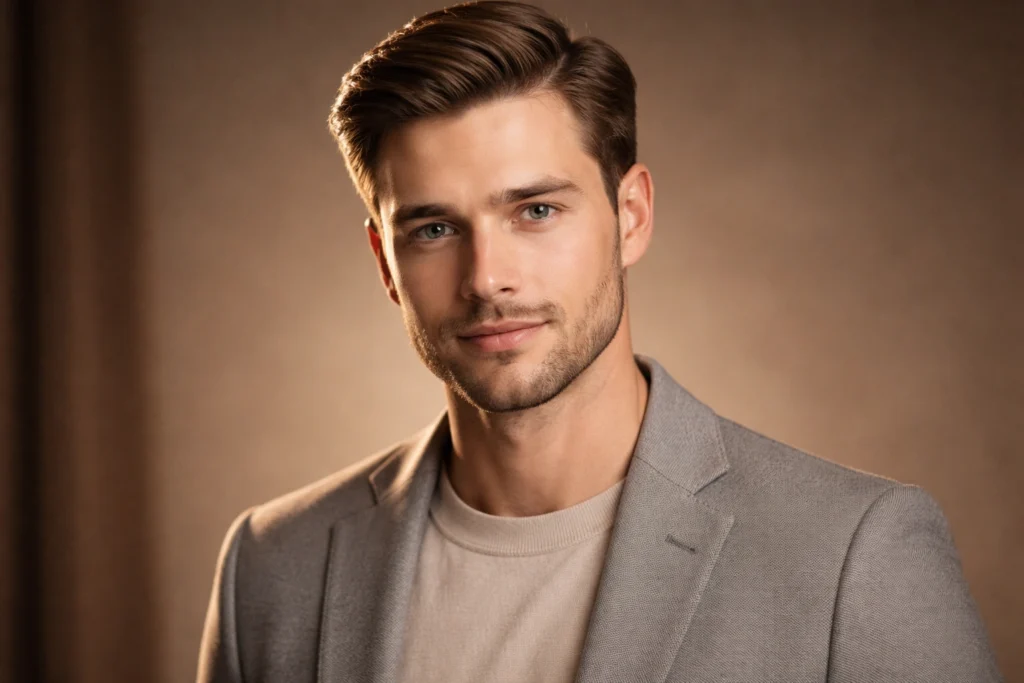
The classic side part comb over is the foundation of every variation that follows. It features hair of medium length on top, typically two to four inches, combed neatly to one side with a well-defined natural part. The sides and back are cut shorter, creating a clean contrast that draws the eye upward and gives the top section its prominence.
This version is the embodiment of reliable elegance. It suits formal settings as naturally as it suits weekend occasions, and it works across most hair types, from straight to lightly wavy. Men who prefer a consistent, low-drama style that still reads as intentionally groomed will find the classic side part to be an enduringly satisfying choice.
Styling Approach
A medium-hold pomade with a natural or low-shine finish works best for this look. Apply to slightly damp hair, comb through from root to tip in the direction of the part, and use the comb to define the part line cleanly. The finished result should look polished without appearing stiff or overly lacquered.
Comb Over Fade
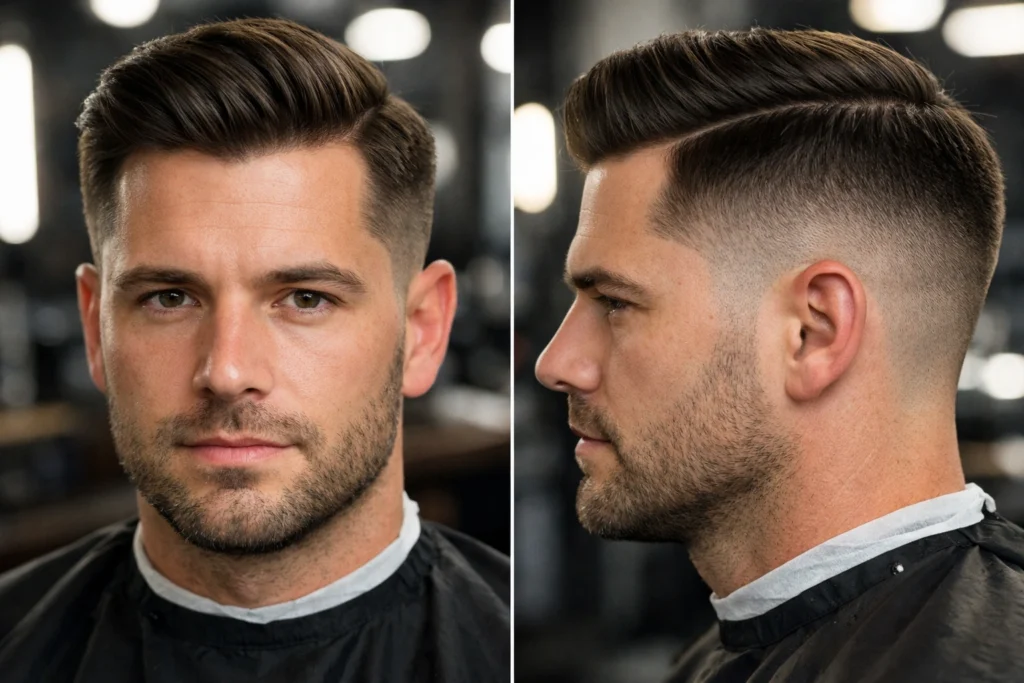
The comb over fade is arguably the most requested variation at barbershops worldwide, and its popularity is entirely justified. It takes the classic side-parted top and pairs it with a graduated fade on the sides and back, creating a sharp structural contrast between the short, clean sides and the fuller, swept top.
The fade can be positioned at low, mid, or high on the head, and each option changes the overall character of the cut significantly. A low fade is more conservative and office-appropriate. A mid fade sits at the most popular middle ground. A high fade makes the boldest statement and suits men who want a more contemporary, streetwear-influenced look.
Who It Works Best For
The comb over fade suits almost every face shape and hair type, making it one of the most universally flattering haircuts available. Men with oval, square, and diamond face shapes in particular find that the proportional contrast of this cut enhances their natural facial structure beautifully.
Hard Part Comb Over
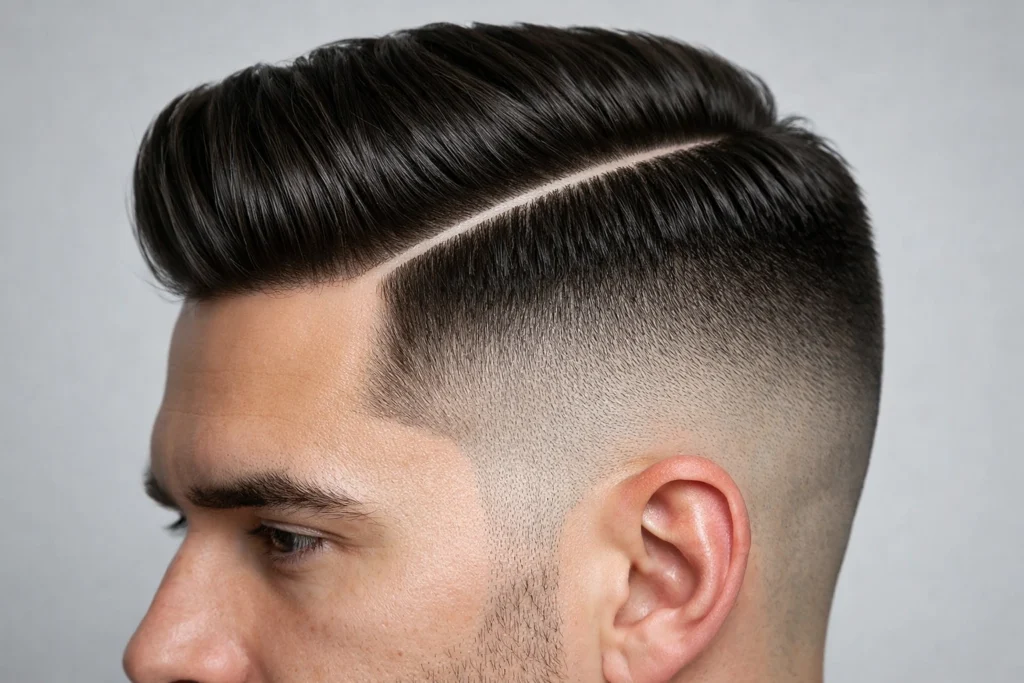
The hard part comb over introduces one of the most visually decisive elements available in modern barbering: a razor-shaved line that replaces the natural part with a precisely etched groove. The result is a look with immediate graphic impact. The shaved line creates a bold separation between the combed top and the shorter sides, adding a modern, almost architectural quality to the overall silhouette.
This variation suits men who want their grooming to make a statement. It works particularly well in creative professional environments, social events, and any context where a polished but distinctive appearance is an advantage. The hard part requires regular upkeep since the shaved line grows in within one to two weeks and needs refreshing to maintain its sharpness.
Textured Comb Over
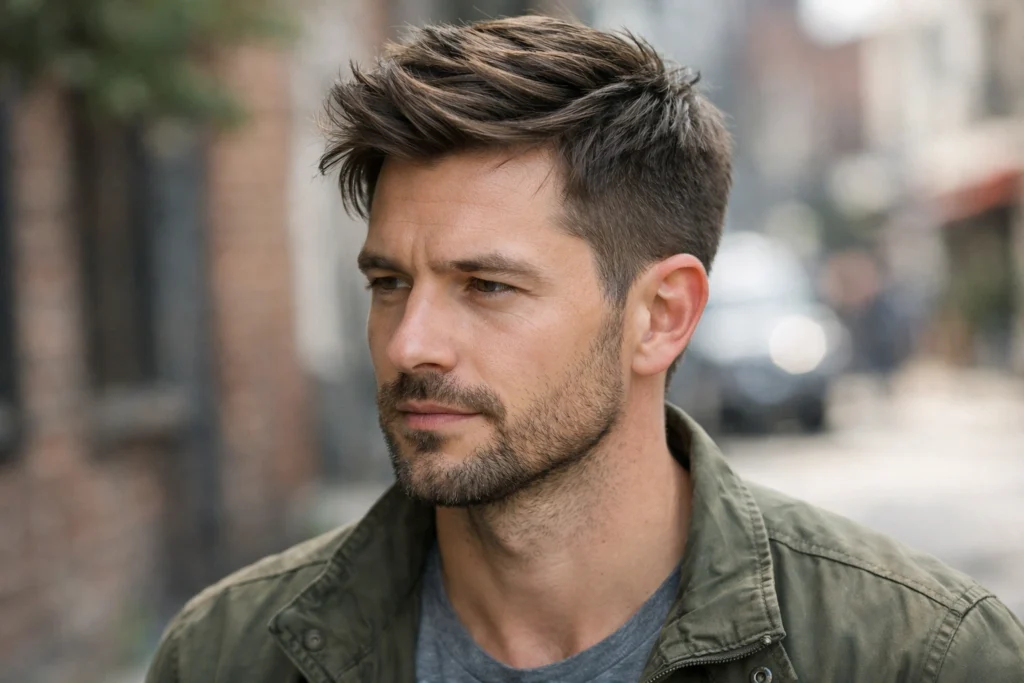
The textured comb over loosens the formality of the classic variation and introduces visible movement, separation, and a relaxed dimensionality to the top section. Rather than lying smooth and uniform, the hair in this version is styled with deliberate texture that creates depth and a naturally worn quality that many men find more wearable on a daily basis.
This look is particularly well-suited to men with naturally thick or slightly wavy hair, where texture can be coaxed out with minimal effort. A matte paste or texture clay applied to dry hair and worked through with fingers rather than a comb produces the kind of undone structure that defines this style.
Ideal Occasions
The textured comb over transitions effortlessly from a casual Friday at the office to a weekend gathering or a relaxed dinner out. It is the most versatile entry point in the fashion-forward comb over family for men who prefer a less rigid daily grooming routine.
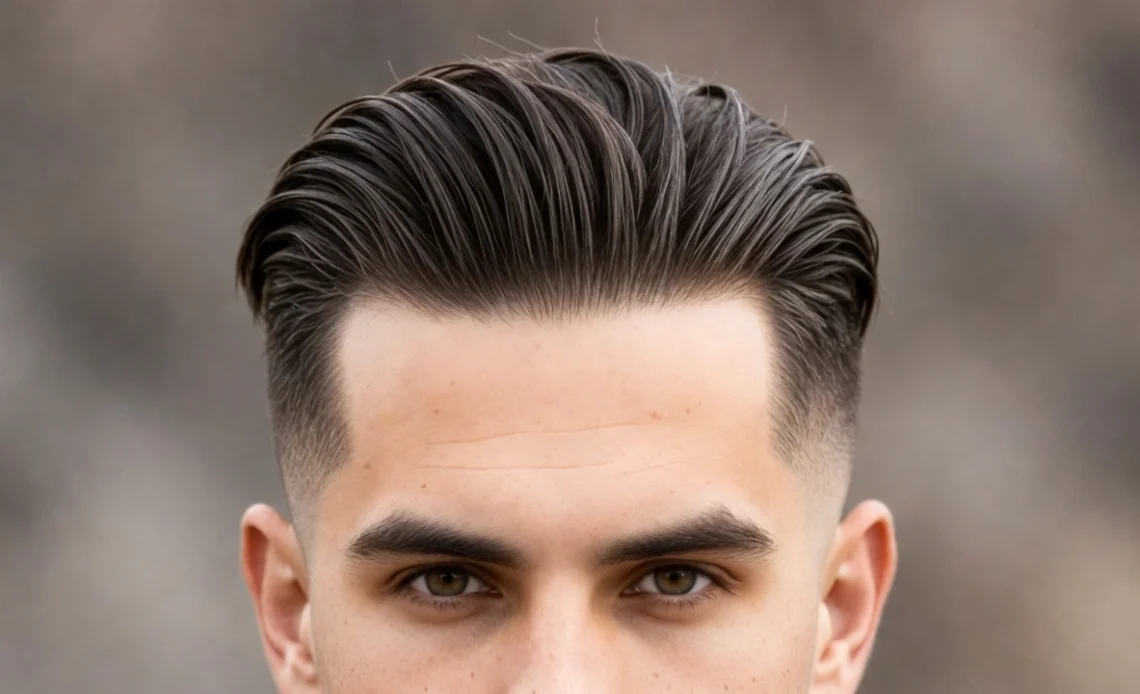
Slicked Back Comb Over
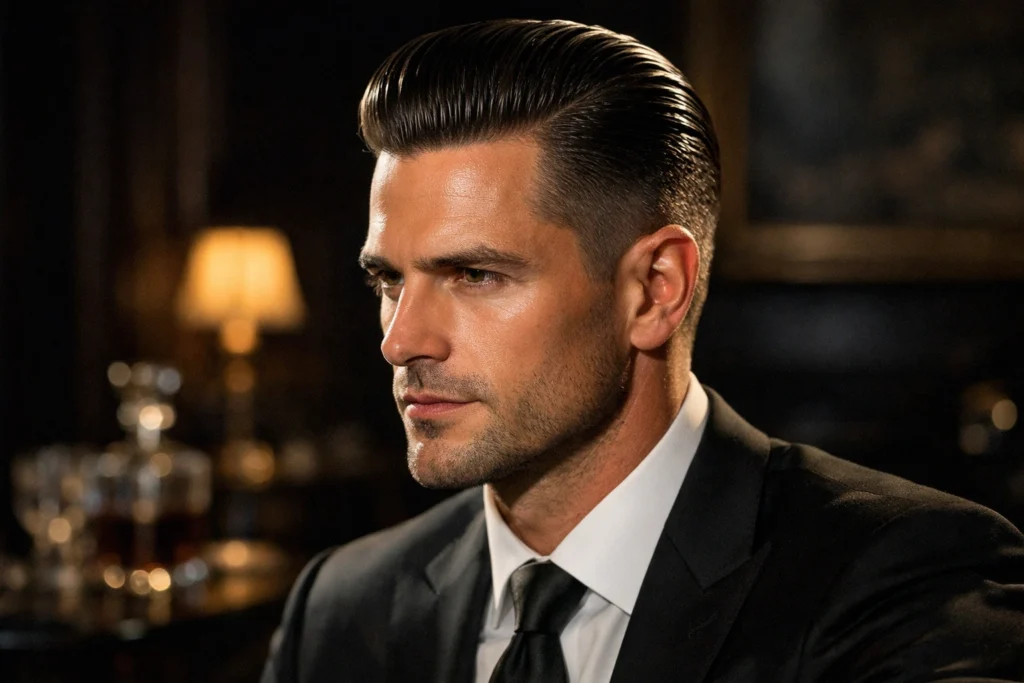
The slicked back comb over redirects the top section away from the temples and toward the crown and back of the head rather than sweeping it to one side. The result is a look with a distinctly cinematic quality, immediately associated with confidence, sophistication, and a deliberate sense of style.
High-shine pomade or a strong-hold gel are the defining products for this interpretation. The hair is combed straight back from the hairline, with any natural part either minimized or used as a subtle directional guide. The sides are typically faded or tapered to keep the focus on the voluminous, swept-back top. This is a strong choice for formal events, black-tie occasions, or any setting that rewards a sharp and commanding appearance.
Comb Over with Skin Fade
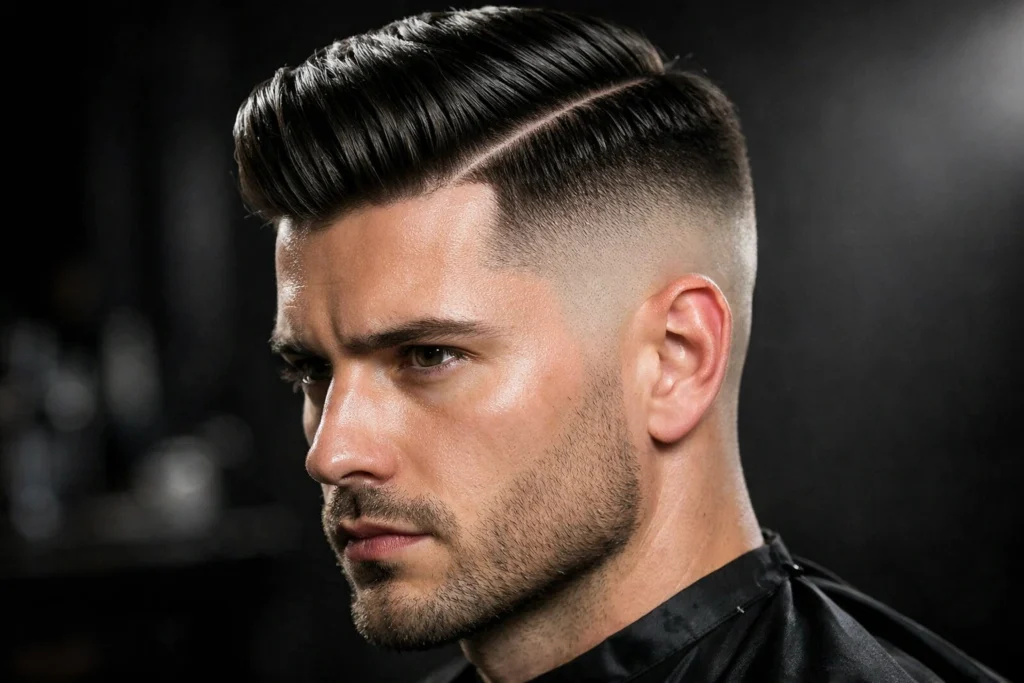
Taking the contrast of the standard comb over fade to its maximum expression, the skin fade version tapers the sides and back all the way down to bare skin. The transition from the lush, styled top to the clean skin at the sides creates a dramatic visual that is unambiguously modern and boldly fashion-forward.
This cut demands technical skill from the barber and regular maintenance from the wearer, as skin fades lose their definition faster than other fade types. The payoff is a look with exceptional visual impact that photographs exceptionally well and commands attention in person. Medium to thick hair on top works best, as it provides the density needed to create meaningful contrast against the skin sides.
Comb Over with Beard Fade
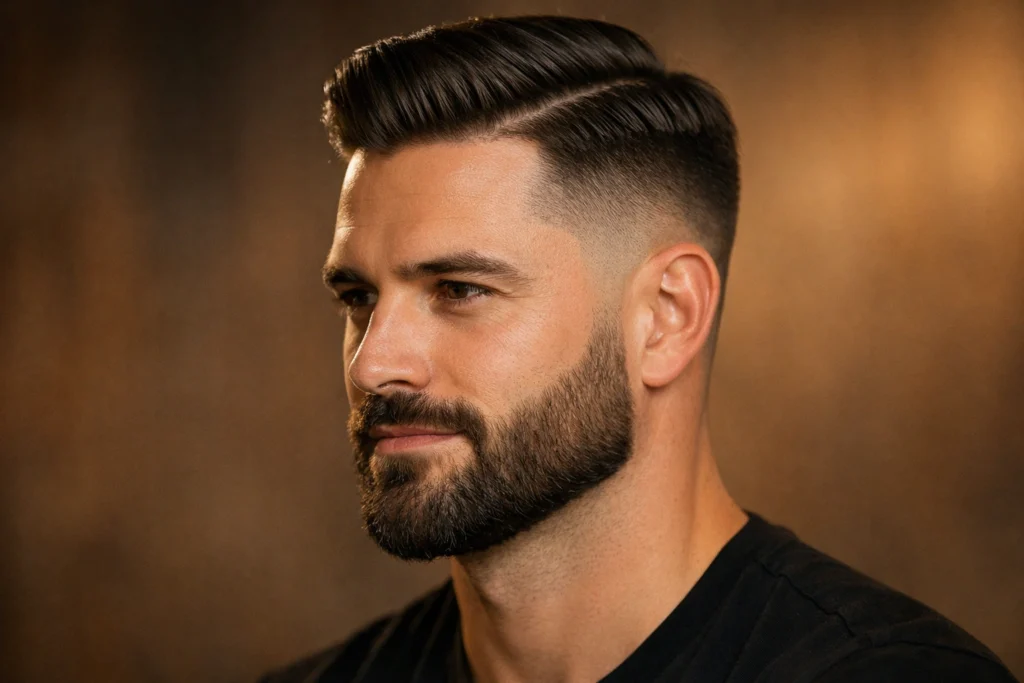
One of the most harmonious combinations in contemporary men’s grooming pairs the comb over with a beard that is itself faded or shaped to complement the haircut. When the fade on the sides transitions seamlessly into a well-maintained beard, the entire look achieves a cohesion that elevates it beyond a simple haircut into a complete grooming statement.
The beard fade, sometimes called a beard taper, involves gradually shortening the beard from the cheeks downward or from the sideburns inward, blending the facial hair into the fade of the haircut. The result is a continuous, sculptural line that frames the face and creates a unified aesthetic from hairline to jawline. This combination works particularly well for events that require a confident, mature, and well-composed appearance.Long Comb Over
Long Comb Over
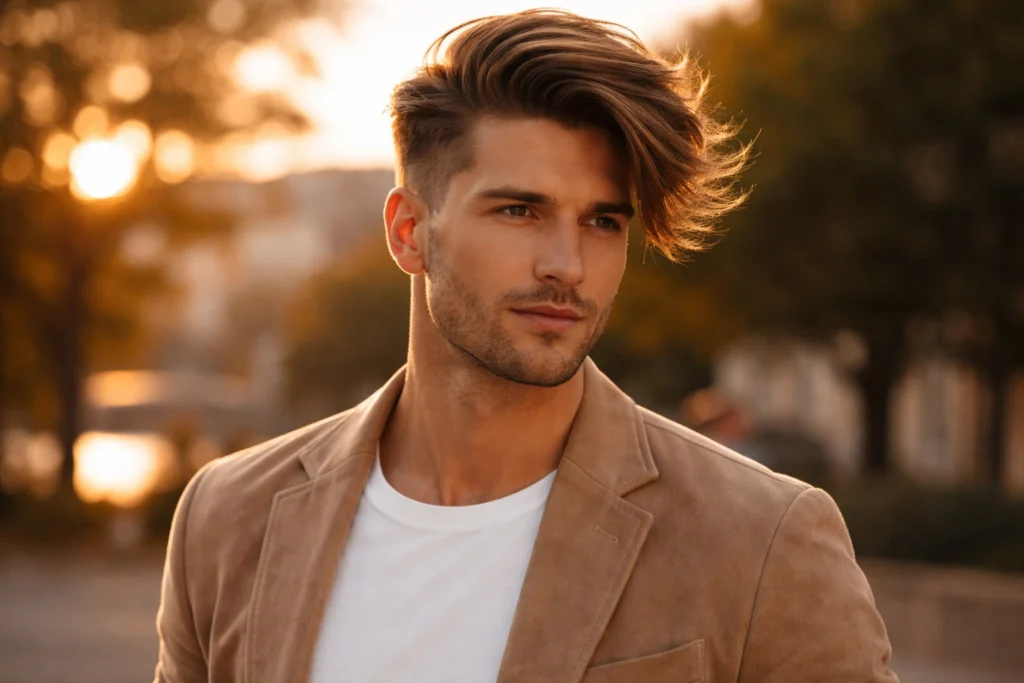
The long comb over operates at the far end of the length spectrum within this style family, keeping the top section at four inches or longer and sweeping it dramatically to one side. The length introduces a flowing, almost cinematic quality to the comb over that shorter versions cannot replicate. The sides are kept shorter to balance the volume on top, though a full taper rather than an aggressive fade often suits longer top sections better.
Men who choose the long comb over tend to have naturally thick hair that supports the weight and movement of longer styling without looking flat or limp. The look suits formal events, artistic environments, and any context where a distinctive, confident appearance is the goal.
Comb Over Pompadour
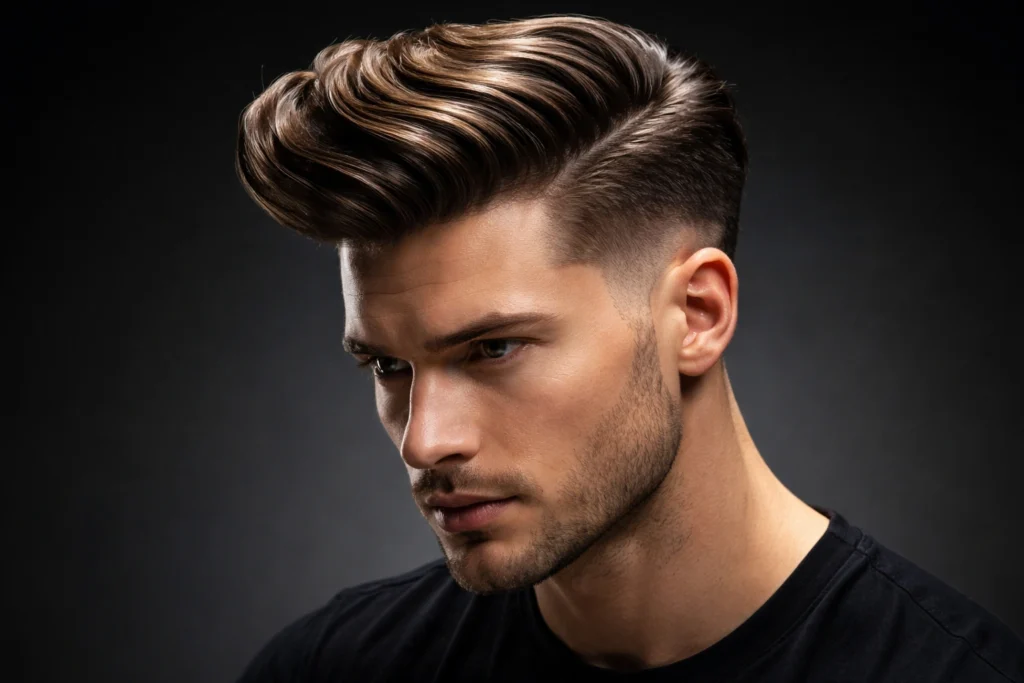
The comb over pompadour hybridizes two of the most enduring men’s hairstyles into a single look that combines the directional sweep of the comb over with the volumetric lift and frontal height of the pompadour. Hair is styled both upward at the front and swept to one side simultaneously, creating a three-dimensional silhouette that is richer and more dynamic than either style achieves on its own.
A high-hold, medium-shine pomade is essential for achieving and maintaining the height and direction simultaneously. Blow drying the hair with a round brush before applying product helps set the lift before the pomade locks it in place. This is a powerful choice for formal occasions, performances, presentations, or any event where a bold, put-together look is called for.
Casual Comb Over

Not every version of this haircut needs to communicate formal intent. The casual comb over is the relaxed, unfussy interpretation of the style, featuring a loosely defined direction of sweep, minimal product, and a generally laid-back finish that suits everyday life rather than dress occasions.
The hair is longer on top and swept generally to one side, but without the precision of a hard part or the structure of a slicked-back finish. A small amount of light-hold wax or a natural finish balm worked through with fingers is all the product this look needs. It suits men who want the general aesthetic of the comb over without the daily commitment to precise styling.
Comb Over Quiff
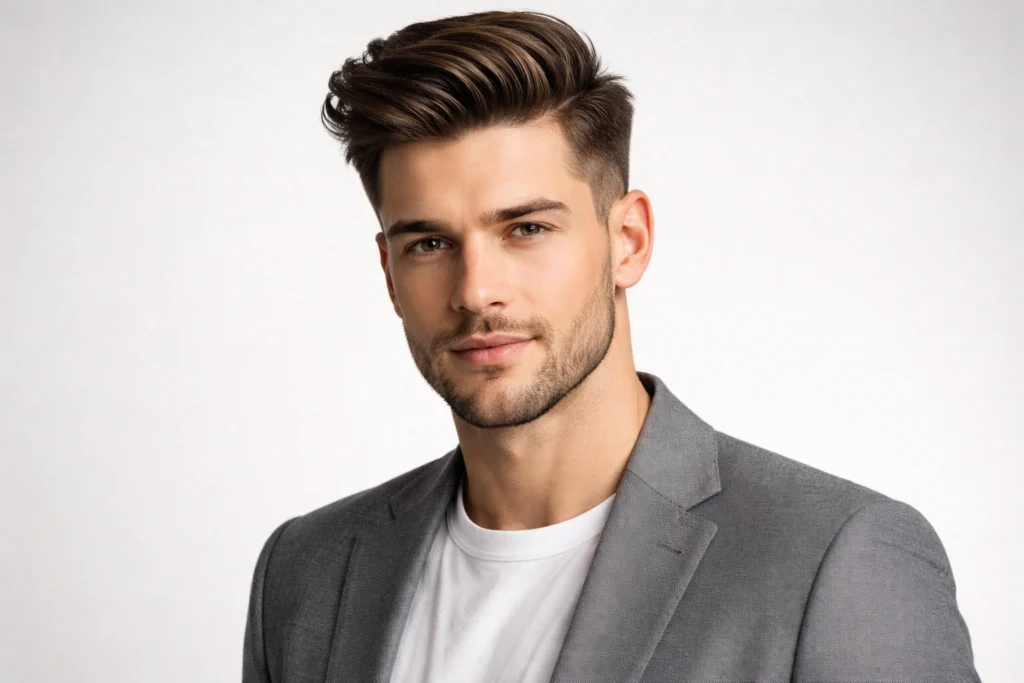
The comb over quiff adds frontal height and a slight backward lean to the classic side sweep, creating a look that has more visual energy and forward presence than the traditional flat comb over. The front section of the hair is blown or combed upward and slightly back before being directed to one side, resulting in a lift that gives the overall silhouette more verticality.
This is a particularly effective style for men with rounder face shapes, as the added height creates an elongating effect that balances wider facial proportions. A medium to firm hold product with some shine suits this variation well, and the finished look is well-suited to smart-casual events, date nights, and social gatherings where a sharp but not overly formal appearance is the goal.
Comb Over with Design
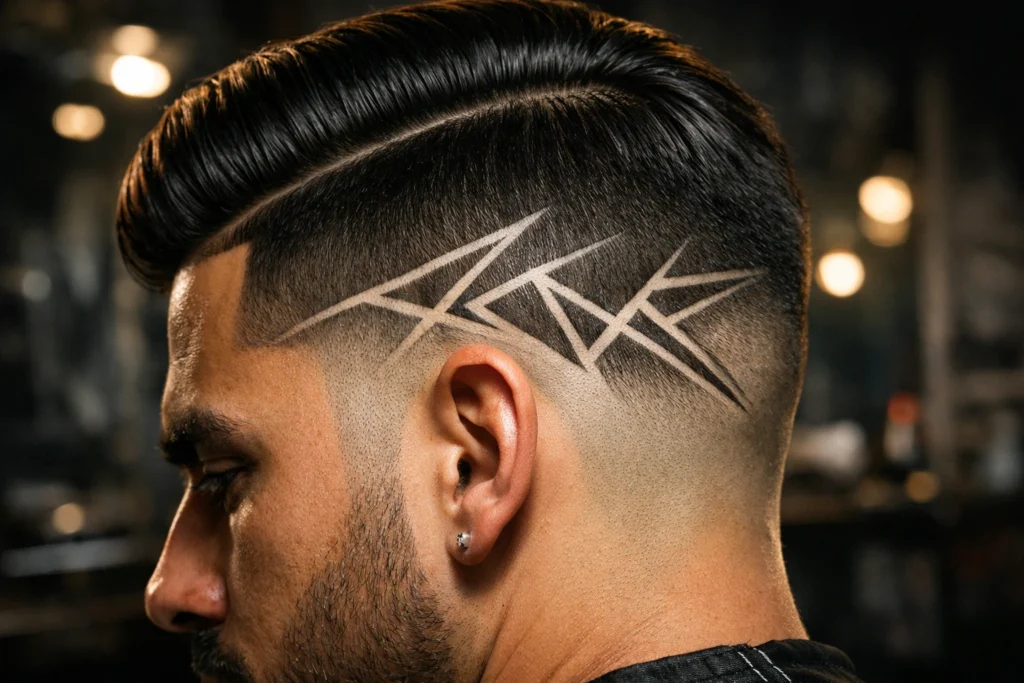
Adding a shaved design into the fade alongside the comb over is one of the most expressive and personality-driven directions the style can take. Geometric lines, curved patterns, and custom motifs etched into the fade section transform the haircut from a grooming choice into a form of self-expression that is genuinely individual.
This variation is popular in urban and creative communities and has strong roots in contemporary barbering culture across North America, Europe, and beyond. The design element requires a barber with genuine artistic skill and a steady hand. It is a bold choice for men who want their haircut to reflect a distinctive personal identity rather than conform to a standard template.
Comb Over for Curly Hair
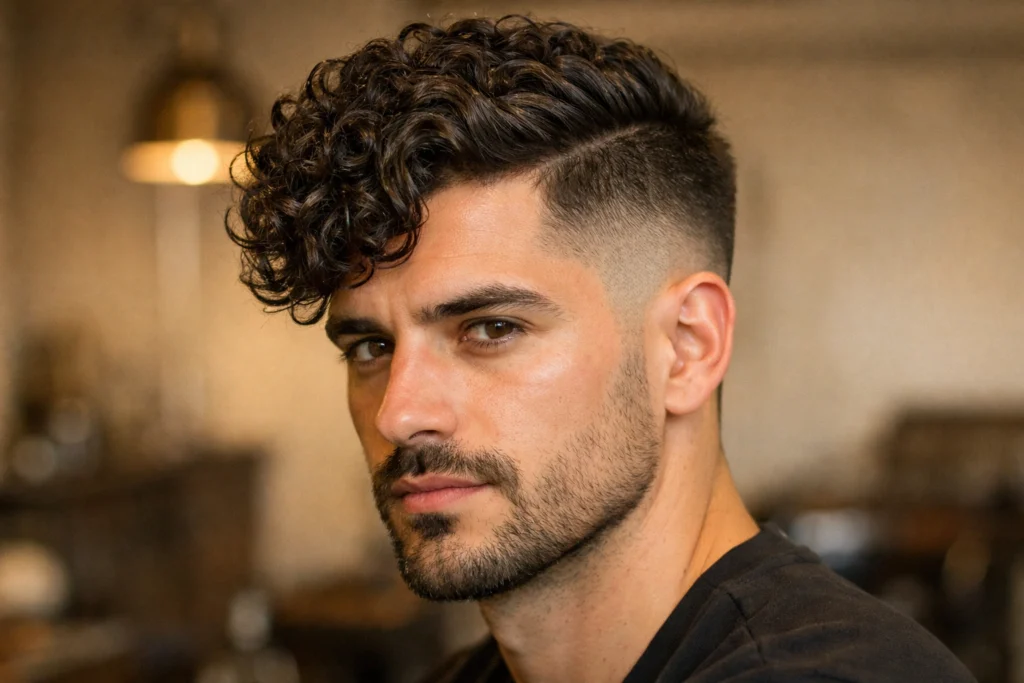
Men with naturally curly hair bring a uniquely dynamic quality to the comb over silhouette. Rather than lying flat and uniform, the combed-over section retains its curl pattern, creating a voluminous, textured top that has natural movement and visual richness. The sides are typically faded to create the same structural contrast that defines straight-hair comb overs, while the curly top does the expressive work.
Curl-defining cream applied to damp hair before blow drying or air drying helps set the curl pattern and reduce frizz. The side part or swept direction is introduced after the curls are defined, using a wide-tooth comb or simply fingers to guide the hair in the desired direction. This version of the comb over has a bold, confident personality that suits creative environments and social occasions particularly well.
Comb Over Undercut
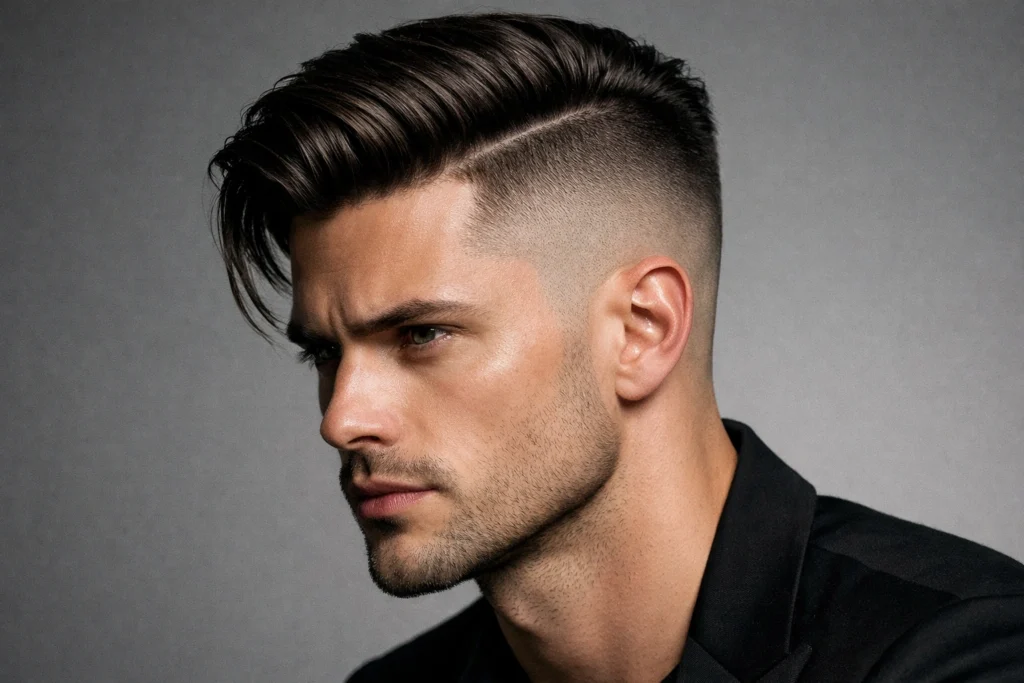
The undercut removes hair from beneath a longer top section using clippers set to a very short or zero guard, creating a dramatic disconnection between the dense top and the virtually bare sides. When the top section is then swept in the comb over direction, the result is a look with extreme contrast and a sharp, fashion-forward edge that is unlike any fade-based variation.
The undercut comb over has strong roots in early twentieth century barbering but was dramatically revived in the 2010s as part of a broader men’s grooming renaissance. It remains a relevant and striking choice for men who want a style that reads as genuinely distinctive. The disconnected look means the parting line is highly visible and the swept top appears almost architectural in its definition.
Ivy League Comb Over

The Ivy League cut, sometimes called the Princeton or Harvard clip, represents the most refined and traditionally prestigious corner of the comb over family. It features a short overall length with enough hair on top to accommodate a clean side part and a subtle sweep across the forehead. The sides are tapered rather than faded, maintaining a conservative, structured profile.
This variation communicates understated authority and professional confidence without resorting to visual drama or bold contrast. It is the cut of choice for high-stakes professional environments, formal occasions, and men who want their grooming to say everything without shouting. Maintained with a light pomade or a traditional hair cream, the Ivy League comb over is as timeless as any haircut in existence and will remain relevant regardless of how trends shift around it.
Conclusion
The comb over haircut earns its place as one of the most fashion-forward and event-versatile styles a man can choose precisely because it refuses to be a single thing. Across these fifteen variations, the common thread is intentionality. Every version of the comb over requires a degree of thought, a degree of skill, and a degree of commitment to personal presentation that communicates something genuine about the man wearing it.
Whether you are preparing for a black-tie dinner, a casual weekend with friends, a creative industry meeting, or a significant personal event, there is a comb over interpretation in this guide that will serve you well. The key is identifying which version aligns with both your hair type and the context you are dressing for, consulting with a skilled barber who can tailor the cut to your specific head shape and growth pattern, and committing to the maintenance that keeps any comb over looking its best. Get those three things right and the comb over will consistently be the most reliable and rewarding haircut in your grooming repertoire.
You may also like this post: 15 Stylish Quiff Hairstyles for Men in 2026
Frequently Asked Questions
What face shapes suit fashion-forward comb over haircuts?
A: Comb overs are among the most face-shape-friendly haircuts available. Oval faces suit every variation without restriction. Square faces benefit from the sweeping direction of the top, which softens the angular jawline. Round faces gain elongation from the vertical height introduced by quiff-influenced versions. Diamond faces are balanced by the width created by the swept top. Men with very long or narrow faces may want to avoid excessive height in the top section and instead opt for flatter, side-swept interpretations.
How much hair do I need on top to get a comb over?
A: A minimum of two inches of length on top is generally required for the hair to have enough weight and direction to sweep convincingly. Shorter top sections can be given a subtle comb over direction but lack the visual presence of longer versions. The casual and Ivy League variations work at shorter top lengths, while the pompadour and long comb over require three to five inches or more.
How often does a comb over need to be trimmed?
A: The frequency depends on the specific variation. Skin fades and hard parts need touching up every two to three weeks to maintain their sharpness, as these elements grow out quickly. Standard fades and tapered versions can go four to five weeks between barber visits. The top section of most comb over styles benefits from a trim every four to six weeks to keep the weight and shape proportional.
What products work best for styling a comb over?
A: Product choice depends on the finish you want. High-shine pomade suits slicked back and classic side part versions. Matte paste or clay suits textured and casual variations. Medium-hold gel works for looks that need firm direction without stiffness. A light natural wax is ideal for the Ivy League and casual versions. As a general rule, start with less product than you think you need and build up, as over-application is the most common styling mistake.
Can men with thinning hair wear a comb over?
A: Yes, and in fact the comb over was originally conceived as a response to thinning hair. Modern versions handle the concern much more elegantly than older approaches. A low to mid fade on the sides reduces the visual emphasis on thinning areas while keeping the top section as the focal point. Matte products add the appearance of thickness, and avoiding very long top lengths prevents the hair from lying flat in ways that expose thinning patches. The classic side part and Ivy League versions are particularly flattering for men managing early-stage hair thinning.
1 Comment