Introduction
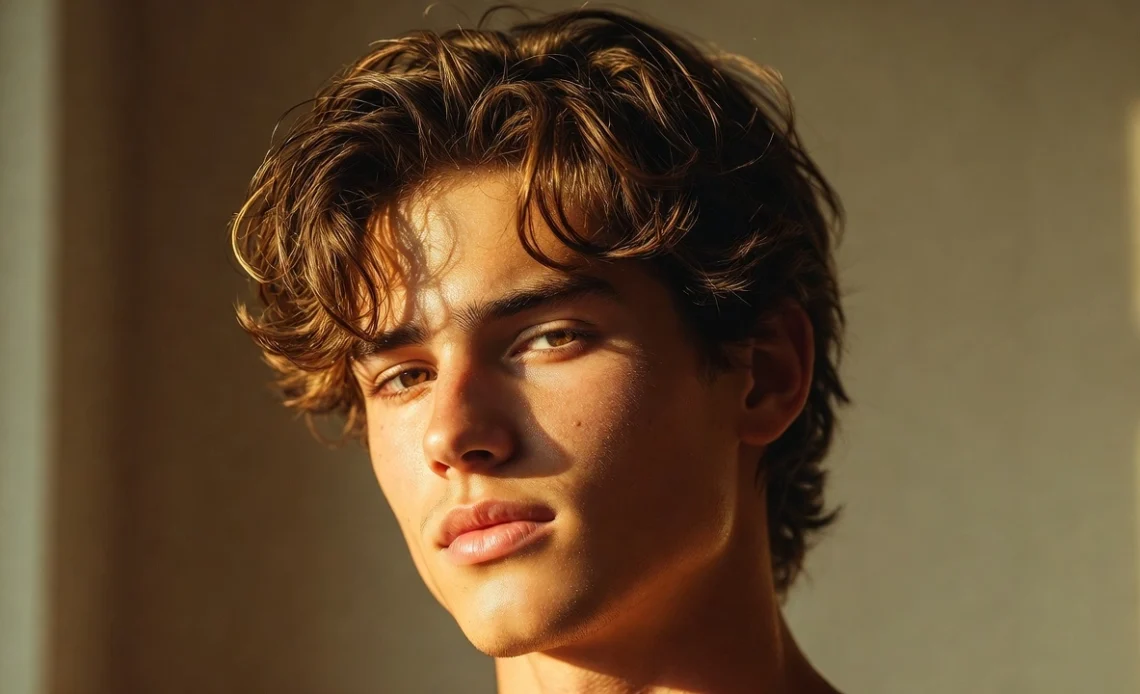
Wavy hair has always occupied a unique position in men’s grooming. It sits between the clean predictability of straight hair and the bold expressiveness of curly hair, offering a natural texture that carries built-in volume, movement, and dimension without demanding constant effort. For years, many men with wavy hair spent their mornings fighting that texture into submission. In 2026, that approach feels not only outdated but completely unnecessary.
The dominant shift in men’s hairstyling this year is a move toward cuts and routines that enhance natural texture rather than suppress it. Barbers are recommending tapered cuts over aggressive skin fades for wavy hair, stylists are reaching for sea salt sprays and curl creams over hard gels, and men across age groups are learning to let their waves do the visual work. The result is a landscape of genuinely fresh wavy hairstyles for men that are easier to maintain, more flattering to diverse face shapes, and more aligned with how modern men actually want to look and feel.
This guide covers thirteen of the most compelling wavy hairstyles trending in 2026, with detailed explanations of what each look involves, who it suits, and how to achieve and maintain it with confidence.
The Wavy Textured Crop
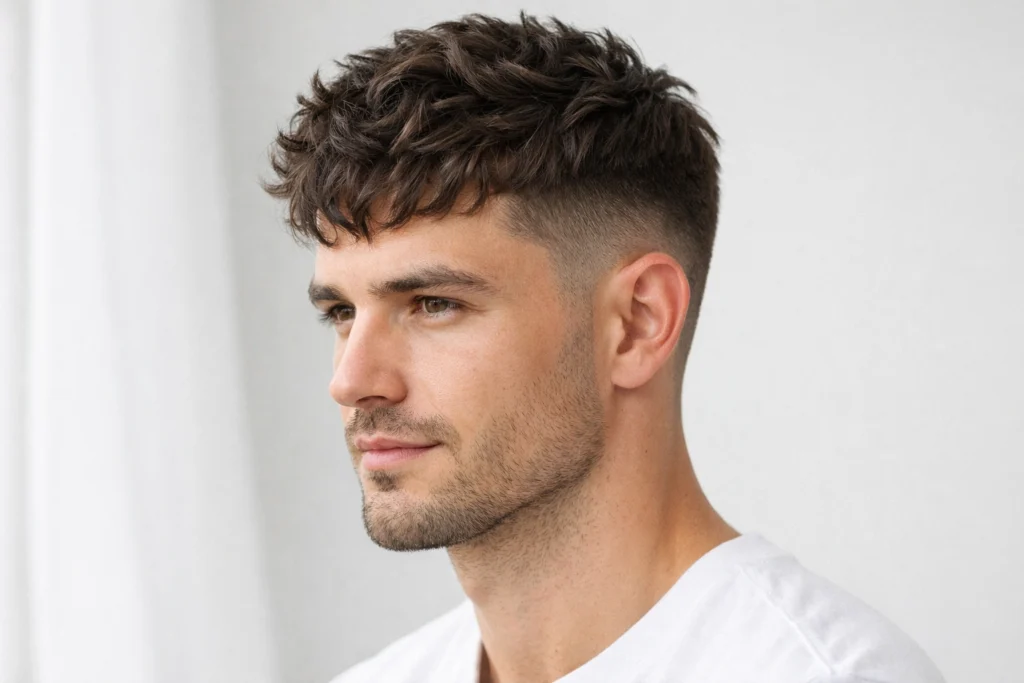
The wavy textured crop has become one of the most requested cuts at barbershops in 2026, and its appeal is straightforward. It keeps the sides short and tight while leaving the top long enough for the natural wave pattern to breathe and express itself. The top section is cut with choppy, layered scissors work that removes bulk without eliminating wave definition, allowing the hair to sit with visible texture and movement rather than lying flat.
This is the ideal entry point for men who want to embrace their waves without committing to significant length. It air-dries in minutes, holds its shape well for weeks between trims, and suits virtually every face shape. Men with 2A to 2C wave patterns get the best results here, as the moderate wave tightness creates just enough volume and definition at the shorter length to make the style look deliberate and polished.
Styling the Textured Crop
Apply a small amount of sea salt spray to damp hair and scrunch upward with the palms to encourage the wave pattern. Allow it to air dry completely before adding a light texture powder at the roots for extra lift if needed. The entire routine takes under five minutes and requires no heat.
The Middle Part Flow
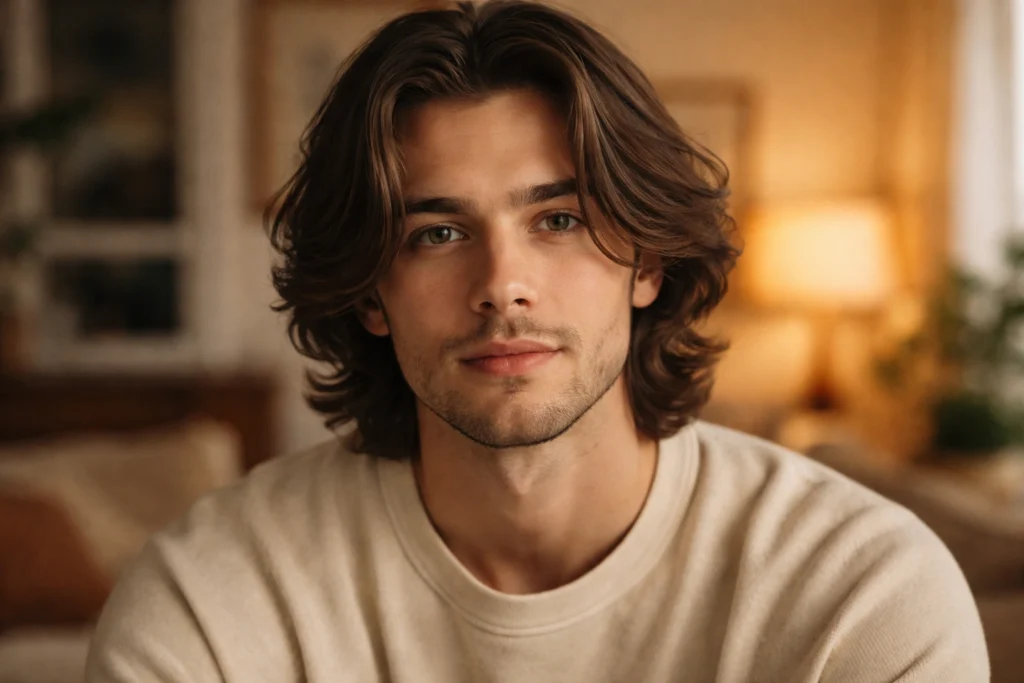
The middle part flow is having its most prominent moment in decades. Hair is grown to medium length, typically reaching the jaw or just below, and parted cleanly in the center. The waves fall naturally to each side, creating a face-framing curtain effect that combines contemporary appeal with a relaxed, unhurried aesthetic.
This style works best on men with longer face shapes, though an off-center version of the part adapts the look for rounder faces by adding asymmetric visual interest. The key to making the middle part flow look modern rather than dated is the texture. The waves should appear lived-in and dimensional, not stiff or overly sculpted. Leave-in conditioner applied to wet hair and air-dried produces the precise quality this look demands.
Tousled Surfer Waves
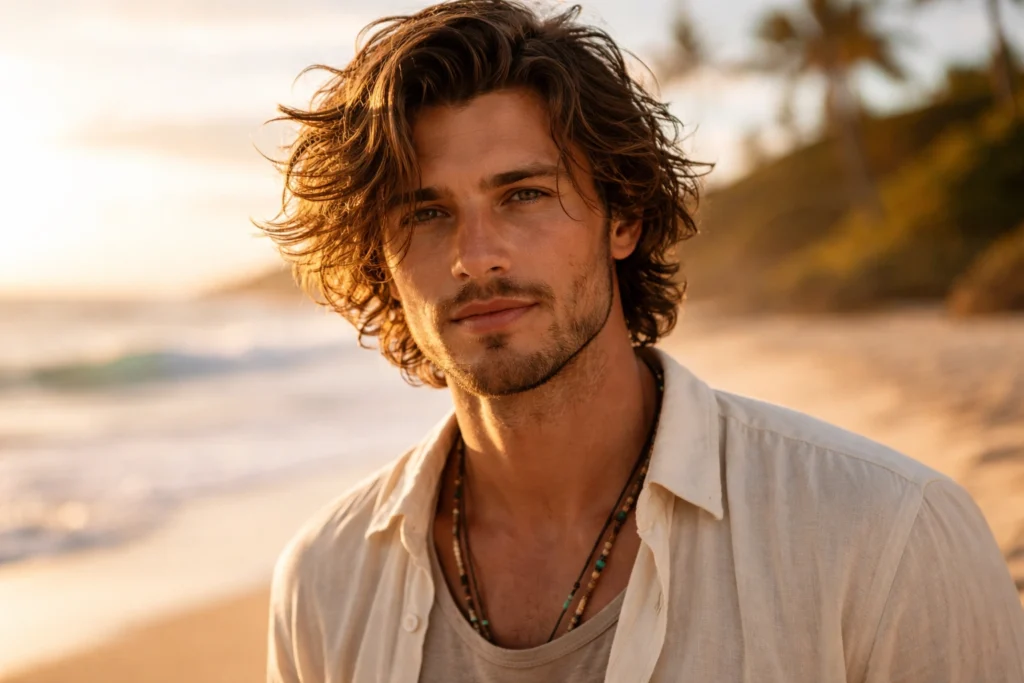
Tousled surfer waves represent the most relaxed and seasonally flexible interpretation of wavy hair styling in 2026. The hair is grown to medium or medium-long length and styled with the explicit goal of looking like it was shaped by salt water and open air rather than a comb and a mirror. The result is a naturally disheveled, effortlessly cool look that has remained a consistent touchstone of men’s grooming culture for decades.
This style suits men with 2B and 2C wave patterns most naturally, where the wave is defined enough to hold shape without excessive product. A sea salt spray applied generously to wet hair and either air-dried or diffused on a low heat setting is the standard approach. The finished look should appear voluminous, slightly unruly, and deeply relaxed.
Who Surfer Waves Suit
Men with longer face shapes and strong jawlines carry this style exceptionally well. The volume and width created by the waves balance elongated facial proportions. Men with rounder faces can still wear the look by keeping the sides slightly shorter and adding a little more height at the crown through diffusing.
The Wavy Quiff
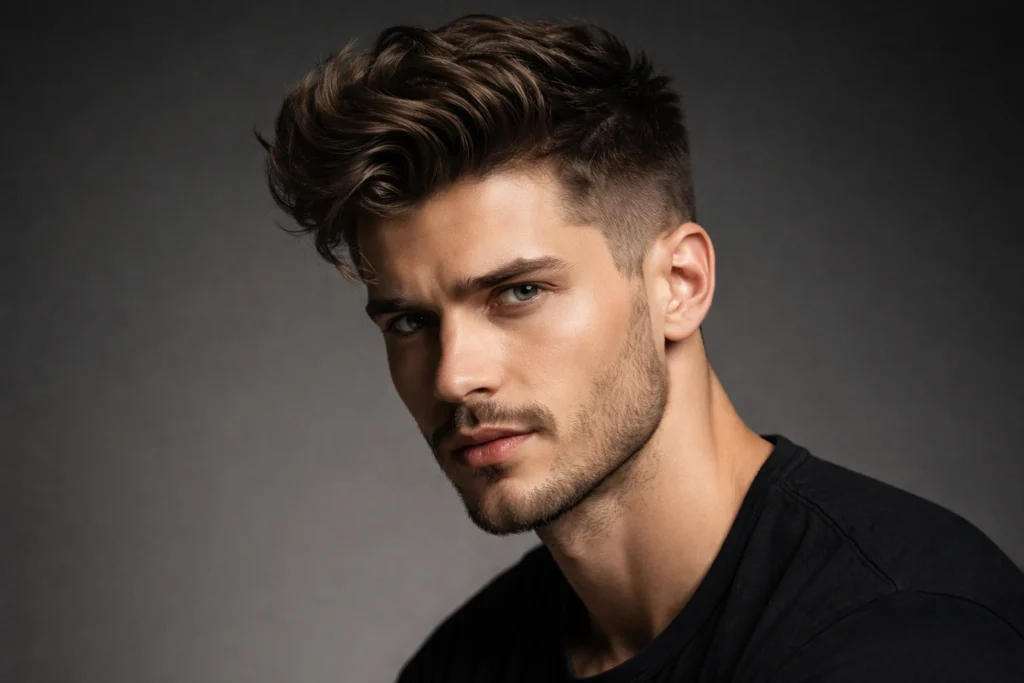
The wavy quiff takes the classic lifted-front silhouette and softens it with natural wave texture, producing a look that has considerably more personality and movement than a traditional smooth quiff. The front section is blow-dried upward and slightly backward before the natural wave sets in, creating a voluminous shape with visible S-curve texture throughout.
The sides are kept shorter, either through a taper or a low to mid fade, to keep the focus directed at the textured top. Men with thick wavy hair find this style particularly rewarding, as the natural density supports the lifted front without requiring excessive product. A small amount of molding paste or medium-hold pomade with a natural finish applied after blow-drying locks the shape without stiffening the texture.
The Wavy Shag
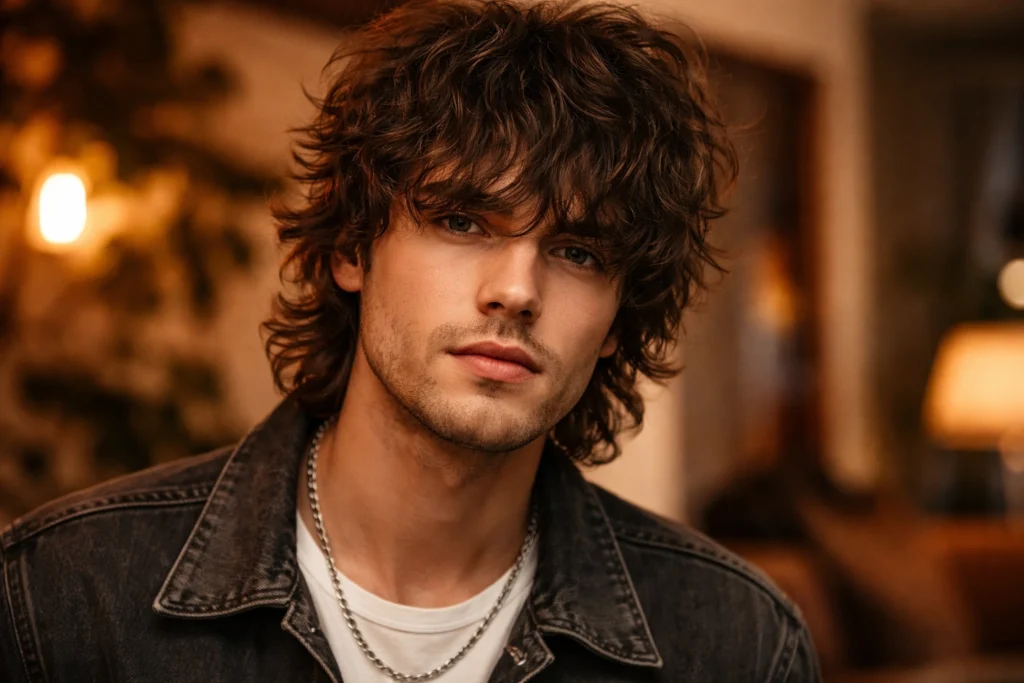
The wavy shag is one of the most distinctly 2026 entries on this list. It draws from 1970s rock culture and the early 2000s indie scene but has been refined for contemporary sensibilities into a style that feels genuinely fresh. The defining characteristics are heavy layering throughout the entire cut, a textured fringe that falls across the forehead, and an overall shape that prioritizes movement and flow over clean geometric structure.
Men who appreciate a more expressive, anti-establishment quality in their appearance find the wavy shag to be an authentic personal statement. It suits medium to long hair lengths and works best on men with 2B wave patterns and above, where the natural texture has enough definition to animate the layers without looking flat or stringy.
The Wavy Pompadour
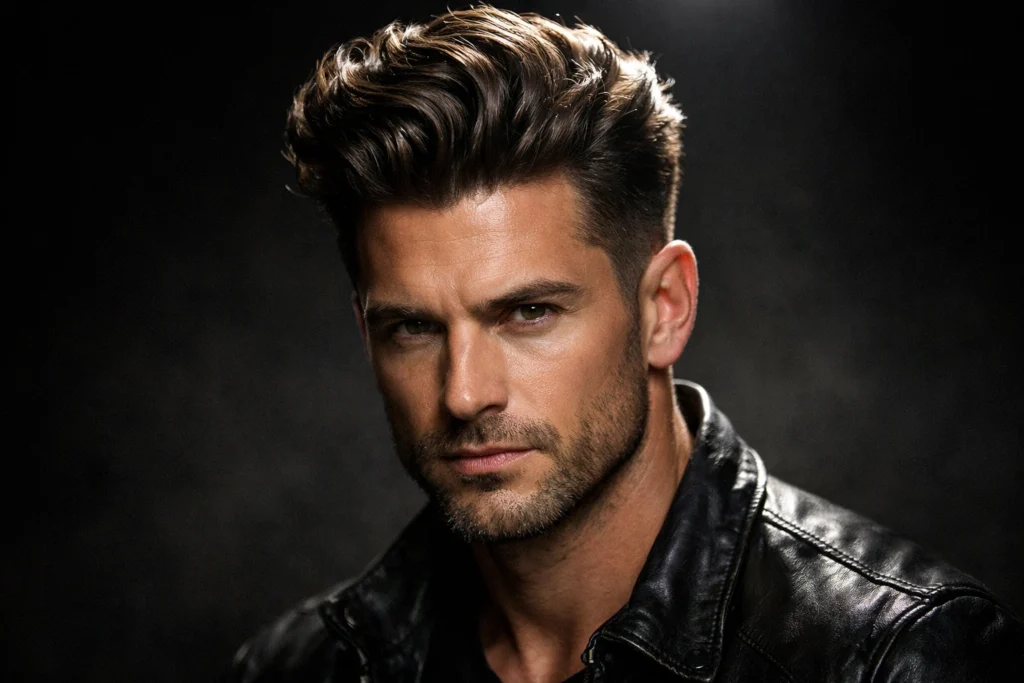
The wavy pompadour lifts the front section of the hair upward and pushes it back from the forehead with confidence, then allows the natural wave to set through the crown and sides of the lifted section. The result is bold, structured, and high-impact, combining the architectural grandeur of the pompadour silhouette with the organic movement of natural wave texture.
Faded or tapered sides are essential for keeping the look proportional, as the volume on top demands clean lines at the sides to prevent the style from appearing oversized. A high-hold pomade with moderate shine applied to the front section before blow-drying upward with a round brush is the most reliable technique for building and holding the lift.
Short Wavy Hair with Fade
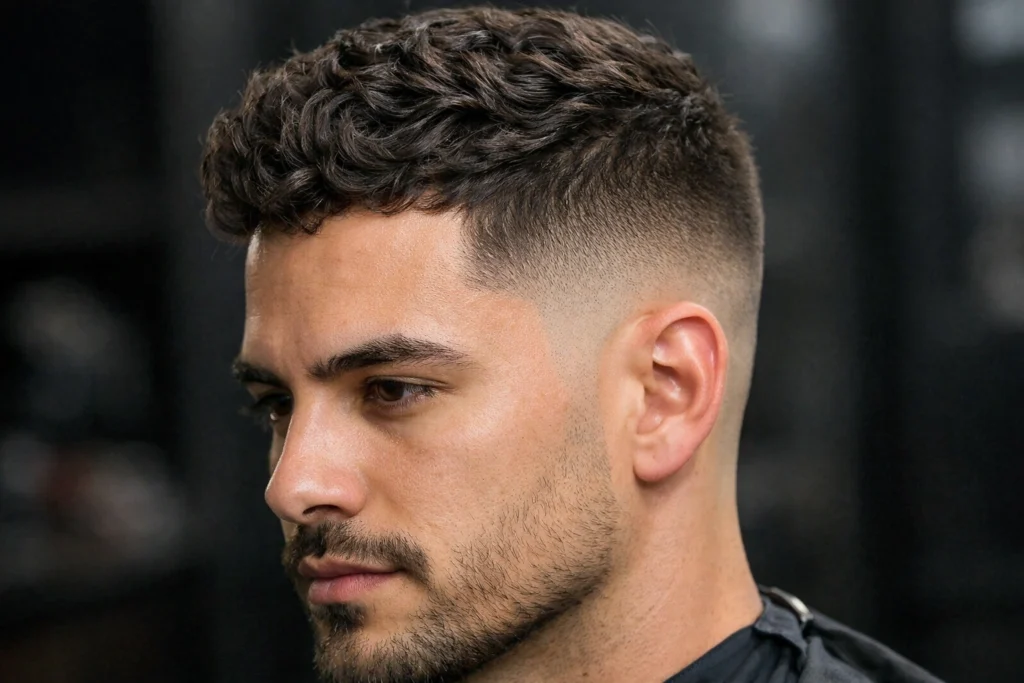
Short wavy hair paired with a fade is one of the most consistently popular combinations in contemporary men’s barbering, and 2026 has done nothing to diminish its appeal. The hair on top is kept at one to two inches, which is enough length for the wave pattern to register clearly, while the sides and back are graduated through a low or mid fade for a clean, modern finish.
The beauty of this combination lies in its balance. It is low maintenance, easy to style, and appropriately sharp for almost any setting from the office to a weekend event. Men with finer wave textures benefit from keeping the top slightly longer in this style, allowing more wave pattern to accumulate and produce the visual density that shorter fine hair can sometimes lack.
The Wolf Cut for Wavy Hair
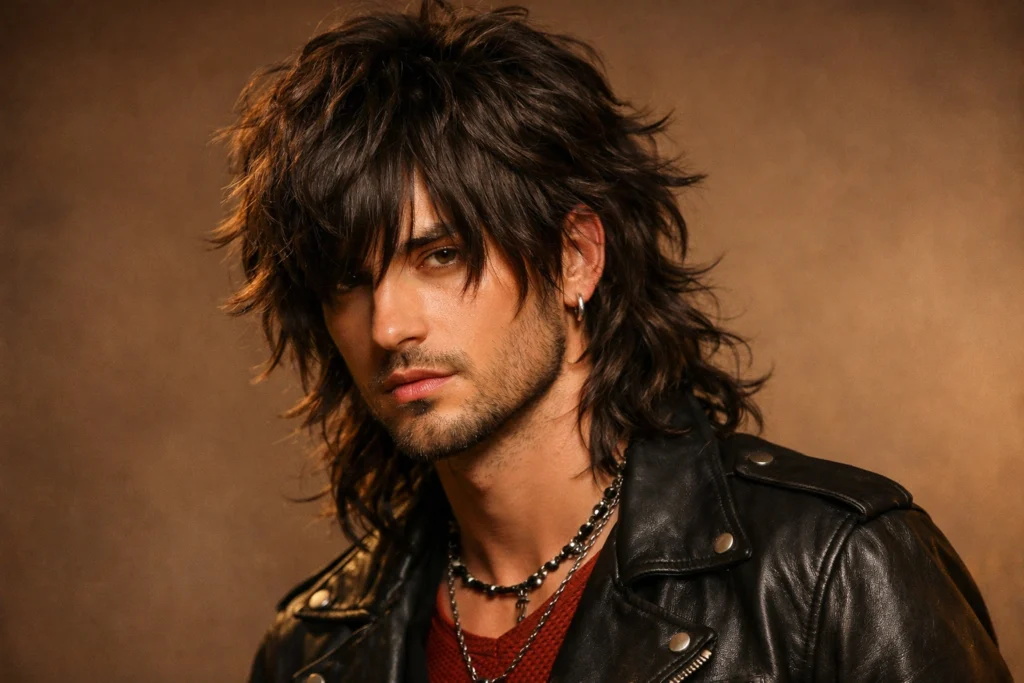
The wolf cut, a hybrid of the shag and the mullet, became one of the defining haircuts of the mid-2020s and continues to evolve in 2026 with wavy hair at its natural element. The cut features heavy layers throughout, significant volume at the crown, a longer back section, and shorter, choppy layers framing the face. On wavy hair, the layers activate an extraordinary amount of movement and dimension.
This is a style for men who are comfortable making a visual statement. It sits confidently at the intersection of fashion-forward and subcultural, and it reads equally well in creative industries, urban environments, and social settings where individual expression is valued. A curl-enhancing cream applied through damp hair before diffusing on low heat produces the most dynamic, voluminous result.
Medium-Length Wavy Hair
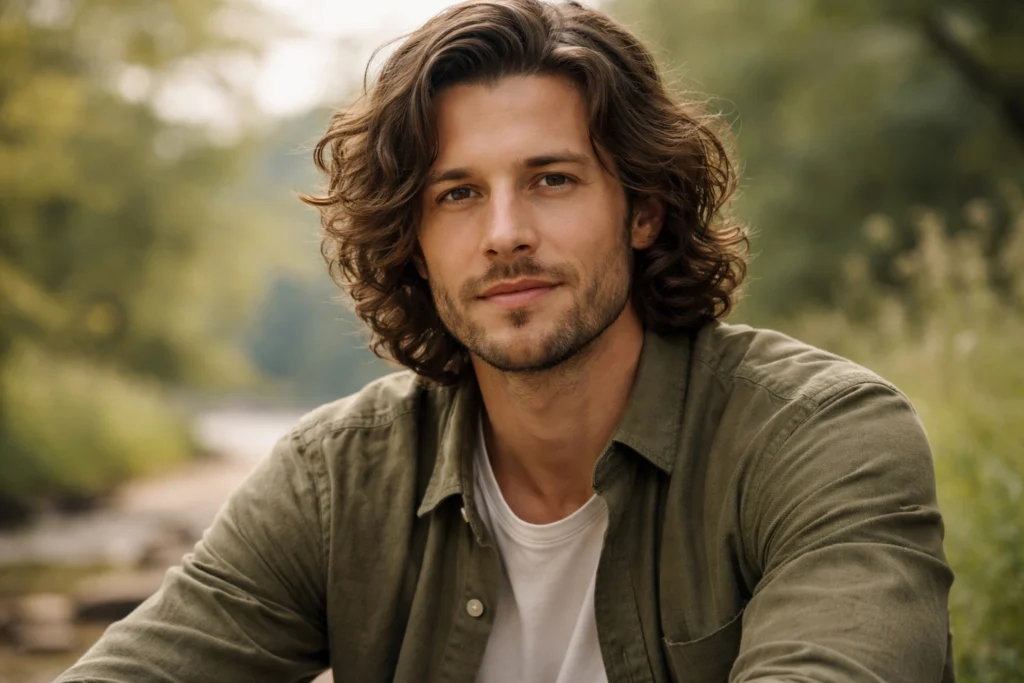
Sometimes the most compelling choice is the most straightforward one. Medium-length wavy hair, sitting between the chin and the collarbone, lets the natural wave pattern do its best work without the complications of very long hair management or the constraints of a short cut. The hair falls with natural fullness and movement, requiring very little intervention to look polished and intentional.
Men who wear medium-length wavy hair in 2026 typically follow a minimal styling philosophy. A leave-in conditioner applied to clean, towel-dried hair, a gentle scrunch to encourage the wave pattern, and air-drying is often the complete routine. The result is a relaxed, approachable aesthetic that works exceptionally well for men with naturally strong 2B or 2C wave patterns.
Length Maintenance
A trim every six to eight weeks prevents the ends from becoming thin, splitting, or losing the soft shape that makes medium-length wavy hair look its best. Asking the barber for a dry cut allows them to see exactly how the waves fall naturally and cut accordingly.
The Wavy Undercut
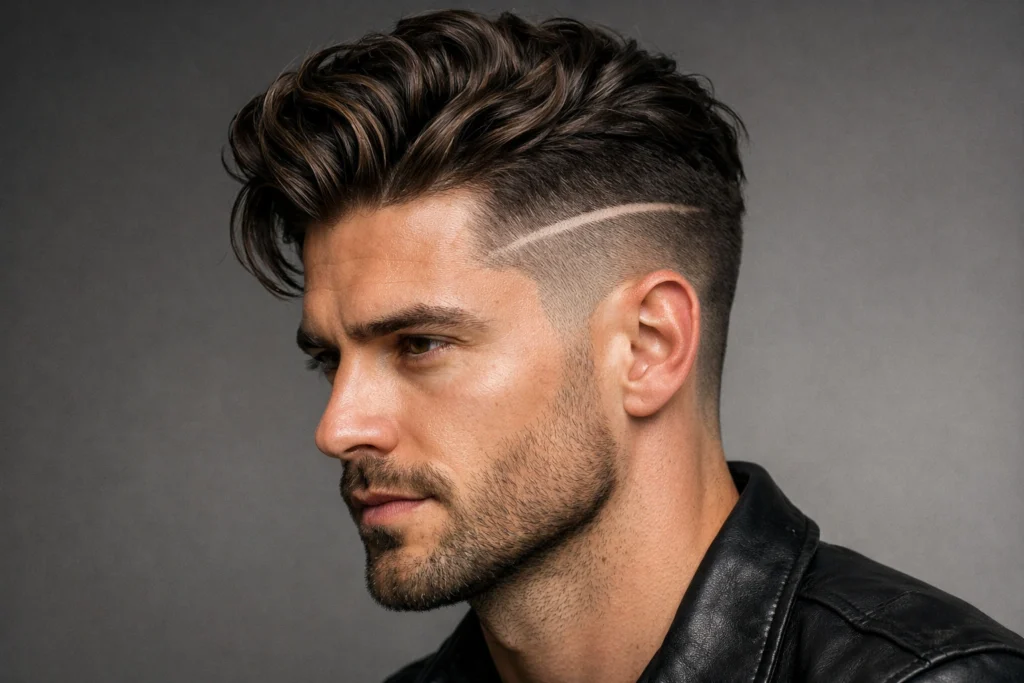
The wavy undercut disconnects the longer top section from the clipper-cut sides with a sharp, defined line rather than the gradual graduation of a fade. The contrast is abrupt and visually dramatic, drawing immediate attention to the volume and movement of the wavy top. In 2026, the wavy undercut has seen a resurgence among men who prefer their hairstyle to have an unapologetically bold, fashion-forward character.
The top can be worn swept to one side in a comb-over direction, pushed back from the forehead, or left to fall naturally with the wave pattern leading the way. Each approach gives the same cut a different personality. A flexible medium-hold product preserves the wave texture while keeping the top in its intended direction throughout the day.
The Wavy Fringe
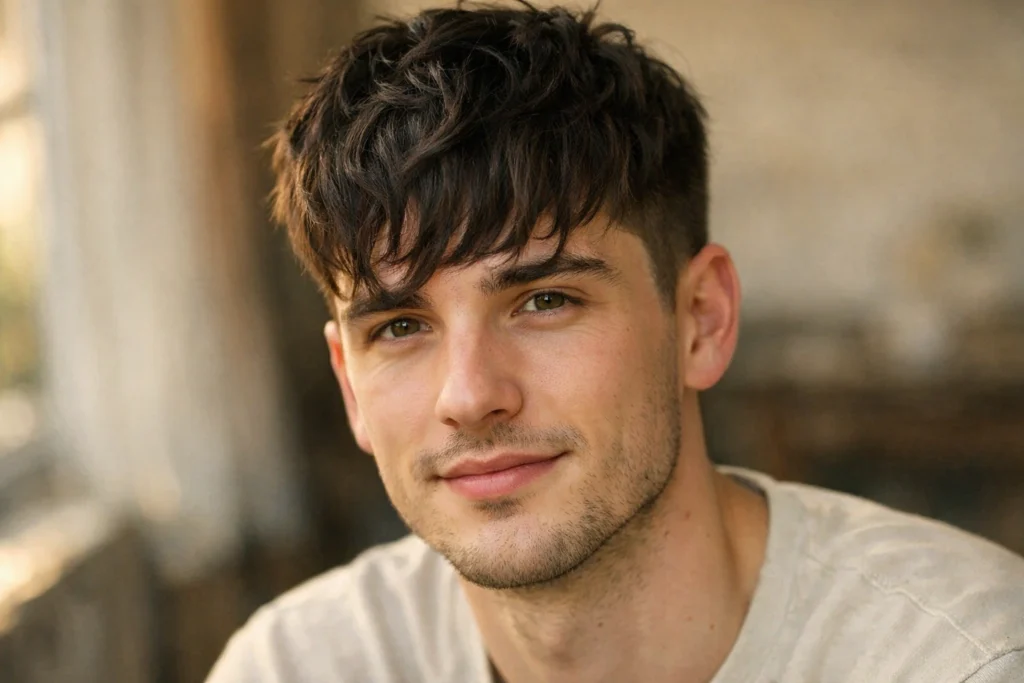
The wavy fringe brings the front section of the hair forward across the forehead rather than lifting or sweeping it back. The waves in the fringe create a soft, dimensional curtain across the brow that is simultaneously youthful and genuinely stylish. This look has particular resonance in 2026 as part of a broader trend toward fringe-heavy, face-framing hairstyles across all hair types.
The fringe length can be adjusted to sit just above the eyebrows for a more classic interpretation or allowed to reach down to the brow or slightly below for a more relaxed, informal version. A light texture powder at the roots after drying lifts the fringe and prevents it from sitting too flat against the forehead, which is the main technical challenge of managing a wavy fringe effectively.
The Wavy Bro Flow
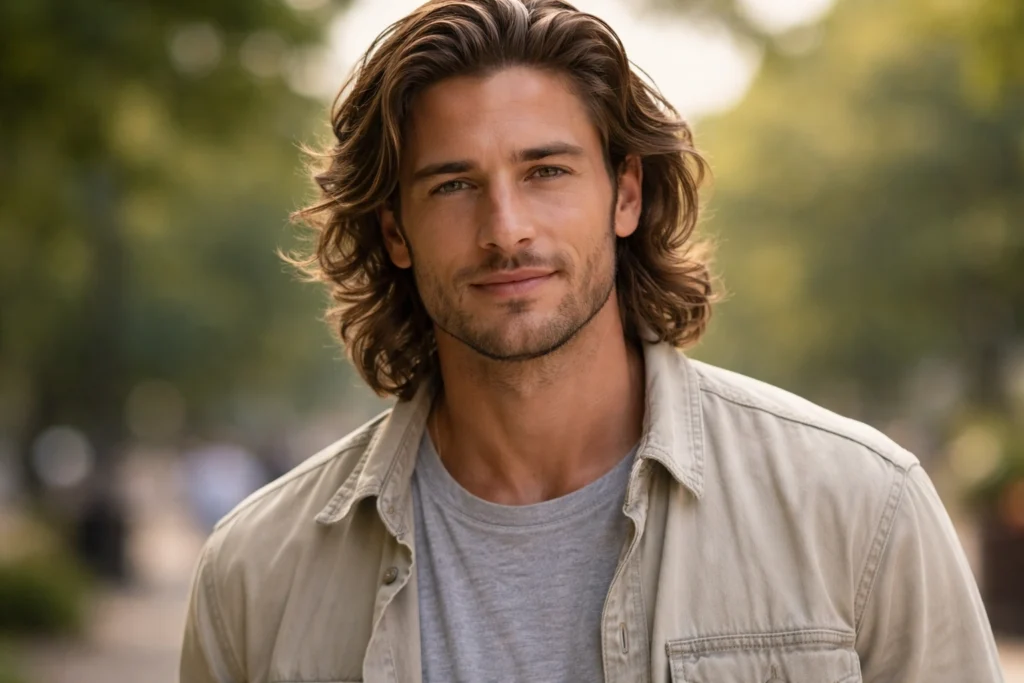
The bro flow, a medium to long style where hair is pushed back from the face and allowed to fall naturally past the ears toward the collar and shoulders, continues to gain mainstream traction in 2026. On wavy hair, the bro flow takes on a genuinely spectacular quality. The natural S-curve pattern creates visible, layered movement through the length of the hair that communicates both a relaxed confidence and an inherent style awareness.
This is a style that rewards patience, as growing the hair to bro flow length requires a commitment of twelve months or more from most starting points. The payoff is a look that ages well as it grows, suits a wide range of face shapes on longer-faced men in particular, and demands very little daily effort to maintain. Leave-in conditioner and air-drying are the primary tools.
The Modern Wavy Mullet
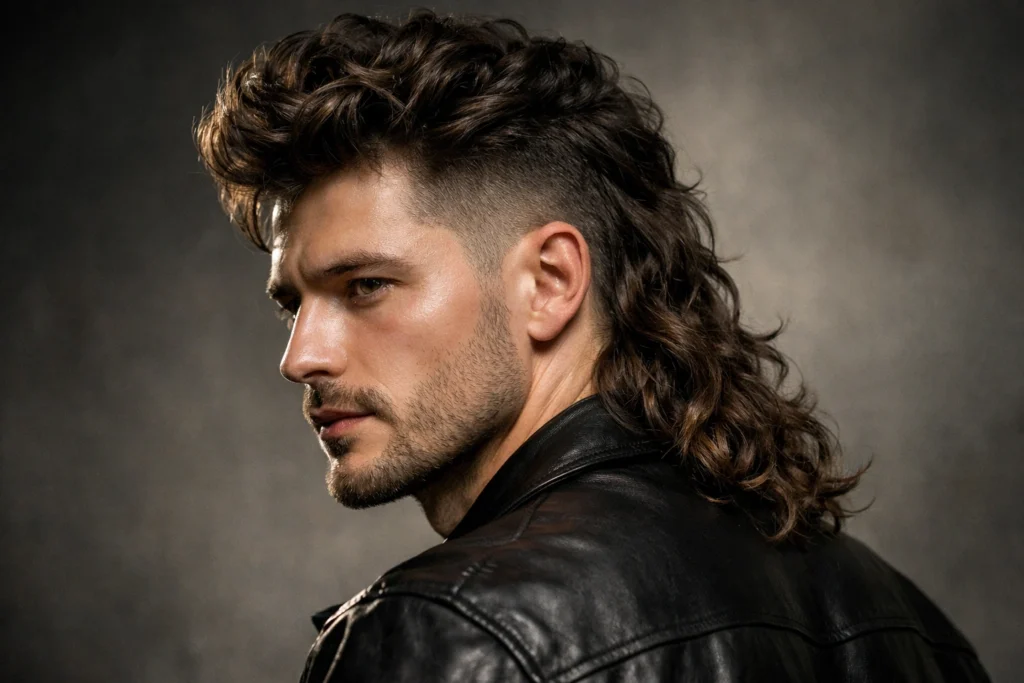
The modern mullet has established itself as one of the boldest and most talked-about men’s hairstyle trends in 2026. Unlike its 1970s and 1980s predecessors, the contemporary version is refined, intentional, and remarkably wearable. On wavy hair, the mullet transforms into something genuinely compelling: faded or undercut sides, a textured wavy top with volume and movement, and a longer back section where the waves cascade freely.
This is not a style for the uncommitted. It requires a barber with genuine technical skill, a clear vision from the wearer, and regular maintenance to keep the shape proportional as all three sections grow at different rates. But for men who wear it with confidence, the modern wavy mullet is one of the most distinctive and fashion-forward statements available in men’s grooming right now.
Conclusion
The thirteen wavy hairstyles covered in this guide collectively make a clear argument: wavy hair is not a challenge to be managed but an advantage to be embraced. The natural volume, the organic movement, and the textural richness that wavy hair brings to any cut are qualities that men with straight hair actively try to replicate with products and tools. If you have waves, you start every styling session ahead of the curve.
The key in 2026 is aligning your cut with your wave pattern, your face shape, and your daily lifestyle. A man who air-dries his hair and uses minimal product should be looking at the surfer waves, the middle part flow, or the medium-length natural style. A man who enjoys a more structured daily routine has the wavy pompadour, the wavy quiff, and the textured crop at his disposal. Take these styles to a barber who understands wavy hair, communicate your natural texture and growth pattern clearly, and invest in the minimal but targeted product routine that your chosen style requires. The result will be a look that feels natural because it genuinely is.
You may also like this post: 15 Modern French Crop Hairstyles for Men
Frequently Asked Questions
What are the best products for styling wavy hairstyles for men?
A: The most effective products for wavy men’s hair in 2026 are those that enhance natural texture without creating stiffness or buildup. Sea salt spray is the most versatile option, adding definition and a natural matte finish. Curl-defining cream works well for 2B and 2C wave patterns that need more hold and frizz control. Leave-in conditioner is essential for longer wavy styles as a daily moisture and definition base. Texture powder adds volume at the roots without affecting the wave pattern itself. Avoid heavy waxes and hard gels, as these tend to clump wavy hair and remove the natural movement that makes these styles look their best.
How often should men with wavy hair wash their hair?
A: Washing no more than two to three times per week is the general recommendation for men with wavy hair. Overwashing strips the natural oils that give wavy hair its softness and definition, which can lead to frizz and a dry, dull appearance. On non-wash days, rinsing with water and applying a small amount of leave-in conditioner is usually sufficient to refresh the wave pattern and reduce any overnight disruption. Men with very thick wavy hair may find they can wash even less frequently without any negative effect on their style.
What face shapes suit wavy hairstyles best?
A: Wavy hairstyles are among the most face-shape-friendly options in men’s grooming. Oval faces suit every variation on this list without restriction. Round faces benefit most from styles with height at the crown, such as the wavy quiff or the wavy pompadour, which create an elongating effect. Square faces are complemented by softer, flowing styles like the surfer waves and the bro flow, which soften angular jawlines. Men with longer or rectangular faces carry medium to long wavy styles particularly well, as the natural width created by the waves balances facial length.
How do I ask my barber for a wavy hairstyle?
A: Bring reference photos of the specific style you want and show your barber the natural wave pattern of your hair when it is dry. Ask for scissors work on the top rather than clipper cuts, which can disrupt the wave pattern unpredictably. Request textured layers if you want movement throughout the cut. For the sides, ask for a natural taper rather than a very short skin fade if you want the waves to extend into the sides. Mentioning your wave type, whether it is a loose 2A wave or a tighter 2C pattern, gives your barber the information they need to make the cut work with your specific texture.
Can men with fine wavy hair wear any of these styles?
A: Yes, though certain adaptations help fine wavy hair look its best. Men with fine hair should prioritize volume-building techniques such as blow-drying with a diffuser on low heat, applying texture powder at the roots, and avoiding heavy products that weigh the hair down. The textured crop, the wavy quiff, and the short wavy fade are the most flattering options for fine wavy hair as they work at lengths where the wave pattern is concentrated and visible. Longer styles like the bro flow require more product attention for fine hair to prevent the ends from looking thin or limp.
1 Comment